1. ArchDaily
  2. 20th Century Society

20th Century Society: The Latest Architecture and News

Dogtrot House: Vernacular Knowledge and Climate-Responsive Design

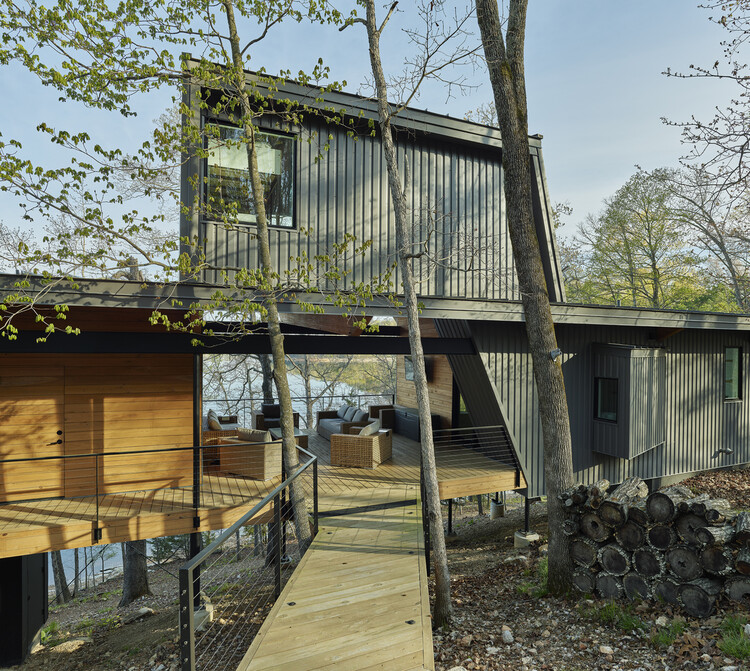
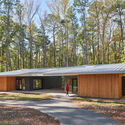
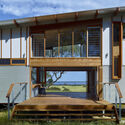
The dogtrot house emerged across the South of the United States during the late nineteenth century as a direct response to humid climates, material availability, and patterns of rural habitation. Found throughout the Appalachian Mountains, coastal Carolinas, and lowlands of Louisiana, the dogtrot house appeared in numerous regional variations, yet its fundamental spatial logic remained remarkably consistent. Two enclosed living masses are separated by an open central passage and unified beneath a continuous roof, creating a dwelling that is simultaneously economical and responsive to long, hot summers. Although architectural historians continue to debate the precise geographic origins of the dogtrot, the typology represents a broader vernacular intelligence that emerged through the convergence of environmental necessity, local construction practices, and rural living.
Dogtrot House: Vernacular Knowledge and Climate-Responsive Design - Image 1 of 4Dogtrot House: Vernacular Knowledge and Climate-Responsive Design - Image 2 of 4Dogtrot House: Vernacular Knowledge and Climate-Responsive Design - Image 3 of 4Dogtrot House: Vernacular Knowledge and Climate-Responsive Design - Image 4 of 4Dogtrot House: Vernacular Knowledge and Climate-Responsive Design - More Images+ 36

The Evolution of Gas Stations: From Roadside Stops to Architectural Landmarks

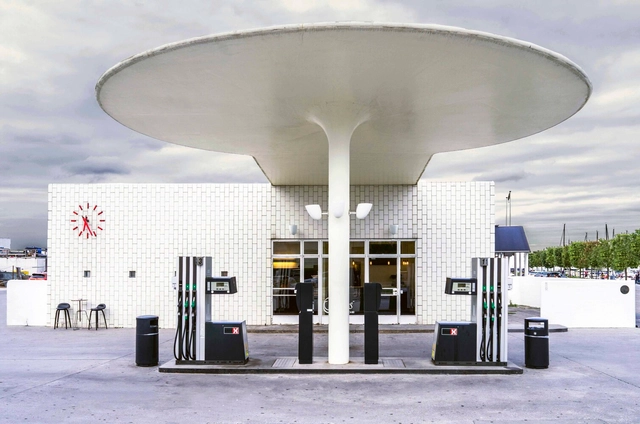
The gas station is an architectural typology that has undergone significant transformations since its inception. Initially, these structures were simple roadside refueling points designed for functionality rather than aesthetics. As automobile culture expanded, gas stations evolved to accommodate new technologies, shifting urban landscapes and changing consumer behaviors. Over time, they became more than just utilitarian stops — they developed into service hubs, integrating restaurants, motels, and leisure spaces, responding to contemporary transportation increasing demands.

By the late 20th century, however, the widespread standardization of gas stations led them to be perceived as "non-places", a concept defined by anthropologist Marc Augé to describe transient spaces that lack social or cultural significance. With uniform designs and a focus on efficiency, gas stations became interchangeable, reinforcing their role as purely functional infrastructure rather than meaningful architectural interventions. This standardization also departed from the era when fuel stations served as recognizable landmarks, contributing to a homogenized landscape devoid of local identity.

The Evolution of Gas Stations: From Roadside Stops to Architectural Landmarks - Image 1 of 4The Evolution of Gas Stations: From Roadside Stops to Architectural Landmarks - Image 2 of 4The Evolution of Gas Stations: From Roadside Stops to Architectural Landmarks - Image 3 of 4The Evolution of Gas Stations: From Roadside Stops to Architectural Landmarks - Image 4 of 4The Evolution of Gas Stations: From Roadside Stops to Architectural Landmarks - More Images+ 41

Richard Rogers Appeals for Public Support to Save Robin Hood Gardens from Demolition

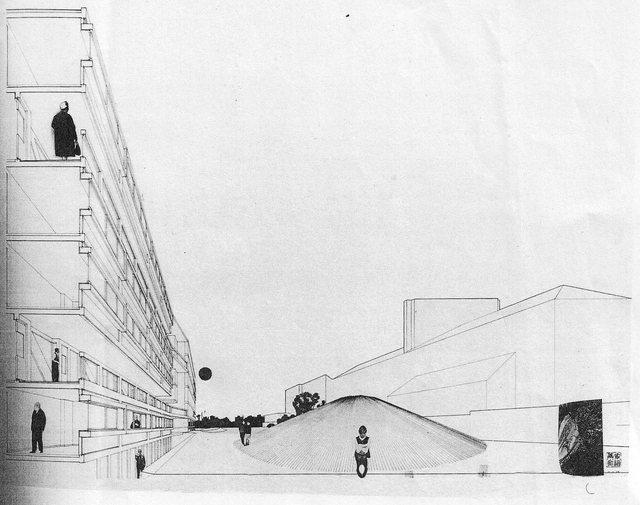
When it was announced in 2012 that London's Robin Hood Gardens – Alison and Peter Smithson's world-famous Brutalist housing estate – was to be demolished, there was outrage among the architectural community. Since then, many have called for the profession to act in order to protect "one of Britain’s most important post-war housing projects," which led to a fresh bid to save the scheme in March of this year. Richard Rogers, Simon Smithson (a partner at RSHP and son of Alison and Peter Smithson), and academic Dirk van den Heuvel have now called upon members of the public to voice their concerns to the UK Ministry for Culture, Media and Sport, before the end of the week:

"Previous efforts in 2009 to have the building listed failed, but the case has now been re-opened and we understand that the new Minister for Sport, Tourism and Heritage will be reviewing the arguments at the end of this week [w/c 15th June 2015]."

20th Century Society Presents 100 Buildings 100 Years at the Royal Academy of Art

The 20th Century Society was founded in the 1970s, to protect British architectural heritage which was built from 1914 onwards - following from the protection of the Victorian Society, which protects architecture from the 19th century up until 1914. This year, to celebrate the one hundred years of architectural heritage which they are sworn to protect, they have selected one building from each year, presenting one hundred of the best, most interesting or most loved buildings from the last century with their 100 Buildings 100 Years project.

The 100 selected buildings are featured in an ongoing exhibition at the Royal Academy in London, and also feature in a new book published by Batsford Books. Read on after the break to learn more about 100 Buildings 100 Years, and see a selection of the chosen buildings from the past hundred years.

20th Century Society Presents 100 Buildings 100 Years at the Royal Academy of Art - Image 1 of 420th Century Society Presents 100 Buildings 100 Years at the Royal Academy of Art - Image 2 of 420th Century Society Presents 100 Buildings 100 Years at the Royal Academy of Art - Image 3 of 420th Century Society Presents 100 Buildings 100 Years at the Royal Academy of Art - Image 4 of 420th Century Society Presents 100 Buildings 100 Years at the Royal Academy of Art - More Images+ 5