1. ArchDaily
  2. 1970s

1970s: The Latest Architecture and News

Designing the Future, Again: What the 55-Year Return of the World Expo to Osaka Reveals

Subscriber Access | 

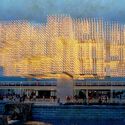
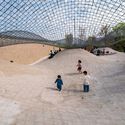
The 2025 Osaka Expo has captured widespread attention—not only for its architectural ambition and spectacle, but also for breaking records and generating controversy. Its most iconic feature, a monumental timber ring designed by Sou Fujimoto, has already made headlines as a Guinness World Record-breaking wooden structure. Built on the reclaimed island of Yumeshima, the site has attracted praise and critique in equal measure. Beyond its awe-inspiring 2-kilometer circumference—parts of which extend dramatically over the water—the structure has also drawn concerns, including questions about health & safety, extreme heat, and swarms of insects that may affect the visitor experience.

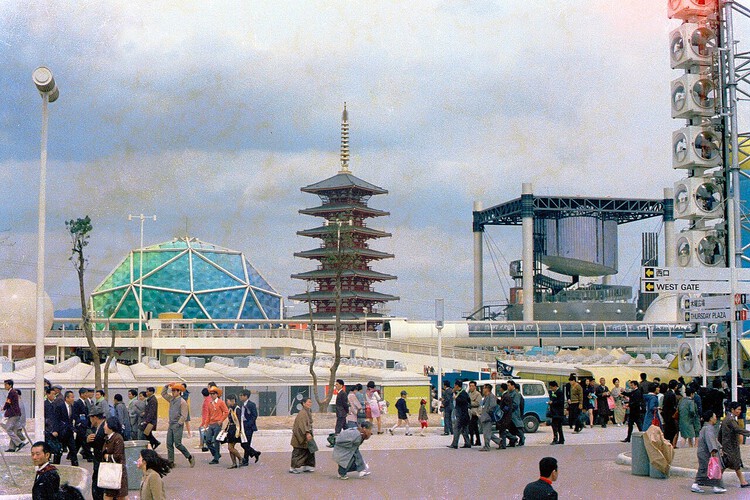
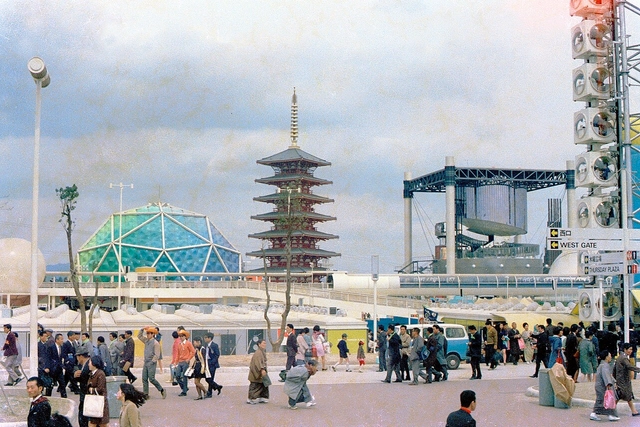
This year also marks a significant anniversary: the 55th year since the 1970 Osaka Expo, held under drastically different socio-economic conditions. Comparing these two expos—both hosted in the same city—offers a rare opportunity to reflect on how the rhetoric, curatorial themes, and architectural ambitions of world expos have evolved over time. From "Progress and Harmony for Mankind" in 1970 to "Designing Future Society for Our Lives" in 2025, the shift in thematic focus reveals changing global priorities. Meanwhile, the scale and nature of architectural involvement have also transformed, from the futuristic visions of Japanese Metabolism to a more internationally dispersed group of designers concerned with sustainability, technology, and civic engagement.


Designing the Future, Again: What the 55-Year Return of the World Expo to Osaka Reveals - Image 1 of 4Designing the Future, Again: What the 55-Year Return of the World Expo to Osaka Reveals - Image 2 of 4Designing the Future, Again: What the 55-Year Return of the World Expo to Osaka Reveals - Image 3 of 4Designing the Future, Again: What the 55-Year Return of the World Expo to Osaka Reveals - Image 4 of 4Designing the Future, Again: What the 55-Year Return of the World Expo to Osaka Reveals - More Images+ 21

Social Radicalism Reexamined: The Legacies of Christopher Alexander and Joseph Rykwert

This article was originally published on Common Edge.

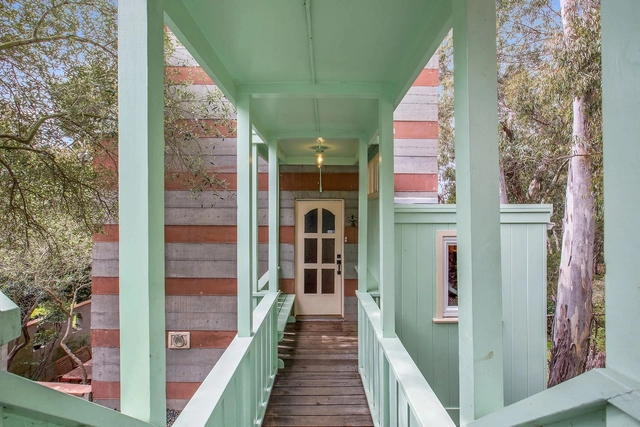
Christopher Alexander (1936–2022) and Joseph Rykwert (b. 1926) were two giants of 20th century architectural theory who began their work in England and eventually created lasting legacies at two great American architectural schools: the University of California at Berkeley (Alexander) and the University of Pennsylvania in Philadelphia (Rykwert). Their careers not only coincided with a critical period of social and cultural research among designers and urbanists, but in many ways continue to inspire the current generation of committed critics of late capitalist development on our imperiled planet. Yet to many they are too little known.

Social Radicalism Reexamined: The Legacies of Christopher Alexander and Joseph Rykwert - Image 1 of 4Social Radicalism Reexamined: The Legacies of Christopher Alexander and Joseph Rykwert - Image 2 of 4Social Radicalism Reexamined: The Legacies of Christopher Alexander and Joseph Rykwert - Image 3 of 4Social Radicalism Reexamined: The Legacies of Christopher Alexander and Joseph Rykwert - Image 4 of 4Social Radicalism Reexamined: The Legacies of Christopher Alexander and Joseph Rykwert - More Images+ 1

The Untold Story of Cairo's Villa Badran: Organic Architecture in the 1970s

While Egyptian architects were exercising their understanding of modernism in the urban fabric in the 1970s, a “chubby rebellion” in the form of Villa Badran defied the standardized curvilinear forms and rigid geometry. Gamal Bakry dived deep into his imagination to construct this unique piece of architecture that still stands as part of the city of Cairo today. With curving and free-flowing facades, Villa Badran drew inspiration from natural forms. In an attempt to create a living space that was more natural in its essence, the bubbly intervention puts in place a monolithic composition that hosts a two-story detached home for an Egyptian family.

The Untold Story of Cairo's Villa Badran: Organic Architecture in the 1970s - Image 1 of 4The Untold Story of Cairo's Villa Badran: Organic Architecture in the 1970s - Image 2 of 4The Untold Story of Cairo's Villa Badran: Organic Architecture in the 1970s - Image 3 of 4The Untold Story of Cairo's Villa Badran: Organic Architecture in the 1970s - Image 4 of 4The Untold Story of Cairo's Villa Badran: Organic Architecture in the 1970s - More Images+ 2

Unpacking Paul Rudolph’s Overlooked Architectural Feats in Southeast Asia

Subscriber Access | 
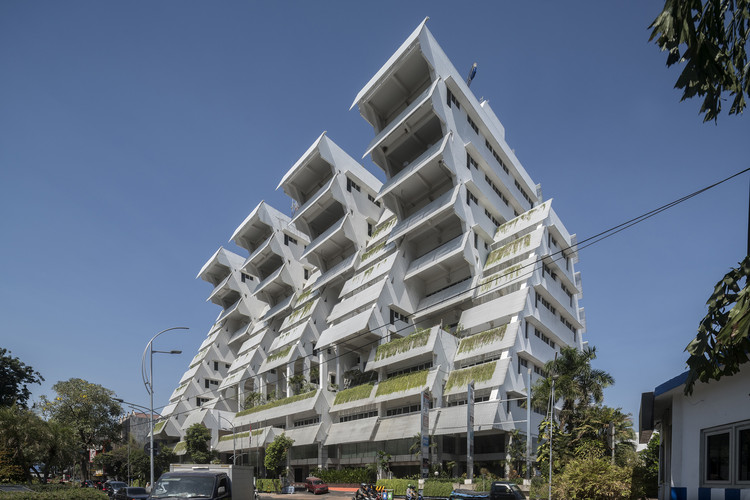
Unpacking Paul Rudolph’s Overlooked Architectural Feats in Southeast Asia - Image 46 of 4
Intiland Tower. Image © Darren Soh

To speak of Paul Rudolph’s illustrious career is to trace a grand arc stretching from the 1940s to the 1990s. More often than not, the popular narrative begins with his student days at Harvard under the tutelage of Walter Gropius, touches upon his earliest, much-loved Florida beach houses, circles around his eventual break from the rigidity of both the Sarasota School and the International Style, and finally races towards the apex: his chairmanship of the Yale School of Architecture, and the concurrent shift to a Brutalist architectural style characterized by monumental forms, rugged concrete, and interwoven, multilevelled spaces awash with a remarkable interplay of light. Then comes the fall from grace: the beloved Yale Art and Architecture Building went up in flames just as the architecture profession began to question modernist ideals, and eventually Postmodernism was ushered in. Flickering, sputtering, Rudolph's grand narrative arc lurched towards Southeast Asia, bearing away the “martyred saint.” Save for several scattered commissions in the United States, Rudolph spent the last two decades of his life building abroad, mostly across Hong Kong, Indonesia, and Singapore, until his death in 1997.

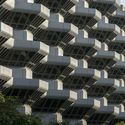
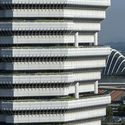
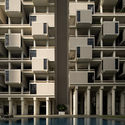
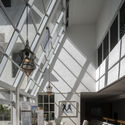
But of course, time and again, historians have sought to challenge the myth of the failed architect by rereading his understudied work from the late years. Adding to this growing corpus of fresh research and alternate perspectives is architectural photographer Darren Soh’s ongoing project documenting—so far—three of Rudolph’s major works in Southeast Asia: The Colonnade (1986) and The Concourse (1994) in Singapore, and the Intiland Tower (1997) in Surabaya, Indonesia.

Unpacking Paul Rudolph’s Overlooked Architectural Feats in Southeast Asia - Image 16 of 4Unpacking Paul Rudolph’s Overlooked Architectural Feats in Southeast Asia - Image 18 of 4Unpacking Paul Rudolph’s Overlooked Architectural Feats in Southeast Asia - Image 28 of 4Unpacking Paul Rudolph’s Overlooked Architectural Feats in Southeast Asia - Image 56 of 4Unpacking Paul Rudolph’s Overlooked Architectural Feats in Southeast Asia - More Images+ 55