Architecture is well-known as one of the more expensive professions to study given the high costs for supplies. The fast-paced rhythm of traditional studio courses requires students to present their design ideas using drawings, diagrams, renderings, and collages—usually plotted onto paper—adding to the already high cost of creating physical models. The price tag for studying and practicing architecture is a cost that the entire profession has assumed, for better or worse.
If you aren't one of the lucky few residing in a country or state in which education is free, or in which there are significant financial aid support systems, the constant extra cost of building models and printing presentation materials has a big impact. In the best case (and only in cases in which the family is in the fortunate position to do so) parents supplement the extra money need; but in many cases, students must work while studying. What else can you do when you're expected to produce a final project or thesis that can total hundreds or even thousands of dollars to produce?
Founded in 1996 by Buenos Aires-born Martin Rein-Cano, TOPOTEK 1 has quickly developed a reputation as a multidisciplinary landscape architecture firm, focussing on the re-contextualization of objects and spaces and the interdisciplinary approaches to design, framed within contemporary cultural and societal discourse.
The award-winning Berlin-based firm has completed a range of public spaces, from sports complexes and gardens to public squares and international installations. Significant projects include the green rooftop Railway Cover in Munich, Zurich’s hybrid Heerenschürli Sports Complex and the German Embassy in Warsaw. The firm has also recently completed the Schöningen Spears Research and Recreation Centre near Hannover, working with contrasting typologies of the open meadow and the dense forest on a historic site.
https://www.archdaily.com/871052/topotek-1-s-martin-rein-cano-on-superkilens-translation-of-cultural-objectsOsman Bari
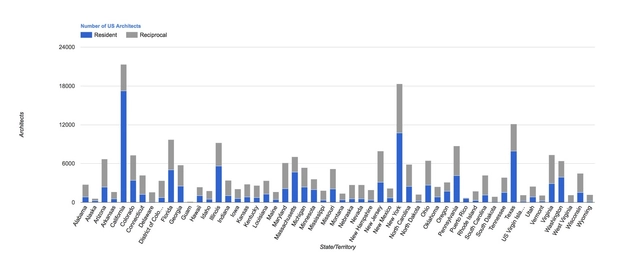
As architects around the country gather for the 2017 AIA Convention in Orlando, the National Council of Architectural Registration Boards (NCARB) has decided to share some initial results from their 2016 nationwide Survey of Architectural Registration, specifically, the number of architects licensed in each state.
The data tracks both the number of resident licenses and reciprocal licenses (licenses for a particular state held by a resident of another state). The 2016 survey found that the number of architects working in the US has held steady, and that architects are working across state lines more than ever before. While the total number architects dropped slightly from the previous year (0.4 percent) to 109,748, the number out-of-state licenses grew a full 3 percent to 126,554.
A feature Instagram users have spent years longing for is finally here: Zoom. Just released today, the update to the iOS app finally will allow you to pinch to zoom in on photos and videos, just like you can in most photo viewing apps (no more screenshotting necessary!). This means you can now get a closer look at the architectural details of your favorite buildings on Instagram, from doorways to moldings to joints. Though be warned, just because you can make it bigger doesn’t mean it will necessarily be clearer - Instagram still will only support images 1080 pixels wide.
On this day twenty-five years ago Tim Berners-Lee launched the “World Wide Web” protocol at CERN in Switzerland, ushering in the age of the Internet. Over the last two decades this global information network has rapidly evolved, increasingly influencing how architecture is conceived, produced, discussed and ultimately implemented in real space.
https://www.archdaily.com/793914/internet-25-years-old-why-we-are-celebrating-today-why-all-architects-should-tooAD Editorial Team
This edition of Section D, Monocle 24's weekly review of design, architecture and craft turns its editorial gaze back to their "own turf" to consider ways in which publications cover design and architecture, both in print and online. The episode asks whether "traditional magazines are as influential as they used to be," and whether or not "clicks and online-only articles can actually pay the bills?" In search of answers, Monocle's Henry-Rees Sheridan talks to ArchDaily's co-founder and Editor-in-Chief, David Basulto, along with European Editor-at-Large James Taylor-Foster, about the origins of the platform – and more.
https://www.archdaily.com/786281/monocle-24-asks-how-do-you-cover-architecture-and-design-archdaily-david-basulto-james-taylor-fosterAD Editorial Team
Eleven women are being considered for the Moira Gemmill Prize for Emerging Architecture prize for their "use of innovative architecture to effect positive social change." Read on to see them all.
Kulapat Yantrasast is one of the founding partners and current Creative Director of wHY (Workshop Hakomori Yantrasast): a multi-disciplinary firm that works with designed objects, architecture and ideas. Yantrasast values humanist design, focusing on the way architecture directly relates to its human inhabitants. The firm has a diverse portfolio, with much of their work focusing on the relationship of public spaces to the city. They have been shortlisted to revitalize Los Angeles’ oldest park, selected to design the performance spaces for Chicago’sre-designed Jackson Park, and designed and built the “Art Bridge” – a cultural piece of infrastructure – over the Los Angeles river.
Visitors to the Chicago Architecture Biennial were greeted with the appearance of a small, 30 square meter home built of thatch and steel – the S House 3. The latest prototype in experiments with affordable, sustainable housing by Vo Trong Nghia, the exhibit allowed visitors to experience the home firsthand. Designed to be built for as little as $1,000 and last over 30 years, the exhibit challenged notions of sustainability and cost, proposing an optimistic look at the future of affordable housing.
Last week marked the opening of Santiago Calatrava's Museum of Tomorrow in Rio de Janeiro. Prior to the its opening, ArchDaily sat down with Calatrava to learn more about the museum's design and how the project's fruition resulted in the removal of an elevated highway that once isolated the city from the harbor.
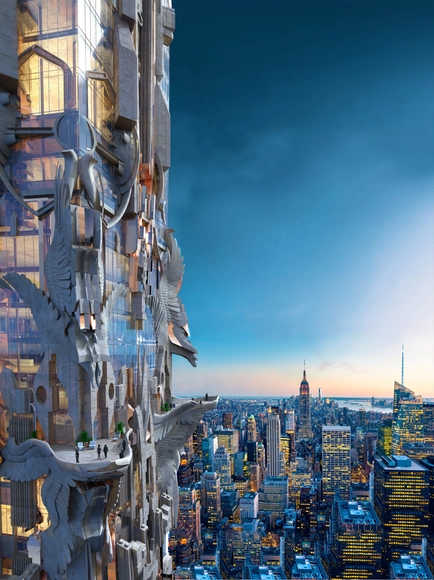
This isn't your typical New York skyscraper; Mark Foster Gage has been commissioned to design a 1492-foot-tall luxury tower in Manhattan - 41 West 57th Street. Described by Skyscraper City as the "missing link between Beaux Arts, Art Deco, Expressionism, Gaudi-Modernisme and Contemporary architecture," the outlandish design boasts a uniquely carved facade cloaked in balconies custom tailored for each of its 91 residential units.
"I think that many of the supertall buildings being built in New York City are virtually free of architectural design - they are just tall boxes covered in a selected glass curtain wall products. That is not design," said Gage.
Martha Thorne has been appointed as dean of the IE School of Architecture and Design in Madrid. Thorne, who is currently IE's vice dean, has had a major impact on the profession by serving as the executive director of the Pritzker Prize for nearly a decade. As BDOnline reports, Thorne will retain her Pritzker role as she furthers "the school's aim to bring the best of innovation and management to architectural disciplines.”
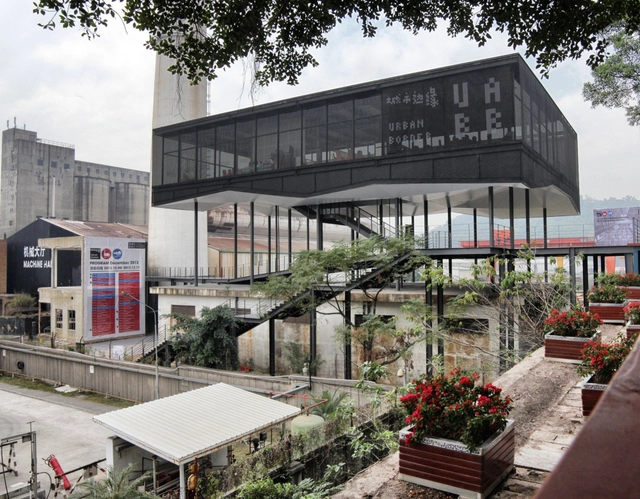
The 2015 Bi-City Biennale of Urbanism Architecture (UABB) has launched an open call for exhibitors. Co-organized by Shenzhen and Hong Kong, UABB is the only biennial exhibition in the world that is based exclusively on the themes of urbanism and urbanization. This year's edition, which will run from December 2015 to February 2016, will be based around the themes "Re-Living the City" and "Visions 2050 - Lifestyle & The City." All those who are interested in participating as an exhibitor should submit their proposals to the organizers of the Shenzhen curatorial team (here) and Hong Kong curatorial team (here) before June 30, 2015. See our past coverage on the 2013 UABB to learn more about the event.
ArchDaily is in need of a select group of awesome, architecture-obsessed interns to join our team for Summer 2015 (June - August)! If you want to spend your days researching/writing about the best architecture around the globe – and find out what it takes to work for the world’s most visited architecture website – then read on after the break…
https://www.archdaily.com/624657/call-for-archdaily-interns-summer-2015AD Editorial Team
With floor areas clocking in at as little as 260 square feet, My Micro NY housing units by nARCHITECTS are the latest singles-oriented housing option to enter the New York rental market. The modular units will be fabricated at the Brooklyn Navy Yard for stacking in Kips Bay this spring, and are projected to welcome their first inhabitants by the end of 2015.
Current New York city zoning and density rules set a minimum apartment floor area of 400 square feet, yet this regulation was waived for My Micro NY in the interests of creating more affordable housing. An inflated rental market has long posed issues for those seeking housing in the city, particularly singles and students with tight budgets. My Micro NY will create 9 stories and 55 individual apartments, whose features include 9 and 10 foot ceiling heights, Juliette balconies, and concealed storage space.
Spread the love and send these Valentines to your favorite architects, because nothing says “I love you” more than cheesy puns. View them all, after the break.





.gif?1472762798)