

This guide explains how to structure multi-image prompts in the RunDifussion platform. Explore RunDifussion's product catalog.
News
How to Prompt and Annotate Multiple Images with AI
| Sponsored Content
https://www.archdaily.comhttps://www.archdaily.com/catalog/us/products/38860/how-to-prompt-and-annotate-multiple-images-with-ai-rundiffusion
From Munich to Mumbai: 7 Unbuilt Office Towers Redefining the Future of Vertical Workspaces
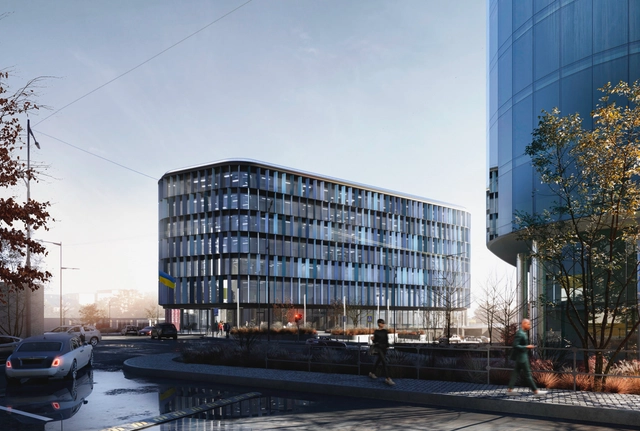
As cities continue to expand upward, the office tower remains one of the most visible symbols of architectural ambition and urban evolution. No longer defined solely by efficiency or corporate image, contemporary workplace architecture is being reimagined as a hybrid ecosystem, one that balances density with daylight, productivity with well-being, and technology with material and spatial integrity. The following unbuilt projects, submitted by the ArchDaily community, reveal how architects across continents are rethinking the typology of the tower, turning verticality into an opportunity for connection, adaptability, and sustainability.
From India's Shivalik Curv and Embassy Zenith, where form and movement are combined to redefine skyline identity, to Dungen in Sweden, a low-rise timber office that mirrors the calm of a forest grove, each project explores how workplaces can become more flexible, humane, and environmentally conscious. In Kyiv, APEX Business Center positions itself as a catalyst for urban vitality, while Jakarta's BNI Tower PIK 2 transforms the corporate tower into a crystalline symbol of growth. In Munich and Ankara, mixed-use concepts like Highrise Hufelandmark and Rhythm Ankara explore the office as part of a broader civic landscape, where work, leisure, and public life intersect.


https://www.archdaily.com/1035370/from-munich-to-mumbai-7-unbuilt-office-towers-redefining-the-future-of-vertical-workspacesNour Fakharany
How Will BIM 2.0, AI Assistance, and Integrated Workflows Shape the Architect’s Design Experience?
| Sponsored Content

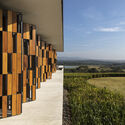
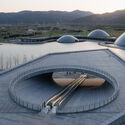
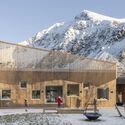
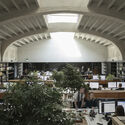
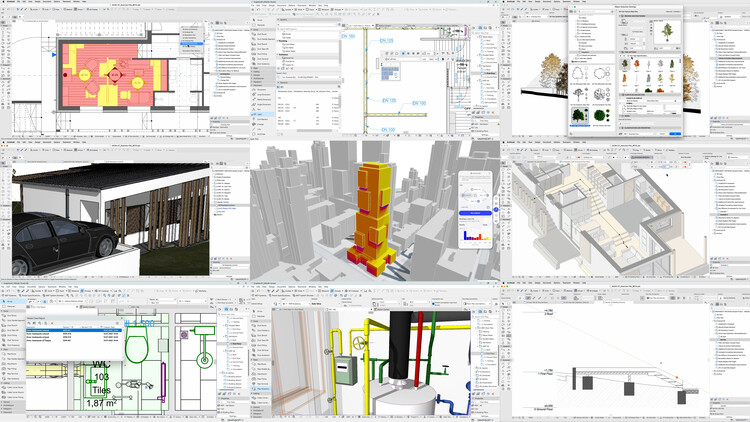
When architects are still students, a moment often marks a turning point: their first encounter with software. It's not just about learning a tool but discovering a space where ideas transcend physical models, taking shape in a digital environment and beginning a relationship many will carry throughout their careers. What happens next? Software keeps evolving, and with it, the design experience. In recent years, this evolution has accelerated—machine learning, AI, prompts, and integrated workflows have moved from the periphery to the core of design practice, becoming part of the shared language between software and users. As these tools take hold, a key question emerges: How will this reshape our experience of designing architecture in the future?
https://www.archdaily.com/1035178/how-will-bim-ai-assistance-and-integrated-workflows-shape-the-architects-design-experienceEnrique Tovar
Staging Culture: The Architect as Curator

Architecture has never been confined to the act of building. It constantly negotiates between material practice and intellectual reflection, yet throughout the twentieth and twenty-first centuries, many architects felt that the built project alone was insufficient to address the full range of questions facing the discipline. Economic pressures, political contexts, and programmatic demands often narrowed the scope of practice.
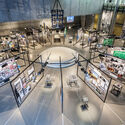
Exhibitions and curatorial platforms, by contrast, created spaces of experimentation and critique, opening arenas where architecture could interrogate itself, where its past could be reinterpreted, its present challenged, and its future projected. In this tension, the figure of the architect-curator emerged, treating curating itself as a form of design — not of walls or facades, but of discourse, narratives, and frameworks of meaning.



https://www.archdaily.com/1035190/staging-culture-the-architect-as-curatorDiogo Borges Ferreira
Creating Cities for Tomorrow: The Future of Sustainable Construction
| Sponsored Content

Rapid urbanization, driven by population growth, is among the powerful megatrends transforming how cities are built. The world is adding a city the size of Madrid every single week — and will do so for decades to come. To meet this demand sustainably, a collaborative, systems-thinking approach to construction is needed.
https://www.archdaily.com/1034927/creating-cities-for-tomorrow-the-future-of-sustainable-constructionMiljan Gutovic
RIBA Stirling Prize Winner and Faith Park in Albania: This Week’s Review

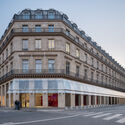
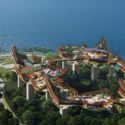
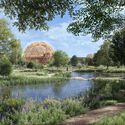
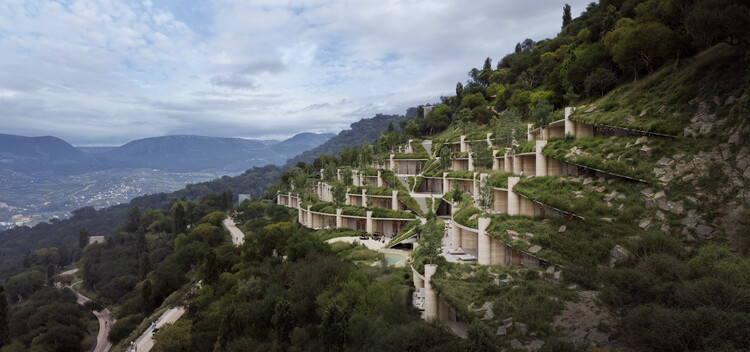
This week's architectural developments highlighted how design operates as a form of social and cultural infrastructure, linking care, community, and context across scales. From London's reinterpretation of the almshouse model to the transformation of urban gateways in Phnom Penh and Tirana, architecture reflected a shared interest in spaces that foster connection and adaptability. Parallel to these urban and infrastructural works, new cultural projects in Paris and Hanoi explored how museums and performance spaces can renew public institutions through material experimentation and spatial flexibility.
https://www.archdaily.com/1035345/riba-stirling-prize-winner-and-faith-park-in-albania-this-weeks-reviewReyyan Dogan
Zaha Hadid Architects’ Danjiang Bridge Nears Completion Ahead of 2026 Opening in Taipei, Taiwan
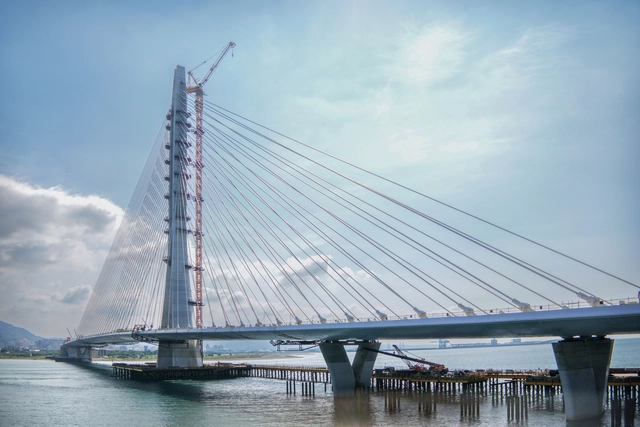
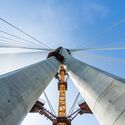
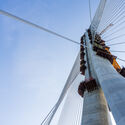
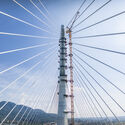
Zaha Hadid Architects was announced as the winner of the Danjiang Bridge International Competition in 2015. At the time, the design proposal sought to minimize the bridge's visual impact by employing a single concrete structural mast to support a 920-meter-long cable-stayed span. Construction began in 2019 on what would become the world's longest single-mast, asymmetric cable-stayed bridge. In October 2025, the final segment of the bridge's steel decking was installed, connecting the east and west banks of the Tamsui River estuary in Taiwan for the first time and confirming its opening date for May 12, 2026.

https://www.archdaily.com/1035330/zaha-hadid-architects-danjiang-bridge-nears-completion-ahead-of-2026-opening-in-taipei-taiwanAntonia Piñeiro
Shifting Sediments: Rivers as an Architectural and Cultural Catalyst

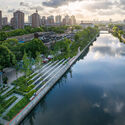
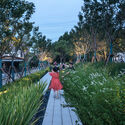
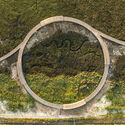
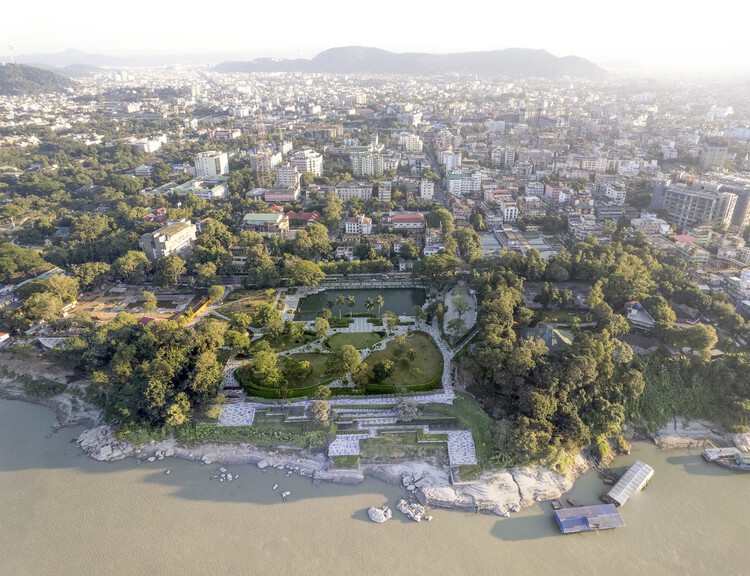
Rivers generate a distinct typology of architecture bound by design threads of material practice, environmental adaptation, cultural symbolism, and imagination. Each river system produces a unique ecosystem where water, soil, vegetation, and settlement converge to form a living network. Designing within this environment requires a capacity to read movement rather than resist it, to build on uncertain ground, and to understand permanence as a balance in motion. Unlike the fixed horizon of the sea, the river is never still. It teaches architects to think in gradients rather than boundaries, and to design as part of an evolving landscape.
https://www.archdaily.com/1035237/shifting-sediments-rivers-as-an-architectural-and-cultural-catalystOlivia Poston
Can You Curve Your Way to a Better Guest Experience?
| Sponsored Content

Architects and designers around the world are pushing the boundaries of modern design, and Corian® Solid Surface is being bent, curved, and twisted to help them realize their boldest visions.
In hospitality spaces, for example, every surface has the potential to shape a guest's experience from the first invitational moment. Visionary designers are using their talents to convey the story of a place, the emotion of an aesthetic, and the essence of a brand. With the right material, we can profoundly influence how a space feels and functions for guests, using everything from sleek, welcoming reception counters to soothing spa-like shower escapes to soaring backlit sculptural panels as our canvas.
https://www.archdaily.com/1033530/shaping-hotel-guest-experiences-elevating-design-with-solid-surfaceRene Submissions
OMA Unveils Hillside Redevelopment Project in Busan, South Korea
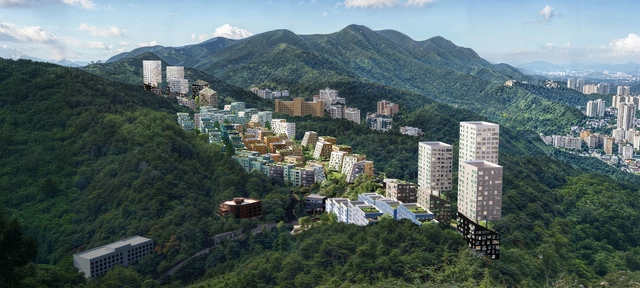
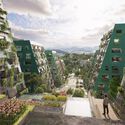
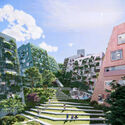
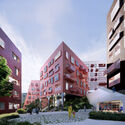
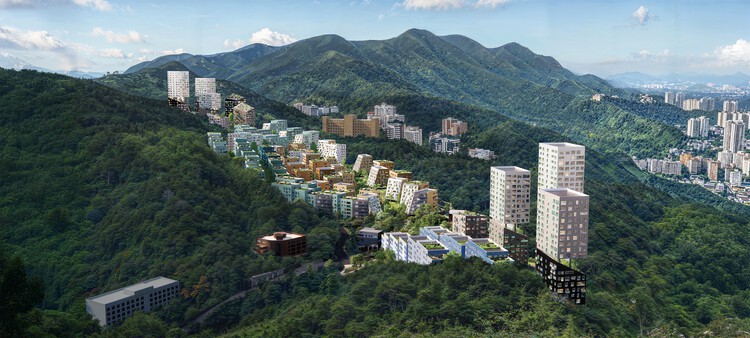
The Busan Slope Housing project by OMA addresses urban redevelopment on the steep hillsides of Busan, South Korea, drawing on the city's topographical complexity and historical settlement patterns. Developed in collaboration with the Busan Architecture Festival and the Department of Housing and Architecture, the project explores strategies to rethink hillside neighborhoods while responding to both contemporary housing needs and the social and spatial legacies of these areas. Rather than replacing these areas with conventional high-rise estates, OMA envisions a flexible, context-responsive framework that integrates contemporary housing typologies with the site's inherited structure.
https://www.archdaily.com/1035303/oma-unveils-hillside-redevelopment-project-in-busan-south-koreaReyyan Dogan
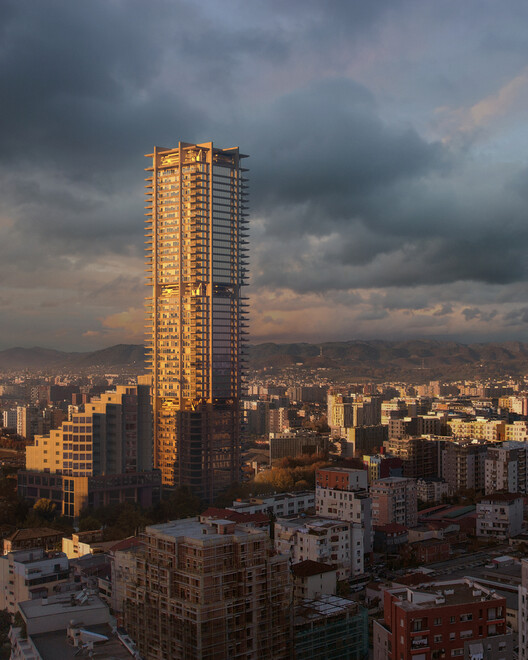
Eduardo Souto de Moura and OODA Reveal Design for a New High-Rise Tower in Tirana, Albania
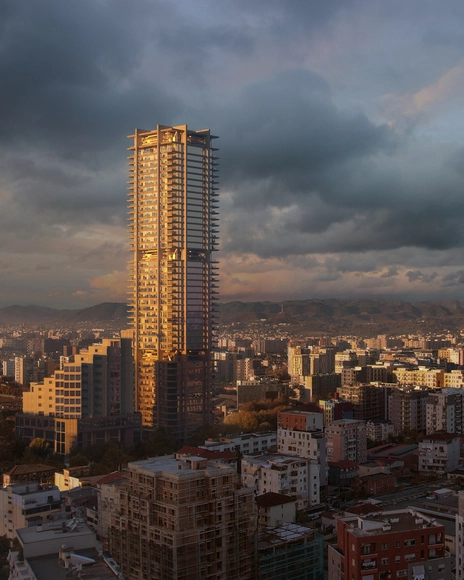
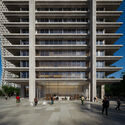
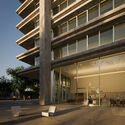
Eduardo Souto de Moura and OODA have unveiled the design of the Oricon Tower, a 180-meter mixed-use skyscraper planned for Tirana, Albania. Located near OODA's recently completed Bond Tower, the project is part of the city's ongoing transformation under the Tirana 2030 Masterplan, which envisions a denser and more connected urban core. The tower will house offices, residences, retail areas, and a hotel, contributing to the city's evolving skyline and serving as a new urban gateway between Tirana's historic center and its expanding western districts.

https://www.archdaily.com/1035281/eduardo-souto-de-moura-and-ooda-reveal-design-for-a-new-high-rise-tower-in-tirana-albaniaAntonia Piñeiro
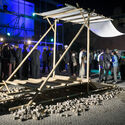
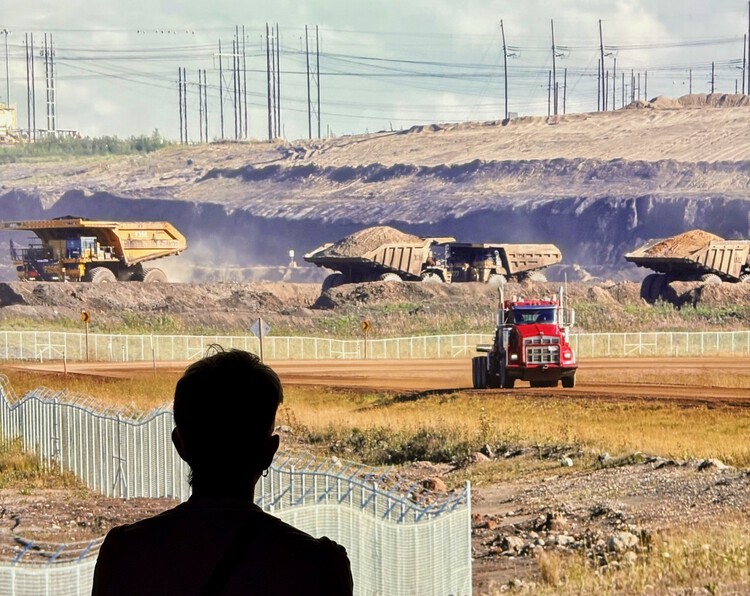
Lisbon Architecture Triennale 2025 Examines the Technosphere and Human Impact on Earth

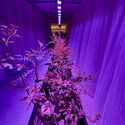
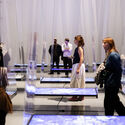
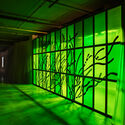
Thirty trillion tons. This is the estimated mass of all human-made matter on Earth, and the starting point for the 7th edition of the Lisbon Architecture Triennale. Curated by Ann-Sofi Rönnskog and John Palmesino, founders of Territorial Agency, the event asks a deceptively simple question: How heavy is a city? To answer it requires more than data. It demands a shift in perception: from the scale of the city to the planetary technosphere.
The technosphere, a term borrowed from Earth sciences, defines the vast system of infrastructures, technologies, and materials that sustain human life while reshaping the planet. Cities, in this view, are not only territories but dense nodes within this planetary metabolism. From October to December 2025, Lisbon becomes a lens to examine that magnitude, hosting three main exhibitions (Fluxes, Spectres, Lighter), a book of essays, a talks program, and more than twenty independent projects across the city.
https://www.archdaily.com/1035135/lisbon-architecture-triennale-2025-examines-the-technosphere-and-human-impact-on-earthRomullo Baratto
Transforming Row Houses: Heritage and Modernity in Montreal’s Historical Neighborhoods

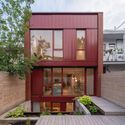
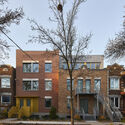
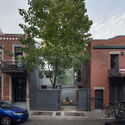
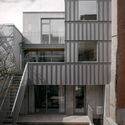
Montreal, the second largest city in Canada is home to a wide array of heritage residential architecture, most of it dating to the 19th and early 20th-century. These are particularly abundant in some of its central neighborhoods like the Plateau Mont-Royal. Interestingly, their preservation is not accidental; it is the result of decades of advocacy by influential figures who recognized the value of the city's built environment, such as Phyllis Lambert and Blanche Lemco Van Ginkel. Efforts like theirs were instrumental in landmark preservation battles that helped to ensure current municipal support. Today, the city has implemented a set of comprehensive heritage protection laws designed to safeguard the integrity of the city's historic neighborhoods.

https://www.archdaily.com/1035063/transforming-row-houses-heritage-and-modernity-in-montreals-historical-neighborhoodsMoises Carrasco
Passive Design Lessons from Renzo Piano’s Most Celebrated Works
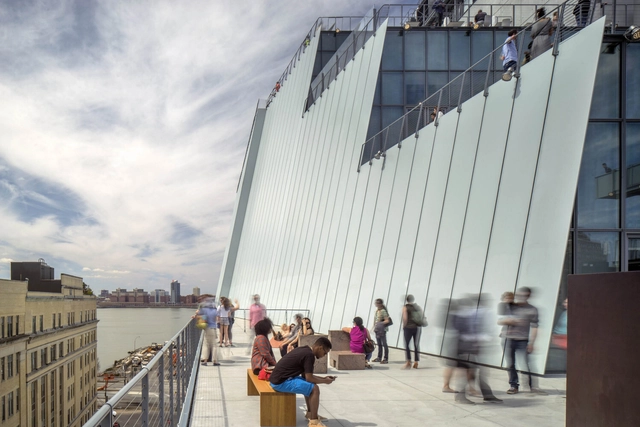
It's no exaggeration to say that Renzo Piano is one of the most unanimously respected architects in the world of architecture. With an oeuvre that blends respect for context, lightness and technology to create environmentally conscious and aesthetically pleasing structures, his approach combines advanced materials with traditional techniques. In projects of various scales, the Genoese architect maintains an essential thread: the implementation of passive architectural strategies, highlighting the importance of these methods for sustainability and energy efficiency. This is often made explicit in his sketches, as an initial concern, and clearly comes through in the finished works. Here are some examples of iconic projects developed by his office in recent decades.
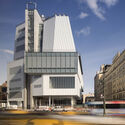
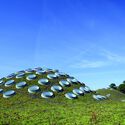
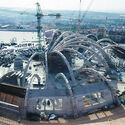

https://www.archdaily.com/1017426/exploring-the-passive-architectural-strategies-in-renzo-pianos-iconic-buildingsEduardo Souza
Buildner Announces Kinderspace 2025 Winners and Next Call for Entries
| Sponsored Content

Buildner has announced the results of its Kinderspace Edition #2 Competition and launched the third annual Kinderspace Edition #3 with an upcoming registration deadline of 26 November 2025. Following its inaugural launch, this annual international competition once again invited architects, designers, and educators to explore new possibilities for early childhood learning environments.
Participants were tasked with envisioning spaces that inspire discovery, foster imagination, and support the emotional and cognitive development of young children. The aim was to move beyond standardized classroom design and propose innovative, flexible, and nature-connected spaces that reflect a deeper understanding of how children interact with their surroundings.
https://www.archdaily.com/1035141/buildner-announces-kinderspace-2025-winners-and-next-call-for-entriesRene Submissions
Techo International Airport by Foster + Partners Opens in Phnom Penh, Cambodia
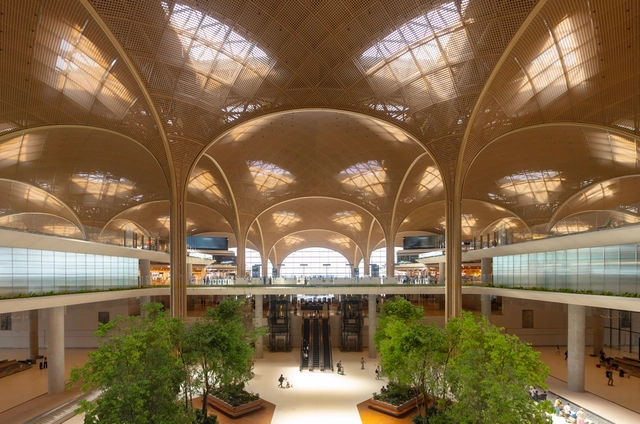
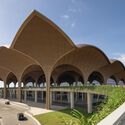
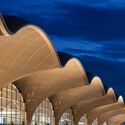
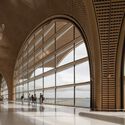
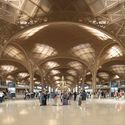
Foster + Partners has completed the Techo International Airport in Phnom Penh, Cambodia, marking a new chapter in the nation's vision for sustainable growth and improved regional connectivity. Situated 20 kilometers south of the city center, the airport's terminal building spans 235,500 square meters and forms the centerpiece of a 24-square-kilometer master plan. Drawing inspiration from Cambodia's vernacular architecture and tropical landscape, the design integrates cultural references and environmental responsiveness to create a contemporary yet contextually rooted gateway for international travel. The first phase, including the head house and northern pier, opened to the public in 2025, while the southern pier is scheduled for completion by 2030.

https://www.archdaily.com/1035263/techo-international-airport-by-foster-plus-partners-opens-in-phnom-penh-cambodiaReyyan Dogan
The Chilean Architecture Biennial Revives a Church Ruin as a Temporary Pavilion
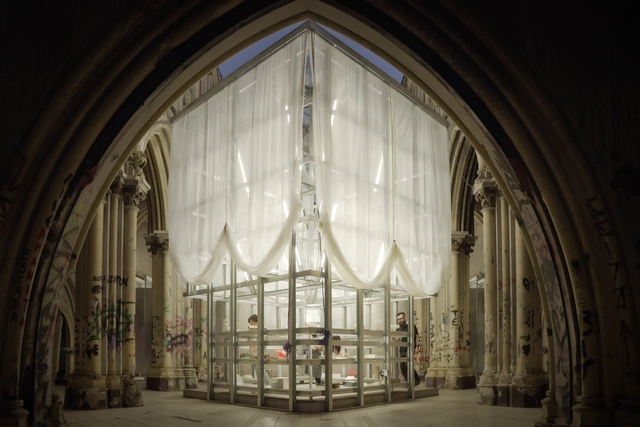
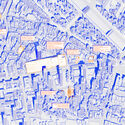
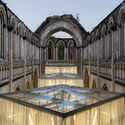
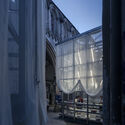
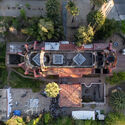
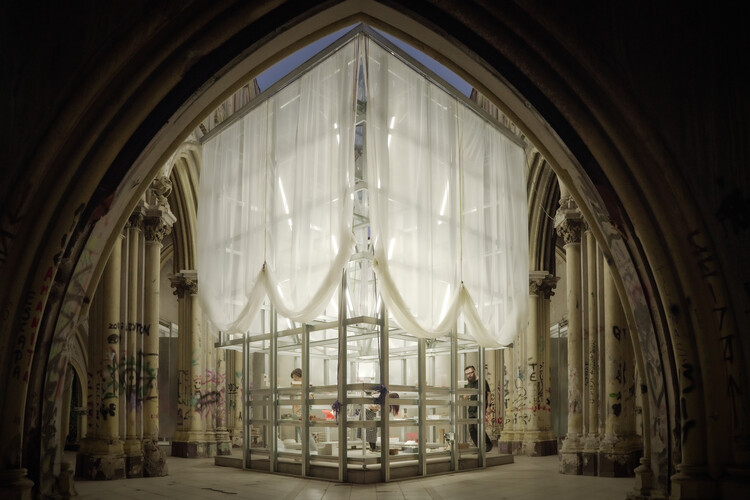
Between September 25 and October 5, 2025, the XXIII Chilean Architecture and Urbanism Biennial took place in Santiago. Under the title "DOUBLE EXPOSURE: (re)program · (re)adapt · (re)construct," the event was organized around the idea of "understanding architecture not as the production of the new, but as the ability to reactivate what already exists." Based on this premise, the curatorial team, composed of Ángela Carvajal and Sebastián López (Anagramma Arquitectes) together with Óscar Aceves, conceived a circuit of eight venues located in downtown Santiago. Their goal was to revive and reclaim urban spaces through a series of free public activities that drew around 70,000 visitors. Among the reactivated sites, the ruins of the San Francisco de Borja Church stood out. Burned during the social outburst of October 2019, the site hosted a temporary pavilion that served as a venue for talks, readings, art installations, discussions, and community events.
https://www.archdaily.com/1035201/the-chilean-architecture-biennial-revives-a-church-ruin-as-a-temporary-pavilionAntonia Piñeiro
MAD Architects Presents “Breathing Cells” at the 2025 Seoul Biennale
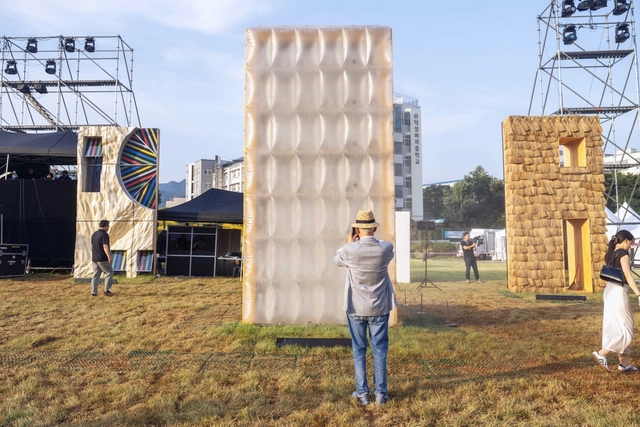
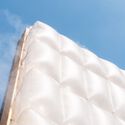
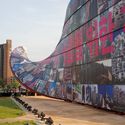
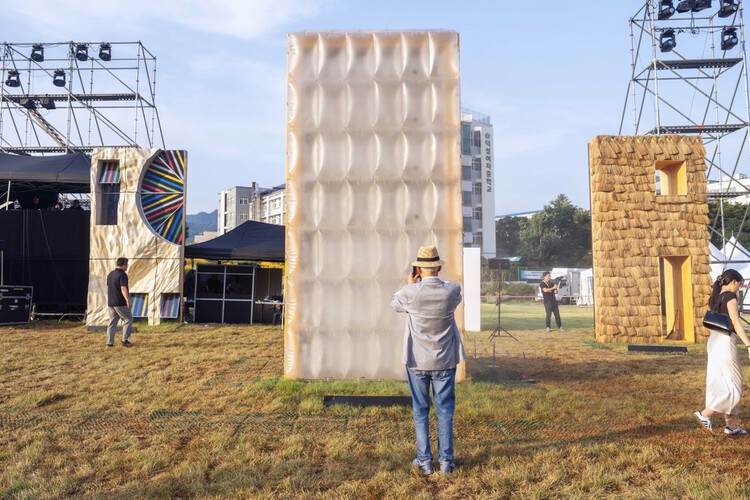
"Breathing Cells," an installation by MAD Architects, is currently on view at Songhyeon Green Plaza in Seoul as part of the 5th Seoul Biennale of Architecture and Urbanism. Invited by Biennale Director Thomas Heatherwick, the installation opened on September 26, 2025, and will remain on display until November 18. Responding to the curatorial theme "Radically More Human," the work presents an alternative vision for future urban environments, one where architecture behaves more like a living organism than a static object.
https://www.archdaily.com/1035211/mad-architects-presents-breathing-cells-at-the-2025-seoul-biennaleReyyan Dogan
Every Second Counts, Every Space Matters: 15 Contemporary Fire Stations

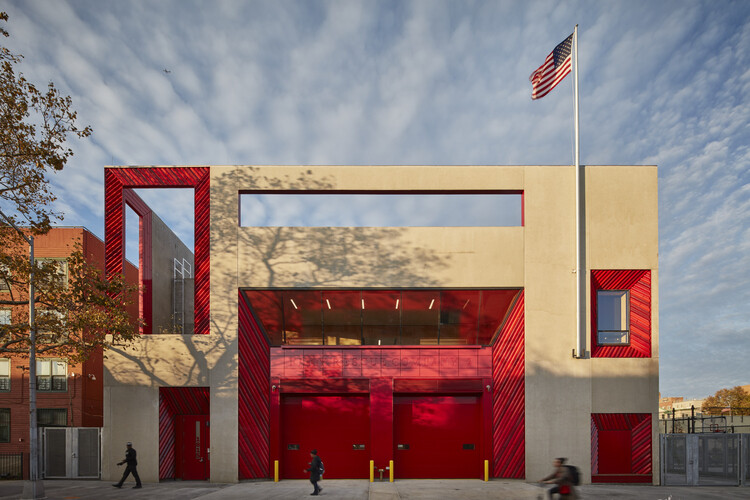
What should be taken into account when designing a fire station? The answer may seem obvious: functionality and efficiency. After all, every second counts in an emergency. But can a building designed for urgent operations also be aesthetically compelling, welcoming, and connected to its community? In recent decades, architects such as Zaha Hadid and Álvaro Siza have demonstrated that it can. By rethinking this building type, they have created spaces that go beyond emergency response—spaces that strengthen social ties, support the well-being of firefighters, and become urban landmarks.


https://www.archdaily.com/1035072/every-second-counts-every-space-matters-15-contemporary-fire-stationsCamilla Ghisleni
Will Cold Plasma Hand Dryers Become the New Gold Standard in Bathroom Hygiene?
| Sponsored Content
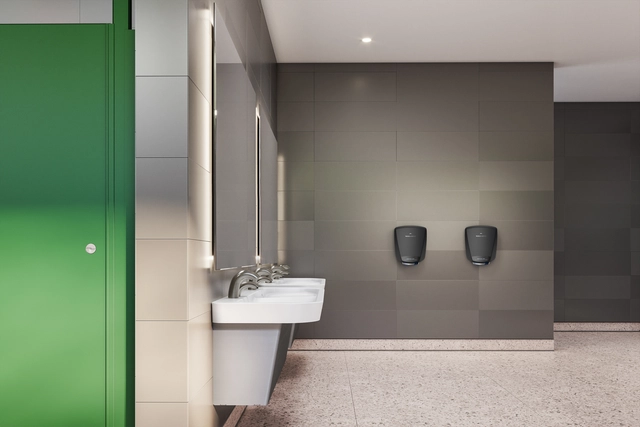
In the pursuit of cleaner, safer public restrooms, hand dryers have long faced a unique challenge: how to effectively kill germs in fast-moving air. Traditional germicidal technologies—like UV lights and ionizers— struggle to deliver meaningful impact because they only have milliseconds to interact with airborne microbes. Cold plasma technology is emerging as a new contender that could redefine hygiene standards.
https://www.archdaily.com/1034565/will-cold-plasma-hand-dryers-become-the-new-gold-standard-in-bathroom-hygieneRene Submissions
The Corporate City: Three Models of Company Town Design

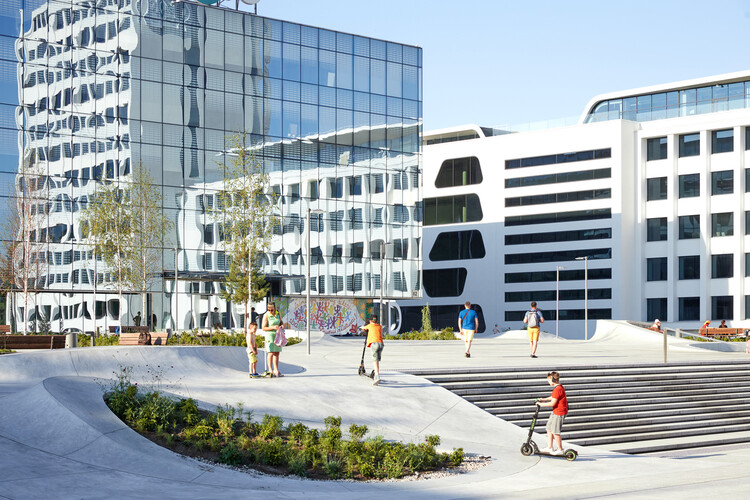
For over a century and a half, corporations have periodically taken on the role of city builders. Neighborhoods or even entire settlements that exist at the intersection of commerce and civic life, "company towns" are recurring urban types. The corporate city has long reshaped itself to match the spirit of each era, whether through the pastoral idealism of industrial England or the cinematic optimism of mid-century America. In its latest guise, the mixed-income campus district, architecture becomes a language of belonging, branding, and quiet persuasion.


https://www.archdaily.com/1035198/the-corporate-city-three-models-of-company-town-designAnkitha Gattupalli
Immersive Spaces: When Architecture Turns Into Experience
| Sponsored Content

In the Water Lilies rooms at the Musée de l'Orangerie in Paris, Claude Monet conceived a 360-degree gallery where visitors are enveloped by continuous landscapes, dissolving the boundaries between painting and environment. There, he sought not merely to represent nature through his distinctive style, but to construct an atmosphere, a perceptual state that the visitor literally inhabits. Architecture, traditionally associated with materiality and permanence, thus gains a new dimension of time, movement, and sensory experience.
Similarly, when contemporary architecture transforms its planes into active surfaces, it extends this pursuit of immersion and presence, now amplified by technology. At the entrance of SOPREMA's new Mammut Tower in Oberroßbach, Germany, architecture and digital narrative converge. Designed and executed by ASB GlassFloor, the newly completed lobby is an immersive environment combining glass, light, and sound into a complete spatial and sensorial experience, demonstrating how interactive technologies can become architectural materials in their own right.
https://www.archdaily.com/1034856/immersive-spaces-when-architecture-turns-into-experienceEduardo Souza
Belgium’s Architecture Offices Through the Lens of Marc Goodwin

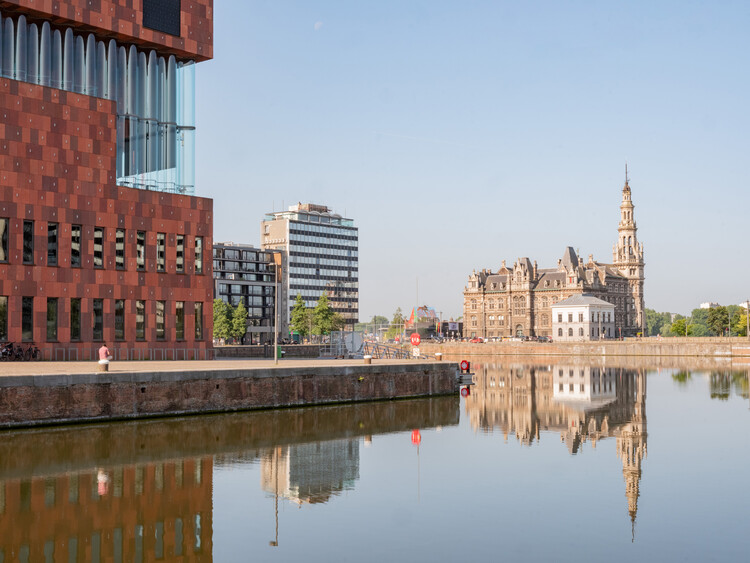
Photographer Marc Goodwin has extended his Atlas of Architectural Atmospheres to Belgium, capturing the workspaces of architecture studios in Antwerp, Brussels, and Ghent. The series includes large offices such as B-architecten, POLO, and Binst Architects, alongside smaller-scale practices like Studio Okami, Stand Van Zaken, and Bruno Spaas Architectuur. Many of them occupy buildings with layered pasts from former workshops, to cinemas, and from storage facilities, to waterfront structures.
In addition to photographing the studios, Goodwin asked each practice the same question: "What makes for a good office space and office culture for you?" Their responses accompany the images, offering insight into how architects define the atmosphere of their workplaces. Studio Okami describes its workplace as a "home office away from home," while Brut highlights the role of shared meals and greenery in softening their penthouse space.
https://www.archdaily.com/1034289/belgiums-architecture-offices-through-the-lens-of-marc-goodwinReyyan Dogan
Fondation Cartier Reopens in Jean-Nouvel-Designed Paris Building With Exhibition by Formafantasma
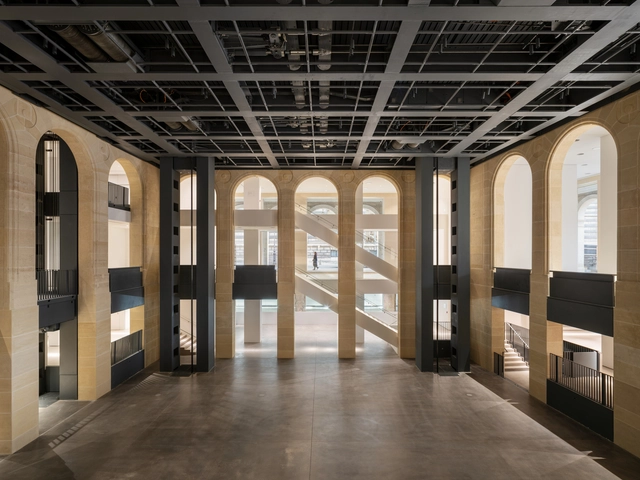
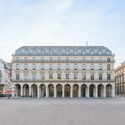
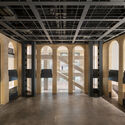
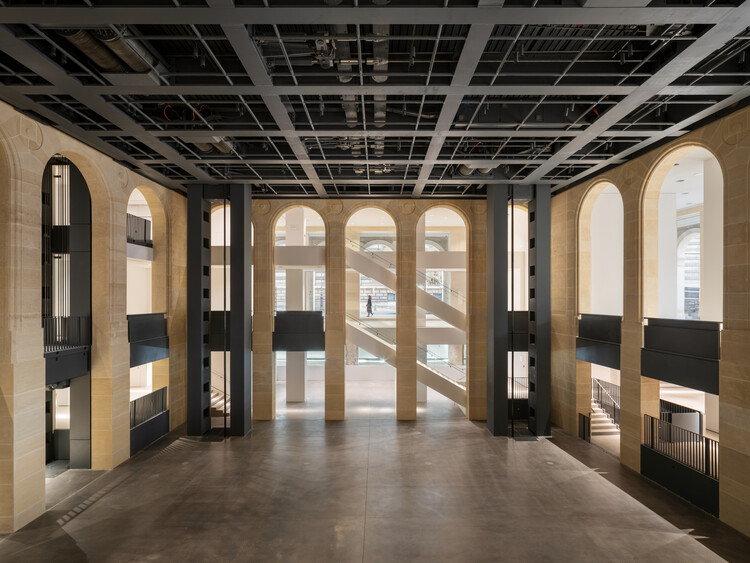
On October 25, 2025, the Fondation Cartier Pour l'Art Contemporain will open its new premises to the public with an inaugural exhibition drawn from its own Collection, entitled Exposition Générale. Located in the heart of Paris, the new space occupies a Haussmannian building that once housed the Grands Magasins du Louvre, recently reimagined by Jean Nouvel. Conceived as a dynamic architecture with five mobile platforms, the building was designed to expand the possibilities of a traditional exhibition venue. These mechanisms aim to accommodate all forms of visual expression, including photography, cinema, the performing arts, science, and craft, within a space that resonates with the urban life of Paris and engages with questions of urban planning and ecology. Within these parameters, the inaugural exhibition brings together more than 600 works by over 100 artists in a contemporary scenography designed by Formafantasma.
https://www.archdaily.com/1035188/fondation-cartier-reopens-in-jean-nouvel-designed-paris-building-with-exhibition-by-formafantasmaAntonia Piñeiro
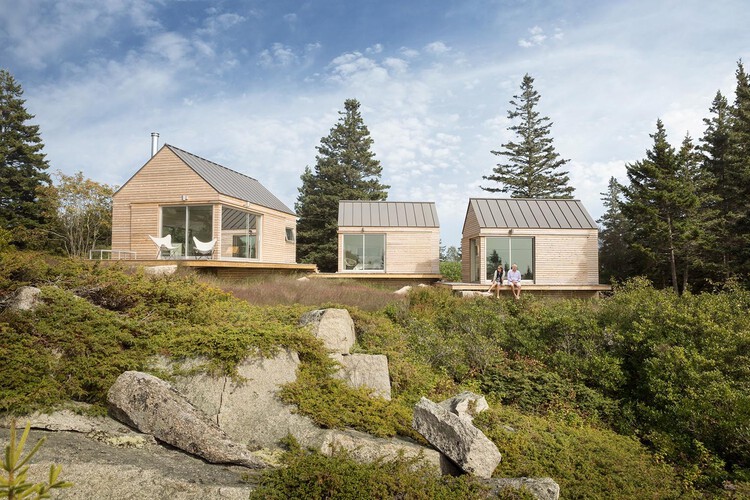
Guesthouses and Lessons in Generosity: Spaces of Hospitality in Rural America
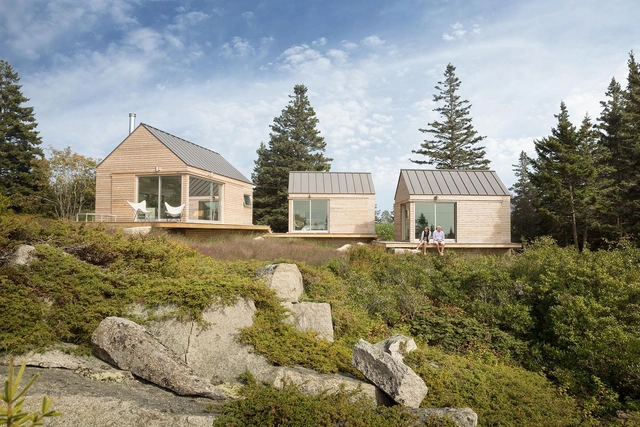
Spaces of hospitality are a mirror to how different cultures articulate generosity, care, belonging, and identity. In busy city settings, this is reflected in hotels, service systems, and curated amenities that directly shape the visitor experience. These spaces translate care into measurable forms, where success is correlated with efficiency, luxury, and brand identity.
In rural America, hospitality operates with a different logic. In these environments, care is grounded in labor and community, while directly responding to the specific ecological and cultural geographies. Distance, limited infrastructure, and close social networks demand forms of architecture that are flexible and self-sufficient. Designs respond to shifting weather, local materials, and a culture where support often begins with neighbors. In this landscape, architectural thresholds of hospitality emerge in responsive, yet unexpected, ways.

https://www.archdaily.com/1034846/guesthouses-and-lessons-in-generosity-spaces-of-hospitality-in-rural-americaOlivia Poston