Budapest Architecture City Guide: 15 Projects Tracing a Capital Built on Layers

Subscriber Access

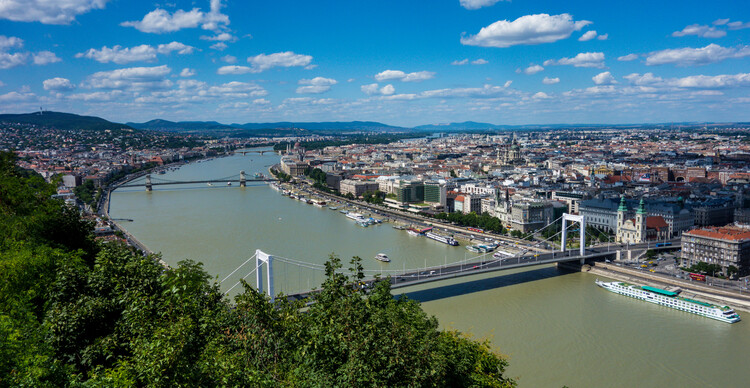
When Buda and Pest joined in 1873, the two parts formed a capital whose identity has since been tied to this balance between geography and urban order. From the riverbanks and thermal baths to imperial monuments and infrastructural works, Budapest's architecture carries the traces of these overlapping histories.

That layered condition continues to shape Hungary's capital today. Alongside its historic fabric, Budapest has seen a steady accumulation of contemporary projects, from cultural institutions in City Park to new educational buildings, sports facilities, adaptive reuse works, and large-scale developments along the Danube. Often working through inherited structures rather than apart from them, these projects add new layers to a city shaped as much by continuity as by change.


Budapest Architecture City Guide: 15 Projects Tracing a Capital Built on Layers - Image 2 of 21Budapest Architecture City Guide: 15 Projects Tracing a Capital Built on Layers - Image 3 of 21Budapest Architecture City Guide: 15 Projects Tracing a Capital Built on Layers - Image 4 of 21Budapest Architecture City Guide: 15 Projects Tracing a Capital Built on Layers - Image 5 of 21Budapest Architecture City Guide: 15 Projects Tracing a Capital Built on Layers - More Images+ 16

Content Loader

Image gallery

See allShow less
About this author
Cite: Diogo Borges Ferreira. "Budapest Architecture City Guide: 15 Projects Tracing a Capital Built on Layers" 08 Jul 2026. ArchDaily. Accessed . <https://www.archdaily.com/1042327/budapest-architecture-city-guide-15-projects-tracing-a-capital-built-on-layers> ISSN 0719-8884

You've started following your first account!

Did you know?

You'll now receive updates based on what you follow! Personalize your stream and start following your favorite authors, offices and users.