Courtesy of the artist and Leslie Feely Fine Art, LLC.
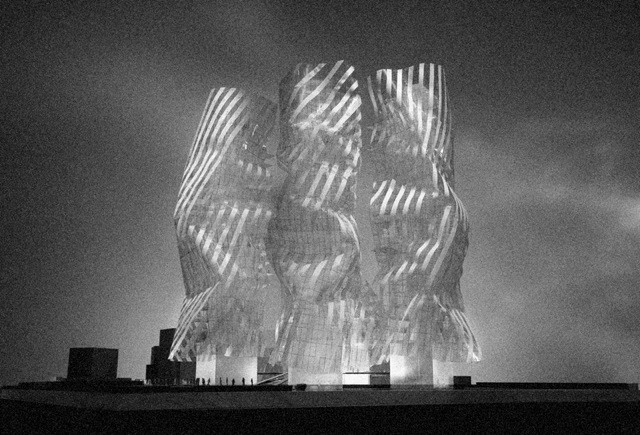
On display at Leslie Feely Fine Art in New York from April 11 to June 30, 2013, the Frank Gehry At Work exhibition features a selection of over 30 diverse process models by Gehry, which are drawn from significant constructions and concepts of the architect’s prolific career. These organic forms, which consist of a wide array of materials, stand as testament to Gehry’s tactile approach, enhancing our perception of this sculptural architect and his work, illuminating the subtleties of Gehry’s thought—and working—process. More images and information on the exhibition after the break.
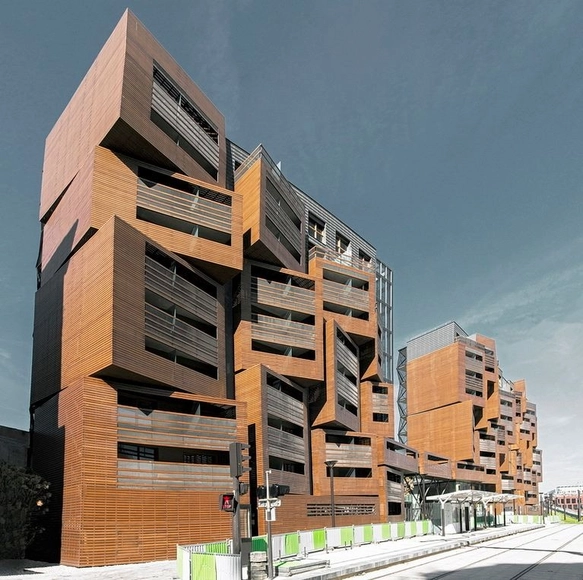
Coming up this Friday, March 8th, at the Center for Architecture in New York, the 'Beyond New York: Organic vs Geometrical Context' lecture is part of the Architecture Dialogue Committee’s on-going series to introduce the next generation of architects not practicing in New York City. For this event, they have invited Spela Videcnik from OFIS arhitekti of Ljubljana, Slovenia to share insights about architectural and urban design from 6:00pm-8:00pm. Videcnik will present OFIS’s design approach through their most recently built projects, such as the Basket Apartments (Paris) and The Cultural Centre for Space Technologies (Slovenia), and how these different geometries inform their current work. For more information, please visit here.
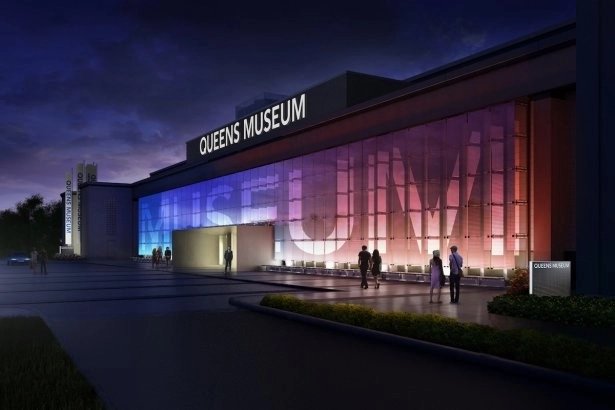
Originally constructed for the 1939 World’s Fair, the resilient structure of New York’s Queens Museum of Art has been undergoing its fourth and most ambitious renovation since April 2011. This $68 million renovation, designed by Grimshaw Architects, will double the institution’s size, expanding the museum to a total of 105,000 square feet upon its completion in October 2013.
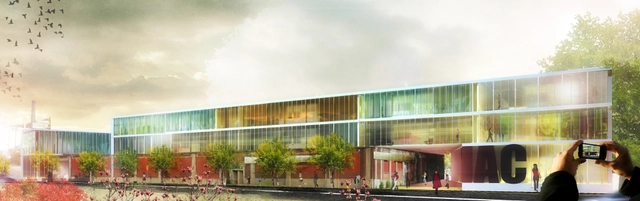
The proposal for the Industrial Arts Center by Stefano Corbo Studio pursues a double challenge: from one hand, to re-activate and reconvert the existing building through new functions and a contemporary language; from the other hand, to focus attention on the public character of the intervention, in order to allow citizens to gather and share the activities of the Art Center during the day, according to the prescriptions of the Brewery District. More images and architects’ description after the break.
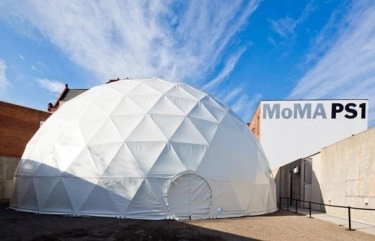
Architects, artists, and designers are invited to participate in the competition to Rethink the Post-Sandy Rockaway. MoMA PS1’s Young Architects program is seeking ideas for alternative housing models, creation of social spaces, urban interventions, new uses of public space, the rebuilding of the boardwalk, protection of the shoreline, and actions to engage local communities and to aid in the effort to rebuild from Hurricane Sandy. Judges will be selecting 25 proposals to be displayed on Rockaway Beach in April. The deadline for submissions is March 15. For more information, please visit here.
Courtesy of College of Architecture and Design (CoAD) at NJIT
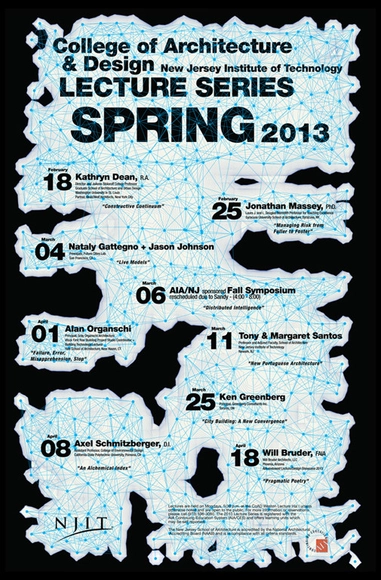
The Spring 2013 Lecture Series at the College of Architecture and Design (CoAD) at NJIT (New Jersey Institute of Technology) began this month with Kathryn Dean’s talk and will conclude on April 18th. This semester, the series, which is free and open to the public, will feature Jonathan Massey, Nataly Gattegno + Jason Johnson, Tony & Margaret Santos, Ken Greenberg, Alan Organschi, and Axel Schmitzberger as keynote speakers. The concluding event is an AIA-endowed lecture by Will Bruder, which is also a part of the annual Design Showcase event. As part of the series, on March 6, CoAD will host a Spring Symposium on “Distributed Intelligence” sponsored by AIANJ. Lectures are Mondays at 5:30pm in Weston Lecture Hall unless otherwise noted. For more information, please visit here.
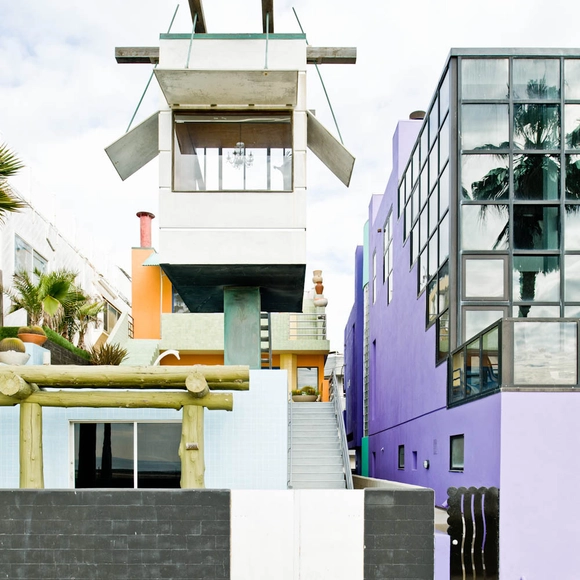
Designed in 1984 for artist Lynn Norton and writer William Norton, Frank Gehry’s Norton House is known for its eccentric form and eclectic materiality. Much like his own house in Santa Monica, the Norton House is a sculptural assemblage of everyday materials. The Nortons had in fact seen Gehry’s house in 1983 and obviously approved of his experiment. So, a year later, they commissioned him to design their house on a narrow, ocean-facing plot of land on Venice Boardwalk. With the commission, Gehry continued his exploration of creating architecture with everyday materials, low costs, and sculptural forms.
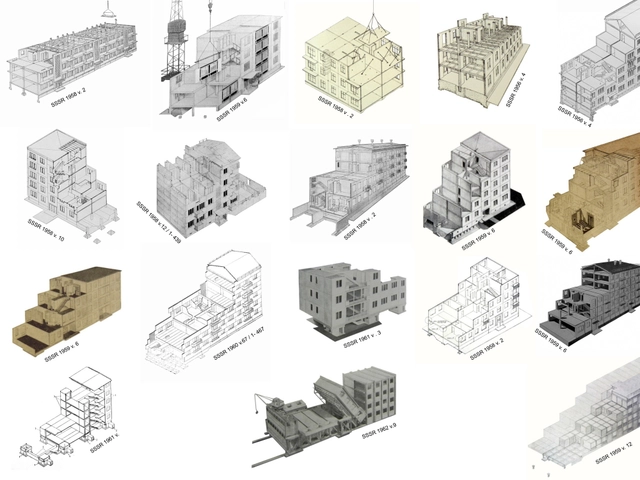
Housing Prototype Systems; Courtesy of Pedro Alonso
Pratt Institute's School of Architecture will present "COLD war COOL digital," an exhibition of 20 scaled prototypes of modernist, pre-fabricated, and globally-distributed Cold War era housing systems that were created using contemporary 3D printing technologies (opening reception 2/18 at 6:15, details below). The exhibition will investigate architectural modernism and its global influence and will connect with contemporary prototype pre-fabrication methods and digital research in housing and skyscraper design. A symposium that explores the technical, aesthetic, and political aspects of prototyping and pre-construction in architecture will be held tonight in conjunction with the exhibition.
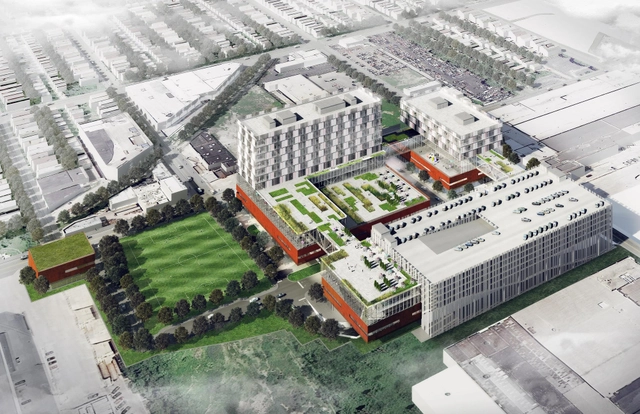
Located in one of the most vibrant yet blighted neighborhoods in Southwest Chicago, HDR Architecture's proposal for the Focal Point Community Campus represents how hospitals can no longer be hermitically sealed from their surroundings; rather, they must embrace the communities in which they reside. Offering a supreme opportunity for this type of change, their concept follows a breakthrough model, which will make it a financially self-sustaining community campus. The vision for the project was developed by Chicago's Saint Anthony Hospital and will be brought to life under The Chicago Southwest Development Corporation, the not-for-profit organization established to develop and maintain the Focal Point property. More images and architects' description after the break.

















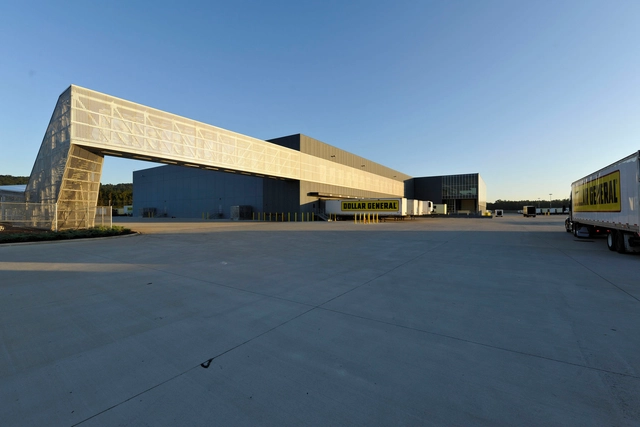


Wakely912506.jpg?1361889461&format=webp&width=640&height=580)
Wakely912522.jpg?1361889504 "© David Wakely")
Wakely912518.jpg?1361889490 "© David Wakely")
Wakely912505.jpg?1361889461 "© David Wakely")
Wakely912512.jpg?1361889471 "© David Wakely")
Wakely912506.jpg?1361889461)