-
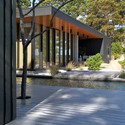
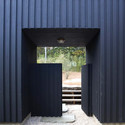
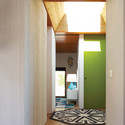
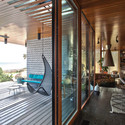
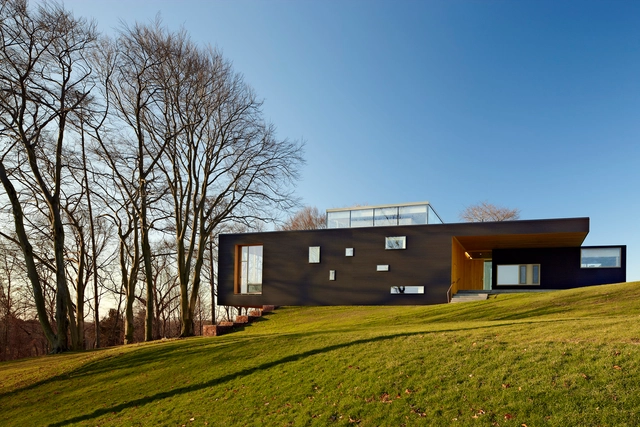
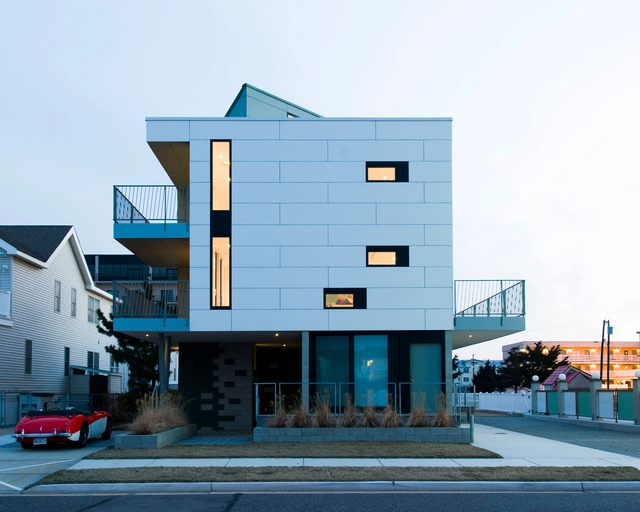
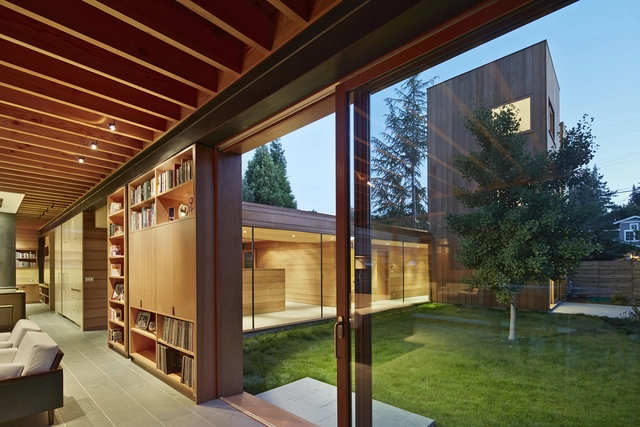
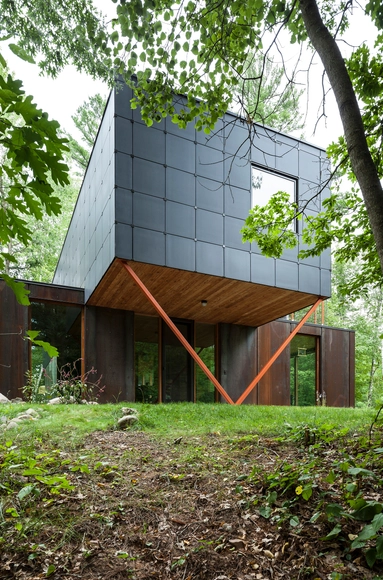
Architects: Gray Organschi Architecture
- Area: 3000 ft²
- Year: 2011


Text by Isaac Wilhelm:

The architectural firm PRODUCTORA, based in Mexico City, is presenting 9 unbuilt projects that have a clear relation to geometry and mathematical composition. Large-scale models, made in collaboration with students at Woodbury University are presented together with black and white CAD drawing that clarify the main conceptual aspect of the building.
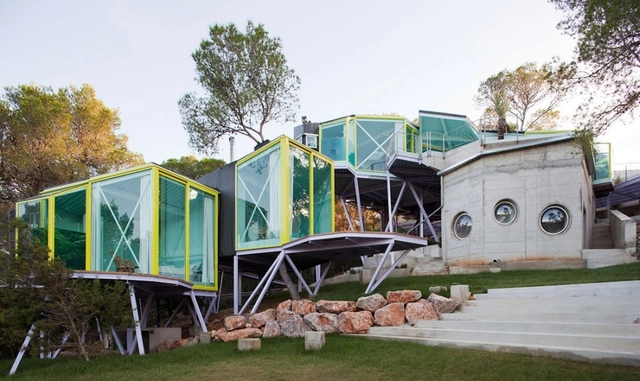
Starting this week,The Princeton University School of Architecture will hold until May 14 a retrospective exhibition on the work of Andrés Jaque and his architectural practice Office for Poitical Innovation. It includes their production since 2000, including several projects we've published in the past like the Plasencia Clergy House, Sweet Parliament Home, Escaravox and the Never Never Land House.
In the last 10 years the Office for Political Innovation has explored the question: ‘What happens to architectural practices when common notions of the urban (as something confined in cities) are replaced by others in which the urban is contained in urban enactments (ordinary interactions in which politics are produced)?’
More after the break.
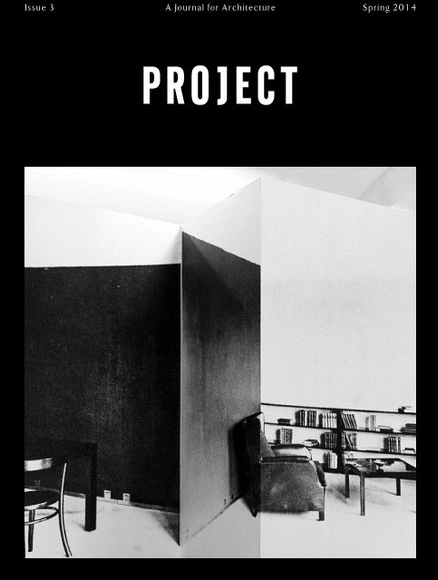
The editors of PROJECT invite you to celebrate the release of Issue Three at common room, 465 Grand St., New York, NY, this Wednesday, April 9 from 7pm to 9pm. PROJECT investigates the possibilities for developing a a critical position in contemporary architecture. Publishing both visual and written work, the goal of PROJECT is to provide a platform for disseminating ideas.
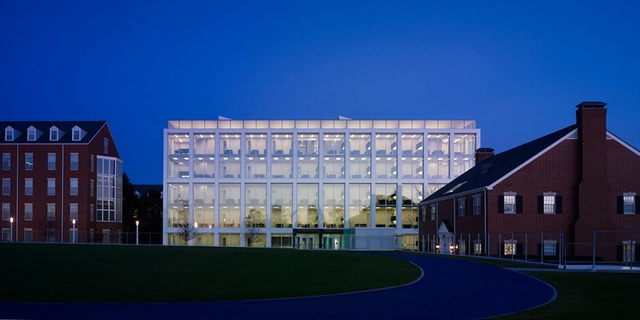

Brooks + Scarpa has won a competition to design a new park-and-ride plaza for the future Angle Lake light rail station in Seattle. As part of the 1.6-mile South 200th Link Extension, which will connect Angle Lake to the airport and downtown area by 2016, the $30 million complex will provide the station’s anticipated 5,400 passengers with a pedestrianized plaza, drop-off and retail area, as well as a 1,050-stall parking garage and 35,000 square feet of reserved space for future transit-oriented development.

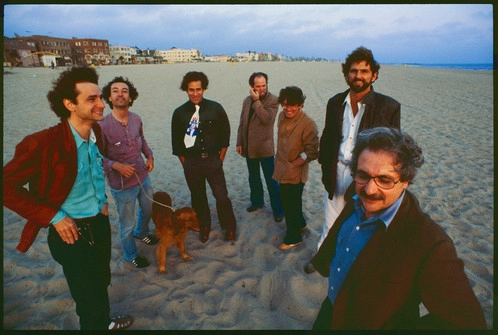
Thom Mayne, Eric Owen Moss, Stephen Phillips and Eva Franch i Gilabert will be discussing on the “institutionalization” of “experimentation” and cultural politics and power of taking risks.
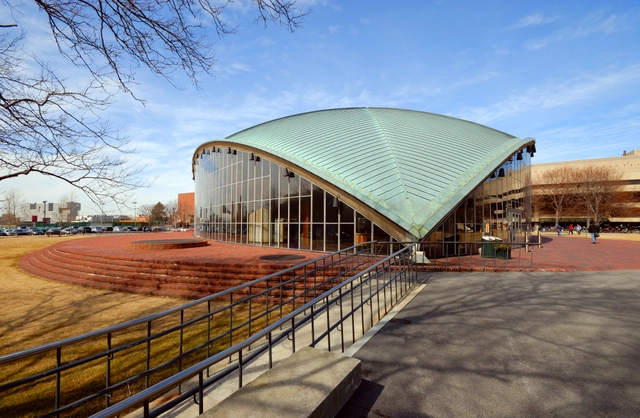
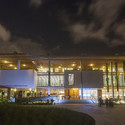
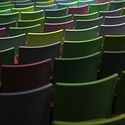
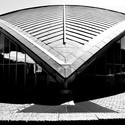
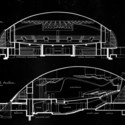
Kresge Auditorium, designed by Finnish American architect Eero Saarinen, was an experiment in architectural form and construction befitting the Massachusetts Institute of Technology’s focus on technology and innovation. This feat of sculptural engineering serves as a meeting house and is part of the cultural, social, and spiritual core of MIT’s campus. Kresge Auditorium is one of Saarinen’s numerous daring, egalitarian designs that captured the optimistic zeitgeist of Post-war America.

CAR and SHELL or Marinetti’s Monster, recently awarded second place in the 2014 eVolo Skyscraper Competition, asks pertinent questions about an "insatiable" desire for growth in urban centres. Based on the premise that we "can no longer stand idly by and watch our cities consume themselves with an anxious need for expansion", Daniel Markiewicz and Mark Talbot's proposal seeks to demonstrate what a "city in the sky" could look like in suburban Detroit. The project is conceived as a vertical neighbourhood, or "a rich vertical urban fabric." Three main grids (streets, pedestrian pathways, and structure) are intertwined to create a box-shaped wireframe to which traditional/contemporary houses and other diverse programs (such as recreational and commercial areas) can be plugged in.
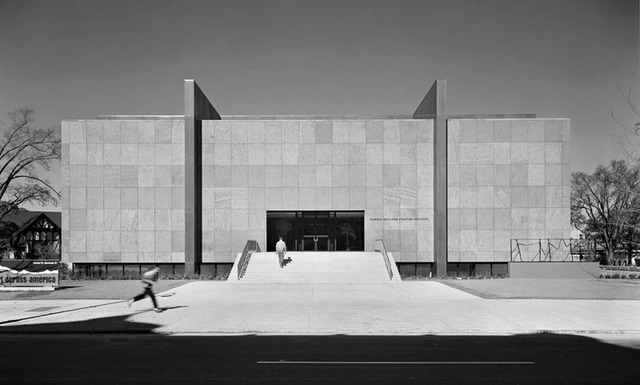
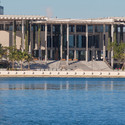
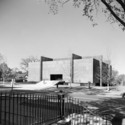
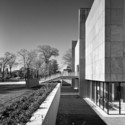
The Munson-Williams-Proctor Arts Institute is a Modern masterpiece and revolutionary precedent of American museum design. Located in Utica, New York, it was the first of many influential cultural facilities designed by Philip Johnson. Also known as the Museum of Art, the structure represents a stylistic turning point in Johnson’s career, marking the end of his loyalty to the International Style and the beginning of his experimentation with Neo-Classicism.