
Japanese Architecture

Capital Tokyo

Language Japanese

Area 377,972.28 km2

Population 127,110,047

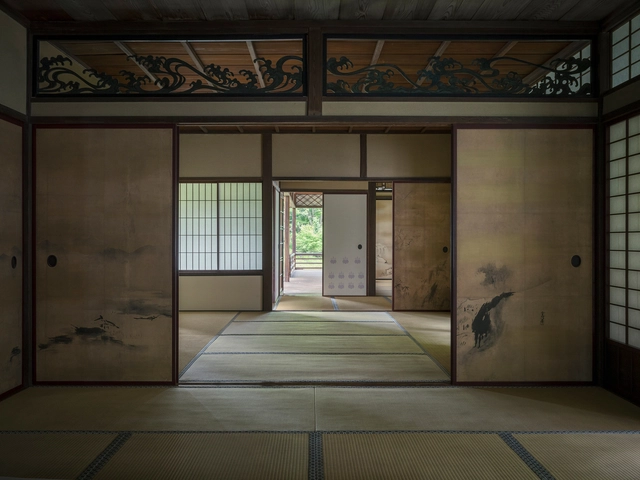
Contemporary Japanese architecture combines a rich mix of traditional design practices and western modern aesthetics. The dialogue between these two is present in the integration of time-honored Japanese architectural elements such as sliding doors (fusama) and modular tatami floor mats with cutting edge design and technology. Japan architecture is at the forefront of investigating questions of micro-housing in its dense cities like Tokyo where the population outnumbers the available space. This page features the work of Japanese architectural offices such as Tadao Ando and Associates and SANAA along with interviews and articles about the ever-changing architectural discourse in Japan.
  1. ArchDaily
  2. Countries
  3. Japan

Latest projects in Japan

Latest news in Japan

Furniture as Architecture: Micro-Modernisms Inside the Home

Modernism is often encountered through built form, photographed facades, canonical plans, concrete manifestos. For most people, its first encounter was far more immediate. It was a chair in an office, a shelf in a living room, a compact unit that reorganized how one sat, stored, or slept. Long before modern architecture could be widely commissioned, it was furniture that entered everyday space, carrying with it a new logic of living. Modernism's promise of transforming life was often delivered through these smaller, repeatable objects.

OMA / Shohei Shigematsu Completes First Public Project in Japan at Newly Renovated Edo-Tokyo Museum

The Edo-Tokyo Museum has reopened to the public following a multi-year renovation, unveiling a series of scenographic interventions and installations designed by OMA under the direction of Shohei Shigematsu. Marking the firm's first public project in Japan, the commission forms part of the broader renewal of the museum's iconic building by Metabolist architect Kiyonori Kikutake. Originally opened in 1993 as the first museum dedicated to the history of Tokyo, the institution traces the city's evolution from the Edo period to the present day, and the new interventions aim to strengthen its relationship with contemporary audiences while preserving the identity of Kikutake's architecture.

Alternate Futures: Five Modernist Landmarks Reimagined for the 21st Century

Modernism in architecture was perhaps the first truly global building design philosophy. Established at the beginning of the twentieth century, its early proponents were heavyweights from Europe, such as Le Corbusier, Walter Gropius, and Mies van der Rohe. In 1923, Le Corbusier published his seminal written work, usually translated into English as Towards a New Architecture. Newness, and a rejection of history, was one of the central tenets of modernism. This manifested itself in the use of new materials such as steel and concrete, which gave rise to an unprecedented freedom of formal expression.

Atelier Tsuyoshi Tane Architects Designs Sea of Time – TOHOKU in Fukushima, Japan

Located in Tomioka, Fukushima Prefecture, Sea of Time – TOHOKU is both an artwork by Tatsuo Miyajima and an architectural project commissioned by the artist. Designed by Japanese architect Tsuyoshi Tane of Atelier Tsuyoshi Tane Architects (ATTA), the project envisions a permanent museum to house Miyajima's artwork. Currently under development from 2024 to 2027, with an anticipated opening in spring 2028. Positioned on a cliff overlooking the Pacific Ocean, the proposal brings together architecture and installation within a site shaped by the memory of the 2011 Tōhoku earthquake and tsunami, framing both the landscape and its historical context as integral components of the design.

"Artisans of the Reiwa Era" Documentary Showcases Traditional Japanese Wood Construction and Craftsmanship

Rinshunkaku is a notable example of early Edo-period residential architecture. Originally built in the Wakayama Prefecture by the Kishu Tokugawa family, the villa was relocated to Sankeien, a traditional Japanese garden in the city of Yokohama, during the Taisho era (1912-1926). The garden was created in the early 20th century by businessman and art patron Sankei Hara and features a number of historic buildings relocated from Kyoto, Kamakura, and other areas of Japan. Rinshunkaku, one of the garden's gems, is a prime example of traditional Japanese architecture and wood construction. Its historical value motivated a large-scale restoration project in 2019, documented in the film Artisans of the Reiwa Era (Reiwa no Shokunin-tachi), filmed and edited by Katsumasa Tanaka and Hiroshi Fujiki. The documentary offers a close, detailed view of Japanese craftsmanship and wood expertise, highlighting rare traditional techniques and paying tribute to the artisans who preserve them.

From Data to Digital Twins: Japan’s PLATEAU Project Offers Open-Access Models of More Than 250 Cities

"Map the New World" is the motto of Project PLATEAU, led by Japan's Ministry of Land, Infrastructure, Transport and Tourism (MLIT), to develop and expand access to 3D models representing the diversity of cities across the country. Japan comprises a total of 744 cities, including 14 with populations exceeding one million, 190 with between 100,000 and one million inhabitants, and 540 with populations between 10,000 and 100,000. To date, 3D models of more than 250 cities have been made available as open data through the country's public G-Spatial Information Center, and can also be accessed via an online browser viewer. According to public authorities, the project aims to strengthen urban resilience by providing society with new tools to address local challenges. This involves not only urban space modeling but also collaboration with local governments, private companies, and technology communities. The project also includes a digital reconstruction of the recently closed Osaka World Expo site.

Renovation and Continuity in Japanese Architecture: The Work of 1110 Office for Architecture

In a shifting societal and environmental landscape, how can architectural design respond to transformation while meaningfully engaging with what endures? 1110 Office for Architecture, based in Osaka, Japan, approaches this question through a body of work defined by careful residential renovations and precise spatial interventions.

Kumamoto Exhibition Explores Shoei Yoh’s Pioneering Timber Structures and Computational Design

The Contemporary Art Museum of Kumamoto and the Shoei Yoh Archive at Kyushu University are honoring the late Japanese architect Shoei Yoh with an exhibition on view at the museum through March 9. The architect, who passed away on January 8, 2026, was born in Kumamoto in 1940 and, throughout his career, worked across product design, interiors, and architecture. He is recognized as a pioneer of contemporary timber construction and for his early contributions to computational design. The exhibition revisits his projects in Kumamoto through drawings and models from the Shoei Yoh Archive at Kyushu University.

Hospitality as Heritage Catalyst: 5 Adaptive Reuse Strategies Across Diverse Latitudes

Subscriber Access | 

Hospitality-driven programs, specifically coffee shops and social hubs, are partly defined by their role as "third places": social anchors that bridge the gap between private and public life. Unlike residential or commercial office programs that require rigid partitioning for privacy and utility, they rely on expansive, open-plan environments. This allows for an architectural strategy of minimal intervention, allowing the structural envelope to remain intact. By avoiding the subdivision of space, architects maintain uninterrupted sightlines to original masonry, timber frames, or decorative ceilings, ensuring the building's historical narrative remains the protagonist. Simultaneously, the commercial activity provides the necessary maintenance and public engagement to ensure the site's continued existence.

When Do Buildings Begin to Matter? Rethinking Heritage in Local Time

A building still being adjusted, repaired, and debated is declared World Heritage. Another, equally influential, must survive five centuries before anyone considers protecting it. This is not an anomaly in the heritage system; it is the system. Across the world, architecture does not age at the same pace because time itself is not neutral. It is cultural, political, and deeply uneven. What we call "heritage" is not simply old architecture; it is architecture that has reached the right moment in a particular place.