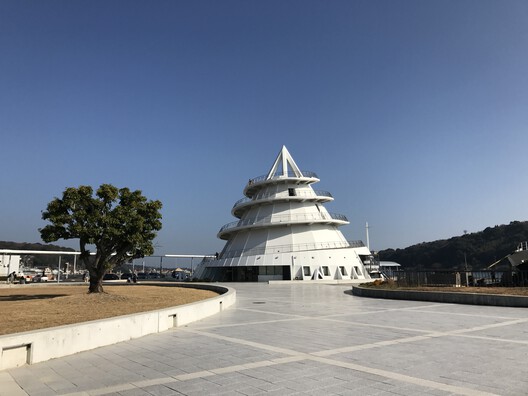
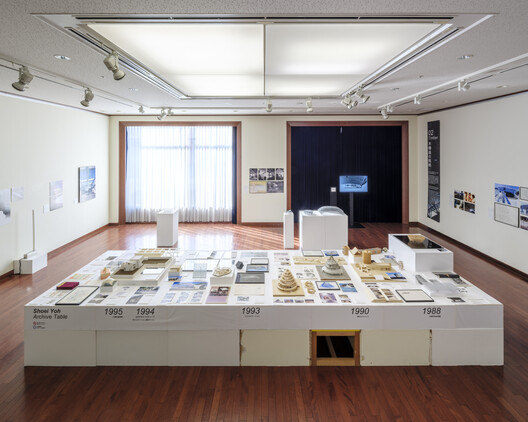
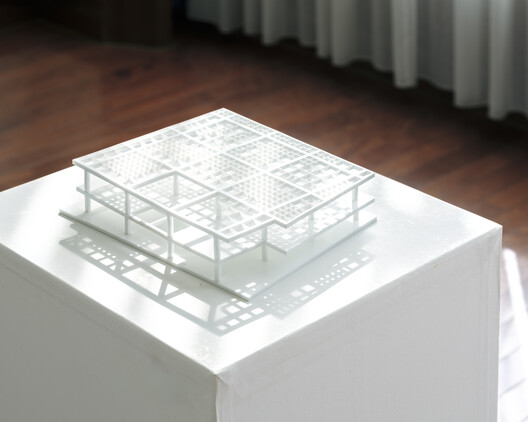
The Contemporary Art Museum of Kumamoto and the Shoei Yoh Archive at Kyushu University are honoring the late Japanese architect Shoei Yoh with an exhibition on view at the museum through March 9. The architect, who passed away on January 8, 2026, was born in Kumamoto in 1940 and, throughout his career, worked across product design, interiors, and architecture. He is recognized as a pioneer of contemporary timber construction and for his early contributions to computational design. The exhibition revisits his projects in Kumamoto through drawings and models from the Shoei Yoh Archive at Kyushu University.



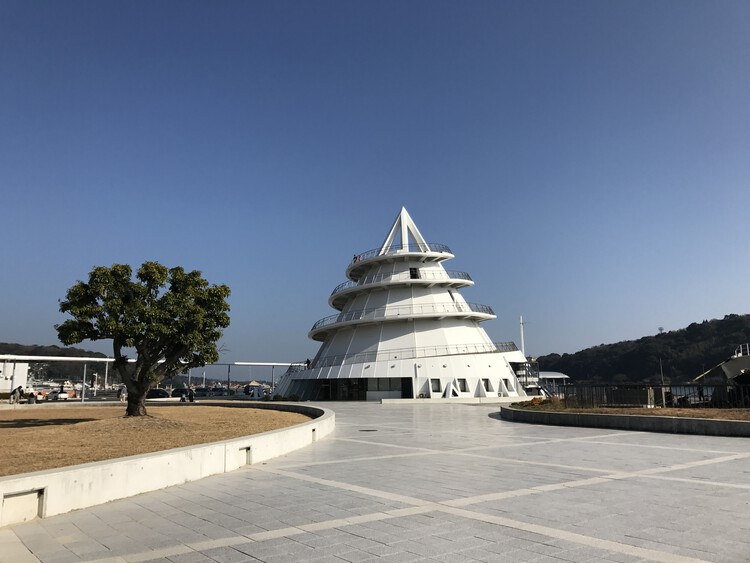
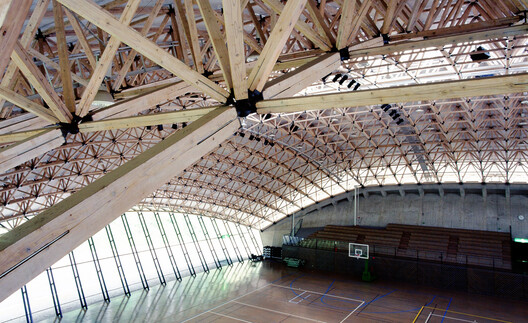
"Revisiting Shoei Yoh" celebrates the life and work of one of Japan's leading postwar architects. Born in Kumamoto in 1940 and based in Fukuoka, he helped shape Japan's modern design scene. From early works that treated light as a primary architectural medium to the Oguni Dome, completed in 1988 as Japan's first large-scale timber structure, Yoh continually pushed architectural boundaries through a rational methodology. His career began in interior and product design before expanding to public facilities, evolving from cubic, interior-like objects to freer and more open spaces that engaged more closely with nature. Combining materials such as glass and bamboo, he described this approach as "elastic architecture."
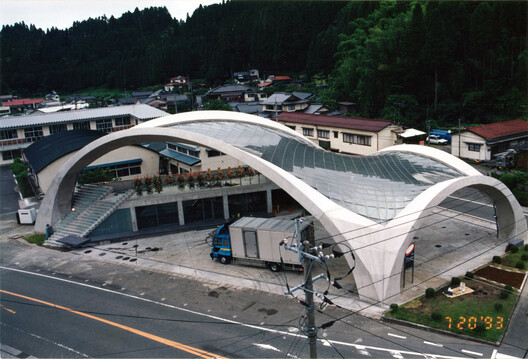
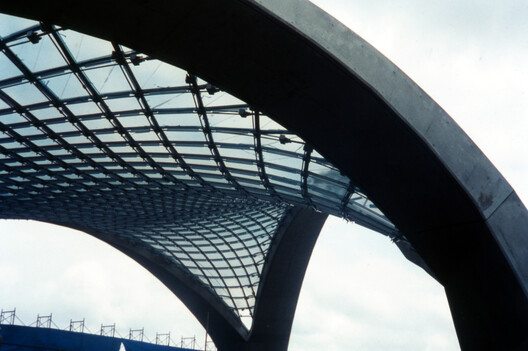
International interest in his practice has grown since the 2013 exhibition Archaeology of the Digital at the Canadian Centre for Architecture, where projects such as the Glass Station, completed in 1993, were situated within the history of early computational design. The Glass Station, located in Oguni, Kumamoto Prefecture, consists of a concrete structure formed by keel arches and a fireproof glass membrane roof that fills the spaces between the framework. According to CCA resident Yu Momoeda, "Yoh believed that any architectural undertaking should be carried out in a reasonable and economical manner. He could come up with such original designs because he considered the whole process—including the finishing details—from scratch."
Related Article
"A Place Remembers What Has Happened:" Tsuyoshi Tane on Memory as a Design Driver in Louisiana Channel InterviewHeld in his hometown of Kumamoto, the exhibition revisits his local projects through the themes of Architecture of Light, Challenging Timber Structures, and Dialogue with Natural Phenomena. Drawings, models, and photographs from the Shoei Yoh Archive at Kyushu University trace a creative trajectory shaped by close engagement with the region's landscape and culture. A large collection of drawings, models, products, and materials by Shoei Yoh and the Yoh Design Office is currently held at the Shoei Yoh Archive at the Environmental Design Global Hub, Kyushu University. Smaller collections are held at the FRAC Centre (Orléans, France), the Canadian Centre for Architecture (Montréal, Canada), and the National Museum of Art (Osaka, Japan).
Other recent news in the architecture and design field includes the selection of Hariri Pontarini Architects and Snøhetta to design the new Ontario Science Centre in Toronto; the announcement of five shortlisted teams for Shift's sustainability landmark in Rotterdam, with proposals by MVRDV, Heatherwick Studio, Office for Political Innovation, Mecanoo, and Ecosistema Urbano; and Renzo Piano Building Workshop and Brunet Saunier & Associés receiving a building permit for a large-scale urban forest hospital in Greater Paris. In Japan, recent developments include the reuse of wood from Sou Fujimoto Architects' Grand Ring for Expo Osaka across the country, and the start of construction on Tokyo's new global headquarters for NTT, a key component of PLP Architecture's Tokyo Cross Park masterplan, a large-scale regeneration project in the Tokyo metropolitan area.


