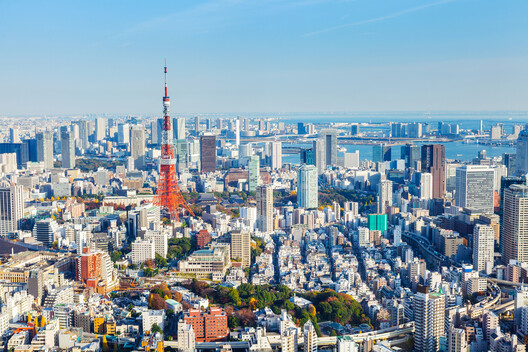
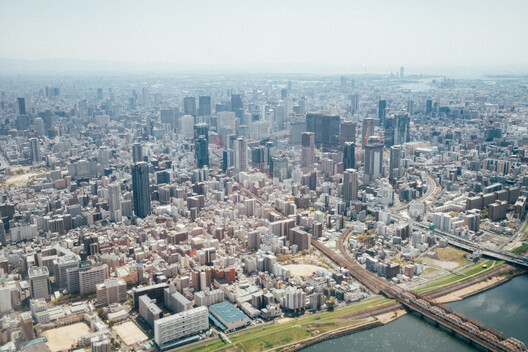
"Map the New World" is the motto of Project PLATEAU, led by Japan's Ministry of Land, Infrastructure, Transport and Tourism (MLIT), to develop and expand access to 3D models representing the diversity of cities across the country. Japan comprises a total of 744 cities, including 14 with populations exceeding one million, 190 with between 100,000 and one million inhabitants, and 540 with populations between 10,000 and 100,000. To date, 3D models of more than 250 cities have been made available as open data through the country's public G-Spatial Information Center, and can also be accessed via an online browser viewer. According to public authorities, the project aims to strengthen urban resilience by providing society with new tools to address local challenges. This involves not only urban space modeling but also collaboration with local governments, private companies, and technology communities. The project also includes a digital reconstruction of the recently closed Osaka World Expo site.
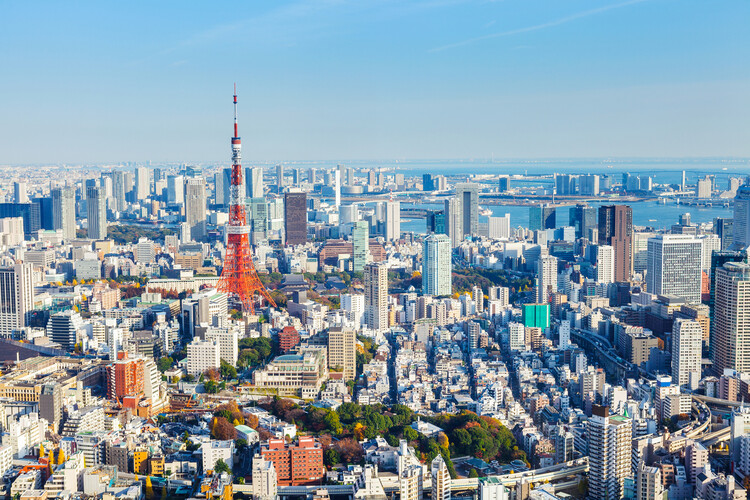
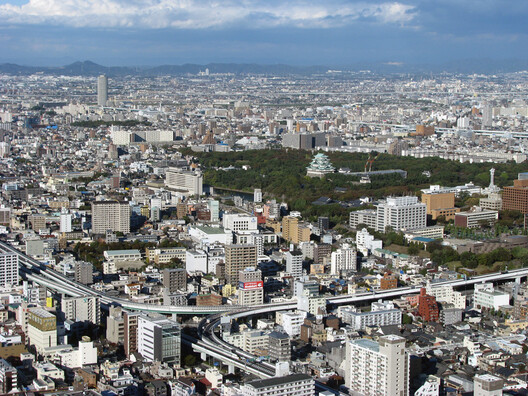
Initiated within the framework of "Digital Transformation in Urban Planning," PLATEAU was launched by the Japanese government in 2020, starting with 15 cities, expanding to 56 by 2021, and aiming to cover 500 cities by 2027. The program's objectives include expanding data coverage, establishing best practices for use cases, and fostering open innovation through accessible tools. The models are conceived as platform data for urban activities, enabling applications in diverse fields such as urban planning and public participation; disaster prevention, simulation, and management; environmental analysis, including solar power generation, urban heat island effects, ventilation, and area energy management; regional revitalization and tourism; mobility mapping and autonomous vehicles; and infrastructure monitoring. As digital twin technologies, these models also support the segmentation and analysis of sensing data, such as point clouds, and their integration with BIM systems.
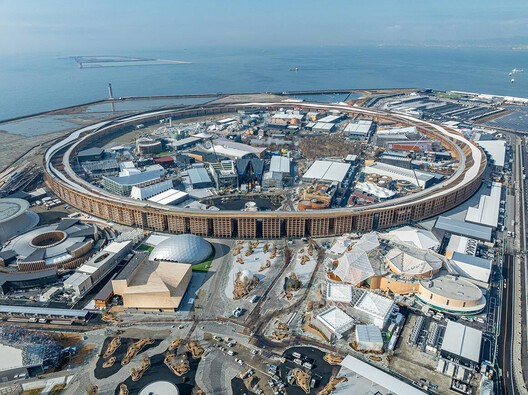
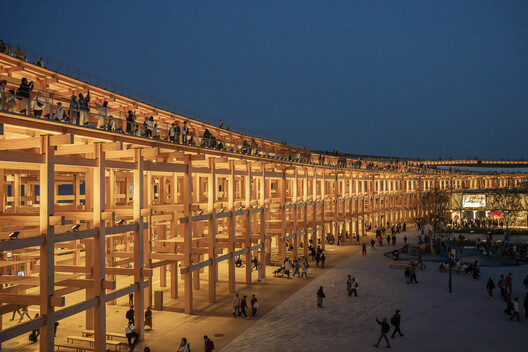
PLATEAU's 3D city models are developed by "unearthing" and reusing existing digital resources, such as survey reports and GIS data. This approach levels access to commonly held local government resources, enabling cost-effective and scalable data production. The results are freely accessible through a browser-based web application called PLATEAU VIEW, which allows users to preview and explore the data. Using standard digital tools, users can navigate cities reproduced in digital space from any angle and overlay multiple layers of information to gain new insights. As part of its effort to preserve collective memory, the project also features a model of the site of the 2025 World Expo in Osaka. A 3D model of the site, surrounded by Sou Fujimoto's wooden Grand Ring, was created using BIM and point cloud data and is now available on the platform. The archive includes the large roof ring as well as pavilions from several participating countries.
One of the main challenges of establishing a nationwide program lies in defining common criteria for the final product. In March 2021, PLATEAU introduced Japan's first standardized data model for 3D city models, the "Standard Data Product Specification for 3D City Models," which has since evolved to version 5.0. This standardization unifies specifications, formats, and quality requirements, improving software compatibility and facilitating data integration to ensure the models remain open and user-friendly. PLATEAU's models are based on the international CityGML standard, developed by the Open Geospatial Consortium for the storage, representation, and exchange of virtual 3D city and landscape models. Unlike conventional 3D models that only capture geometric form, these digital twins structure and enrich urban elements, such as buildings and roads, with semantic information, including usage, year of construction, and planning data.
As stated by editor Enrique Tovar, the widespread use of software in architectural design reflects not only the technical complexity of today's practice but also a significant shift: software has become less a specific tool and more an environment. Danish architectural practice Henning Larsen recently launched OpenDetail, a crowd-sourced and peer-reviewed database of architectural detail drawings, addressing a growing interest in bio-based materials such as timber, hemp, clay, reed, and mycelium. Grimshaw had previously introduced Minoro, a centralised reference point for navigating carbon reduction strategies across complex project ecosystems, while MVRDV NEXT, the innovation and digital tools division of the Dutch architectural firm, launched CarbonSpace, a free, open platform for carbon accounting. Whether for visualisation, tracking, parametrisation, or as an information library, digital tools seem to be evolving across different scales to accompany every step of the built environment's design process.
Editor's Note: This article was originally published on April 08, 2026.


