
-
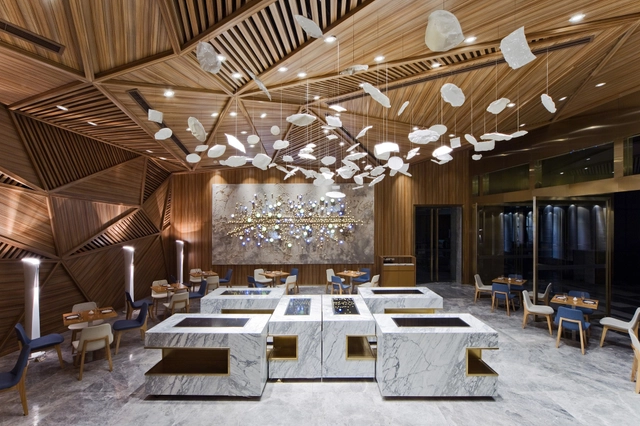
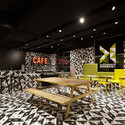
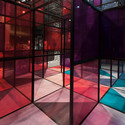
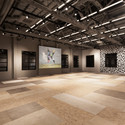
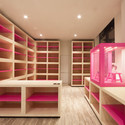
Architects: Atelier Archmixing
- Area: 274 m²
- Year: 2014




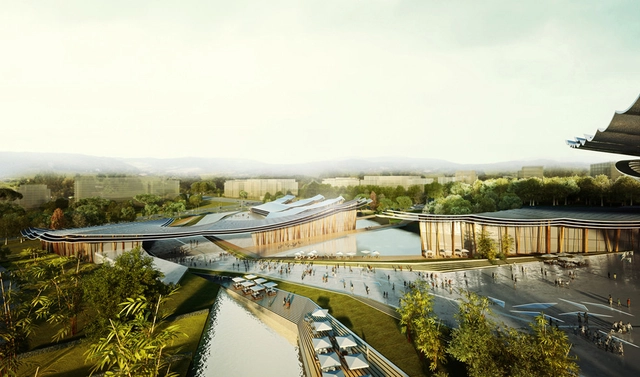
Spanish studio Rafael de La-Hoz and Chinese design institute Architectural Design and Research Institute of Harbin Institute of Technology (ADRI-HIT) have been announced as the winners of a competition to construct a new cultural centre in Meishan, China. Located in Sichuan province in the nation's south, the complex will combine a sports centre with five museums, a library, and exhibition hall.
Occupying a sprawling 260,000-square-meters, the new complex is sited near the campus of the University of Meishan, and responds to the terraced topography of Sichuan's rice paddies. Learn more about the project and view selected images after the break.
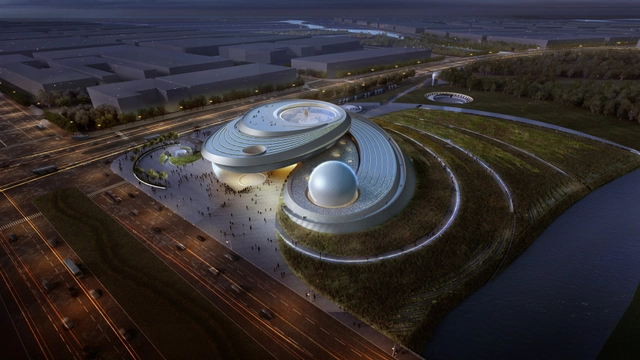
Ennead Architects has won an international competition to design the Shanghai Planetarium. The “celestial” design hopes to elevate the Shanghai Science and Technology Museum’s (SSTM) “scientific and technological capacity” while redefine the district Lingang upon its completion in 2018.
“Drawing inspiration form astronomical principles, our design strategy provides a platform for the experience of orbital motion, and utilizes that as a metaphorical reference and generator of form,” says Ennead Architects.


One of ARCHITECT Magazine's six winners of a 2015 Progressive Architects Award (P/A), NADAAA and Himma Studio's Ordos 20 + 10 reflects a reconfiguration of the office typology for compact spaces.
The project is part of a high density office park masterplan in Ordos City, located in Inner Mongolia, in which developments are subject to stringent zoning regulations. Offices included in the area must be comprised of multiple cubic volumes, and lack what NADAAA and Himma Studio describe as "an immediate urban context." Learn more about the project and the architects' response to these considerations after the break.
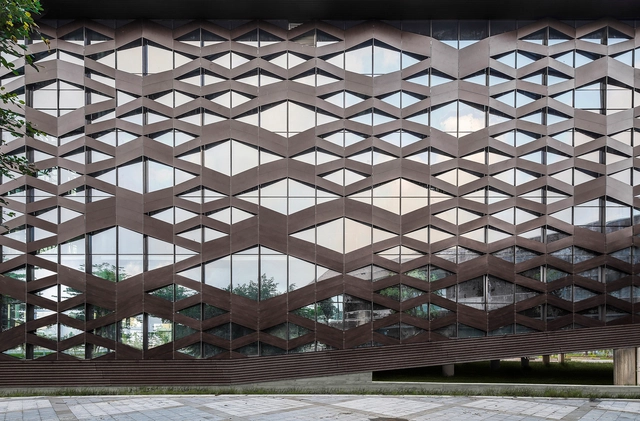
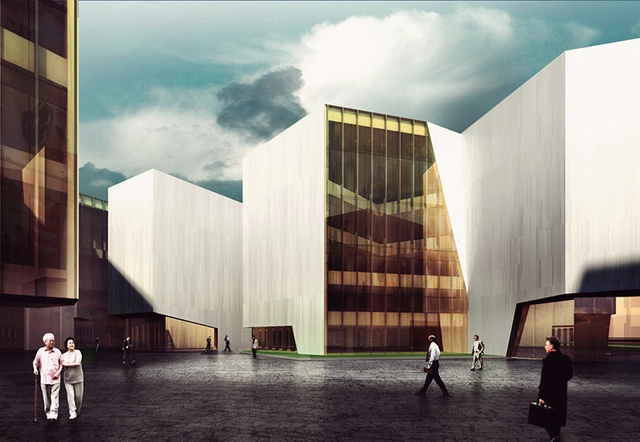
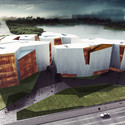
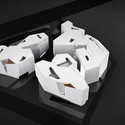
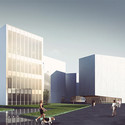
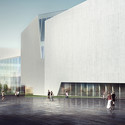
RTA-Office has released its first-prize winning proposal for the Wuhu Urban Planning Exhibition, Office, and Archive. The design stems from the idea of an “urban cultural container,” holding both knowledge and space, and extracts its sculptural form from the surrounding mountainous landscape.
Pushing for the Exhibition Hall to be a recognizable landmark, the design is largely driven by its surrounding context. The building as a whole derives its shape from the rocky faces of the nearby Yashan Mountain, giving it a strong sense of place. Similarly, the structure is divided into three distinct sections all grounded by a central public space, each informed by the same rocky inspiration. The cracks in the rocks’ surfaces are mirrored in the irregular entrances and windows carved into the building’s volumes.
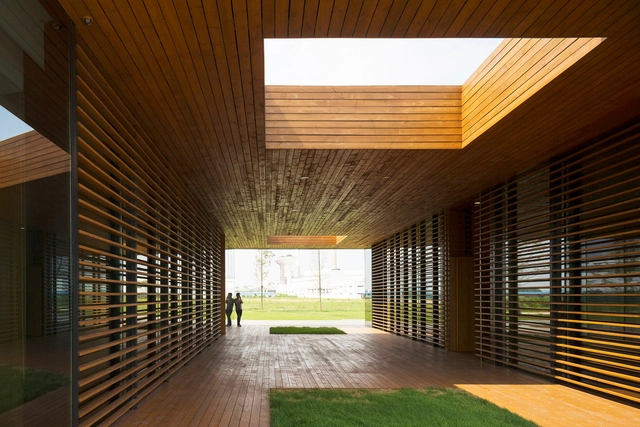

The winning entry in a competition for Pingshan's first theater, Beijing-based OPEN Architecture's Pingshan Performing Arts Center has broken ground in Shenzen. The 1350-capacity theatre is located in the city's new urban district, and slated for completion by the end of 2015.
Read more about the project and view selected images after the break.