

-
Architects: reMIX studio
- Area: 240 m²
- Year: 2015


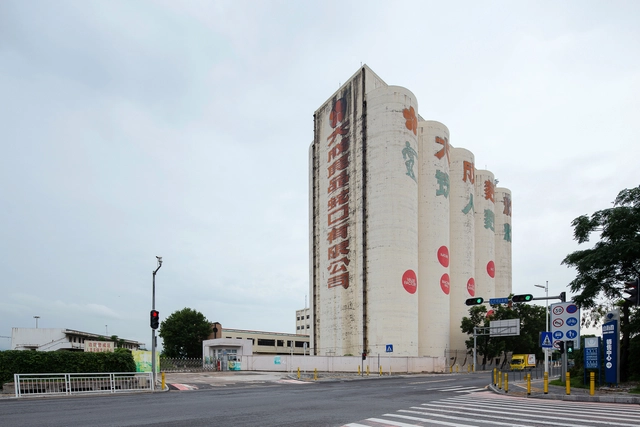
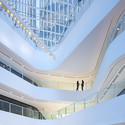
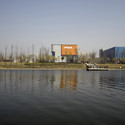
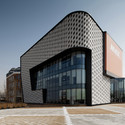
The 2015 Bi-City Biennale of Urbanism\Architecture (2015 UABB), the world’s only biennale dedicated to the themes of urbanism and architecture, announced its highlight exhibits. Based in Shenzhen, one of China’s first Special Economic Zones, 2015 UABB will feature presentations from over 72 exhibitors from six continents who will all explore the theme “Re-Living The City”. Opening to the public on 4 December this year, 2015 UABB will take over the former Dacheng Flour Factory in Shekou, a declining factory complex built in 1980s that will be transformed into a multifaceted exhibition venue especially for the biennale.
.jpg?1444654728&format=webp&width=640&height=580)
.jpg?1444260181&format=webp&width=640&height=580)

.jpg?1443794805&format=webp&width=640&height=580)
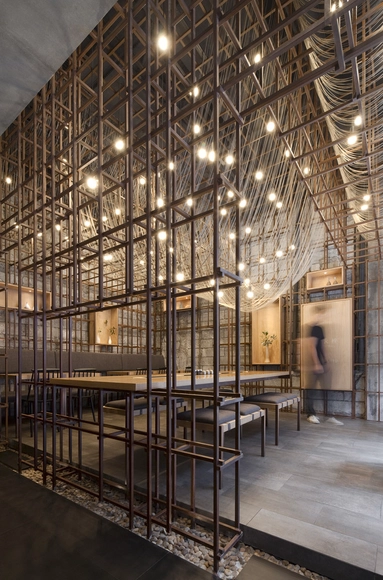
Text description provided by the architects. Following up a year of development, Penda has unveiled their installation for Beijing Design Week (BJDW) 2015 – Rising Canes, a structural system made entirely of bamboo and ropes. Meant to be a speculation system for larger developments, the installation is fully modular, ecological and easy to expand in every direction. Bamboo was chosen as the main construction material for its long traditional roots in China and fantastic structural capability, as well as part of a desire to fight its current obscurity as a construction material.
.jpg?1442641230&format=webp&width=640&height=580)
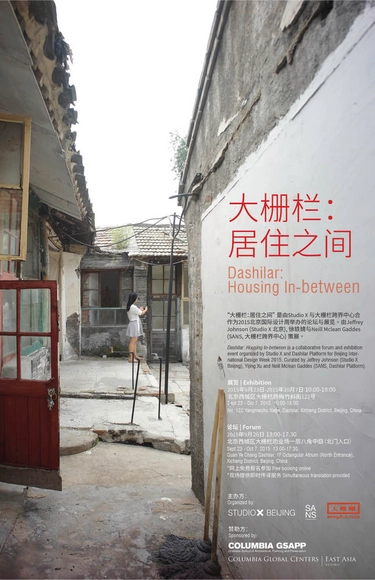
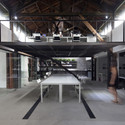
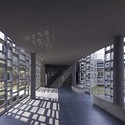
Dashilar: Housing In-between is a collaborative forum and exhibition event organized by Studio X and Dashilar Platform for Beijing International Design Week 2015. Curated by Jeffrey Johnson (Studio X Beijing), Yijing Xu and Neill Mclean Gaddes (SANS, Dashilar Platform) with support from Columbia University GSAPP, Dashilar Platform and Beijing International Design Week.
‘Housing’ is a basic human necessity and has always been a critical subject of discussion around the world. With growing awareness of the gross inequalities created by neoliberal economies, significant attention has been placed recently on the housing conditions of those less privileged and marginalized.

.jpg?1444655387 "© Zhang Mingming")
.jpg?1444655104 "© Zhang Mingming")
.jpg?1444656102 "© Shengliang Su")
.jpg?1444656061 "© Shengliang Su")
.jpg?1444654728)














.jpg?1444260054 "© Tim Franco")
.jpg?1444260033 "© Tim Franco")
.jpg?1444260082 "© Tim Franco")
.jpg?1444260137 "© Tim Franco")
.jpg?1444260181)



.jpg?1443944228 "© LV Hengzhong")



.jpg?1443795381 "Speculation of Future Developments. Image Courtesy of Penda")
.jpg?1443795335 "Speculation of Future Developments. Image Courtesy of Penda")
.jpg?1443794787 "© Hua Su")
.jpg?1443794843 "© Xia Zhi")
.jpg?1443794805)

.jpg?1442641249 "© Chen Yao")
.jpg?1442641182 "© Chen Yao")
.jpg?1442641239 "© Chen Yao")
.jpg?1442641203 "© Chen Yao")
.jpg?1442641230)