Antonia Piñeiro

BROWSE ALL FROM THIS AUTHOR HERE

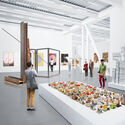
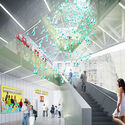
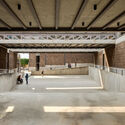
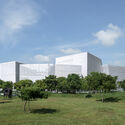
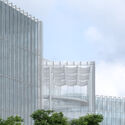
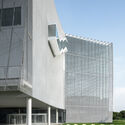
Louisiana Museum of Modern Art Opens Memoryscapes Exhibition Exploring the Design Methodologies of ATTA and DnA

The Louisiana Museum of Modern Art will inaugurate, on January 22, 2026, the second exhibition in its Architecture Connecting series, focusing on the discipline's relationship with science and research across a wide range of fields, including biology, neuroscience, and anthropology. The first exhibition in the series, Living Structures (2024–2025), featured ecoLogicStudio, Atelier LUMA, and Jenny Sabin Studio, highlighting their work at the intersection of algorithms and nature and their development of methods that re-evaluate sustainable architecture and climate considerations. This second exhibition, titled Memoryscapes, explores the memories, stories, and traditions informing the working methodologies of Xu Tiantian's DnA_Design and Architecture (Beijing) and ATTA – Atelier Tsuyoshi Tane Architects (Paris).

Louisiana Museum of Modern Art Opens Memoryscapes Exhibition Exploring the Design Methodologies of ATTA and DnA - Image 1 of 4Louisiana Museum of Modern Art Opens Memoryscapes Exhibition Exploring the Design Methodologies of ATTA and DnA - Image 2 of 4Louisiana Museum of Modern Art Opens Memoryscapes Exhibition Exploring the Design Methodologies of ATTA and DnA - Image 3 of 4Louisiana Museum of Modern Art Opens Memoryscapes Exhibition Exploring the Design Methodologies of ATTA and DnA - Image 4 of 4Louisiana Museum of Modern Art Opens Memoryscapes Exhibition Exploring the Design Methodologies of ATTA and DnA - More Images

Zaha Hadid Architects Breaks Ground on Bishoftu International Airport for Ethiopian Airlines in Addis Ababa

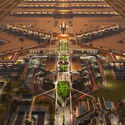
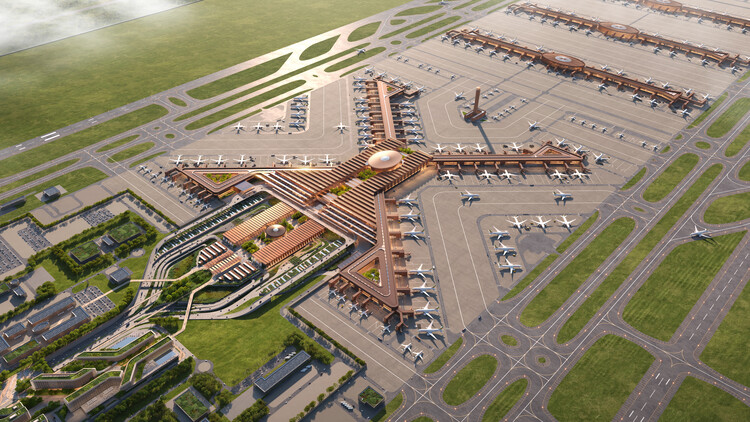
Construction has begun on the new Bishoftu International Airport (BIA), designed by Zaha Hadid Architects for Ethiopian Airlines Group. Ethiopia's Prime Minister, Abiy Ahmed Ali, laid the cornerstone at the airport's groundbreaking ceremony on Saturday, January 10, 2026. The new airport will be located approximately 40 kilometers south of the Ethiopian capital, Addis Ababa, and is planned to become Africa's largest airport. Phase One of the project is designed to serve 60 million passengers per year. Subsequent phases are expected to increase capacity to up to 110 million passengers annually, supported by four runways and parking for 270 aircraft, more than four times the capacity of Ethiopia's current main airport, according to statements by the Prime Minister.

Zaha Hadid Architects Breaks Ground on Bishoftu International Airport for Ethiopian Airlines in Addis Ababa - Imagen 1 de 4Zaha Hadid Architects Breaks Ground on Bishoftu International Airport for Ethiopian Airlines in Addis Ababa - Imagen 2 de 4Zaha Hadid Architects Breaks Ground on Bishoftu International Airport for Ethiopian Airlines in Addis Ababa - Imagen 3 de 4Zaha Hadid Architects Breaks Ground on Bishoftu International Airport for Ethiopian Airlines in Addis Ababa - Imagen 4 de 4Zaha Hadid Architects Breaks Ground on Bishoftu International Airport for Ethiopian Airlines in Addis Ababa - More Images+ 6

CRA–Carlo Ratti Associati and Italo Rota Transform MAE Carbon Fiber Archive Into an Interactive Museum in Italy

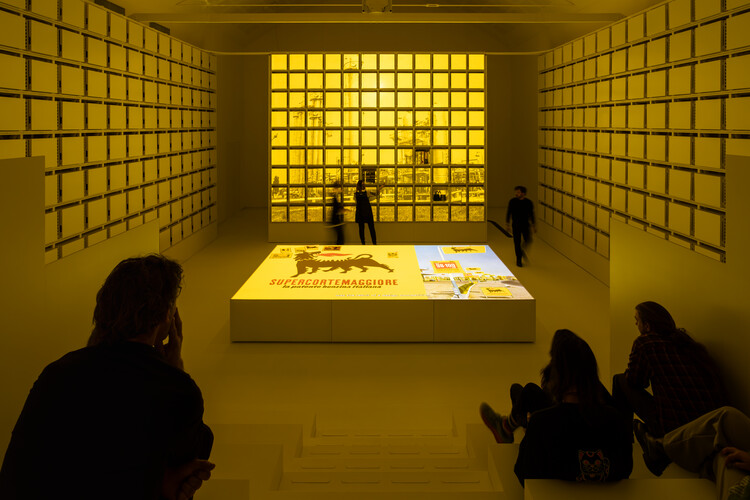
A new museum dedicated to the science of carbon fiber opened in Fiorenzuola d'Arda, Italy, on December 17, 2025. The project dates back to 2021 and was designed by CRA–Carlo Ratti Associati in collaboration with the late Italian architect Italo Rota. Commissioned by MAE, a manufacturer of equipment for carbon fiber production, the project transforms one of the world's largest archives on carbon fiber into a dynamic museum, uniting research with archival preservation and turning the archive into a space for interactive exploration. The project is described by its designers as a "living museum," a place to read, inquire, and connect ideas.

CRA–Carlo Ratti Associati and Italo Rota Transform MAE Carbon Fiber Archive Into an Interactive Museum in Italy - More Images+ 12

Equatorial Guinea Relocates Its Capital From Malabo to Ciudad de la Paz on Central Africa’s Mainland

Malabo served as the capital city of Equatorial Guinea from the country's independence from Spain on October 12, 1968, until January 2, 2026, when a decree issued by President Teodoro Obiang Nguema Mbasogo officially transferred the capital to Ciudad de la Paz ("City of Peace"), located in Djibloho Province. Obiang formalized the move as part of a long-planned territorial reorganization. While the former capital remains an important economic center on Bioko Island, Ciudad de la Paz was conceived as a planned capital on Africa's mainland. The initiative to relocate the capital dates back to 2008, with construction beginning in 2011. The new capital, also referred to as Djibloho, after the province, or Oyala, has been framed by the government as a decentralization effort aimed at improving national accessibility.

14 Global Stadium Projects and Surrounding Urban Masterplans Currently in Progress

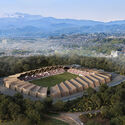
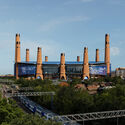
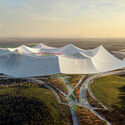
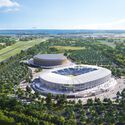
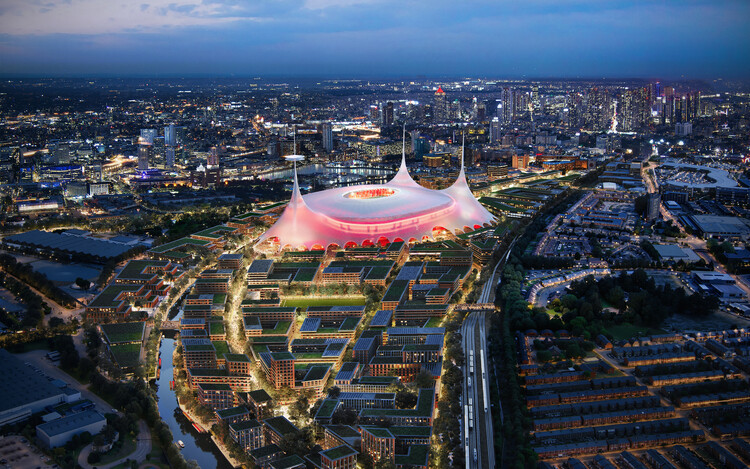
During 2025, several sports infrastructure projects were announced that remain on our radar, most of which are scheduled for completion between 2028 and 2030. Located across Asia, Europe, Africa, the Middle East, and North America, these projects reflect contemporary masterplan strategies for the transformation of large sports venues within their urban contexts. Many of the stadiums are planned as part of broader redevelopment frameworks that include new public spaces, mixed-use programs, event facilities, and mobility upgrades, rather than as isolated structures. Designs led by international offices such as Populous, Foster + Partners, Heatherwick Studio, OMA, Gensler, AFL Architects, and VUILD illustrate a range of architectural, urban, and infrastructural responses to the evolving role of large sports facilities.

14 Global Stadium Projects and Surrounding Urban Masterplans Currently in Progress - Imagem 1 de 414 Global Stadium Projects and Surrounding Urban Masterplans Currently in Progress - Imagem 2 de 414 Global Stadium Projects and Surrounding Urban Masterplans Currently in Progress - Imagem 3 de 414 Global Stadium Projects and Surrounding Urban Masterplans Currently in Progress - Imagem 4 de 414 Global Stadium Projects and Surrounding Urban Masterplans Currently in Progress - More Images+ 10

“Built Environment: An Alternative Guide to Japan” Exhibition in Montréal Examines Resilient Japanese Architecture

The exhibition Built Environment: An Alternative Guide to Japan at the Université du Québec à Montréal's (UQAM) Centre de design will be on view until January 25, 2026. Curated by Shunsuke Kurakata, Satoshi Hachima, and Kenjiro Hosaka, it features a selection of 80 projects from Japan's 47 prefectures, including works by renowned Japanese architects such as 2014 Pritzker Prize laureate Shigeru Ban, Kengo Kuma, the designer of the Museum of Modern Art's renovation in New York Yoshio Taniguchi, celebrated landscape architect and sculptor Isamu Noguchi, and 2019 Pritzker Prize laureate Arata Isozaki. The selection aims to offer a renewed perspective on Japan through innovative buildings, civil engineering projects, and landscape designs. Organized in collaboration with the Japan Foundation and presented with the support of the Consulate General of Japan in Montreal, the exhibition is conceived as a traveling project exploring the resilience of Japanese architecture and infrastructure in the face of natural disasters and climate change.

Cultural Venues, Fresh Perspectives on Public Space and One Month until the Winter Olympics: This Week’s Review

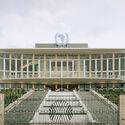
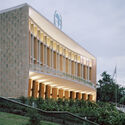
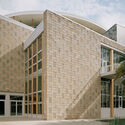
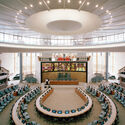
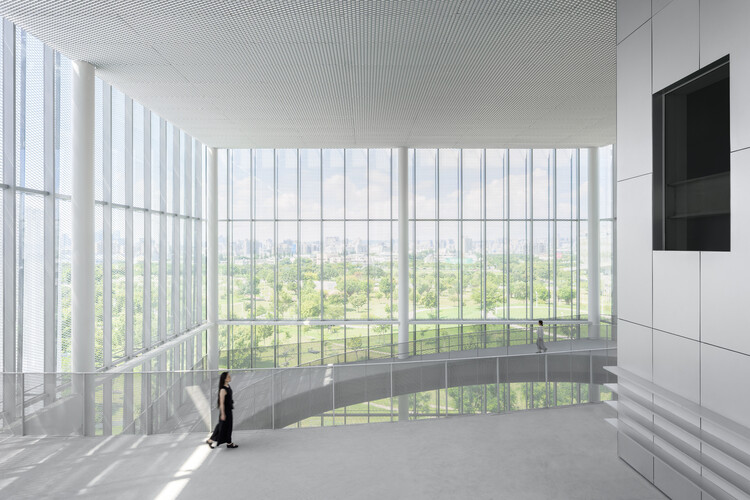
This week's news compilation brings together current discussions around public and collective space, cultural infrastructure, and long-term urban transformation across diverse geographic contexts. From shared management models redefining public space ownership in cities such as Paris and New York, to large-scale event-driven initiatives linked to Milano Cortina 2026 and the World Urban Forum in Baku, the selected projects and initiatives highlight how governance, culture, and infrastructure intersect in contemporary practice. These themes are further developed through a mix of strategic planning processes, including international test planning efforts in Northern Lviv, and built projects spanning education, culture, and temporary architecture, from a new dental teaching facility in Blantyre, Malawi, to restored and newly opened cultural venues in the United States and Taiwan, and adaptive reuse interventions showcased at the Chicago Architecture Biennial. The international examples outline an architectural landscape shaped by reuse, public engagement, and the evolving role of design in responding to social, cultural, and institutional frameworks.

Cultural Venues, Fresh Perspectives on Public Space and One Month until the Winter Olympics: This Week’s Review - Image 1 of 4Cultural Venues, Fresh Perspectives on Public Space and One Month until the Winter Olympics: This Week’s Review - Image 2 of 4Cultural Venues, Fresh Perspectives on Public Space and One Month until the Winter Olympics: This Week’s Review - Image 3 of 4Cultural Venues, Fresh Perspectives on Public Space and One Month until the Winter Olympics: This Week’s Review - Image 4 of 4Cultural Venues, Fresh Perspectives on Public Space and One Month until the Winter Olympics: This Week’s Review - More Images+ 15

The Egg Performing Arts Center Reopens Following Six-Month Restoration in Albany, New York

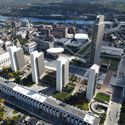
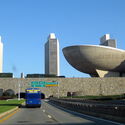
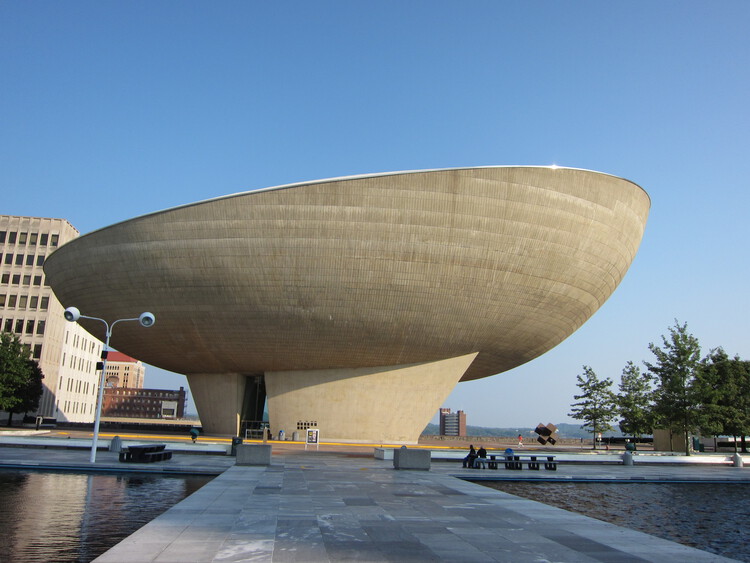
The Egg is a performing arts centre located in Albany, within New York's Empire State Plaza, designed by the North American firm Harrison & Abramovitz. Construction began in 1966 and was completed twelve years later, in 1978, with the aim of hosting a broad range of cultural events and performances for New York State residents. Drawing inspiration from Brazilian modernism, the domed, egg-like concrete structure stands out as a striking counterpoint within an otherwise rational urban ensemble. Surrounded by state government towers set in an open plaza and clad in stone, the building's exposed concrete, its seemingly suspended form, and pronounced curved geometry position it as a late example of modernist Brutalism. The venue is currently undergoing restoration and, after six months of renovations, is set to reopen on January 8, 2026, in what has been described as a "refreshed and reimagined" space.

The Egg Performing Arts Center Reopens Following Six-Month Restoration in Albany, New York - Image 1 of 4The Egg Performing Arts Center Reopens Following Six-Month Restoration in Albany, New York - Image 2 of 4The Egg Performing Arts Center Reopens Following Six-Month Restoration in Albany, New York - Image 3 of 4The Egg Performing Arts Center Reopens Following Six-Month Restoration in Albany, New York - Image 4 of 4The Egg Performing Arts Center Reopens Following Six-Month Restoration in Albany, New York - More Images

One Month to Go: Adaptive Reuse and Alpine Transport Upgrades Shape the Road to Milano Cortina 2026

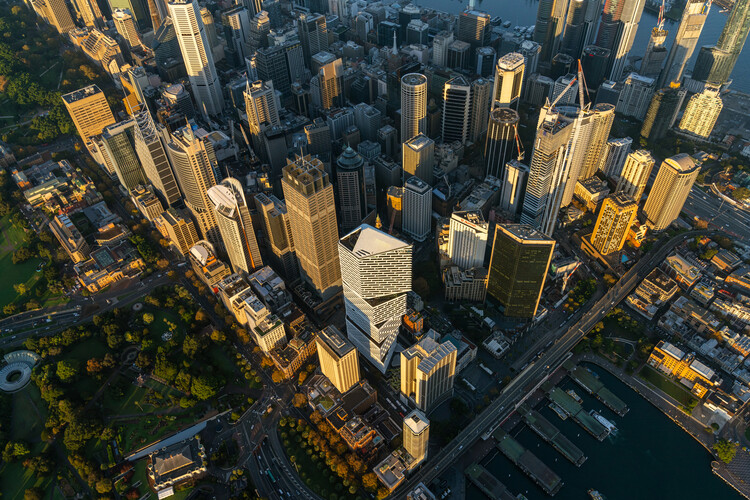
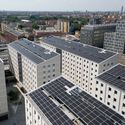
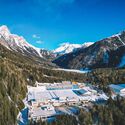
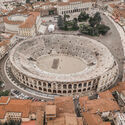
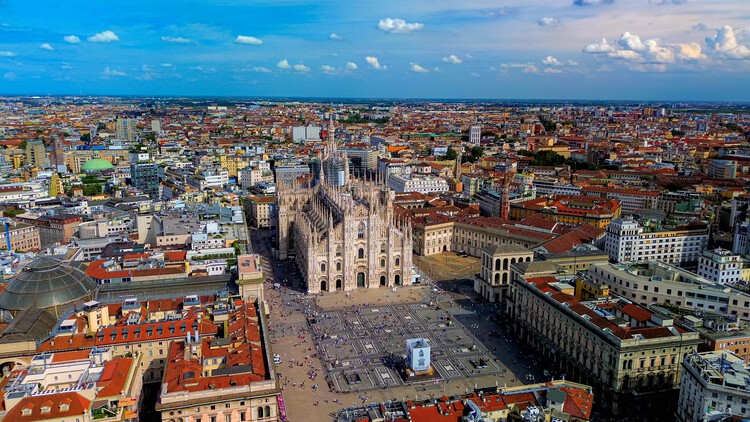
One month remains until the Opening Ceremony of the Olympic Winter Games Milano Cortina 2026, with competitions set to run from February 4 to 22, 2026. The Opening Ceremony will take place on February 6 at the Milano San Siro Olympic Stadium and will bring together approximately 2,900 athletes from around the world competing across 16 sports, with 116 gold medals to be awarded. The Olympic Winter Games return to Italy twenty years after Torino 2006 and seventy years after Cortina 1956. This edition, however, adopts a markedly different approach, proposing a shift away from the traditional high-cost, high-waste model toward adaptive reuse, renewable energy, and long-term regional development. The most geographically dispersed Winter Games in history plan to rely on 92% existing or temporary venues, build on regions with established tourism industries, avoid major environmental disruption, and implement circular design and recycling strategies, the results of which will become evident in the coming months. The Milano Cortina 2026 Winter Paralympics will follow, taking place from March 6 to 15, 2026.

One Month to Go: Adaptive Reuse and Alpine Transport Upgrades Shape the Road to Milano Cortina 2026 - 1 的图像 4One Month to Go: Adaptive Reuse and Alpine Transport Upgrades Shape the Road to Milano Cortina 2026 - 2 的图像 4One Month to Go: Adaptive Reuse and Alpine Transport Upgrades Shape the Road to Milano Cortina 2026 - 3 的图像 4One Month to Go: Adaptive Reuse and Alpine Transport Upgrades Shape the Road to Milano Cortina 2026 - 4 的图像 4One Month to Go: Adaptive Reuse and Alpine Transport Upgrades Shape the Road to Milano Cortina 2026 - More Images+ 7

Who Owns Public Space? Three Active Models of Shared Management Shaping Urban Commons in Europe and New York

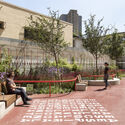
Public space is often understood as belonging to no one in particular, collectively accessible yet institutionally maintained, yet a growing number of initiatives are challenging this assumption by testing shared management and distributed ownership models. In Paris, Adoptez un banc introduces a sponsorship-based approach, allowing individuals and groups to support temporarily and symbolically claim responsibility for historic public furniture without compromising its collective use. Elsewhere in the city, community gardens operating under the Main Verte framework demonstrate a self-managed model, in which public and private landowners retain ownership while delegating day-to-day control to citizen associations for food production and shared use. In New York, Common Corner represents a third pathway, based on institutional collaboration and participatory design, where public agencies, nonprofits, designers, and residents co-produce public space within a public housing context. Taken together, these three cases suggest that care, authorship, and responsibility can be distributed across citizens and institutions, producing more resilient, locally grounded urban environments.

“Coming Together” Exhibition in Washington Explores Post-Pandemic Transformations of Community and Public Spaces

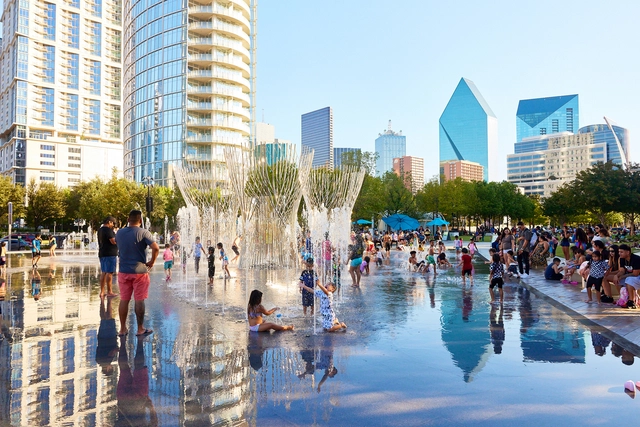
The exhibition Coming Together: Reimagining America's Downtowns, held at Washington, D.C.'s National Building Museum, explores the transformations underway in the United States' downtowns and the ways communities have organized to shape alternative urban scenarios. Curated by Uwe S. Brandes, Professor at Georgetown University, and designed by Reddymade and MGMT., it is the first of three major exhibitions within the Museum's Future Cities initiative, an interdisciplinary project examining the city as a hub, catalyst, essential building block, and reflection of society. Coming Together features examples from more than 60 U.S. cities, both large and small, highlighting lessons learned and opportunities embraced in the wake of the COVID-19 pandemic as communities adapt to lasting changes in work, housing, mobility, entertainment, and recreation. The exhibition is currently open to the public and will remain on view through Fall 2026.

“Coming Together” Exhibition in Washington Explores Post-Pandemic Transformations of Community and Public Spaces - 1 的图像 4“Coming Together” Exhibition in Washington Explores Post-Pandemic Transformations of Community and Public Spaces - 2 的图像 4“Coming Together” Exhibition in Washington Explores Post-Pandemic Transformations of Community and Public Spaces - 3 的图像 4“Coming Together” Exhibition in Washington Explores Post-Pandemic Transformations of Community and Public Spaces - 4 的图像 4“Coming Together” Exhibition in Washington Explores Post-Pandemic Transformations of Community and Public Spaces - More Images+ 18