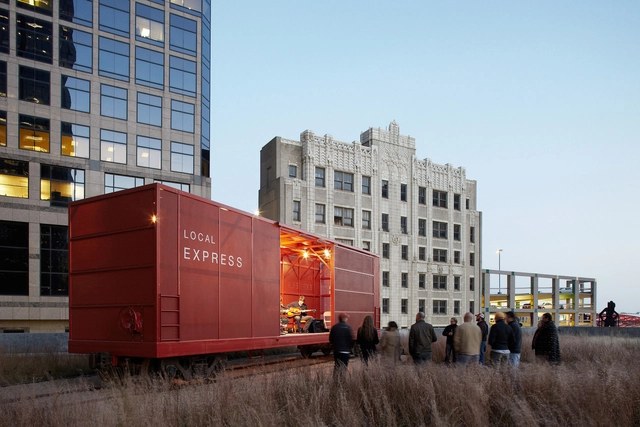
Almost 500,000 buildings have arrived at the Port of Los Angeles in 2021. Well- not exactly. Over 490,000 shipping containers have arrived, though. If there’s a design trend that has caught the world by storm over the past decade, it’s been the rise in transforming shipping containers into buildings as a form of architecture. But are shipping container buildings just a fad that was used to propel ideas about taking every day or is there more substance to creating giant Jenga-inspired structures?
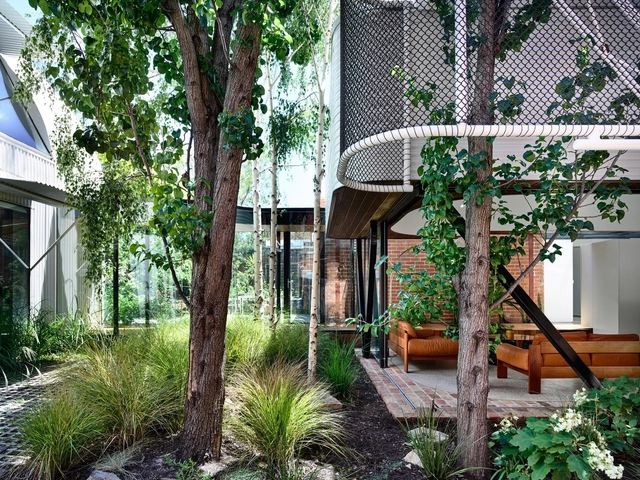
A healthy environment that is also visually appealing in our homes has become increasingly sought when it comes to designing houses and residential spaces, especially during the world’s current context. One of the most successful ways of achieving this is through a thoughtful design of the landscape that complements the built project. The art of landscaping is the arrangement of nature’s raw material elements, like vegetation and planting, combined with nonliving elements, such as exterior structures, paving, and decking, in order to create site-specific solutions that enhance the exterior spaces of a project.
The complexity of our world is constantly increasing, and with it, the pressure and demands placed upon our built environment. Architects are faced with a monumental task: to translate society’s ever-changing needs into tangible, effective and sustainable solutions. Pressing issues such as the climate crisis, rapid urbanization, population density and housing shortages call for a new architecture –one that isn’t afraid to questionthe traditional way of working and is prepared to take on the challenge. Today the industry must adapt, evolve and innovate to cope with these challenges. The availability of data is changing the game, and as technology continues to advance, it will open new ways of thinking, creating and engaging with the built environment.
In this article, we delve into the effects of the digital transformation, how it is reshaping the industry and the questions it raises about the future role of architects.
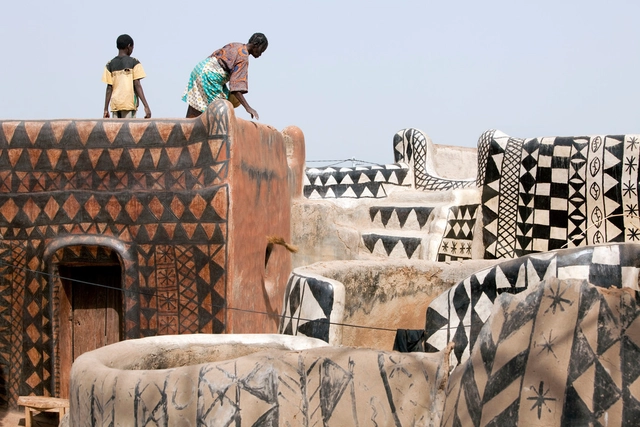
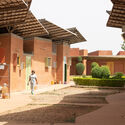
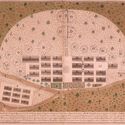
In the south of Burkina Faso, sharing borders with the northern environs of Ghana is Tiébélé; a small village exhibiting fractal patterns of circular and rectangular buildings, housing one of the oldest ethnic groups in West Africa; the Kassena tribe. With vernacular houses dating back to the 15th century, the village’s buildings strike a distinctive character through its symbol-laden painted walls. It is an architecture of wall decoration where the community uses their building envelope as a canvas for geometric shapes and symbols of local folklore, expressing the culture’s history and unique heritage. This architecture is the product of a unique form of communal collaboration, where all men and women in the community are tasked with contributing to the construction and finishing of any new house. This practice serves as a transmission point for Kassena culture across generations.
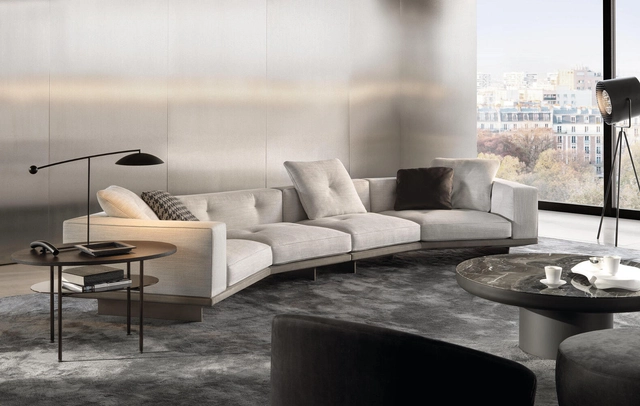
The airy and modern Dylan modular seating system by Rodolfo Dordoni for Minotti is contemporary with couturier details. Image Courtesy of Minotti
In a world of fast-paced change, Minotti’s pursuit of timeless design as well as its honed technical expertise result in elegant pieces that stand ready to elevate any interior with sophistication and style. The 2023 Collection demonstrates this, finding a balance between classicism and contemporaneity, organic lines and solid volumes.
Coordinated by Rodolfo Dordoni with Minotti Studio, the new collection expresses a single language of stylistic coherence derived from international voices such as Marcio Kogan / studio mk27, Nendo, GamFratesi, Inoda+Sveje and Gordon Guillaumier. While embracing consistency with Minotti’s design vision, the 2023 Collection explores new horizons with the aim of responding to the ever-changing nature of contemporary living.
In his latest TED Talk, Thomas Heatherwick decries a condition affecting areas of the city defined by monotonous buildings, or what he calls “an epidemic of boringness.” While recognizing the functionality which drove these designs, he states that functionality alone cannot ensure that the structures become active parts of urban life, as they often fail to provoke an emotional response from passers-by. Heatherwick explains that, in his view, this emotional function, or the ability of buildings to mean something to their users and visitors, is essential. When it succeeds, architecture can positively contribute to the quality of life and well-being of its residents, promote social cohesion and contribute to a sense of identity. So how can architecture provoke a positive emotional connection and provide an enjoyable backdrop to the communities it serves?
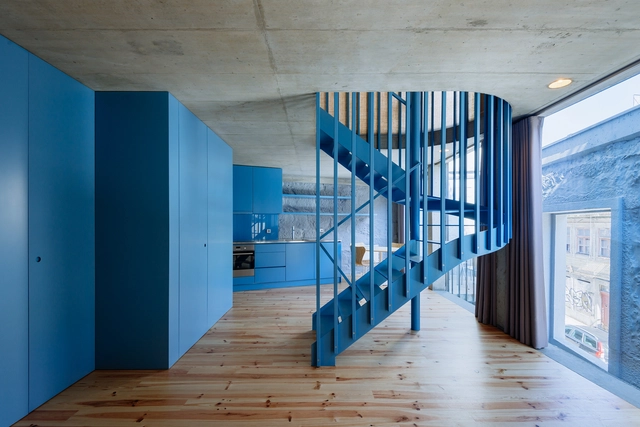
Colors directly influence space perception. Through them, it is possible to stimulate the user's mood - making the environment calmer or more dynamic - and also change our perception of space without changing a centimeter of any wall. Dealing with them is not always easy. In a time when we want rooms with more personality (or more "instagrammable"), learning to compose with different shades and textures is essential.
As true spatial orchestrators, architects’ expertise extends beyond the mere construction of buildings, often transcending the physical realm of design. They possess the unique ability to craft spaces that are not only visually appealing, but that also feel welcoming, harmonious, and, above all, functional. Embracing this vital role involves careful consideration of all the bits and pieces that make up a project; from a building’s foundations to a sofa, architects must ensure that all the elements, in every scale, tie together in a way that is cohesive and positively influences our everyday lives.
In this fourth feature, we met with co-chairs ofdesign for Health architectArif Hasan, former Visiting Professor NED University Karachi and member of UNs Advisory Group on Forced Evictions, and architectChristian Benimana, Senior Principal and Co-Executive Director atMASS Design Group
Environments that inspire, promote well-being and stimulate a connection with nature. Biophilic landscaping in education spaces recognizes the importance of this bond for student development, as it benefits well-being, academic performance, and people's health. We have selected eight projects that bring natural elements to the classroom or that place students directly in nature to illustrate the qualities in these spaces.
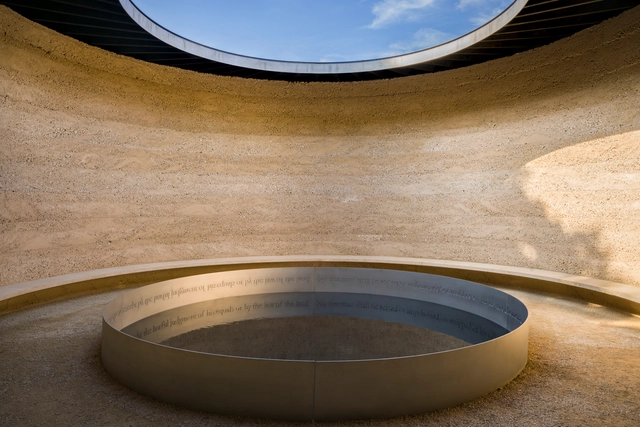
In a world of extravagant textures, colors, and flavors, who would have thought that a substance that has no color, no smell, and no taste is precisely the most essential for human existence? Antagonistic in itself, water carries an ambiguity of values and meanings that confer a high degree of complexity sustained by the versatile and soluble profile that distinguishes it in a complex simplicity. In this sense, water, as a source of life, has become an object of devotion and study over time. This has fostered a continuous effort focused on understanding, transporting, and controlling this element.
Videos
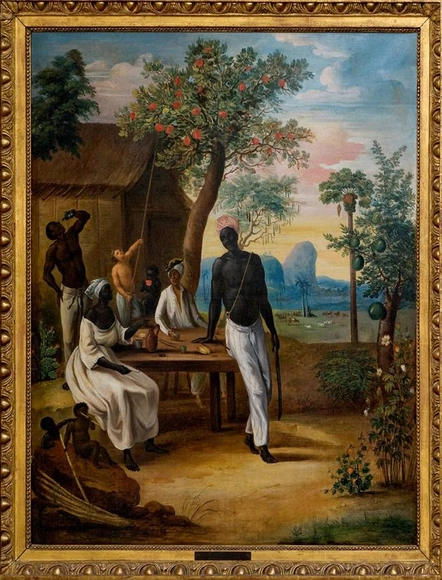
Le Masurier (documenté en 1769-1775). Esclaves noirs à la Martinique, 1775. Huile sur toile – 125 x 106 cm. Paris, ministère des Outre-mer / Archives nationales. Image Courtesy of Archives nationales
The institution of slavery shaped landscapes on both sides of the Atlantic Ocean. And in turn enslaved and free Africans and their descendants created new landscapes in the United States, the Caribbean, and Sub-Saharan Africa. African people had their own intimate relationships with the land, which enabled them to carve out their own agency and culture.
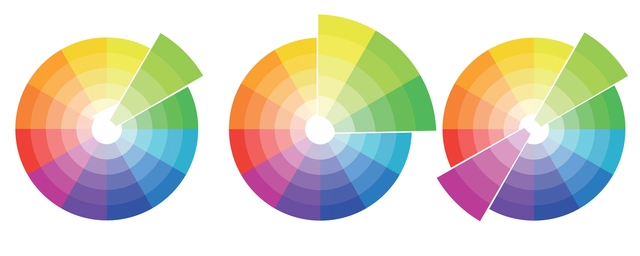
Even though Isaac Newton’s experiments and observations led to the development of the color wheel during the 17th century, his revolution in the understanding and application of colors continues to influence the creation of architecture and design projects. Arranging colors in a circular format, Newton mapped the color spectrum to create the first color wheel. As a visual representation of how colors relate to each other, it has been a fundamental tool for artists, architects, and designers to understand color relationships and therefore create appealing palettes for each space. Beyond merely “eyeing” color combinations, applying the color theory based on the geometric relationships in the color wheel helps designers determine which colors are suitable together. Color has the ability to play with spatial perception, create a sense of atmosphere, and evoke emotional responses, making it essential for design.
By exploring the multiple possibilities of the color wheel, we create a guide to enhance architectural design through three color combinations: monochromatic, analogous, and complementary.
Some architects have left their mark on history; one such case is Antonio Gaudí. Through his nature-inspired conceptions, he became the foremost representative of Catalan modernism. The impact of Gaudí's work can be seen on various architectural scales, including the Sagrada Familia, Parc Güell, Colònia Güell, Casa Milà, and Casa Battló, the latter being an iconic landmark of Barcelona’s architecture.
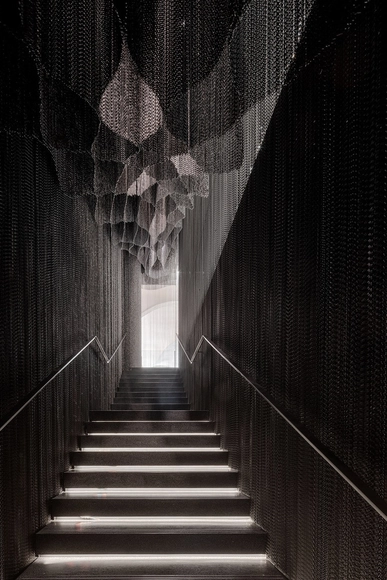
Casa Battló emerged from the renovation of an 1877 building, which was acquired in 1903 and subsequently commissioned to Gaudí for its transformation. Inspired by animal forms, particularly those of the ocean, the facade and interior were renovated using curves and a combination of vibrant colors. This intervention marked a turning point for the house, as it significantly changed the facade, redistributed the interior, and provided a sublime interaction with natural light. Following the nature of the renovation that began with Gaudí, a new interior project for the stairs and atrium of Casa Batlló was developed in 2021. This renovation is the result of a dialogue between the anodized aluminum chains developed by Kriskadecor and the abstraction of the ingenious use of light in Casa Batlló through Kengo Kuma's design.
https://www.archdaily.com/1001552/metallic-layers-in-dialogue-with-light-an-abstract-intervention-at-casa-batlloEnrique Tovar
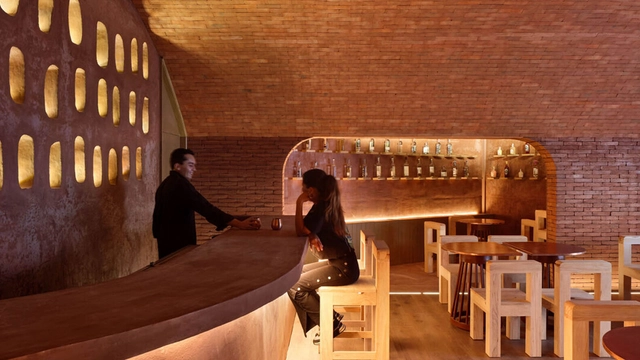
Mezcal is a Mexican beverage that has gained great popularity in the last decade. Its history dates back to pre-Hispanic times when cultures consumed various drinks derived from the agave plant in different ways. During the pre-Columbian period, this plant was used for various purposes, ranging from food to the production of fibers and medicines. However, within the different processes, they discovered that they could ferment and distill the juice of the agave to obtain an alcoholic beverage, which they called "pulque".
Einstein’s Special Theory of Relativity introduces the mind-blowing concept that time – as we know it – is not as stable and reliable as it first seems. As a defining characteristic upon which all of human history is referenced, the fallibility of time is a confusing prospect. 15 minutes, for example, seems an eternity while waiting in line, and yet the 300,000 years of human history equates to less than a day in the lifetime of the Earth.
So when we talk about ‘saving the planet’ by slowing and reversing climate crisis, what we really mean is extending our own existence upon it. Because no matter what we do, this rock will continue to spin for billions of years yet. In reality, humanity itself is only a temporary installation.
These four outdoor installation projects use the Earth’s environment and borrow its resources to investigate our human relationship with time, and how it affects our lives down here on the surface.
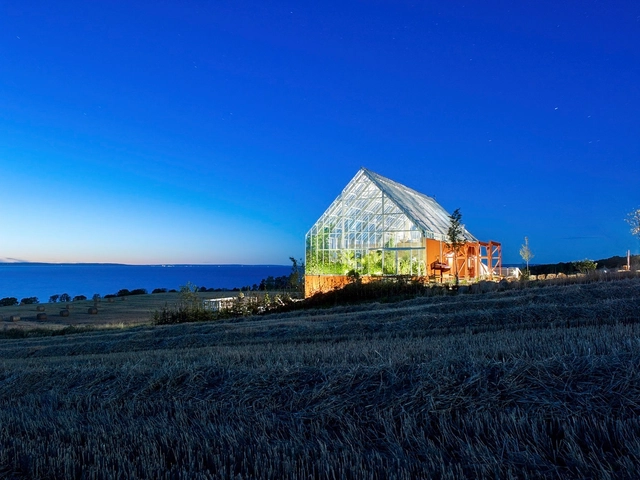
Researchers point out that "proto-greenhouses" arose to fulfill the desire of the Roman Emperor Tiberius (42 BC to 37 AD) to eat cucumbers every day of the year. Since it was impossible to grow the vegetable on the island of Capri in winter, his gardeners developed beds mounted on wheels that they would move into the sun when possible, while on winter days they would place them under translucent covers made of Selenite (a type of gypsum with a glassy appearance). But the production of large-scale greenhouses only became possible after the Industrial Revolution with the availability of mass-produced glass sheets. Since then, they have been used to grow food and flowers, forming a microclimate suitable for plant species even in places with severe climates. But in some cases, these artificial growing conditions can also form interesting living spaces. The recent Lacaton & Vassal awards rekindled this interest. How is it possible to create greenhouses that can be good for both humans and plants?
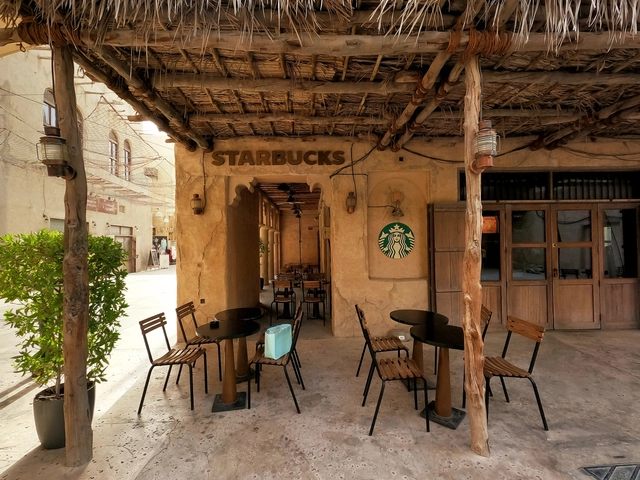
Two years ago, Starbucks' branch in Al Seef, Dubai captivated the internet with its contextual design. Located in the oldest part of Dubai, the renowned coffee outlet boasts a thatched roof, mud-like exterior finishes, traditional screens, and wooden furniture, all of which retain the picturesque charm of the landscape. The design not only garnered immense attention on social media but also attracted curious customers to the store. Effortlessly blending in with its regional context, the Al Seef branch has become an integral part of the locality. The store is one of Starbucks' many efforts at regionalizing its international outlets to create authentic connections with customers. In an era where consumers crave meaningful connections, regionalism in retail design emerges as a powerful design strategy.
Acquiring real estate through cryptocurrencies, such as Bitcoin (BTC), Ethereum (ETH), and Binance Coin (BNB), is already a reality in many countries, including the United States, England, and Brazil. With the rise of this market and the increasing acceptance of these assets as a legitimate form of payment, investors and buyers are exploring new possibilities for transactions with cryptocurrencies, including the real estate sector.
June 8th was World Oceans Day 2023, which brought the theme 'Ocean Planet: Tides are Changing'. The purpose of the United Nations was to generate a "new wave of enthusiasm for caring and protecting the ocean and the entirety of our blue planet."
A new opportunity to reflect on the importance of preserving these vast aquatic ecosystems that cover more than 70% of the Earth's surface - and an opportunity to reflect on how architecture can contribute to their protection and conservation through the design of resilient coastal infrastructure, the development of marine energy technologies, sustainable design of coastal buildings, and regeneration of marine ecosystems.
An arid environment refers to specific regions characterized by a severe lack of available water and extremely dry weather conditions. More specifically, arid regions by definition, receive less than 25 centimeters of rain per year. In the immense vastness of arid environments, where extreme climates present significant challenges, the role of water in architecture takes on a new dimension.
For centuries, architects and designers dealing with harsh desert landscapes and the vital necessity of water have invented techniques, technologies, and new structures. Moreover, many creative approaches have been created to harness, collect, and cool water in arid environments.
A trusted go-to for architects and interior designers, Buster + Punch’s hardware and fittings now feature in the smartest homes and hotels, Michelin-starred restaurants and concert halls. Image Courtesy of Buster + Punch
In 2013, home fashion label Buster + Punch emerged from a garage in East London, with a refreshing stance on everyday detailing and fittings that elevated them into desirable and trendy pieces.
The brand’s founder Massimo Buster Minale was renowned for his work as an architect by day and maker of custom motorcycles by night – the latter sold from the garage a few hundred yards from his London flat. His motorcycle clients began commissioning one-off interior pieces and detailing for their homes. Minale had always struggled to find premium hardware and fittings for his architecture projects for Richard Rogers and Foster & Partners and now saw a clear gap in the market.
The university campus has a distinctive spatial typology. Established as a micro-city, these self-contained environments are subject to their ownrules and systems. They are designed as a deviation from the cities that host it to allow for the growth and proliferation of knowledge outside the status-quo. Centered around the transfer of information, academic centers are becoming increasingly relevant to urbanism. Campuses and their host cities evolve to mimic each other's structure, forming opportunities for urban renewal.
Land reclamation from the sea has become a popular phenomenon in coastal development. It is the most preferred solution to the need for land in coastal areas and has been implemented for various use cases, including flood control and agriculture. Nowadays, it has become a famous urban response to the rapid increase in coastal urbanization, economic activity, and global population. Countries like China and the Netherlands lead the chart on the amount of land area reclaimed. However, most reclamation projects today take place within urban centers in the global south. Cities in West Africa, East Asia, and the Middle East produce these new lands as economic forerunners for their commercial industry and as platforms to house luxury residences.
But the relationship between the design and production of reclaimed lands and the response of water in ocean environments is complex. It requires a symbiotic relationship with water bodies for stability but can provoke natural forces when negligently imposed on the sea. Ocean water behaviors, including tidal accumulation, sea level rise, connection to wetlands, and aquatic biodiversity, can question the success or failure of land reclamation projects in different contexts.




_Frans_Parthesius__-_02_Villa_Fifty-Fifty_Design_Studioninedots_Photography_Frans_Parthesius.jpg?1620679031 "© Frans Parthesius")
_Jeremias_Thomas_MeMo_House_IMG_2037_01.jpg?1620678960 "© Jeremias Thomas")

_Peter_Eckert_01_-_04_Hood_River_Residence.jpg?1620679227 "© Peter Eckert")