
Following two years of legal disputes, 2020 AIA Gold Medalist Marlon Blackwell and HBG Design have reached a settlement to their infamous Saracen Casino case. The award-winning firm claimed that it was responsible for the design of the Saracen Casino in Pine Bluff, Arkansas, however, HBG Design, a Memphis design firm who Blackwell brought into the project as architect-of-record was taking credit for it instead. After performing extensive design work from 2017 to March 2019 then being abruptly fired from the project, MBA sued HBG for "copyright infringement, attribution, tortious interference, breach of contract, and unjust enrichment".
Although the case was settled, the battle is yet another incident in the ongoing debate of intellectual property in architecture, and the legal implications between design architects and architects of record.

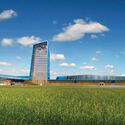
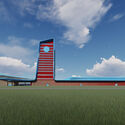
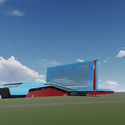

In 2017, Marlon Blackwell Architects was selected by the Quapaw Nation to design the first legal casino in Arkansas. The Quapaw Nation, the local indigenous tribe behind the project, used the architect's unique design as a reference to convince members of the Arkansas community to amend their constitution and legalize casino gambling. Upon approval, MBA selected Memphis-based HBG Design to provide the technical architecture work on the prospective $250 million "Saracen Casino", to which they agreed to split the net architectural fees for the rest of the project, which were approximately $14.9 million, with nearly 35% for MBA and the remainder going to HBG.


According to the lawsuit, HBG had direct access to Blackwell's copyrighted architectural design works all throughout the project. However, a couple of years after the the project was put in place, MBA was suddenly pushed out by HBG and dismissed from the project. Since then, HBG allegedly "continued working with MBA's designs and has made derivative works without MBA's authorization", which led to a legal dispute between MBA and HBG on who was the designer of the project.
The lawsuit, "MBA v. HBG/Saracen Development/John Lane Berrey" indicated that HBG Design took over Blackwell’s design after the completion of schematics, worked with Quapaw Nation to fire the design architects from the project without any financial compensation, violated MBA's copyright, and interfered with the firm’s business. Blackwell also claimed that HBG Design "provided false information" to John Berrey, chairman of the Quapaw Nation, leading to the firm being promptly removed from the project. However, the case never made it to court as Blackwell and HBG settled the case on terms that satisfied all involved parties, just before it was supposed to go to court last winter. The settlement was reached in January 2022, ensuring that MBA receive design credit for its work on the building, attributed as “HBG Design, Inc., architect of record, derived from an original design by Marlon Blackwell Architects, P.A.”


To Blackwell’s advantage, the firm had well-documented assertions of its intellectual property rights and proof of HBG’s access to the original digital design material, and BIM data available on a shared server. Had the case gone to trial, the entire argument would have been a reference for other designers who experience similar disputes.
BIM usage weighs against any denial of appropriation by HBG; the firm’s position does not speak well for their understanding of, or respect for, architectural intellectual property. The problem, of course, is that all the copyrightable material is highly liquid, because it’s all digital. When you’re working in someone’s Revit file, you’re essentially working in a three-dimensional, information-rich prototype proxy of the building. So the idea that you could have created a completely unique work of architecture when your starting point was somebody else’s Revit file is ridiculous. -- Phillip Bernstein, Yale University Professor and Previous Chair of the AIA National Contract Documents Committee
In 1990, Congress passed the Architectural Works Copyright Protection Act to protect the intellectual property of architects, however there's an ongoing debate on whether some designs are stolen or “modified” to become original.

A soft opening of the casino was held in October 2020 due to the pandemic, with an 80,000-square-foot gaming area. However, the design’s unique architectural element, the 13-story hotel tower, remains unbuilt, with no prospective construction dates.
News via The Architect's Newspaper and Architectural Record


