Subscriber Access

The Invisible Brief: How Laboratory Needs Shape Research Buildings

9:31
9:31

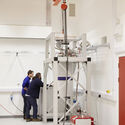
A floor that feels solid may still be moving. Vibrations travel through the ground and across buildings, often at levels too small for people to notice. Most have little effect on everyday activities, but in some research laboratories, instruments measuring matter at the nanoscale can register movements this small, and even traffic several miles away can interfere with an experiment.

Other experiments place different demands on the spaces around them. Equipment and the ducts and services above it often need more height than a conventional floor provides. Certain processes require continuous ventilation, while equipment generates heat that must be removed. The systems supporting this work occupy space of their own, and some of them produce the very vibrations that sensitive experiments need to avoid.


The Invisible Brief: How Laboratory Needs Shape Research Buildings - Image 1 of 41The Invisible Brief: How Laboratory Needs Shape Research Buildings - Image 2 of 41The Invisible Brief: How Laboratory Needs Shape Research Buildings - Image 3 of 41The Invisible Brief: How Laboratory Needs Shape Research Buildings - Image 4 of 41The Invisible Brief: How Laboratory Needs Shape Research Buildings - More Images+ 36

Content Loader

Image gallery

See allShow less
About this author
Cite: Daniela Andino. "The Invisible Brief: How Laboratory Needs Shape Research Buildings" 04 Nov 2026. ArchDaily. Accessed . <https://www.archdaily.com/1187930/the-invisible-brief-how-laboratory-needs-shape-research-buildings> ISSN 0719-8884
Engineering Collaborative Research & Education Building at Penn State University / Payette. Image © Warren Jagger

隐形的设计任务书:实验室需求如何塑造科研建筑

是否

You've started following your first account!

Did you know?

You'll now receive updates based on what you follow! Personalize your stream and start following your favorite authors, offices and users.