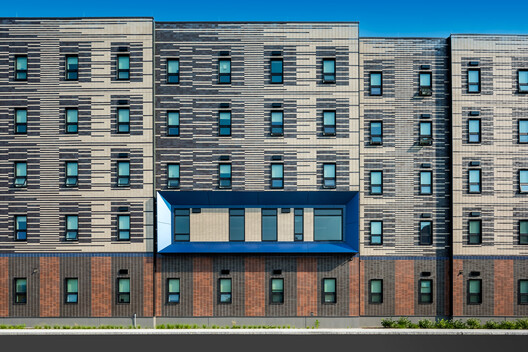
Masonry is often perceived through its weight, depth, texture, and sense of permanence. Yet these physical qualities also have several implications for the performance of a building envelope. From the thickness of the mortar joint to the weight of the material, every masonry decision is connected to considerations of durability, stability, and long-term performance, while preserving the material character associated with solidity and permanence. At Summer Street Apartments, thin brick offered a way to retain these qualities while accommodating the insulation and envelope requirements of an all-electric, net-zero energy building. Just as importantly, it helped give the project the residential character the architects were looking for.
Building permanent housing with supportive services requires particular attention to how residents experience the building from day to day. It means understanding their current and future needs, providing access to mobility and services, and considering how the spaces themselves can support well-being. Designing layouts that are easy to navigate, maximizing access to natural light, incorporating vegetation, and separating private spaces from shared gathering areas can help a building feel more residential and less institutional. For people transitioning out of homelessness, that distinction can matter from the moment they arrive.
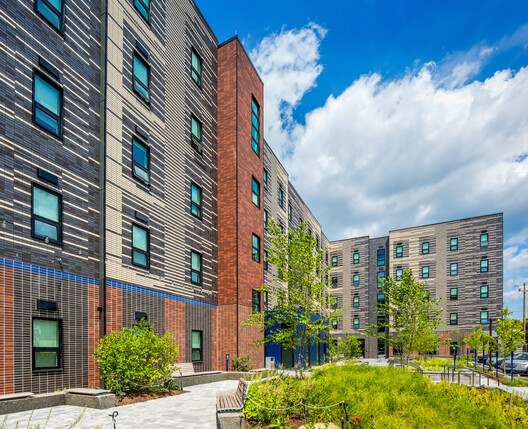
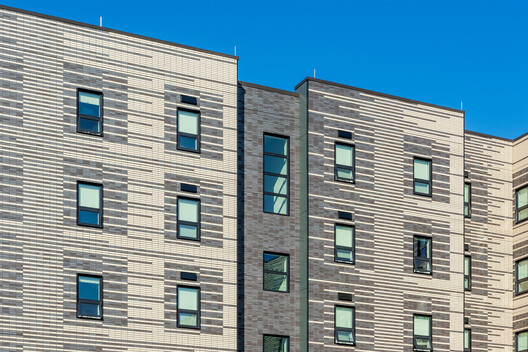
Summer Street Apartments was built on a vacant parcel within the Transit-Oriented Development zone near downtown Providence. The project uses biophilic elements, intuitive wayfinding, and a mix of private and communal spaces alongside high-performance building strategies and net-zero energy goals. Designed by KITE Architects, the project had to combine a high-performance building envelope with a warm and durable exterior within the same wall assembly. The design team selected thin brick from Summitville—a General Shale brand—in a combination of four colors: 26 Savannah, 401 Graphite, B109 Andover Blend, and Aquavue, a blue-glazed finish. A gradient pattern, anchored by a red-brick base, uses shifts in color to add visual depth and recall the masonry character of traditional urban buildings. The upper volumes are set back to respond to the site constraints and create visual interest along the roofline. Several common rooms are distributed along the north façade on the upper levels, providing spaces for gatherings and community interaction.
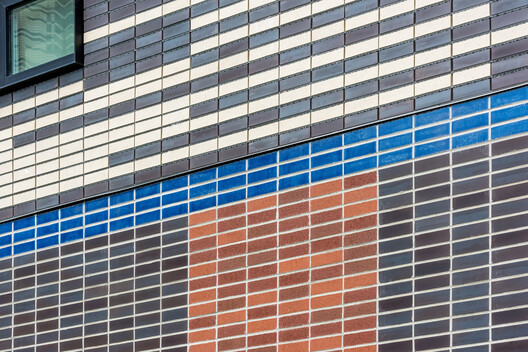
Thin brick can reduce the thickness and weight associated with masonry cladding while retaining its appearance and surface texture. While a conventional-thickness brick veneer adds weight and depth to a wall assembly, a high-performance envelope also needs space for continuous insulation and carefully detailed air-sealing layers. By reducing the depth of the cladding, thin brick leaves more room within the assembly for these components. At Summer Street Apartments, this helped make brick compatible with the requirements of an all-electric, net-zero energy building without giving up the visual and tactile qualities of masonry.
Performance, however, was only one constraint. The wall system also had to meet a tight budget and construction schedule, requiring close coordination among the manufacturer, installer, mason, contractor, and design team. Energy-efficiency measures, tax credits, and green incentives allowed the project to bring together seven different programs and secure more than $2 million in funding, including programs tied to Zero Net Energy and Energy Star standards. Every material had to contribute to this funding structure, meeting required performance levels without increasing costs or disrupting the construction schedule.
Solar energy—generated both on-site and off-site—is combined with electric systems to keep the building's operating costs low after construction is complete. Together with the use of a low-maintenance façade material, these strategies prepare the building to control costs for decades, demonstrating how a façade decision can influence building performance throughout its life cycle.
"For residents, this financial and environmental strategy directly translates into more stable and sustainable living conditions. Lower operating costs help maintain affordability, while the building's high-performance design creates a healthier and more comfortable environment." —KITE Architects
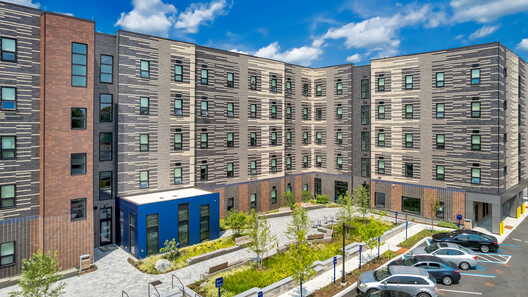
At Summer Street Apartments, material selection is closely tied to both construction costs and environmental performance. The project's energy and funding strategies connect decisions made during design and construction with the building's future operating costs. Thin brick plays a specific role in this equation: reducing the depth and weight of the cladding while leaving more room for insulation and high-performance envelope details. In this case, adapting brick to a thinner format allows the building to meet demanding performance requirements while retaining the texture and permanence associated with masonry.


