(1).png)
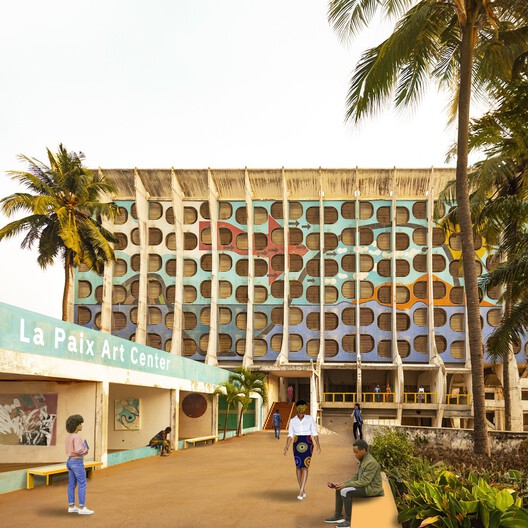
"Architecture that holds multitudes." This is the phrase Studio NEiDA uses to introduce itself, making its position toward the world clear: to listen to and respect the plurality of existences that move through each context. More than a statement of principles, the phrase seems to function as a method. What does it mean, after all, to design spaces capable of sheltering not only people, but also memories, knowledge, and conflicts?
There is no denying that Studio NEiDA's plural approach is, in part, rooted in its own geographical position. Working between Togo and Germany, the practice operates across two seemingly distinct contexts that are nevertheless historically connected. In a recent interview, Jeanne Autran-Edorh, the French-Togolese architect and co-founder of the studio, alongside the curator and writer Fabiola Büchele, recalls the history between the two countries, noting that, as few people know, before becoming an independent republic, Togo was a German colony that later came under French rule.