ArchDaily Next Practices Awards

ArchDaily Next Practices Awards

presented by

The ArchDaily Next Practices Awards celebrates emerging professionals and firms expanding the boundaries of architecture.

More Architecture for Less: SSdH and the Latent Potential of Existing Buildings

More Architecture for Less: SSdH and the Latent Potential of Existing Buildings

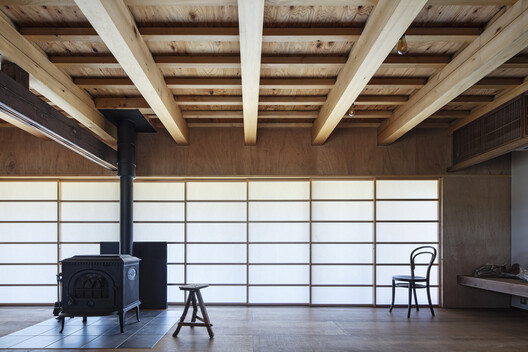
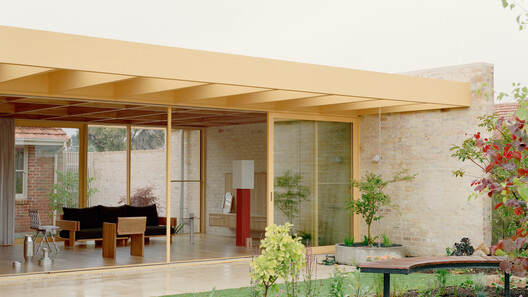
Amid growing recognition of architecture's responsibility toward environmental and planetary ecologies, contemporary practice is increasingly oriented toward working with what already exists—its material, spatial, and historical conditions. Within this shift, architecture and design aesthetics are increasingly about reshaping inherited environments. This approach underpins the work of SSdH, a Melbourne-based architecture practice founded in 2020 by Todd de Hoog, Harrison Smart, and Jean-Marie Spencer. Working across scales of renovation, extension, and adaptive insertion, the studio consistently engages existing buildings as active agents. Winner of the ArchDaily 2025 Next Practices Awards, the Australian firm foregrounds environmental responsibility, material economy, and collaborative processes grounded in site-specific conditions.

Read more »

Reading the Territory: The Landscapes of Estudio Ome

Reading the Territory: The Landscapes of Estudio Ome

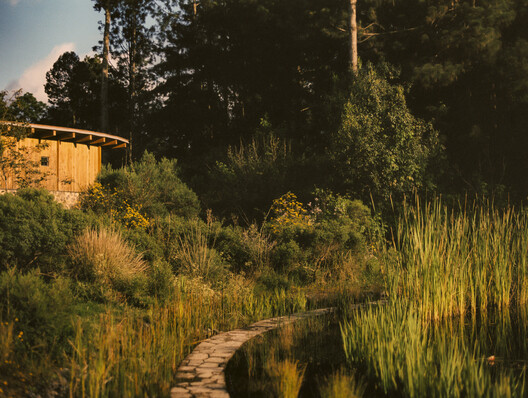
Based in Mexico City, Estudio Ome, founded by Susana Rojas Saviñón and Hortense Blanchard, is an architectural and landscape practice working across forests, volcanic terrains, urban fragments, and former industrial sites. Winner of the ArchDaily 2025 Next Practices Awards, the studio develops projects through sustained observation of ecological and territorial conditions, where design decisions arise directly from the behavior of soil, water, vegetation, and ground.

Read more »

“Earth Is Not Nostalgia”: Hand Over on Design-Build and Local Materials

“Earth Is Not Nostalgia”: Hand Over on Design-Build and Local Materials

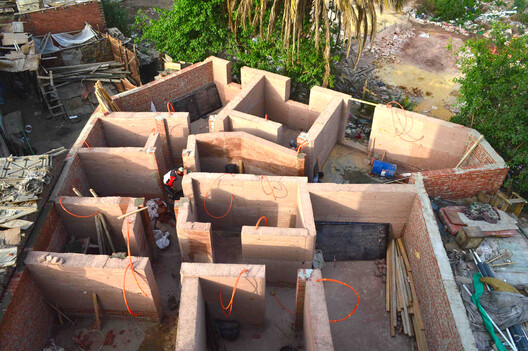
Each year, the ArchDaily Next Practices Awards highlights emerging studios that are expanding the scope of architecture through new methods, materials, and ways of working. Selected from a global pool, these practices reflect a shift away from singular definitions of the discipline, engaging instead with broader questions of construction, environment, and social impact. Rather than operating within fixed categories, many of these studios position themselves across fields, combining design, research, and production to respond to contemporary conditions.

Read more »

"Calibrated Instability": Daryan Knoblauch on Building With Tension, Time, and Light

"Calibrated Instability": Daryan Knoblauch on Building With Tension, Time, and Light

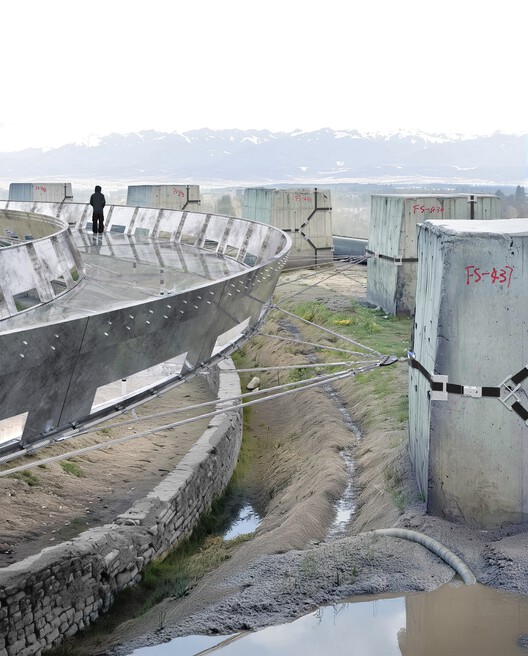
Daryan Knoblauch's work sits at the intersection of architecture and live cultural production, with a focus on how space is made legible through tension and atmosphere. Rather than treating temporary work as a lesser category of architecture, Knoblauch approaches installations, stages, and event architectures as full disciplinary problems—where enclosure, stability, light, and movement must be resolved with the same seriousness as any building, often under tighter constraints and faster timelines.

Read more »

Public Space in Use: Región Austral and the Architecture of Everyday Life

Public Space in Use: Región Austral and the Architecture of Everyday Life

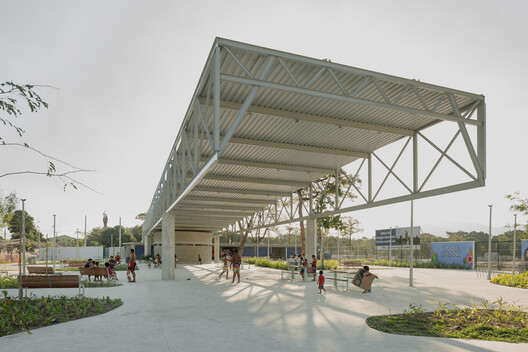
Architecture is often evaluated through what gets built. But in many cases, what matters happens after: how spaces are used, adapted, and made part of everyday life. For Región Austral, winner of ArchDaily's 2025 Next Practices Awards, this is where design really begins. Working across many contexts, the practice approaches public space not as a single object, but as something that needs to be activated, negotiated, and sustained over time. Their projects focus less on defining form and more on creating the conditions for use, with design serving as the starting point.

Read more »

“Material Is Where the Story Begins”: Studio NEiDA on Building Through Craft and Context

“Material Is Where the Story Begins”: Studio NEiDA on Building Through Craft and Context

Studio NEiDA operates at the intersection of architectural practice, research, and curatorial work, with a consistent focus on how buildings emerge from the material and cultural conditions of a place. Rather than treating materiality as a finishing language, the studio frames it as the beginning of an architectural narrative—starting from what is locally available, they look at what craft knowledge exists on the ground, and how those resources and skills situate a project within an architectural lineage. This approach foregrounds limitations and possibilities as productive forces, and positions design as an iterative process of aligning spatial intent with the realities of construction culture and vernacular intelligence.

Read more »

Arquivo: Deconstruction and Material Reuse for a Circular Architecture

Arquivo: Deconstruction and Material Reuse for a Circular Architecture

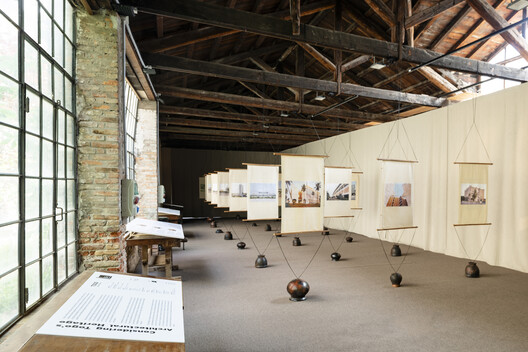
The construction industry today faces an unavoidable paradox: the urgent need for sustainable solutions for the future of cities collides with the exhaustion of the term "sustainability" itself, often reduced to a hollow commercial label. In this scenario, Arquivo – one of the winners of ArchDaily's 2025 Next Practices Award – emerges as a facilitator and mediator between different stakeholders in the construction field through disassembly – or rather, de-construction – and the reuse of building elements. Etymologically, if "construction" derives from the Latin construere (to heap up, assemble), the prefix "de-" imposes a conceptual inversion: it is not about destroying, but about disassembling with intelligence to understand the logic of the parts.

Read more »

Choreographing Lagos: Dele Adeyemo on Dance, Cosmology, and Spatial Practices

Choreographing Lagos: Dele Adeyemo on Dance, Cosmology, and Spatial Practices

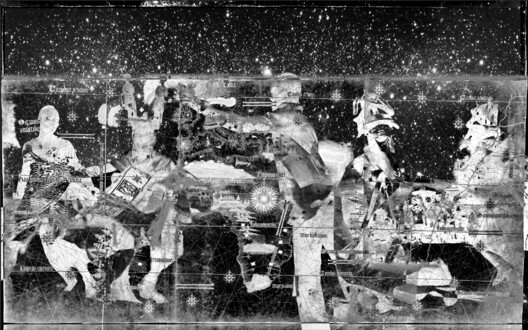
Having thrown a stone today, Eshu kills a bird of yesterday. The Yoruba proverb tells both a story of reparation and of ancestrality by joyfully bending spacetime conventions and accessing subjects from the past with present actions. The saying offers a poetic entry point to broader West African traditions and to the practice of Scottish-Nigerian artist and architect Dele Adeyemo. Named one of the winners of the ArchDaily 2025 Next Practices Awards, Adeyemo's work brings together ecology, spirituality, dance, and territory, examining how embodied cultural practices can generate alternative spatial possibilities within and against the architecture of racial capitalism.

Read more »

First Aid for Endangered Heritage: An Interview with Ambulance for Monuments

First Aid for Endangered Heritage: An Interview with Ambulance for Monuments

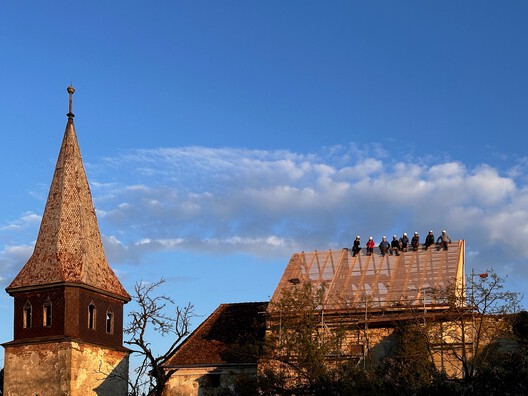
Ambulance for Monuments is a first-aid initiative dedicated to safeguarding Romania's endangered built heritage, operating in a race against time to prevent collapse and irreversible loss. The project responds to the growing vulnerability of historic structures, from Saxon fortified churches and manor houses to wooden churches and rural landmarks, many of which no longer benefit from the community networks that once sustained them. In a country deeply affected by emigration since 1990, where nearly half the population still lives in rural areas, entire villages have lost the people, skills, and everyday care that once kept these monuments standing.

Read more »

Deir ez-Zor: Raising Hope Through Heritage Documentation

Deir ez-Zor: Raising Hope Through Heritage Documentation

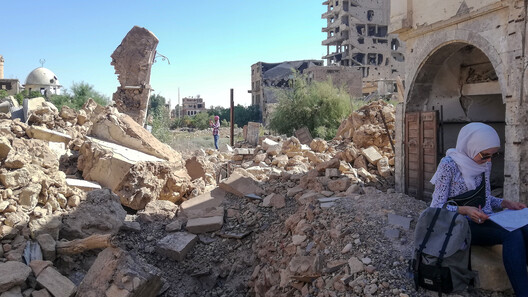
The historic city of Deir ez-Zor in eastern Syria has had more than its fair share of calamity after the outbreak of the war in 2011. After seeing destruction caused by fierce battles between armed groups and the central government, as well as occupation by ISIL, the earthquake in February 2023 brought further damage. Behind the headlines, however, is an ancient city tracing its founding to the dawn of civilization on the banks of the Euphrates River, with living architecture from the Ottoman and French Mandate periods. A winner of the ArchDaily 2025 Next Practices Awards, the Deir ez-Zor Heritage Library aims to revitalize the city and support sensitive reconstruction by documenting and promoting its built heritage.

Read more »

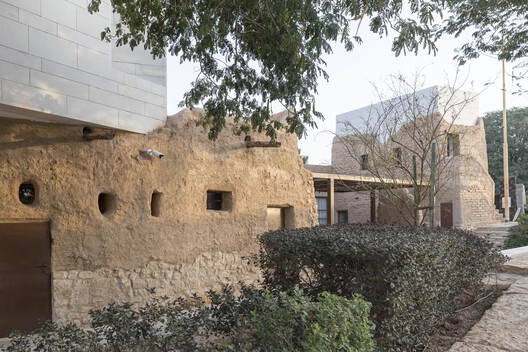
Setbacks as Courtyards: How Civil Architecture Reimagines the Gulf House in Bahrain

Setbacks as Courtyards: How Civil Architecture Reimagines the Gulf House in Bahrain

For centuries, domestic architecture throughout the Gulf has been organized around the courtyard. Houses presented thick exterior walls and limited openings to the street, turning inward toward a shaded garden that structured everyday life. This spatial arrangement responded to both climate and culture. The courtyard brought daylight into deep plans, enabled cross-ventilation, and provided a protected outdoor environment within dense urban fabrics. In the House with Seven Gardens, in Diyar Al Muharraq, Bahrain, the Bahrain-based practice Civil Architecture, one of the winners of the ArchDaily 2025 Next Practices Awards, revisits this spatial tradition through the conditions of contemporary suburban housing. Rather than reproducing the courtyard house as a historical model, the project reinterprets its environmental logic within the regulatory frameworks and spatial conditions that shape much of today's urban development in the Gulf.

Read more »

Mapping Space Without Sight: Inside SEAlab’s Sensory Architecture

Mapping Space Without Sight: Inside SEAlab’s Sensory Architecture

Founded in 2015 in Ahmedabad by Anand Sonecha, SEAlab is a practice shaped by a slow, contemplative engagement with place, proportion, and participation. Recognized as one of the winners of the ArchDaily 2025 Next Practices Awards, the studio builds with simple materials and local techniques, pursuing environments that are experienced as much as they are seen. This ethos became particularly tangible in Gandhinagar, where the School for Blind and Visually Impaired Children did not begin as a purpose-built institution. The school had been operating from an existing primary school building, with classrooms stacked above dormitories and twelve children sharing a single room. Space was limited, and so were growth opportunities. The new academic building was required to expand capacity, improve living conditions, and support greater student independence.

Read more »

Drawn by Hand: Géométral's Site-Specific Architecture

Drawn by Hand: Géométral's Site-Specific Architecture

Founded in 2022 by Clément Masurier and based in Paris, France, Géométral is an architectural practice defined by design strategies that are linked to the landscape, which it treats as a primary determinant of form. The studio, one of the winners of the ArchDaily 2025 Next Practices Awards, approaches each project as a small universe that combines program, atmosphere, and spatial narratives. Rather than a single signature style, they focus on crafting moods and situations tailored to each context and user.

Read more »

Framing Life Through Voids and Verandahs: The Architecture of pk_iNCEPTiON

Framing Life Through Voids and Verandahs: The Architecture of pk_iNCEPTiON

Founded as a practice working across architecture and community-focused projects, pk_iNCEPTiON is based in Maharashtra, India. The studio, one of the winners of the ArchDaily 2025 Next Practices Awards, works on rural schools, houses, libraries, and public buildings, with a focus on spatial organization and adaptability. Operating across varied social and climatic contexts, pk_iNCEPTiON approaches design through careful attention to movement, scale, and the relationship between built form and open space. 

Read more »

Inside Contemporary Kazakhstani Architecture: Exploring the Work of NAAW

Inside Contemporary Kazakhstani Architecture: Exploring the Work of NAAW

Selected as one of the winners of ArchDaily 2025 Next Practices Awards, NAAW represents a new generation of architectural studios reshaping contemporary practice in Central Asia. Founded in 2019 by Elvira Bakubayeva and Aisulu Uali, the studio operates at the intersection of research, interdisciplinary collaboration, and spatial experimentation, positioning architecture as a tool for reflection and an active agent in shaping contemporary Kazakhstani identity.

Read more »