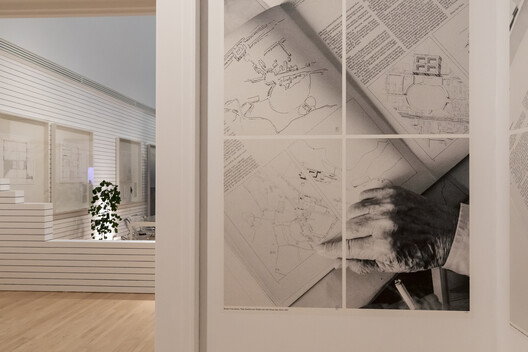
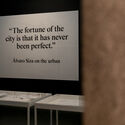
The Canadian Centre for Architecture (CCA) is presenting "The fortune of the city is that it has never been perfect," an exhibition dedicated to the urban work of Portuguese architect Álvaro Siza. On view in the institution's Main Galleries from May 21, 2026, to January 10, 2027, the exhibition examines Siza's approach to city-making through a selection of projects that engage with the historical, social, and physical conditions of existing urban environments.
Curated by Giovanna Borasi with Laura Aparicio Llorente as curatorial assistant, the exhibition explores how Siza's architectural practice extends beyond the design of individual buildings to encompass neighborhoods, public spaces, and broader urban structures. Rather than presenting the city as a fixed or idealized condition, the exhibition focuses on Siza's method of working with existing contexts, considering history, topography, infrastructure, and everyday life as fundamental components of the design process. Through this perspective, the exhibition reflects on questions surrounding urban transformation, the continuity of the built environment, and the relationship between architecture and planning.

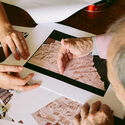
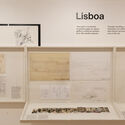
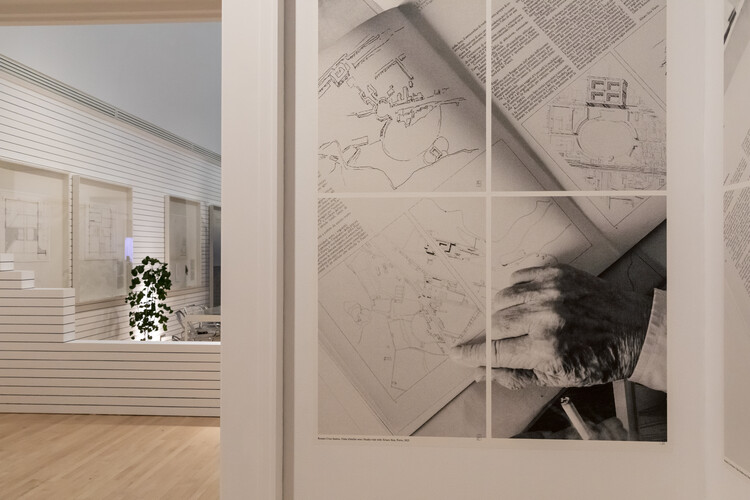
The exhibition draws extensively from the Álvaro Siza archive donated to the CCA, presenting original drawings, sketchbooks, architectural models, and photo collages alongside a selection of photographs documenting completed projects. Works by photographers Gabriele Basilico, Nuno Cera, Giovanni Chiaramonte, Alessandra Chemollo, and Balthazar Korab provide additional perspectives on the buildings and urban environments represented in the exhibition. The presentation also includes material by architects and historians whose work intersected with Siza's research or with the sites addressed in his projects, including Aldo Rossi, Gene Summers, James Stirling, Kenneth Frampton, and Jean-Louis Cohen, situating his urban investigations within broader architectural discussions.
Related Article
Museum of Art Pudong Presents "Jean Nouvel: Without the Artist, Architecture Disappears" in Shanghai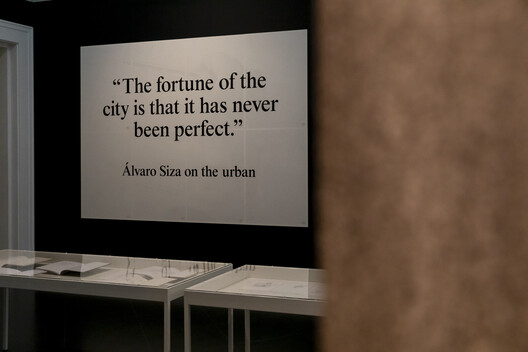
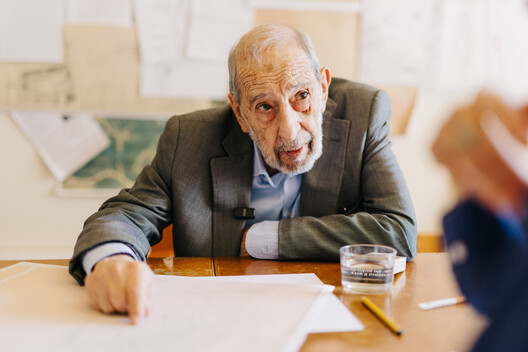
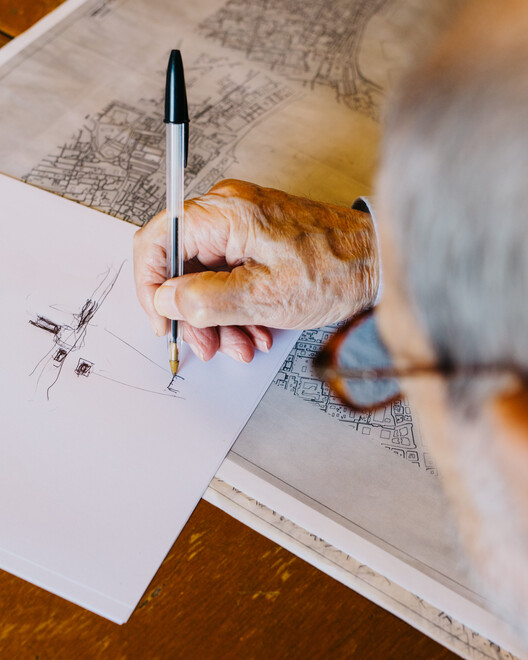
According to the CCA, the exhibition considers the city itself as a source of knowledge for future urban development, emphasizing the value of its accumulated physical, historical, and social layers. Instead of proposing universal solutions, it highlights Siza's project-based approach to understanding each place through direct observation, drawing, and careful engagement with its existing conditions, identifying the appropriate scale and form of intervention within an already established urban fabric.
The exhibition is accompanied by a publication centered on an oral history recorded with Siza over several days in Porto. The volume brings together archival documents, newly transcribed notes from the architect's sketchbooks, and previously unpublished material identified through a collaborative transcription initiative based on his archive.
Other recent exhibition news includes Jean Nouvel: Without the Artist, Architecture Disappears at the Museum of Art Pudong in Shanghai, the first solo exhibition by the Pritzker Prize laureate inside a building of his own design. As part of the UNESCO-UIA World Capital of Architecture programme, Barcelona's Jardí Botànic presents Parlour Gardens: Dreams from the Rooftop, featuring ceramic landscape installations by 14 international designers. Meanwhile, the Danish Architecture Center hosts PLACE by Dorte Mandrup's studio, exploring the relationship between architecture, landscape, and context through five projects across Northern Europe.