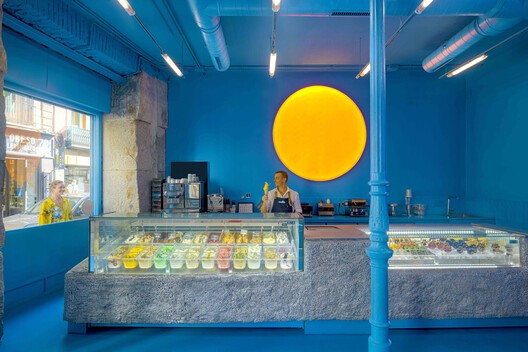
The ice cream shop functions as an exercise in branding through playfulness in retail and commercial spaces, a small architectural gesture designed to draw people in off the street or across the park. From dense urban cores to quiet coastal towns, designers return again and again to color, materiality, and childlike curiosity as the primary tools for these spaces. This consistency appears to persist regardless of climate, culture, or context, signifying that the common threads of design are connected by experience and indulgence.
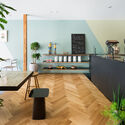
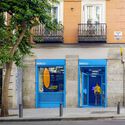
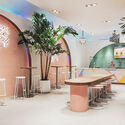

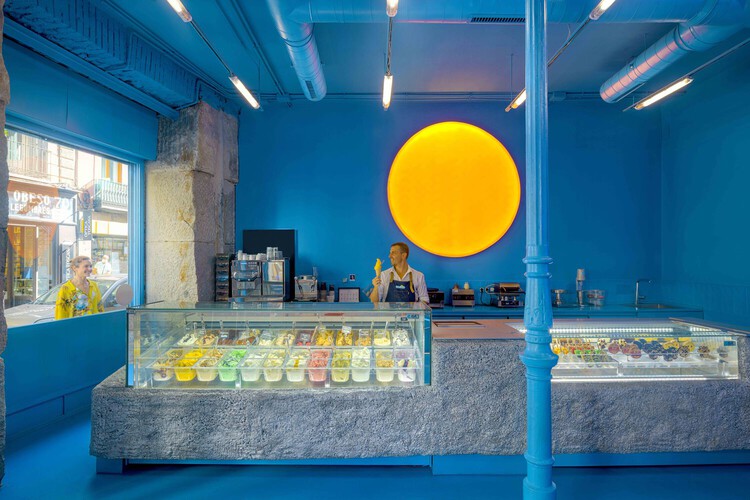
This collection considers that body of work across four distinct settings, each of which imposes its own logic on the design process. Urban storefronts must negotiate street presence and pedestrian flow within the rhythm of an existing block. Interior locations, often nested inside shopping malls or indoor markets, require designers to generate an identity without the benefit of a street facade, relying instead on lighting, signage, and material contrast to carve out a sense of place. Outdoor patios and terraces introduce questions of climate, seasonality, and the choreography of seating and shade. Pop-up and installation formats compress all of these concerns into temporary structures that must communicate memorably, through bold geometry or unexpected material choices.


