.jpg?1605120958)
.jpg?1605120958)
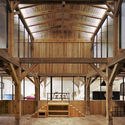
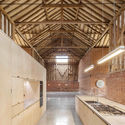
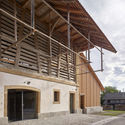
Much like silos and raised granaries, the barn is an essential building typology in agricultural storage. Their designs are typically simple and functional. Specifically serving as storage facilities for large volumes of raw materials, they are characterized by high ceilings, wide spans, and relative flexibility, protecting agricultural products—such as cereals, fruits, grains, straw, and hay—from the sun, rain, moisture, and pests.
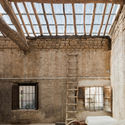
In the past, it was common for rural families or villages to manage their own food production, keeping barns and other outbuildings adjacent to their homes dedicated to working the land. However, the rapid evolution of farming methods—marked by modernization, the use of seed drills, improvements in fertilization and irrigation, and seed selection and breeding—led over time to a gradual increase in land productivity and yield. Consequently, new forms of land management began to take shape. Today, large-scale production, concentrated in specific regions of each country, is common, featuring almost fully mechanized processes. As a result, many small and medium-scale farms have ceased operations, and a significant percentage of the population has left rural areas to migrate to cities.

.jpg?1605120958 "From Barns to Houses: Contemporary Adaptation of Agricultural Architecture in Europe")


