

From projects and institutions that reinforce the relationship between art and architecture to initiatives seeking new approaches to persistent urban and ecological challenges, this week's developments reflect a broader effort to reconsider established frameworks and expand the role of design in contemporary society. Whether through adaptive reuse, policy innovation, artistic experimentation, or critical research, architects and cultural organizations are exploring how existing systems can be transformed to address emerging realities. These questions resonate across new architectural projects that translate environmental conditions and civic aspirations into built form. In Chicago, the completion of the Obama Presidential Center positions architecture as a vehicle for public memory, while in Albania, OODA's Lighthouse reinterprets local landscapes and traditions through a tower overlooking the Adriatic coast. Meanwhile, Heatherwick Studio's proposed AlUla Manara visitor centre responds to the conditions of Saudi Arabia's desert landscape, combining scientific research and tourism within a destination dedicated to observing the night sky.

Cultural Projects Reinforcing the Relationship Between Art and Architecture
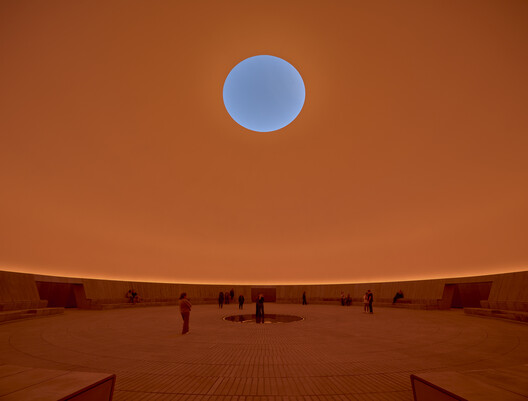
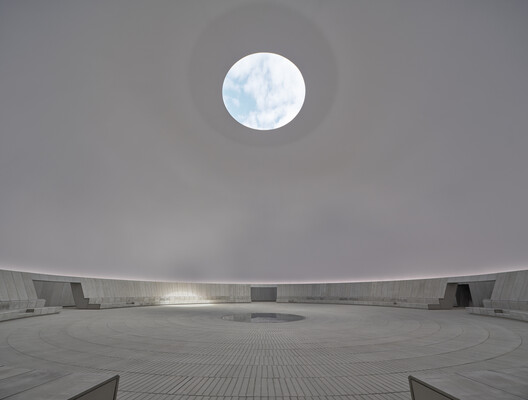
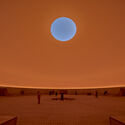
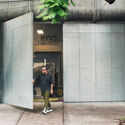
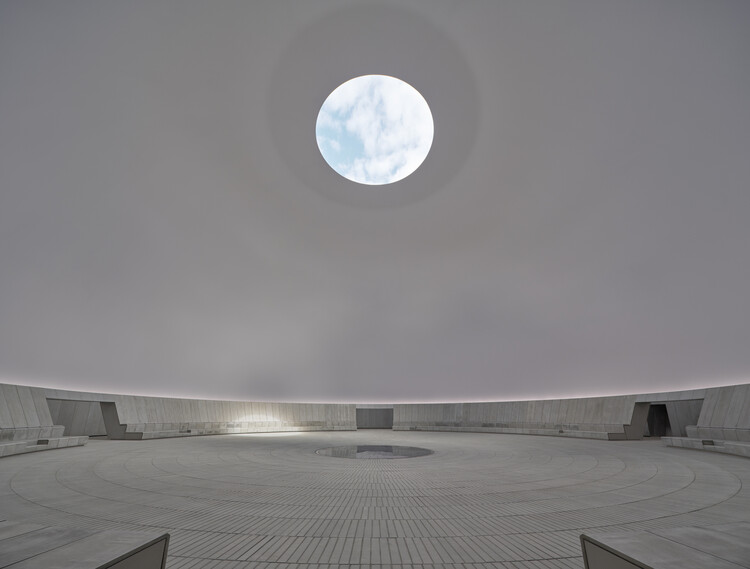
In a recent interview with Louisiana Channel, Mexican artist Pedro Reyes reflected on sculpture as a form of social practice, arguing that art is not a fiction but a "surplus reality." His work, which frequently operates at the intersection of public space, participation, and urban life, offers a perspective that resonates with contemporary architectural discourse, particularly in its emphasis on shaping social relationships through designed environments. Expanding this dialogue between artistic and spatial experience, Schmidt Hammer Lassen has completed the latest phase of the ARoS Aarhus Art Museum expansion, centered on James Turrell's immersive installation As Seen Below – The Dome. The project serves as a frame and an active medium for artistic perception, creating conditions in which light, space, and atmosphere become the work itself. Meanwhile, the London Museum has officially begun its move into Smithfield's restored General Market, a major adaptive-reuse project that transforms a historic market complex into a cultural institution. Beyond providing a new home for the museum's collections, the intervention highlights how heritage structures can be reinterpreted to support contemporary forms of cultural production, exhibition, and public engagement.
Related Article
“Art Is Not Fiction, but a Surplus Reality:” Pedro Reyes on Sculpture as Social Practice in Louisiana Channel Interview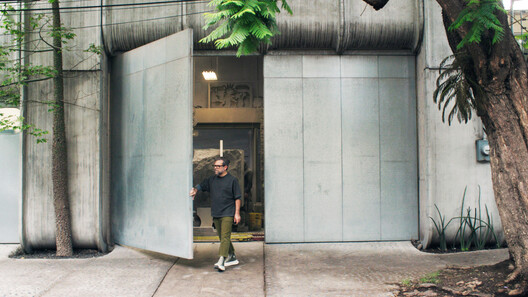
Rethinking Existing Systems to Address Contemporary Crises
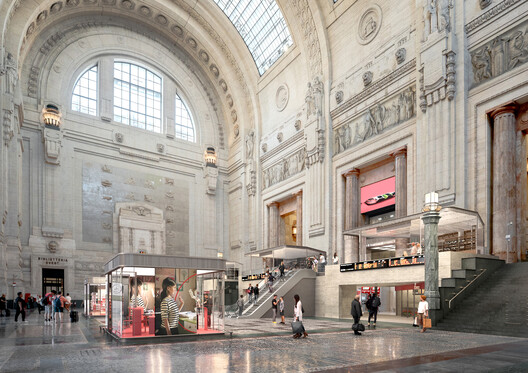
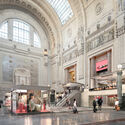
As cities and institutions confront mounting social, environmental, and economic pressures, recent initiatives suggest that addressing contemporary crises requires more than incremental adjustments; it demands new ways of thinking about existing structures and frameworks. In Milan, PARK has unveiled a proposal to reimagine the interiors of Milano Centrale, transforming one of Italy's most iconic railway stations and a monument closely associated with the Fascist era. Rather than treating the building solely as a preserved artifact, the project explores how adaptive interventions can reinterpret historical legacies while responding to present-day patterns of mobility and public use. A similar willingness to rethink established systems can be seen in New York City, where a series of new policies focused on construction, taxation, and financing seek to address the ongoing housing crisis.

This search for alternative models also extends to cultural and research institutions, increasingly positioning experimentation and critical inquiry as essential tools for responding to complex contemporary challenges.. The Graham Foundation's announcement of 54 new grants highlights the role of research and creative practice in generating new architectural knowledge at a moment when conventional approaches are being questioned across disciplines. Looking ahead to the 2027 Venice Architecture Biennale, the Swiss Pavilion proposes an examination of water not only as a resource but also as a political, ecological, and legal subject, reflecting broader efforts to rethink the relationships between ecosystems and the built environment. Likewise, the Tallinn Architecture Biennale 2026 has revealed a program centered on the theme How Much?, inviting participants to reconsider questions of value, resources, and limits in architecture.
On the Radar
Tod Williams Billie Tsien Architects' Obama Presidential Center Opens in Chicago's Jackson Park
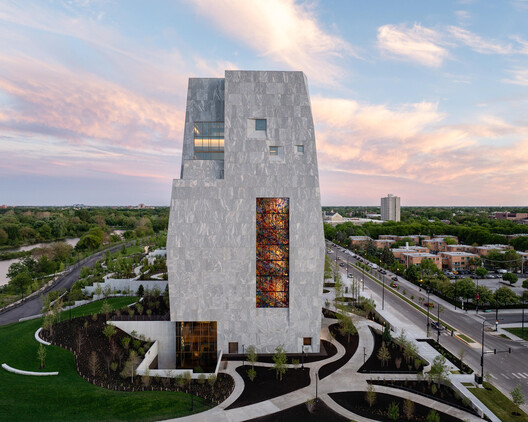
The Obama Presidential Center has officially opened in Chicago's Jackson Park, marking the completion of a project nearly a decade in the making. Designed by Tod Williams Billie Tsien Architects and developed by the Obama Foundation, the campus is located on Chicago's South Side, the neighborhood where Barack and Michelle Obama have personal roots. The project faced significant public debate throughout its development, with community advocates, preservation groups, and urban planners raising concerns over its impact on the historic Olmsted-designed park landscape and on long-term housing affordability in the surrounding area. The campus is organized around a central Tower building housing the primary museum and archive spaces, flanked by a Forum, a branch of the Chicago Public Library, and a Recreation Center. The buildings are clad in precast concrete developed specifically for the project, with surfaces that respond to light throughout the day. The landscape, designed in collaboration with landscape architect Michael Van Valkenburgh, restores a significant portion of Jackson Park to its original Olmsted plan, reintroducing native plantings and improving pedestrian connectivity between the park and the lakefront. The center is designed to serve as a civic and cultural anchor for the South Side, offering free public access to its outdoor spaces and programming facilities.
OODA Designs The Lighthouse, a Coastal Residential Tower on the Adriatic Coast of Albania
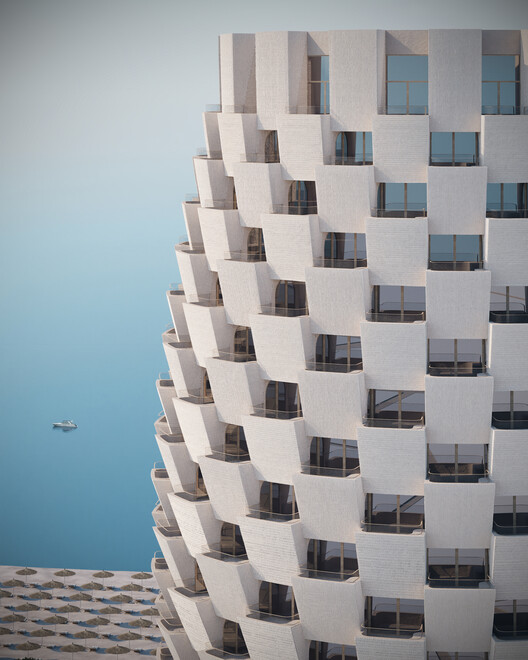
Situated on the Adriatic coast of Velipojë, Albania, OODA's The Lighthouse is an 18,474 sqm residential and hospitality tower currently under construction. The design is organized around a centralized cylindrical core that frees the building's perimeter from structural constraints, enabling a 360-degree panoramic relationship with the coastline and the urban fabric beyond. The formal language draws from the local landscape: the spiral geometry of the native pine cone, the profiles of traditional fishing boats, and the patterns of Northern Albanian craft weaving are translated into an alternating rhythm of concave and convex three-dimensional balconies that ring every level, managing solar incidence and filtering the sea breeze. Northern Albanian limestone, prefabricated concrete elements, and perforated surface panels handle passive thermal regulation and acoustic comfort, while green terraces planted with native coastal vegetation are added to promote microclimates of biodiversity.
Heatherwick Studio Unveils AlUla Manara, a Dark-Sky Visitor Centre in the Deserts of Northwest Saudi Arabia
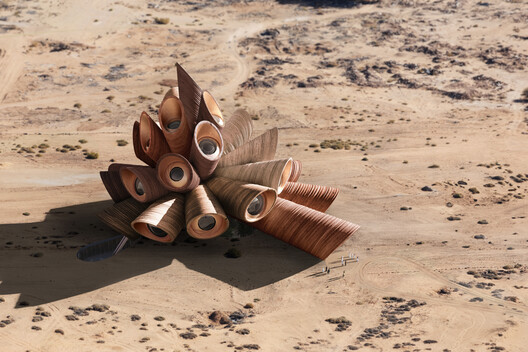
Heatherwick Studio has revealed the design for AlUla Manara, an astrotourism visitor centre to be built in the remote desert landscape of AlUla, northwest Saudi Arabia, an area recently designated as one of the region's first Dark Sky Parks. Selected by the Royal Commission for AlUla following an international design competition, the project is conceived as a shared hub for scientific research and public engagement with astronomy. The design takes its formal language from the spiralling geometries found across galaxies, planetary rings, fossils, and shells, translating them into three interlocking telescope-like tubular volumes clad in textured stone that references the sandstone mountains of the surrounding UNESCO World Heritage landscape. Inside, the program combines immersive exhibition spaces, a planetarium, a restaurant, and a rooftop observation deck with active research facilities. The broader masterplan extends the centre's reach into the landscape, incorporating on-site accommodation, a stargazing lodge, remote viewing pods, and connections to nearby hiking trails, as well as several new telescopes intended to serve a growing international community of astronomers.
This article is part of our new This Week in Architecture series, bringing together featured articles this week and emerging stories shaping the conversation right now. Explore more architecture news, projects, and insights on ArchDaily.


