

Following over two years of systematic destruction of life, habitat, and essential facilities in the Gaza Strip, a new front of war in Southwest Asia was announced on February 28th, 2026. Since then, US-Israeli military attacks have had a human and infrastructural impact on Lebanon, Syria, Iraq, and Jordan. In the months since, the attacks have only intensified, reaching the deepest ground advance into Lebanese territory in 26 years and leading to mass displacement in the southern part of the country. This latest stage of the conflict marks the sixth Israeli invasion of Lebanon since 1978, resuming a nearly 50-year history of Israeli military interventions in the country. While a ceasefire agreement was supposed to take effect on 27 November 2024 and expire on 2 March 2026, evidence of the destruction of towns and World Heritage Sites shows that it was never truly respected. UNESCO has consistently issued condemnations of "unlawful attacks against cultural property," the latest one responding to the "ongoing escalation of hostilities" on May 29th, 2026.
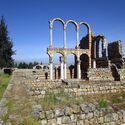
The Israeli offensive in Lebanese territory is concentrated in the south of the country, openly targeting control of territory up to the Litani River since March 16th, 2026. Official maps published by the Israeli military following the April 17, 2026, ceasefire agreement show the occupied zone covering around 10% of Lebanon's total land area. However, according to multiple international sources, the situation on the ground extends beyond the declared area and could reach up to a fifth of the country. On May 30, Israeli troops crossed the Litani River, previously the political limit of the offensive, for the first time since 2006, blowing up the main bridges over the river to cut off southern Lebanon. Satellite imagery has confirmed that Israel has razed more than two dozen Lebanese border towns and villages since March 2026, using tactics modelled on those used in Gaza.
The destruction has fallen most heavily on the city of Bint Jbeil, which, according to the city's mayor, has seen more than 70% of its area destroyed and 20% partially damaged. Other heavily affected districts include Nabatieh, the Tyre coastal district, the border zone of Marjayoun, and, most recently, the eastern Bekaa Valley. One of the most symbolic losses of the war took place on May 30 on a strategic hill near Nabatieh, when Israel seized Beaufort Castle, claiming the site was a military stronghold associated with Hezbollah, the same fortress Israel had captured in 1982 and held for 18 years. The castle was first struck on May 27th, despite holding the highest protection status granted by UNESCO in 2024. The listing includes five castles in the Mount Amel region of southern Lebanon, "representing some of the most remarkable examples of cultural and architectural exchange in the Near East during the medieval period."
Related Article
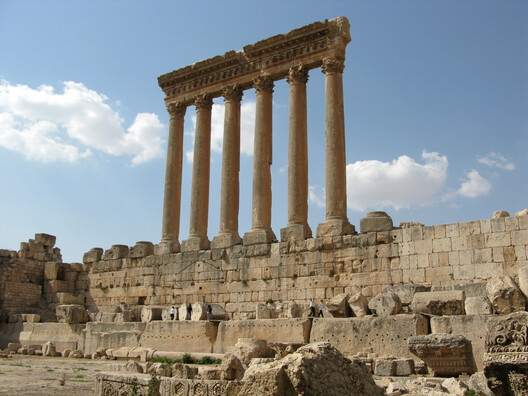
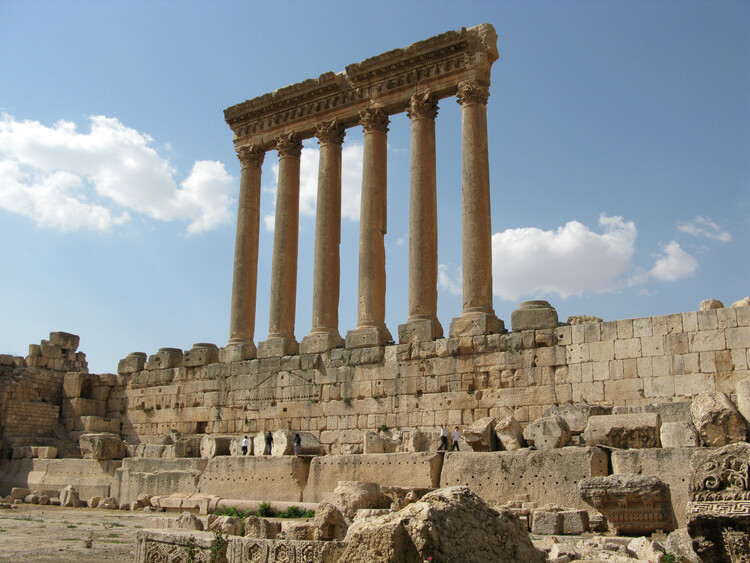
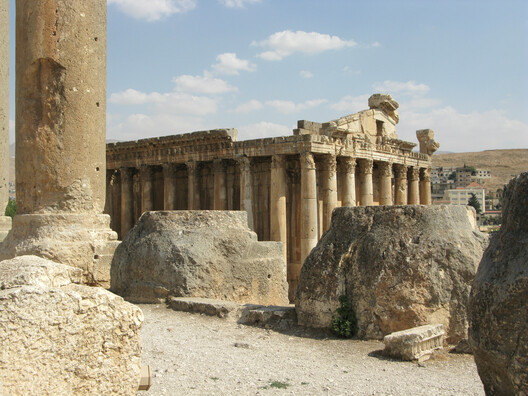
Deir ez-Zor: Raising Hope Through Heritage DocumentationThis is not the first instance of an international heritage protection violation observed during this latest offensive. Tyre, Lebanon's fourth-largest city, located around 20 km north of the Israeli border, was repeatedly struck from October 2023 to November 2024. Strikes resumed on March 2nd, 2026, as hostilities escalated again. Airstrikes have landed within 50 metres of the city's Roman-period archaeological ruins, the remains of a great Phoenician city that was once the most important centre for maritime and land commerce in the eastern Mediterranean. On May 30, Israel ordered the mass evacuation of Tyre, displacing 160,000 people and directly striking UNESCO-protected sites in the 5,000-year-old city. Another UNESCO World Heritage Site was struck in 2024: the Ottoman-era buildings near the temple complex in the city of Baalbek. Comprising several temples of Greco-Roman tradition, with even more ancient vestiges of Phoenician origin, the site represents for UNESCO "a religious complex of outstanding artistic value" with a "majestic monumental ensemble."
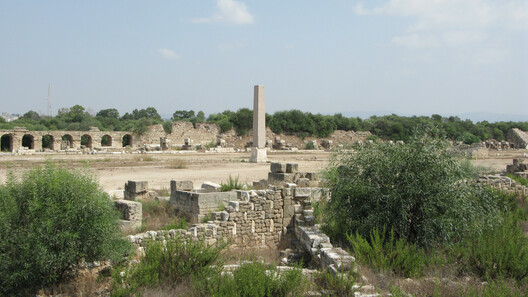
The destruction of cultural heritage is a direct attack on the development of local identity and the recognition of a shared human history. Among the sites recognised for their religious and spiritual significance are the Church of St. George in Derdghaya, the Church of St. George in Yaroun, the Mosque of Kfar Tibnit, and the Mosque of Yaroun, all struck in 2024 along with numerous smaller shrines and mosques. On May 30, Israeli warplanes resumed bombarding Yaroun, damaging the dome of the historic Saint George Church and marking a new assault on centuries-old religious landmarks in the area. Beyond the seizure of Beaufort Castle, other examples of medieval architecture have also been affected, including Tibnin Castle, the Castle of Shamaa, and the Qubbat of Duris. The damage encompasses architectural heritage representing millennia of history, Phoenician, Roman, Byzantine, Crusader, and Ottoman, making this territorial invasion a significant cultural heritage crisis. The bombing of sites such as the Qaraooun Dam in the Bekaa Valley also endangers ecological infrastructure, risking the flooding of the entire region.
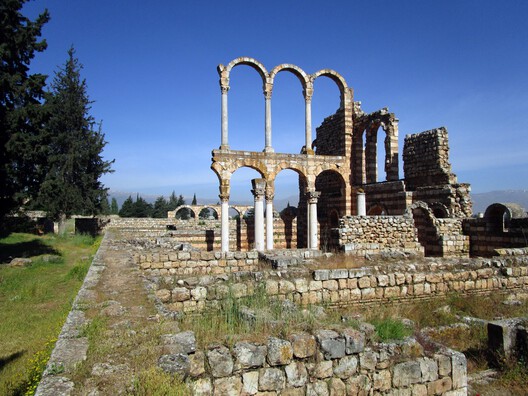
As the conflict intensifies, a growing body of international organisations has mobilised to defend the country's cultural heritage. Following Lebanon's formal request for international support, UNESCO granted provisional enhanced protection to 39 cultural properties, providing financial assistance for emergency operations on the ground. This initiative was built on a prior round of enhanced protection granted in 2024 to 34 Lebanese cultural properties. In parallel, UNESCO has been working with the Lebanese Ministry of Culture and the Directorate General of Antiquities to support the secure storage of archaeological collections and museum holdings, and is carrying out satellite monitoring of heritage sites in partnership with UNITAR/UNOSAT. In its April 2026 statement of solidarity with Lebanon, the institution reaffirmed the commitment of the international heritage community, pledging, as it had since the Beirut port explosion, to contribute to the sites' complete recovery. Yet these efforts, however significant in political and symbolic terms, have had no discernible restraining effect on the military offensive. Strikes on and around protected sites have continued, making clear that the international legal framework of enhanced protection has so far proven unable to halt the destruction on the ground.


