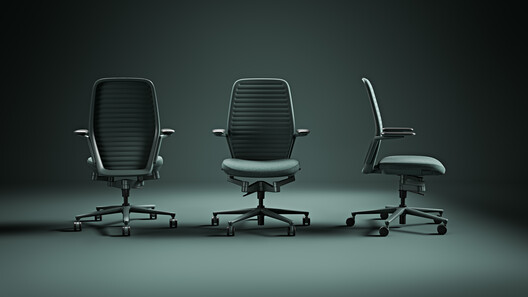
Workplace ergonomics have long been defined by stability: fixed postures, lumbar support, carefully calculated angles, and the relentless pursuit of the "correct" way to sit. Comfort was largely associated with maintaining a supported posture in chairs designed to reduce movement, align the spine, and sustain the body during long periods of sitting. Today, as contemporary workspaces become increasingly flexible and hybrid, questions are emerging around whether comfort is truly linked to static permanence, or rather to the possibility of movement itself.
Although ergonomic chairs have evolved significantly, many still operate within a "corrective" logic, managing discomfort through mechanisms and adjustments without fundamentally reconsidering the relationship between the body and motion. Recent research on sedentary behavior and active ergonomics has challenged the idea of stillness as the ideal condition for comfort. Instead, subtle posture transitions and continuous micro-movements are now understood as important contributors to circulation, musculoskeletal health, and overall wellbeing. In this context, contemporary ergonomics gradually begins shifting away from models based on containment toward approaches centered on adaptability, balance, and fluid movement.
This shift in perspective will shape KI's presentation during Design Days 2026 in Chicago. The company will unveil a new Inspiration Center in the Fulton Market district alongside an immersive installation exploring new ways of sitting, moving, and interacting in workplace environments.
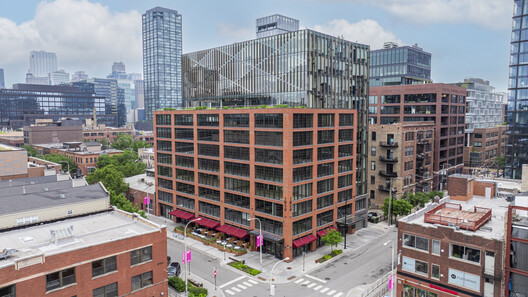
Held annually during NeoCon, Fulton Market Design Days has become one of North America's leading events for workplace and hospitality interior design, bringing brands, architects, designers, and manufacturers through a series of activations, installations, and temporary showrooms spread throughout Chicago's industrial district. In recent years, the neighborhood has established itself as one of the city's main commercial design hubs, attracting companies interested in more experimental, less formal environments than the traditional showrooms of the Merchandise Mart.
For Design Days 2026, KI is relocating its long-standing presence from the Merchandise Mart to a new space on the eighth floor of the WELL-certified 1045 West Fulton building. Designed in partnership with Whitney Architects and constructed by Redmond, the new Inspiration Center will bring together KI, KI Wall, and Pallas Textiles in an environment conceived less as a conventional showroom and more as a creative platform for architects and designers. The project adopts the concept of "industrial whimsy," blending raw industrial materiality with more tactile, playful, and experimental elements. Exposed structures, metallic surfaces, textile layers, graphic interventions, and collaborative zones compose an environment designed to encourage discovery, material experimentation, and spatial interaction. The space includes areas dedicated to conceptual development, material labs, application vignettes, and hospitality settings intended for informal gatherings and professional exchange.
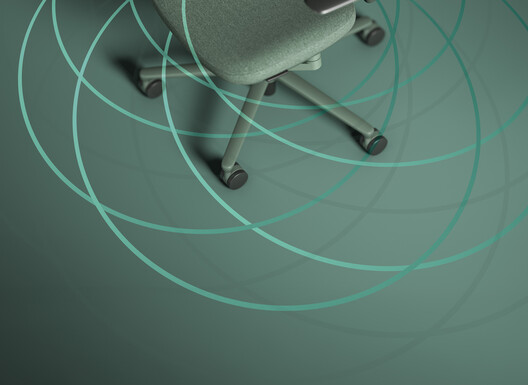
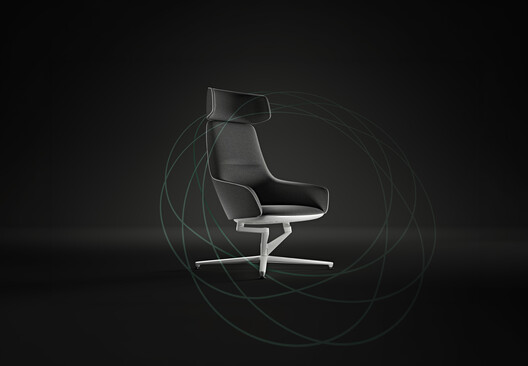
In April, KI introduced Flow Chamber, a one-day immersive installation created to test how users responded to new forms of movement, balance, and support within workplace environments. Presented as the first public experience of Cognetic Technology, the installation took the form of an eight-foot cube that invited visitors to enter, sit, and explore how subtle bodily movements interact with responsive seating systems. Through its focus on micro-movements and shifting postures, the project expanded the conversation around comfort, adaptability, and bodily balance in contemporary workplaces.
Cognetic Technology was developed to work in harmony with the body's natural movement rather than stabilizing it completely. The concept originated from designer Aaron DeJule, whose personal experience after a serious car accident revealed the limitations of traditional ergonomic chairs. That experience ultimately led to a broader investigation into how seating systems might respond more naturally to the body's instinctive movements rather than restricting them. Years of experimentation followed until subtle, almost unconscious micro-movements emerged as the central principle behind the technology. Drawing from kinesiology and gravity, the technology seeks to transform sitting into a more adaptive and responsive experience that is altogether physical, physiological and neurological.
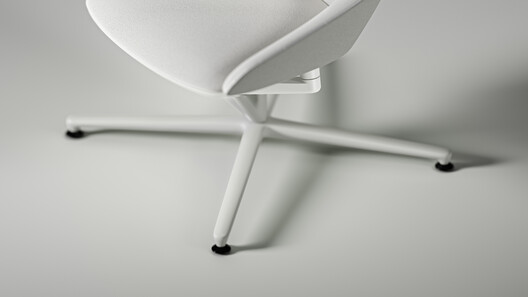
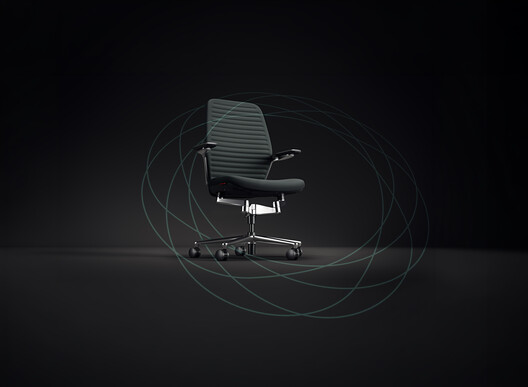
In contemporary workplaces, chairs no longer respond solely to posture, but also to circulation, collaboration, attention span, and sensory comfort. The growing emphasis on movement-based design reflects wider transformations in architecture and interior design, where flexibility and bodily awareness are becoming central considerations in the shaping of learning, working, and social environments.
As the boundaries between work and rest blur, and the very idea of ergonomics appears to be shifting away from fixed and corrective models toward approaches more open to movement and bodily variation. KI's presentation in Fulton Market positions seating as an active participant in the spatial experience, capable of influencing how we occupy and move through the modern world.


