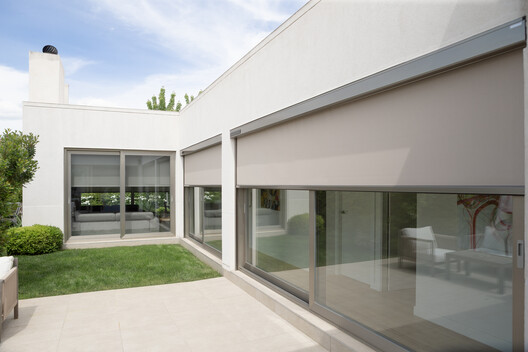
Taking a deeper look at the interplay of light and shadow in architecture seems to be a recurring topic on the agenda of many professionals in the field. Spaces of light and darkness are conceived to enhance circulation and spatial directionality, as well as to highlight the colors, textures, and forms of specific architectural elements. That said, the impact of natural light on building facades reveals the need to develop strategies that support energy savings, improve the thermal and visual comfort of interior spaces, and promote the reduction of carbon emissions. Considering light as another material in architecture, in what ways could its power contribute to the architectural experience?
From Le Corbusier and Alvar Aalto to Louis I. Kahn and Luis Barragán, many architects have sought to explore the importance of light, shadow, and penumbra, considering them essential elements of the spatial experience. While both light and shadow have inspired and fascinated humanity since ancient times, these intangible and ephemeral elements have, over the years, demonstrated their value as fundamental resources in architectural design beyond their poetic and sensory dimensions. As Louis Kahn once stated, "The sun never knew how great it was until it hit the side of a building." In contrast to traditional static enclosures, contemporary dynamic facades demonstrate the ability to adapt their functions, characteristics, and methods to constantly evolving environmental conditions and performance requirements.
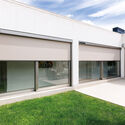
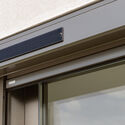
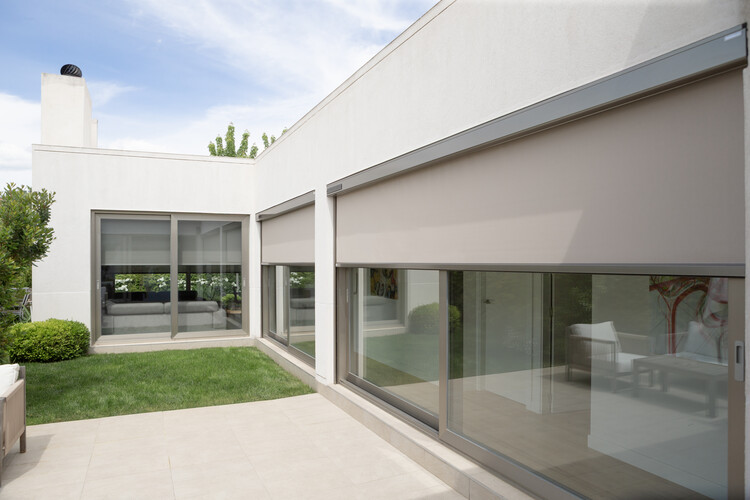
Whether by reducing energy consumption, improving thermal comfort, or adjusting levels of shading and natural ventilation, a wide range of facade design technologies make it possible to optimize solar protection and interior comfort in architecture. Bandalux introduces Z-Box Solar, a motorized roller shade with cassette that requires no electrical installation. Designed to withstand wind and other weather conditions, it features a zipper guide system that keeps the fabric securely within the guides. The system is manufactured with durable, long-lasting materials, from cassette, guides, and covers in aluminum to stainless steel screws and high-strengh plastic caps. In addition, it incorporates a solar panel, a battery, and a motor powered by renewable energy from the sun.
Related Article
There's No Good Architecture Without Daylight: How to Promote Designs Molded and Nurtured by LightIn terms of finishes, this system is available in a wide range of colors and fabrics and can be adapted to different dimensions, reaching a maximum surface area of 16.8 square meters. From its self-recharging battery that operates independently of the electrical grid to its stainless steel spring system, it offers advantages such as resistance, fabric stability, and the ability to absorb wind forces, among others.
Autonomy and Efficiency: Maximizing Solar Protection
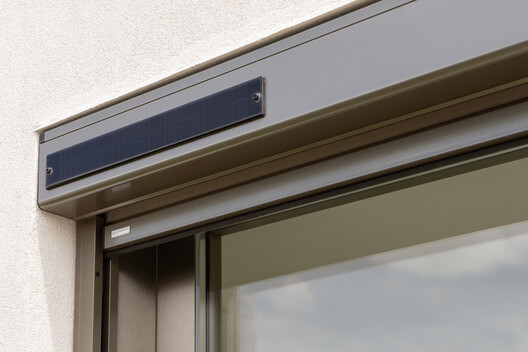
Functioning as an autonomous shade and a source of renewable energy with no electrical consumption, the solar panel captures sunlight and converts it into electrical energy to charge the motor's battery. Among the considerations to keep in mind before installation, the solar panel should not be placed on shaded facades, as this would prevent optimal battery recharging. The photovoltaic cells must remain unobstructed, with no elements in front of them, while the available motors are rechargeable and operate using radio-frequency technology.
Beyond Resistance and Reliability
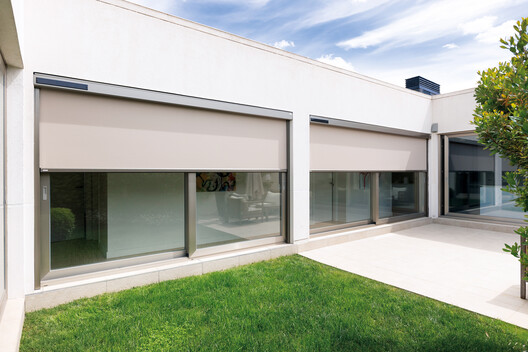
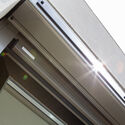
With its quick installation, the Z-Box Solar system helps save both time and costs. Its zipper guide system delivers secure fabric attachment, ensuring high resistance to wind. The Zip Deep guide allows the zipper to be concealed, optimizing light blockage through hidden fabrics. Meanwhile, Bandalux's patented stainless steel spring system ensures fabric stability and absorbs wind forces. By improving the drape, consistency, and tension of the fabric, the new Max bottom bar also enhances performance, even in narrow shades. In fact, Zip Deep guides installed either frontally or laterally allow the box to rest on the guide, eliminating the need for additional installation supports. The Z-Box Solar shade is certified with a Class 6 rating in accordance with EN 13561 standards.
In addition, Bandalux has developed a solution that allows the cables to be concealed inside the box, which is accessible for inspection. The rechargeable battery is housed inside, allowing easy access when replacement or maintenance is required. The end pieces feature robust shafts, while the support incorporates a high-precision bearing system, providing smooth, quiet operation and concentric rotation throughout the system.
Integrating Visibility and Opacity
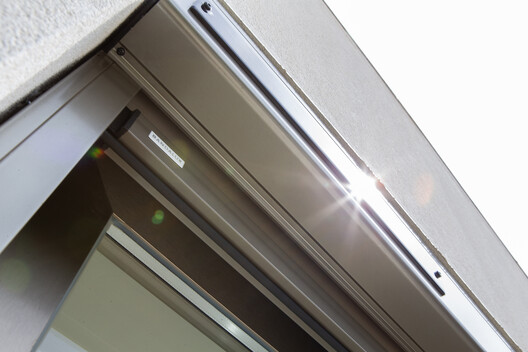
As a guided shade with a zipper closure, there is no gap between the fabric and the guide, providing greater opacity when combined with Bandalux's blackout fabric range. It is also available with insect screen fabric, which offers a high degree of openness and visibility in the area where it is installed, though this is not the only option for highlighting these qualities. The Z-Box 130 and Z-Box Solar fabric range has been expanded to include Cristal. Made of PVC, the Cristal fabric maintains its transparency and visibility over time, making it ideal for enclosing terraces and porches. Its horizontal heat sealing provides fabric stability and ensures high resistance.
On the other hand, Bandalux's Airpure® shade incorporates a technology that purifies the air and is typically used in healthcare settings, educational facilities, and spaces occupied by people with allergies or respiratory conditions. It is based on the application of a nanocoating to the shade's fabric, which removes airborne pollutants and also eliminates unpleasant odors.
Across a wide range of scenarios and environments, Bandalux is dedicated to designing and manufacturing solutions that ensure maximum comfort and solar protection through the use of custom-made shades, blinds, and awnings. From zip roller shades to other solar control systems, Bandalux continuously incorporates innovative technical advancements into the development of its product catalog.


