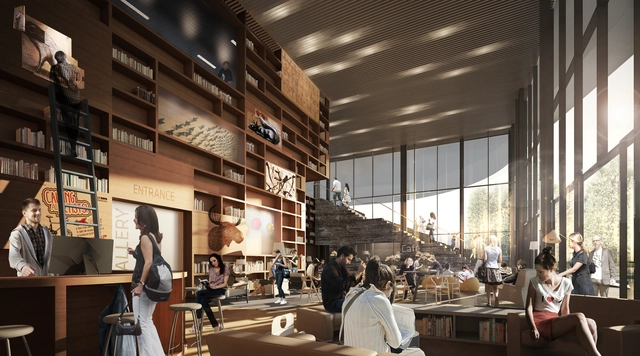
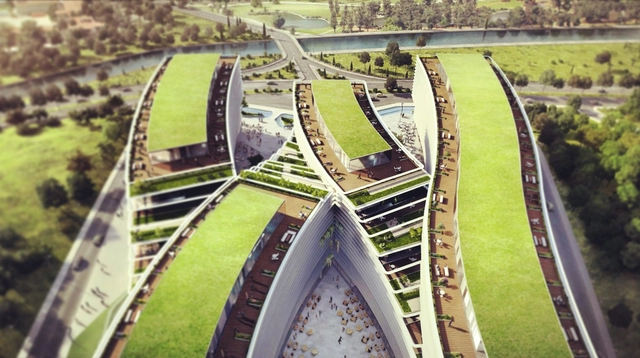
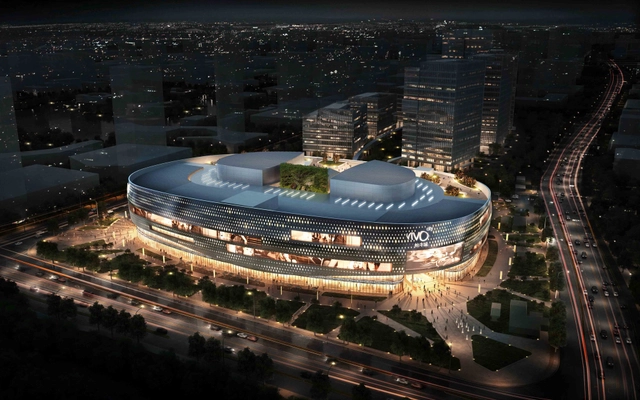
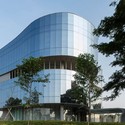
With the ground breaking ceremony recently held to kick start construction, the Aedas designed Mapletree Minhang Development Project involves two sites – Mapletree Business City and VivoCity. With a site area of approximately 119,000 square meters and a gross floor area of about 297,000 square meters, Vivocity is designed as a double looped mall with high efficiency. More images and architects’ description after the break.
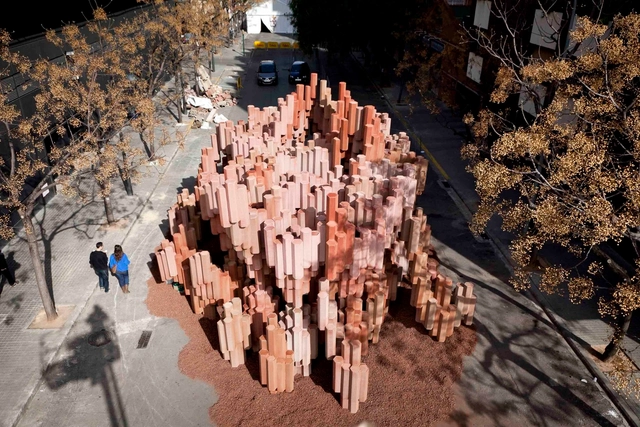
Built for the annual traditional festival called “Fallas” held in Valencia in March, the corrugated cardboard temporary pavilion was made out with 3.000 purposefully made corrugated hexagonal boxes as the only structural material. The main challenge for the project by architect Miguel Arraiz and sculptor David Moreno was the wind and the rain, because the structure should be at the urban space during at least 5 days. More images and architects’ description after the break.
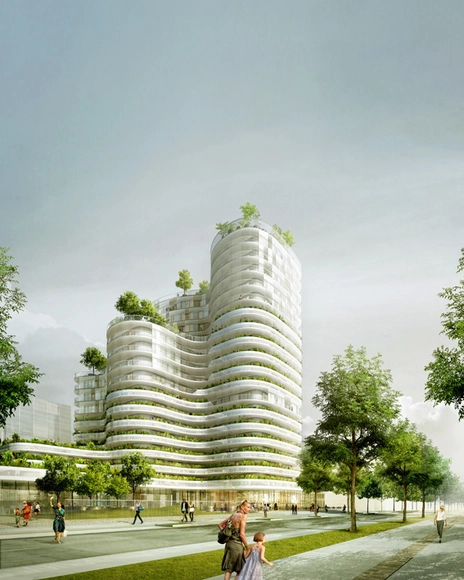
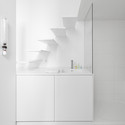
Designed by Hamonic + Masson, their winning proposal for the housing units in Nantes opens a dialogues with the surrounding space by introducing a new way of living together, mainly based on the generosity of the exterior private and community spaces. The architecture of the building and public spaces will be composed of a play in the accumulation and stacking of floors. The ensemble of curves highlights the building's radiance and dialogue with the near and far environment. More images and architects' description after the break.
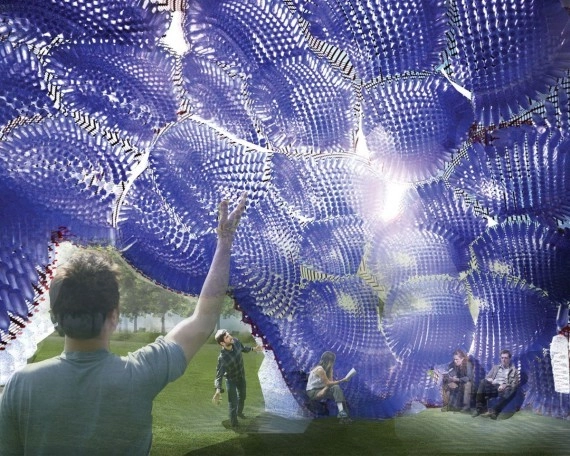
City of Dreams Pavilion 2012-2013 Winner: 'Head in the Clouds' by Studio Klimoski Chang Architects
FIGMENT has teamed with the Emerging New York Architects Committee (ENYA) of the American Institute of Architects NY Chapter (AIANY) and the Structural Engineers Association of New York (SEAoNY) to host their 4th annual call for proposals to design and construct an architectural pavilion on Governors Island, the City of Dreams Pavilion. The City of Dreams Pavilion will be a gathering place for people to meet, learn about the arts programs on the island, be able to enjoy a performance or lecture, and experience the interaction of art and the historic context of Governors Island. Participants are being challenged to imagine a future New York City where anything is possible. The deadline to register is June 1, and submissions are due July 1. For more information, please visit here.
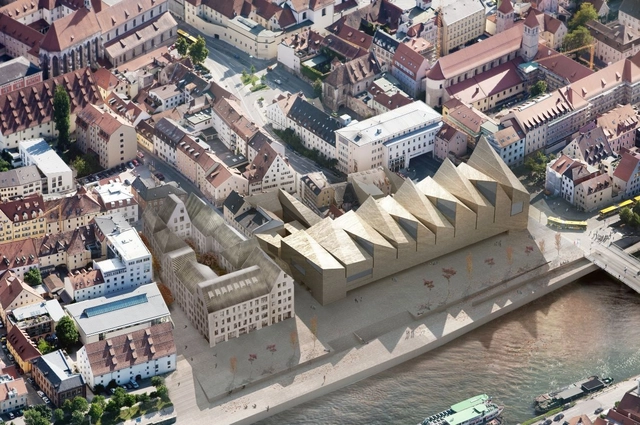
OODA + Menos é Mais Arquitectos recently unveiled their design proposal for the Bavarian History Museum which explores the ability of architecture and urban planning to spread a cultural event, so that it leads to optimism and a contrasting pleasure drive between the river, the museum, the city and the public in general. Taking advantage of the excellent location on the Danube and close to the cathedral, the new museum is an urban landmark that reveals his historical narrative in its interior. More images and architects' description after the break.
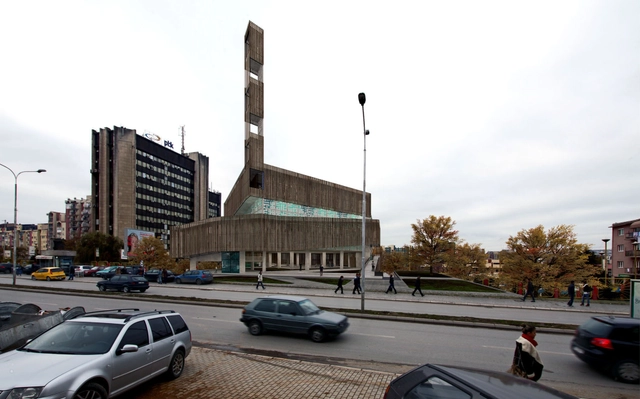
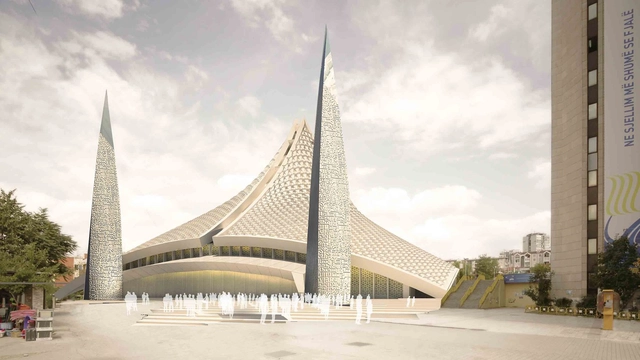
In this proposal for the Central Mosque of Pristina, Asar Consulting Engineers decided to use the traditional mosque components for a kind of new mosque design in a new form and a different combination to make it more fitting for its time and location. This new combination is done with the aim of keeping the functional value of different components and increasing their efficiency. One of the elements of mosque architecture which can’t be separated from this design is green and open space. This space is so important that it should become an element at the entrance of the mosque. More images and architects' description after the break.
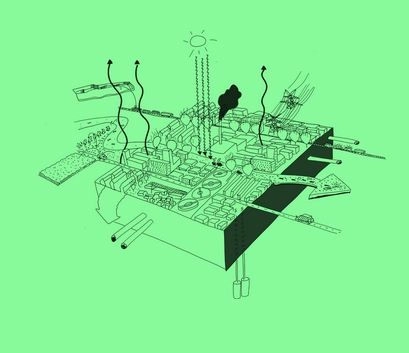
With the theme of 'Urban by Nature', the sixth edition of the International Architecture Biennale Rotterdam opens in May 2014 in the Kunsthal in Rotterdam. With Dutch landscape architect Dirk Sijmons as the curator, IABR is calling for best practices from all over the world to support and substantiate the Biennale’s main exhibition’s narrative. Prospective participants who have designed or are designing concrete projects that deal with the relationship between man, nature and city, are invited to submit their applications by June 9, 2013. For more information, please visit here.
Last year the University of California, Davis invited three architectsto compete for the chance to design their new $30 million art museum, slated to open in 2016. The competition was a design-build affair, with each entrant being asked to pair up with a contractor and submit a holistic design. For those who missed it, SO - IL were announced as the winners of the competition.
Here we present one of the two runner-up submissions from Henning Larsen Architects. Given the name 'The Leaf', the design it spatially and materially expresses its overlapping functions. Its name comes from the lightweight leaf-like steel and aluminum roof, which filters sunlight and offers shade. The leaf sits on a heavy concrete base, providing accommodation for the museum's exhibits.
Read the architects description after the break...
72 Hour Urban Action, the world's first real-time architecture competition, will give selected teams only three days and three nights to design and build interventions in public space in response to local needs, social challenges, and the sites and missions offered. With an extreme deadline, a tight budget and limited space to rapidly leave a lasting impact on the city's urban fabric, participating teams will be battling the clock, the restrictive conditions, and each other to dream and realize projects. The competition will take place July 25-28 in Derry-Londonderry, in northern Ireland. For more information, and to apply, please visit here. More images after the break.
Focusing on the users' working and living qualities, the winning proposal for the Premier Campus Office in Kagithane addresses its presence in Istanbul as a new form of contextual and urban approach. Designed by JDS Architects, the building is formed by their desire to make it interact with its environment and acts as a catalyst of business life for a new Istanbul that promotes contemporary culture, architecture and lifestyle. More images and architects’ description after the break.
The idea behind the design by Invert Studios (Victoria Stotskaia, Raof Abdelnabi, Kamel Lokman Salem) for the Central Mosque of Pristina started with a very simple question:How can we can design a building that should play in harmony with the surrounding neighborhood, integrated with the urbanity, and for a very powerful reason want to stand out as a futuristic icon for the city? By proposing a design that is not conventional and common, and in an effort to change the way the public perceives mosques external shapes, they created an example of a world class building that reflects the Islamic Architectural Heritage. At the same time, this building stands out with a high technology character. More images and architects' description after the break.












![Chiswick Residence / Arki[vis] - Houses, Garden, Facade](https://images.adsttc.com/media/images/518a/4a6d/b3fc/4b07/ee00/0002/medium_jpg/3_-_Copy.jpg?1368017504)
![Chiswick Residence / Arki[vis] - Houses, Courtyard, Door, Facade](https://images.adsttc.com/media/images/518a/4aa9/b3fc/4bb6/e600/0004/thumb_jpg/22_-_Copy.jpg?1368017566 "© Karl Beath")
![Chiswick Residence / Arki[vis] - Houses, Kitchen, Chair, Table](https://images.adsttc.com/media/images/518a/4a6e/b3fc/4bb6/e600/0002/thumb_jpg/7_-_Copy.jpg?1368017507 "© Karl Beath")
![Chiswick Residence / Arki[vis] - Houses, Stairs, Handrail, Facade, Chair](https://images.adsttc.com/media/images/518a/4a8c/b3fc/4bb6/e600/0003/thumb_jpg/14_-_Copy.jpg?1368017531 "© Karl Beath")
![Chiswick Residence / Arki[vis] - Houses, Patio, Facade, Table, Chair](https://images.adsttc.com/media/images/518a/4ab5/b3fc/4bb6/e600/0005/thumb_jpg/23_-_Copy.jpg?1368017579 "© Karl Beath")
![Chiswick Residence / Arki[vis] - More Images](https://images.adsttc.com/media/images/518a/4a6d/b3fc/4b07/ee00/0002/newsletter/3_-_Copy.jpg?1368017504)