1. ArchDaily
  2. Zero-Waste

Zero-Waste: The Latest Architecture and News

Spacelab's Experimental Shelter is Energy Self-Sufficient and Designed for Disassembly

Spacelab's Experimental Shelter is Energy Self-Sufficient and Designed for Disassembly - Featured Image
Courtesy of Spacelab

Italian architecture practice Spacelab designed an energy self-sufficient shelter for temporary use, a parametric project that can be built without foundations on any site, leaving no trace and no damage to the site at the end of its life cycle. Named Zero in reference to the lack of waste during construction or removal and its zero-emissions operation, the structure can be demounted and reassembled multiple times, tapping into issues of circular economy, impermanence and reuse.

Spacelab's Experimental Shelter is Energy Self-Sufficient and Designed for Disassembly - Image 1 of 4Spacelab's Experimental Shelter is Energy Self-Sufficient and Designed for Disassembly - Image 2 of 4Spacelab's Experimental Shelter is Energy Self-Sufficient and Designed for Disassembly - Image 3 of 4Spacelab's Experimental Shelter is Energy Self-Sufficient and Designed for Disassembly - Image 4 of 4Spacelab's Experimental Shelter is Energy Self-Sufficient and Designed for Disassembly - More Images

No More Waste: 10 Ways to Incorporate the Circular Economy into an Architectural Project

A circular economy is an economic system aimed at eliminating waste and the continual use of resources. Looking beyond the current take-make-waste extractive industrial model, a circular economy aims to redefine growth, focusing on positive society-wide benefits. It entails gradually decoupling economic activity from the consumption of finite resources and designing waste out of the system. Underpinned by a transition to renewable energy sources, the circular model builds economic, natural, and social capital.

It is based on three principles:

  • Design out waste and pollution.
  • Keep products and materials in use.
  • Regenerate natural systems.

Finding Infinity Develops a Zero-Carbon Strategy for Melbourne

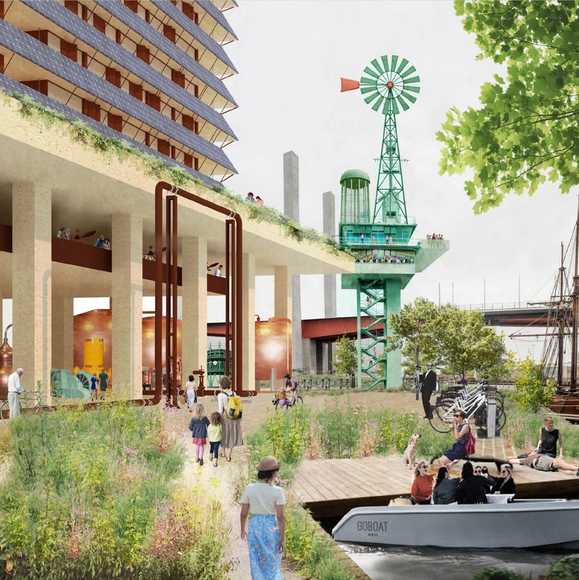
Australian research lab Finding Infinity has collaborated with architects, councils and investors to create a strategy that would turn Melbourne into a self-sufficient city by 2030. Building on exemplary case studies and scientific research, the initiative proposes a 10 step plan for the city’s transition from a consumer of resources to a zero-carbon urban environment.

Finding Infinity Develops a Zero-Carbon Strategy for Melbourne - Image 1 of 4Finding Infinity Develops a Zero-Carbon Strategy for Melbourne - Image 2 of 4Finding Infinity Develops a Zero-Carbon Strategy for Melbourne - Image 3 of 4Finding Infinity Develops a Zero-Carbon Strategy for Melbourne - Image 4 of 4Finding Infinity Develops a Zero-Carbon Strategy for Melbourne - More Images+ 29

The Project in a Small Japanese Village Setting the Standard for Zero-Waste Architecture

Subscriber Access | 

Nestled in the steep gorges and river valleys of Japan’s Tokushima prefecture is Kamikatsu - a small town seemingly like any other. But Kamikatsu, unlike its neighbors (or indeed, most towns in the world), is nearly entirely waste-free.

Since 2003 - years before the movement gained widespread popularity - the town has committed to a zero-waste policy. The requirements are demanding: waste must be sorted in more than 30 categories, broken or obsolete items are donated or stripped for parts, unwanted items are left in a store for community exchange. But the residents’ efforts over the years have paid off- nearly 80% of all the village’s waste is recycled.

The Project in a Small Japanese Village Setting the Standard for Zero-Waste Architecture - Image 1 of 4The Project in a Small Japanese Village Setting the Standard for Zero-Waste Architecture - Image 2 of 4The Project in a Small Japanese Village Setting the Standard for Zero-Waste Architecture - Image 3 of 4The Project in a Small Japanese Village Setting the Standard for Zero-Waste Architecture - Image 4 of 4The Project in a Small Japanese Village Setting the Standard for Zero-Waste Architecture - More Images+ 15