Welcome to 2019; polarizing political views are an ever-present reality and it doesn't seem to be improving. Whether you live in the US or on the other side of the globe our environments are actors in the theater of influence. What happens when design becomes part of the equation? How does architecture and the built-environment play a role in the social and political lives of the people in power and those on the fringes?
Molly Butcher, SVA MA Design Research class of 2015, researched the marketing of Martian and extraterrestrial settlements. Toroidal Colony, Cutaway view, exposing the interior. Art work: Rick Guidice. Image NASA Ames Research Center
Designers that rise to the top can write, articulate, weave a narrative, and communicate ideas in a compelling way - Khoi Vinh, Principal Designer, Adobe.
Do you have a research project you’d like to take to the next level? Are you challenged by communicating your ideas in multiple formats?
Now a one-year program with student funding, the Design Research, Writing & Criticism MA program at NYC’s School of Visual Arts empowers professionals as researchers, writers and—above all—critical thinkers.
Call for Submissions, UC Berkeley's Room One Thousand, Issue 5: Timeless
Timeless | Adjective | org. 1550
: staying beautiful or fashionable as time passes : lasting forever : having no beginning or end, eternal. : not affectetd by time : referring or restricted to no particular time : untimely, ill-timed : without time
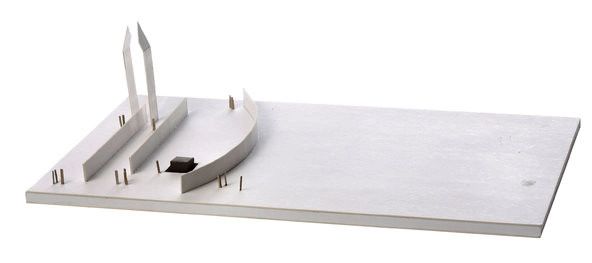
Each element in this model represents a character in Ayn Rand’s Atlas Shrugged, and the space between these elements represents the relationship between them. Model by writer Kanasu Nagathihalli and architecture student Chelsea Hyduk. Image via The New York Times
"Great architects build structures that can make us feel enclosed, liberated or suspended. They lead us through space, make us slow down, speed up or stop to contemplate. Great writers, in devising their literary structures, do exactly the same." A recent post by Matteo Pericoli of The New York Times describes what happens when writers, students in Pericoli's creative writing course, team up with architects in order to "physically build the architecture of a text." The resulting models are physical representations of the emotions, relationships, and narrative-styles of stories by authors as varied as David Foster Wallace, Ayn Rand, and Virginia Woolf. Check out all the models, and their accompanying descriptions, at the NYT.