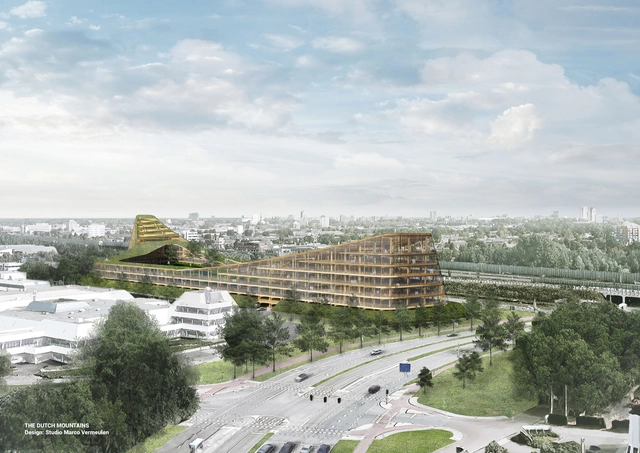
Plans have been revealed for the “largest wooden building in the world” to be located just outside Eindhoven in the town of Veldhoven, The Netherlands. Known as the Dutch Mountains, the complex was conceived via a multi-disciplinary partnership made up of tech companies, service providers, architects and developers, and would contain a hi-tech, mixed-use program for residents and visitors.
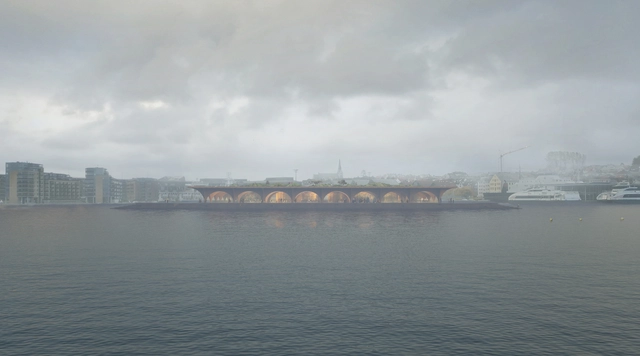
Soon the people of Stavanger, Norway will get to see the LERVIG beer brewing process at the new 11,000 square meter visitor center and brewery designed by Danish architects COBE. An iconic focal point on what was once an industrial pier, the building will offer many new amenities to central Stavanger. The brewery will be encircled by public spaces such as a harbour bath and Norway’s first west-coast ‘street-food’ market, complete with a green roof above. From these periphery spaces, guests will be able to view the brew tanks and fermentation process happening in the heart of the building.
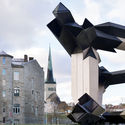
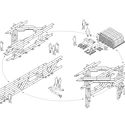
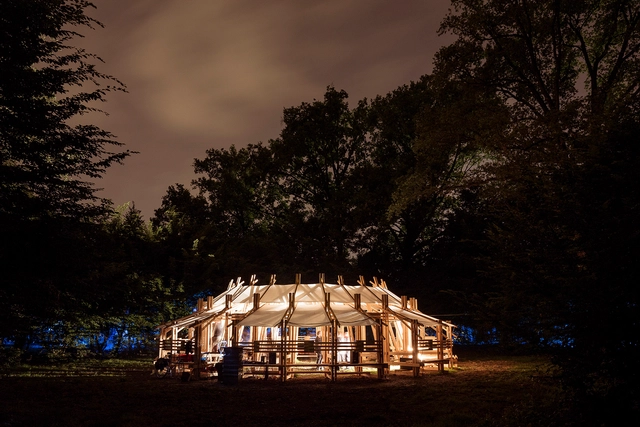
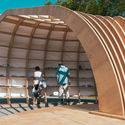
Out of 200 applicants, London-based Gilles Retsin Architecture won the Tallinn Architecture Biennale 2017 competition with their temporary outdoor installation. Participants were challenged to use the fabrication abilities of Estonianwoodenhouse manufacturers in a new and creative way. Jury member Martin Tamke said the Retsin proposal is, “characterized by outstanding aesthetic and intellectually challenging, as it questions current beliefs and trends in architecture."
The project site is within the garden of an ancient villa. A baroque trail weaves through the garden’s dense foliage, around many fountains and clearings.
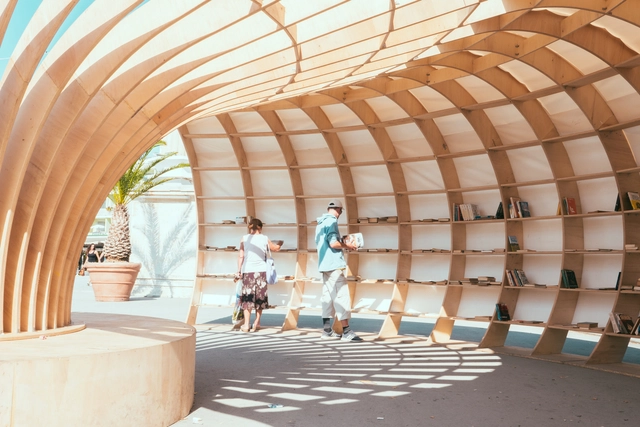
Downtown Studio's latest design for a street library in Bulgaria, that utilizes the tools of parametric design to create a wooden structure that is light and transportable.
The project, a natural undulating form that develops in a semicircle, is constructed by a series of wooden modules that provide a public space with shelves to store and share books.
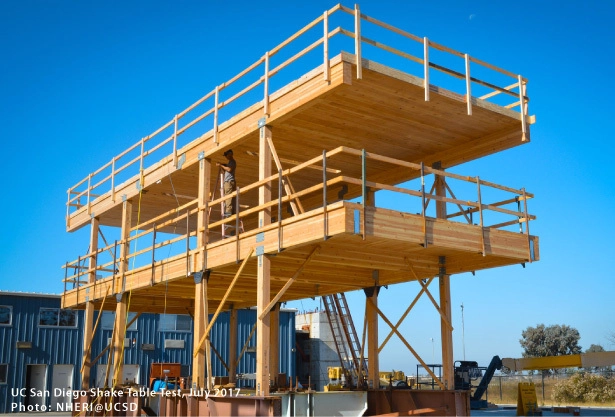
At a time when engineers, designers, and builders must find solutions for a resource-constrained environment, new wood technology, materials, and science are accelerating efforts to enhance safety and structural performance.
International Building Code requires all building systems, regardless of materials used, to perform to the same level of health and safety standards. These codes have long recognized wood’s performance capabilities and allow its use in a wide range of low- to mid-rise residential and non-residential building types. Moreover, wood often surpasses steel and concrete in terms of strength, durability, fire safety, seismic performance, and sustainability – among other qualities.
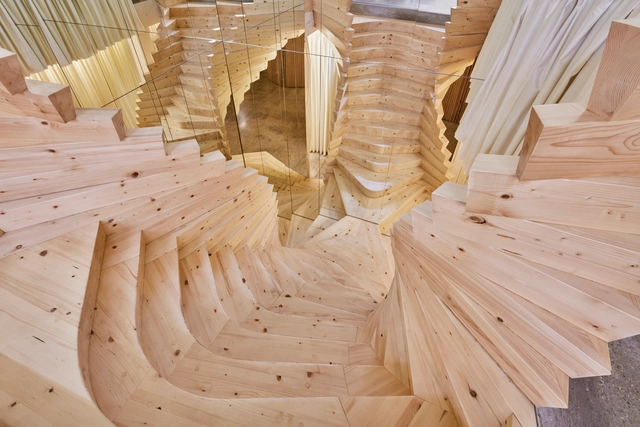
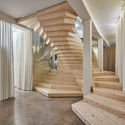
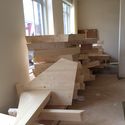
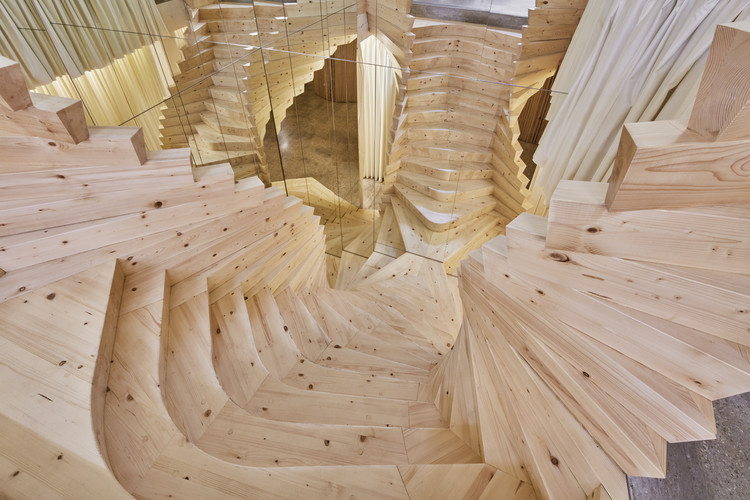
Conventional, straight-forward staircases can step aside to make room for these upgraded twisting and dynamic steps that make going upstairs a fun and enjoyable experience. London based studio, ACME has developed a staircase prototype with modern construction methods and an adaptive design approach.
The massive twin spiral staircase was installed at ACME's own office, which previously, had no usable stair between floors. The project takes inspiration from Coco Chanel’s mirror stair in her Parisian apartment, 31 Rue Cambon. Here, the two sides of the stair were cladded with mirrors and anyone perched at the top can observe the comings and goings on all levels of the atelier.
Videos
Cortesía de Departamento de Arquitectura de la Universidad Técnica Federico Santa María
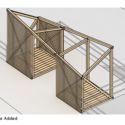
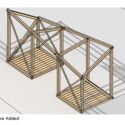
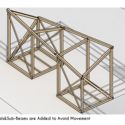
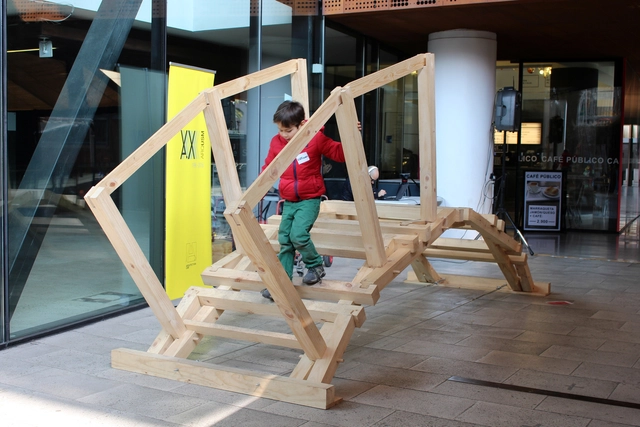
Inspired by Leonardo da Vinci's self-supporting bridge, architect Diego Poblete has developed a structure that can be assembled in less than 15 minutes and, according to his study, can support up to 500 kilograms. Focusing on the issue of connectivity in rural towns, Poblete developed a wooden system that is assembled without using a single screw, optimizing the use of the resource and facilitating easy construction:
With this we can facilitate the journey of children to school in rural areas, in areas where paths are interrupted by rivers or streams. Also, once the structure has reached its useful life, the parts can be easily replaced by new ones, while the wood, being a natural material, can be reused or recycled. In this way, this pedestrian bridge is also an environmentally friendly solution.
The project was born from Poblete's thesis project as a pedestrian walkway and is based on a modular design that could be repeated to cover larger stretches. Its main advantage is the fact that it uses no nails or screws, using digitally-manufactured traditional carpentry joints.
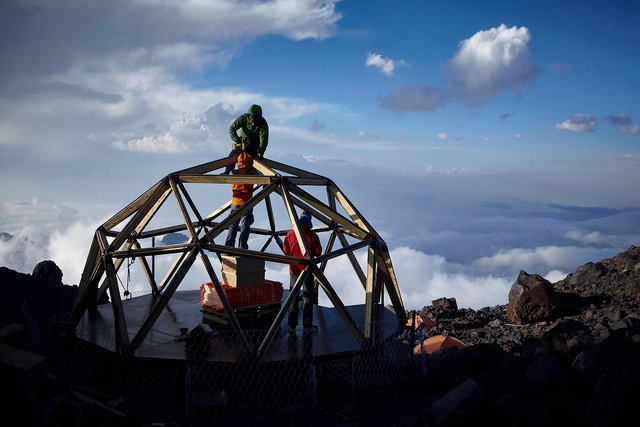
At an altitude of 3,800 meters, Ice-Age architects have designed and produced a compact and lightweight shelter as the last base before climbers venture up Mount Elbrus, the highest point in Europe. Inspired by Buckminster Fuller's 2V geodesic dome, it can sleep up to 16 people as they acclimatize to the altitude and wait for the appropriate weather for the climb.
The Pavilion d’Eau, designed by EPFL architecture student Alexander Wolhoff, was constructed in Lake Geneva, Switzerland. The pavilion is a product of six months of research, prototyping, and coordination with different local and academic organizations done in conjunction with LHT3 labs. The exterior of the octagon pavilion has a structural aesthetic, while the interior -- only accessed by wading in the water -- is ornamental, clad in handmade ceramic tiles.
The UNESCOWorld Heritage Site municipality of Saint-Saphorin en Lavaux allowed for the temporary pavilion in the waters of Lake Geneva. The project is designed to touch the landscape lightly, not affecting the natural lake bed. The pavilion is comprised of materials including lake stones, wood, and porcelain tiles. To ensure a minimal and reversible impact on the site, the footings of the pavilion are made of seven gabions, metal cages filled with stones collected from the lake.
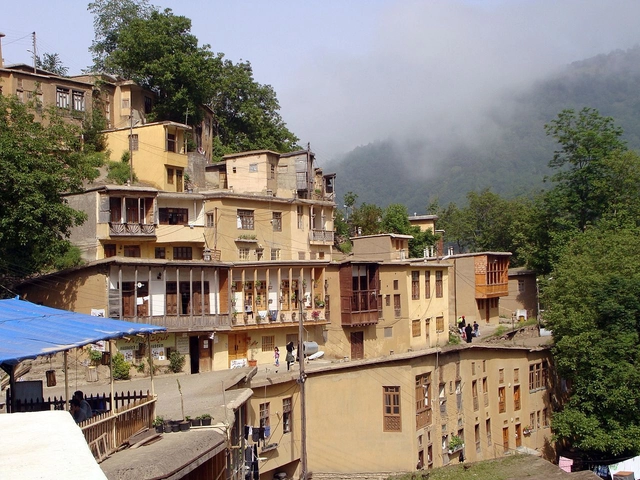
More than a thousand meters above sea level on the slopes of the Alborz mountain range in Gilan, northern Iran, a remarkable village dating back to 1006 AD bustles with life. The unique ochre-brown structures of Masuleh follow the slope of the mountain that the village nestles on—or rather, grows from—giving the village its most unusual quality: the roofs of many of the houses connect directly to, or even form a part of, the street serving the houses above.
Designed for the V-A-C Foundation, Venice-Based Israeli architect Omri Revesz’s adjustable Street Cinema rests lightly next to a canal in Venice, Italy, expanding, contracting, opening, and closing as its program changes.
Acting as a social gathering point during the day and an open-air cinema at night, the structure was open for the 74th Venice Film Festival as part of the V-A-C’s Venice Art Biennale 2017 exhibition Space Force Construction – a reflection on the centenary of the Soviet Revolution.
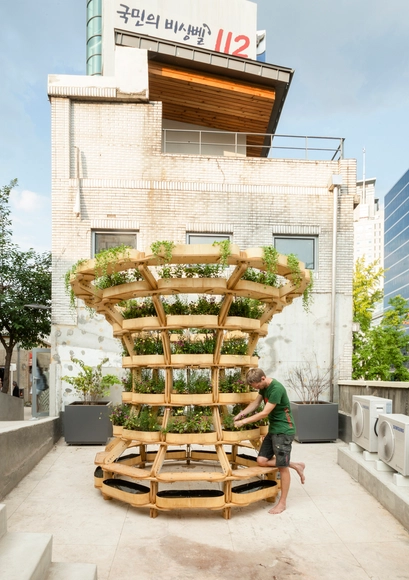
As a response to the fast-paced city life, GrowMore is an urban gardening modular design with endless configurations to suit even the most unexpected of spaces. Designed by Sine Lindholm and Mads-Ulrik Husum, the modular building kit provides an opportunity for social interaction and locally grown vegetation, reminding people to pause and connect with nature.
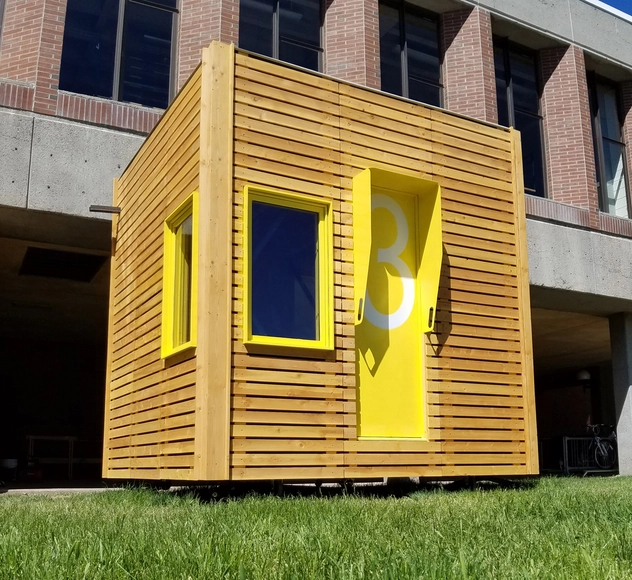
Three M. Arch. candidates at Montana State University, Jonathan Chavez, Kimball Kaiser and Adam Shilling, won an Undergraduate Scholars Programresearch grant which they used to fund their design-build project: B.O.B., the Backyard Office Box. B.O.B. is a kit of parts which, when put together, create a 150-square-foot dwelling space. The design team, also known as Tr3s, wanted their project to be adaptable to a variety of sites and users. B.O.B. can function as an additional space to already existing projects or standalone as a temporary shelter.
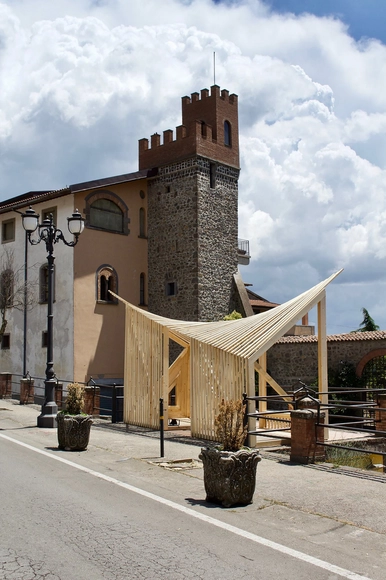
With the common goal across their portfolio of enhancing the landscape, Camposaz has designed a tourist information pavilion in Roccamonfina, Italy. The wood pavilion is sited just off of a pedestrian path, overlooking the adjacent public park with stunning views of the nearby mountains, a driver in the design.
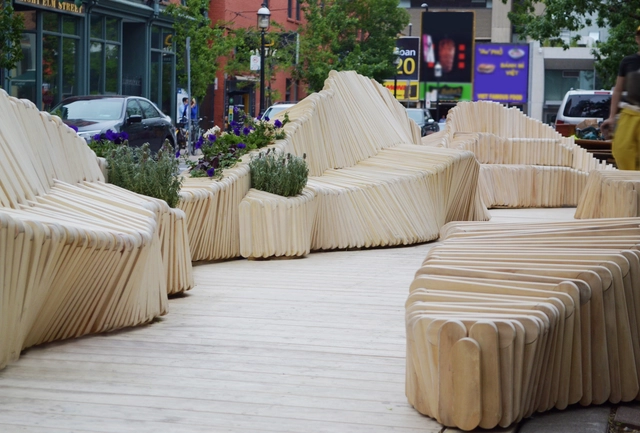
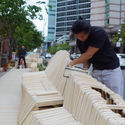
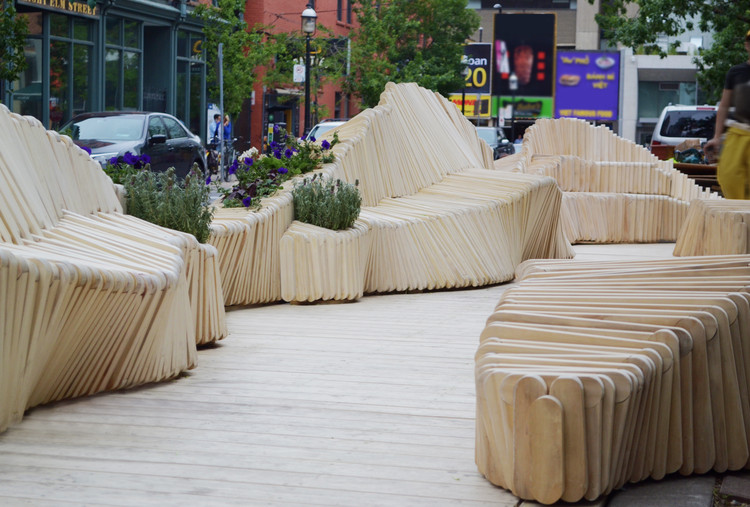
This modular design developed by the students of the Department of Architecture Sciences at Ryerson University proposes a public space to sit and relax that works as an extension of the walkway, appropriating and giving a new meaning to the parking spaces in the streets of Toronto.
The project, with a natural wave form, is built by a series of Accoya wood modules, which allow easy storage, reuse, and reconfiguration.
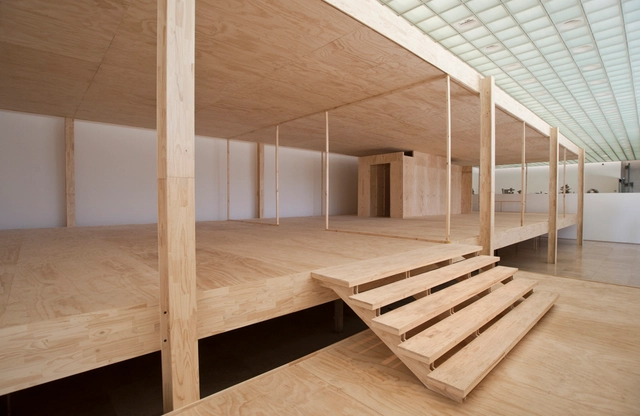
In December 2010, Manuel Peralta Lorca completed the work "Welcome Less Is More," a wooden reconstruction of Mies van der Rohe's Farnsworth House that was installed inside the Patricia Ready Gallery in Santiago, Chile. This September, a new version of this work will be mounted in the hall of Santiago's Museum of Contemporary Art, under the name "Home Less is More."
In the following story, the artist tells us about the process of reinterpreting this icon of modern architecture in wood and how a team of carpenters—who agreed to immerse themselves in the philosophy of Mies—was fundamental to completing the challenge.
https://www.archdaily.com/878665/how-an-artist-constructed-a-wooden-replica-of-mies-farnsworth-housePola Mora
Seeking to connect the traditions of carpentry and the prefabrication industry, Chilean practice abarca+palma have developed a modular house proposal made up of 10 different types of module, capable of forming 5 different house layouts.
The house is constructed in pine wood—using composite beams and pillars—with prefabricated SIP panels.















_(1).jpg?1506588062 "© <a href='http://www.panoramio.com/photo/106899133'>Panoramio user alireza javaheri</a> licensed under <a href='https://creativecommons.org/licenses/by/3.0/deed.en'>CC BY 3.0</a>")