


-
Architects: Arboreal Architecture
- Area: 10 m²
- Year: 2018
-
Manufacturers: LUNOS, Nuprotec, Rationel, Vastern Timber Company, WISA
-
Professionals: Cut & Construct, Get Turner, Corbett & Tasker, MLM Building Control



.jpg?1548249340&format=webp&width=640&height=580)
Online courses have gained more and more recognition in the past couple of years. In addition to the flexibility and convenience of learning wherever and whenever you want, they provide access to content from well-respected professors and colleges. In the field of architecture and construction, online courses have grown exponentially. Last year, we compiled a list that focused mainly on constructive and material techniques. This time we selected 15 online courses covering a range of subjects. We hope this selection of courses can help you with your next project.
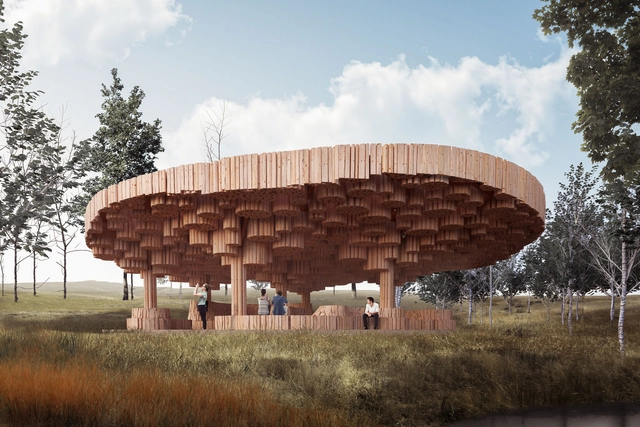
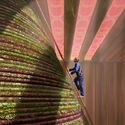
Berlin-based Burkinabé architect Diébédo Francis Kéré has designed a wooden pavilion for Tippet Rise Art Center in Montana. In addition to the pavilion, the Tippet Rise Fund of the Sidney E. Frank Foundation will also support Kéré's work to build an environmentally sustainable secondary school in Burkina Faso called Naaba Belem Goumma. Kéré designed the project in the Beartooth Mountains so visitors can experience a "rain of light" as sunlight filters through a structure of vertically stacked logs.
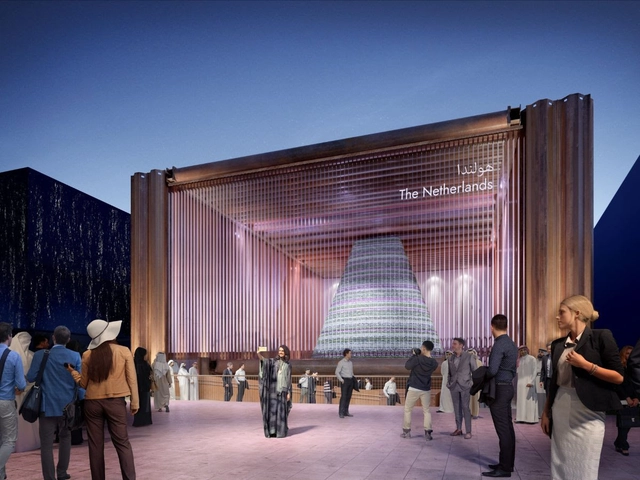
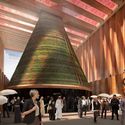
The Dutch pavilion for Expo 2020 Dubai has been unveiled, designed by a consortium, made up of Expomobilia, Kossmann.dejong, V8 Architects and Witteveen+Bos. The scheme has been designed “as a closed-loop climate system in which private and business visitors will enjoy an intense sensorial experience.”
Based on the Netherlands' chosen theme of “uniting water, energy, and food” the pavilion will be built using a construction method prioritizing closed-loop circularity, local materials, and a post-use recyclable agenda.
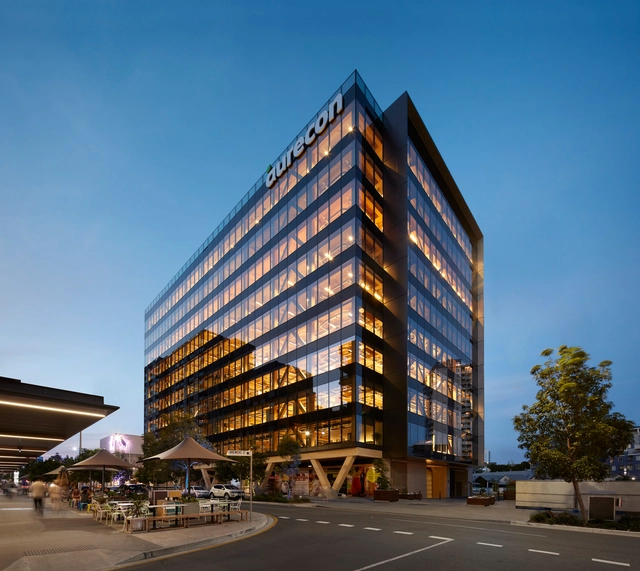
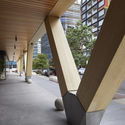
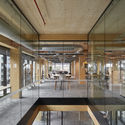
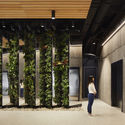
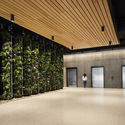
Australia’s largest engineered timber commercial building has opened in Brisbane, designed by Bates Smart. At 10 stories, and 45 meters in height, the “25 King” open plan office complex is the tallest timber structure in Australia, and “establishes new frontiers in the design of commercial buildings.
The scheme’s aesthetic is centered on the goal of “bringing a clear expression of its exposed timber structure to the building’s transparent envelope and promoting a warmer, more natural workplace environment of the future.”
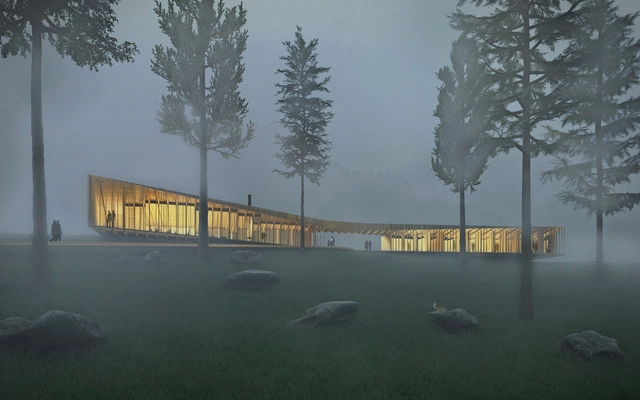
The 'Long Lodge' proposal for residential cabins along the Appalachian Trail, recently named the Honor Award Winner of the 2018 Maine Mass Timber Design Competition, highlights simple yet creative ways to spotlight the possibilities and natural beauty of timber as a construction material. The winning four-person design team created a lodge that not only serves as a temporary living space but rather becomes a memorable spatial experience through the effects of the structural design choices.

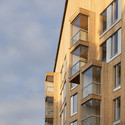
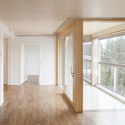
Wood is one of the oldest building materials used in architecture. Versatile, it can be used in structural solutions, coatings, partitions, fittings and, very often, in furniture. Another quality of the material is its sustainability - if well managed during planting, cutting, and treatment processes, it can be considered renewable and low carbon, adding value to the completed building.
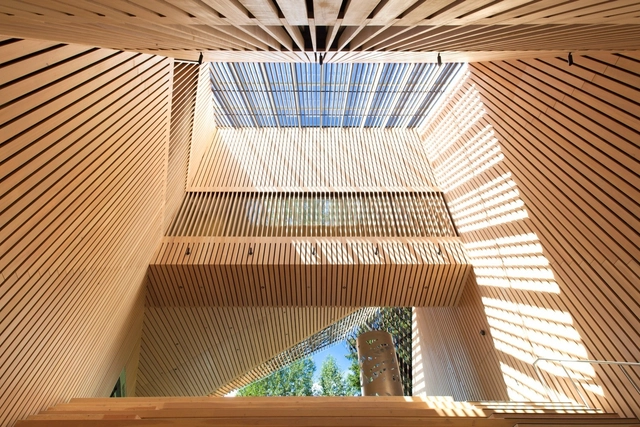
The design and construction community is revolutionizing the way we think about wood in construction. Growing pressure to reduce greenhouse gas emissions, coupled with a desire for aesthetically appealing designs, have resulted in a wood momentum that is being celebrated by architects and engineers around the world.
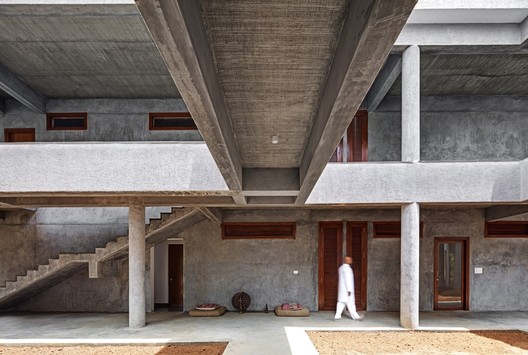
Greatly influenced by the modern movement--and in particular the presence of Le Corbusier--contemporary Indian architecture reflects a mixture of traditional and western references. Using mainly local materials such as brick, concrete and stone, Indian buildings stand out with their high visual impact and a assertive heaviness.
Because of its scarcity, wood is mostly used in details and finishes rather than as main structures. Some of the most successful architects in India have managed to gracefully balance the use of concrete and wood in a gentle gesture that evokes elegance and rough textures.
Here we present some of the best examples of contemporary Indian architecture that have used both concrete and wood in a harmonious and attractive way.


.jpg?1548250668 "© Fernando Guerra | FG+SG")
.jpg?1548250696 "© Fernando Guerra | FG+SG")
.jpg?1548249391 "© Fernando Guerra | FG+SG")
.jpg?1548251417 "© Fernando Guerra | FG+SG")
.jpg?1548249340)









.jpg?1530466848 "© María González")








.jpg?1539029465 "Valley Villa (Vilnius, Lithuania) / Arches")
.jpg?1539029241 "Organic Farm (Tangshan, Hebei , China) / ARCHSTUDIO")