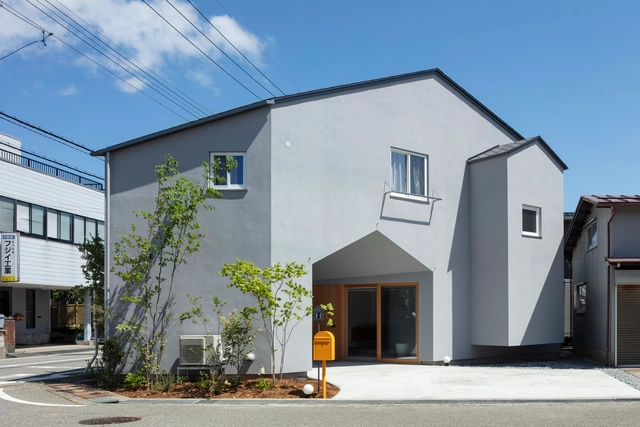
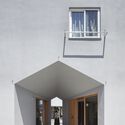
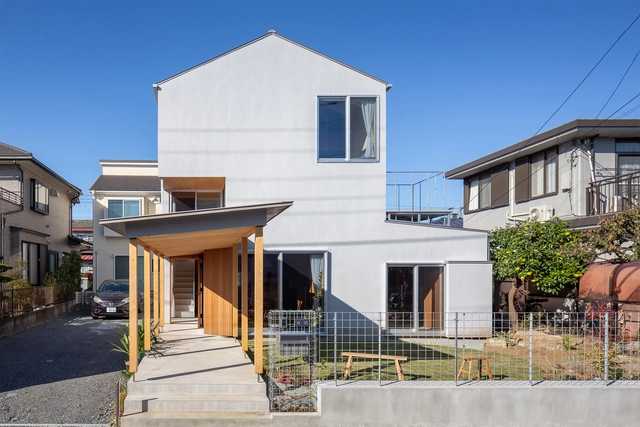
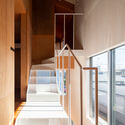
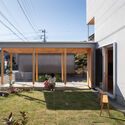
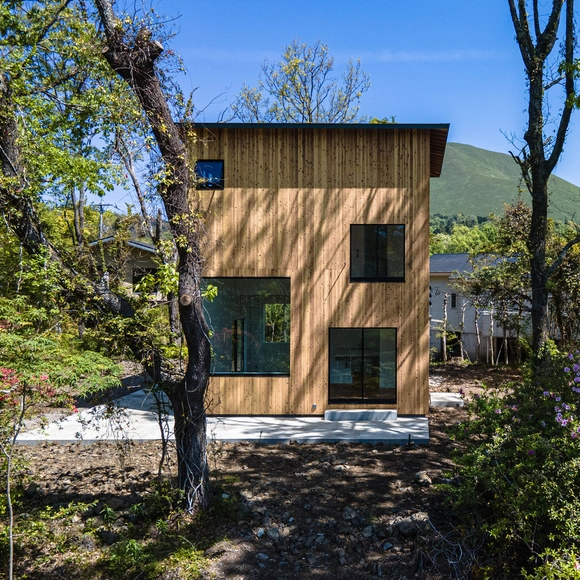
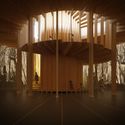
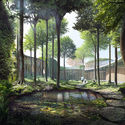
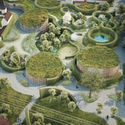
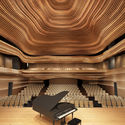
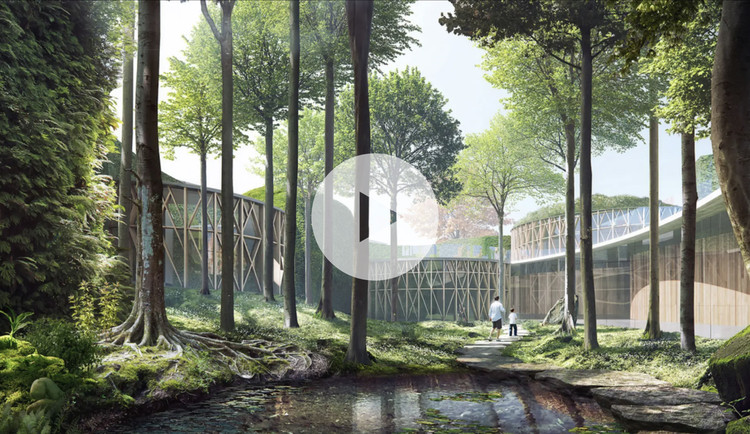
Single Family Home / Indievisual AG. Image Courtesy of Prodema
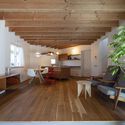
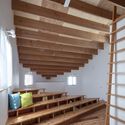
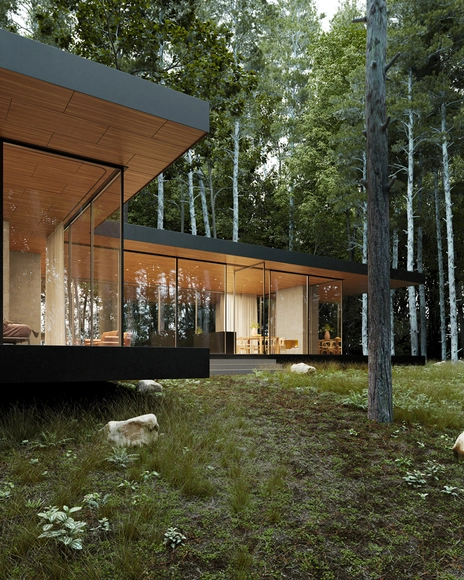
Many practitioners and theorists of modern architecture favored large open plans, looming glass windows, and through both of these means, an unencumbered connection to nature. To do so, many iconic modernist buildings would use cantilevered roofs extending over glass curtainwalls, including Mies van der Rohe’s Farnsworth House and Pierre Koenig’s Case Study House #22. In the years since this trend was popularized, however, a seemingly niche yet cumbersome problem would present itself: the problem of continuous wood ceilings.
https://www.archdaily.com/965244/the-continuous-wood-ceilings-trend-warmth-and-texture-indoors-and-outdoorsLilly Cao
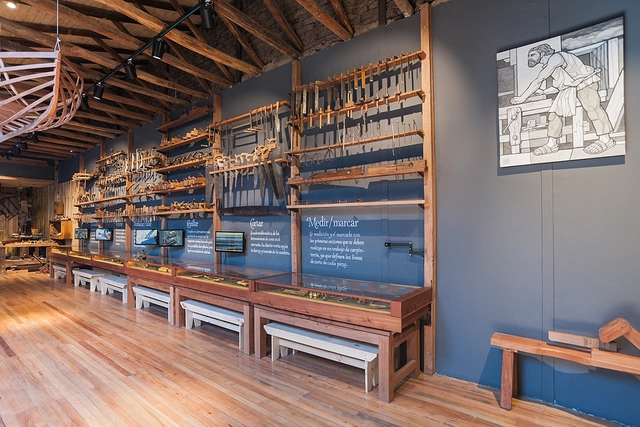
Wood is one of the most versatile materials used in construction nowadays and can be used for many different purposes, from beginning to end of the building process. Working with wood in a building requires specific skills that are very different from the skills of a bricklayer. Carpentry and joinery are the two main trades that handle wood in architecture and construction.
There is a fine line between the two, and people are often confused about which professional is the best suited for a particular job. This article will address the difference between the two practices to help you choose which one is best for your project.
Zero kilometer materials can be purchased locally, do not need to be transformed by large stages of industrial processing or toxic treatments and, at the end of their service life, they can be returned to the environment.
For example, wood from a nearby forest eliminates the need for long transfers, valuing local resources, and allowing architecture to lessen its environmental impact while committed to the landscape and context.
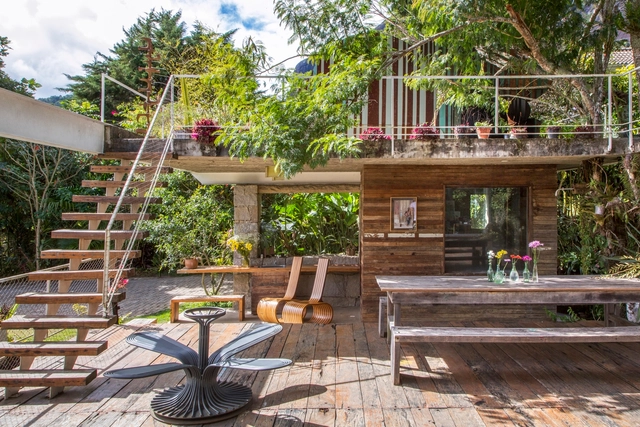
Reclaimed wood is wood that has been taken from its original application and repurposed. Old buildings such as houses, barns, and warehouses, often have to be torn down, resulting in demolition waste, which can be recycled and reused. Reclaimed wood can be used for many purposes, from cladding to building structures, and is very popular in contemporary architecture all over the world.
To get you inspired, here is a selection of 12 Brazilian houses that use this recycled material in flooring, walls, decks, bathrooms, outdoor areas, and stairs.
Ronald McDonald House of British Columbia . Image Courtesy of reSITE
In a Design and the City episode - a podcast by reSITE on how to make cities more liveable - Vancouver-based architects Michael Green and Natalie Telewiak advocate for more sustainable building on Earth, with a special mention for one of their preferred materials - wood. The interview sees the two architects balance the benefits and disadvantages of mass timber construction, which they are a strong proponent of as evidenced by their project T3, a LEED Gold Certified, seven-story timber office building in Minneapolis, Minnesota.
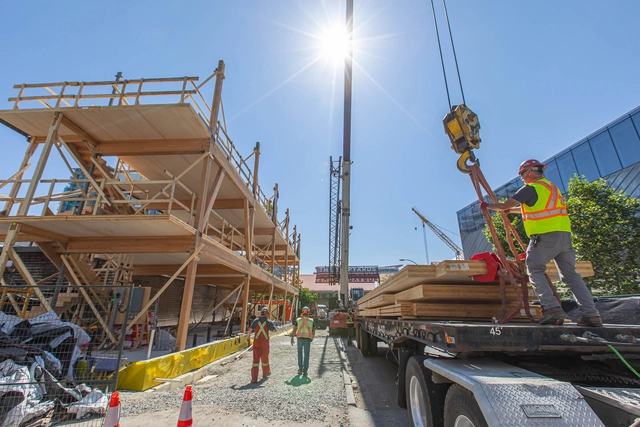
Mass timber components for this project were prefabricated offsite which not only aids in the ability for on-site assembly but also aids in the disassembly of projects in the future if needed. Timber's versatility allows it to be disassembled and then reassembled into other buildings and furnishings, sequestering carbon for longer so long as it stays out of the landfill. Photo: PH1 construction by Naikoon Contracting, KK Law. Image Cortesia de naturallywood.com
The first Shikinen Sengu was held in the year 690, in the city of Ise, Mie Prefecture, Japan. It consists of a set of ceremonies lasting up to 8 years, beginning with the ritual of cutting down trees for the construction of the new Ise Shrine and concluding with the moving of the sacred mirror (a symbol of Amaterasu-Omikami) to the new shrine by Jingu priests. Every 20 years, a new divine palace with exactly the same dimensions as the current one is built on a lot adjacent to the main sanctuary. Shikinen Sengu is linked to the Shinto belief in the periodic death and renewal of the universe, while being a way of passing on the ancient wood construction techniques from generation to generation.
The idea of creating a building that will have an expiration date is not a common one. In fact, the useful life of a structure is often given little consideration. When demolished, where will the materials go? Will they be disposed of in landfills or could they be reused in new projects? There are certain construction methods and materials that make this process easier. Others make reuse unfeasible, due to several factors.
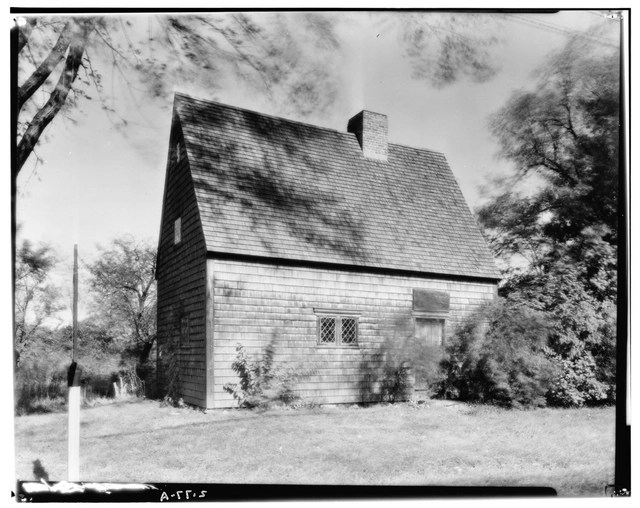
The Peak House, Main Street, Medfield, Norfolk County. Image Courtesy of Library of Congress HABS MASS
There is an architecture of the migrant. It is survivalist, built with what is available, made as quickly as possible, with safety as its core value. Americans romanticize that architecture as “Colonial”: simple timber buildings, with symmetric beginnings, infinite additions, and adaptations. But “Colonial” architecture is not what was built first by the immigrants to a fully foreign land 400 years ago. Like all migrant housing, time made it temporary and forgotten.
Choice of building materials and the inherent continuous reflection about the reach and capabilities of architecture are an interesting alternative way to approach this issue. The materials used in social housing should address local and economic possibilities and the real needs for access to housing in the contemporary context.
In this article, we analyze different projects published on our site to identify some of the predominant materials used in social housing, both for the formation of structures or enclosures. The intentions of this are two-fold: firstly, to create a worldwide panorama of different case studies with different construction styles from a range of geographical locations, and secondly, to provide inspiration and tools to architects to make better social housing.
Below we present 15 social housing projects and their diverse materials and construction styles.
HANNAH office, founded by Leslie Lok and Sasa Zivkovic, is a US-based architecture and research practice that has been experimenting with digital design and fabrication techniques across all types of projects ranging from furniture to urbanism. Both professors at Cornell University College of Architecture, Art, and Planning, Leslie and Sasa lead a studio with a focus on innovative design, where technology plays a crucial role in their work, combined with a sharp study of materials, new applications, and construction techniques, resulting in highly creative projects.
Curved shapes have always sparked architects' fascination for evoking nature's beauty, fluidity, dynamism, and complexity. To replicate these shapes, however, is no easy task. From their two- or three-dimensional representation to their execution in their final materials, this represents an enormous difficulty, which requires technical expertise and a great amount of knowledge to achieve strong results. Thinking of new ways to produce organic shapes from natural materials is even more complicated.
In addition to this, working with a natural material such as wood carries its own set of peculiarities. Factors such as the species of wood, where the tree grew, what climate it faced, when it was cut, how it was sliced or dried, among many other variables, largely influence the final result. But it's hard for other materials to compare to the beauty and warmth that wooden surfaces bring to the built environment. If the appropriate processes are used, wood can be curved and remain in the desired shape - and for this, there is a number of known techniques which Australian company, Sculptform, has perfected.
Stilt houses are houses raised on piles over the surface of the soil or a body of water. Dating back to the Neolithic and the Bronze Ages, a wide variety of raised dwellings have been identified in a variety of forms worldwide, designed with several diverse and innovative methodologies. Stilt houses are well suited to coastal regions and subtropical climates. More than just a distinctive structural design resolution, they also protect against floods, maximize views and allow homeowners to build on rocky, steep, or unstable land. They also serve to keep out animals and vermin, provide ventilation from underneath, and minimize a house’s ecological footprint.
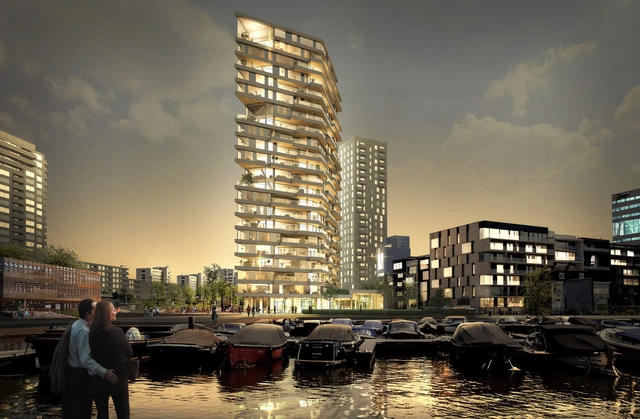
Rendering of HAUT. Image Courtesy of Team V Architectuur
Across the globe, tall wood structures have begun transforming the world of skyscrapers and high-rise buildings, ushering in an important shift to an architectural practice that has traditionally been dominated by steel and concrete. Typically defined as wood-constructed buildings over 14 stories or 50 meters high, the past six years have seen over 44 tall wood buildings built or underway around the world. Notable examples include Michael Green Architecture and DLR Group’s T3 and Team V Architectuur’s upcoming 73 meter residential tower HAUT.
https://www.archdaily.com/924341/could-tall-wood-construction-be-the-future-of-high-rise-buildingsLilly Cao
Talking to the Louisiana Channel, iconic Japanese architect Kengo Kuma discusses the many influences that have shaped his work - and also delves into the impact that the ongoing pandemic has had on the architectural field. In the interview, Kuma describes how influential his early upbringing was to his architectural career. Growing up in a small wooden house in the 1950s - originally built in 1942, would go on to guide his architectural perchance of using wood in his projects. Kuma also mentions Japanese architect Kenzu Tange as a key inspiration and cites Tange's Yoyogi National Gymnasium - constructed for the 1964 Summer Olympics in Tokyo - as a project that would influence him towards an architectural career.
A vault is a constructive technique that is achieved by compressing the materials forming it together. While this technique has existed since the time of the ancient Romans, certain types of vaulted ceilings, such as the Catalan or Valencian timbral vault, only reached popularity in some areas of the world at the start of the 19th century thanks to their lost cost and ready availability. With the ability to span over 30 meters and add substantial height to structures, vaulted ceilings became a go-to for the construction of industrial spaces such as workshops, factories, and warehouses.




.jpg?1615469357&format=webp&width=640&height=580)










.jpg?1626079817&format=webp&width=640&height=580)
.jpg?1625518957&format=webp&width=640&height=580)
.jpg?1625519477 "© Andy Chen")
.jpg?1625519474 "© Andy Chen")
.jpg?1625518958 "© Andy Chen")
.jpg?1625519242 "Courtesy of HANNAH")
.jpg?1625518957)