Postgraduate Master in Curatorship of Architecture and Design
The role of the Curator requires a comprehensive and multifaceted training that allows them to move in different contexts and platforms. The contemporary Curator investigates and identifies relevant issues and their relationships to, then, launch through exhibitions a narrative capable of catching the audience’s interest. A Curator’s work, therefore, encourages reflection and promotes new ways of perceiving and understanding architecture and design. The Master in Curatorship of Architecture and Design at IUAV (Venice, Italy) aims to train professionals capable of developing curatorial projects with a solid foundation in theory and critical thinking, coupled with a strong knowledge of strategies in exhibition making.
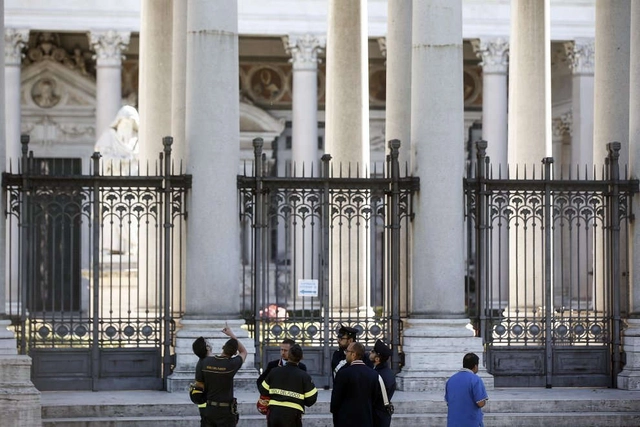
Inspections underway in Rome. Image via La Repubblica (Roma)
Following an earthquake measuring 6.6 on the Richter Scale that struck central Italy this morning at 7:40 a.m. local time—the fourth to hit this part of the country in three months—a number of structures have collapsed entirely or been severely damaged. While no deaths have been reported at this time, the BBC suggests that twenty people have been injured.
EXPO CHICAGO and Zuecca Project Space Present EXPO VIDEO: Invisible Cities at Spazio Ridotto (Oct. 24–Nov. 25, 2016)
EXPO CHICAGO and Zuecca Project Space collaborate to present a satellite iteration of the EXPO VIDEO program, highlighting a selection of dynamic and cutting-edge film, video, and new media works by artists selected from EXPO CHICAGO 2016 Exhibitors at Spazio Ridotto in Venice, Italy. The programmatic partnership between the exposition and the satellite location extend on a programmatic partnership presented with the Italian Cultural Institute in Chicago.
Part of the Venice Architecture Biennale 2016’s Collateral Events, Branding Islands Making Nations: On Intangible Assets and Value Propositions in Spatial Practice is a public program and case study competition, drawing attention to the application of political power in spatial practice. Intended to open the discourse on added value in design, Branding Islands Making Nations expands upon the 15th International Architecture Exhibition’s call to arms by inviting an extended field of spatial practitioners to Venice. Consultants and communication designers, marketing and advertising experts will gather to speculate on the role of branding in the making of a place.
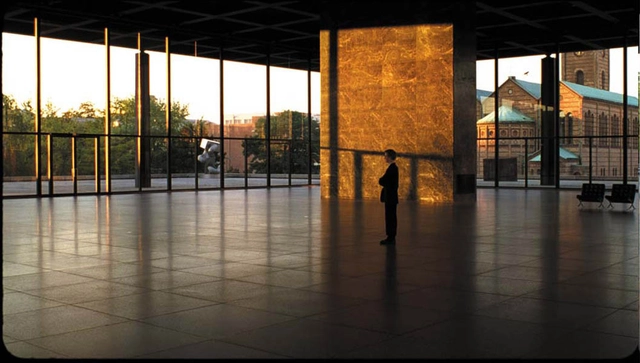
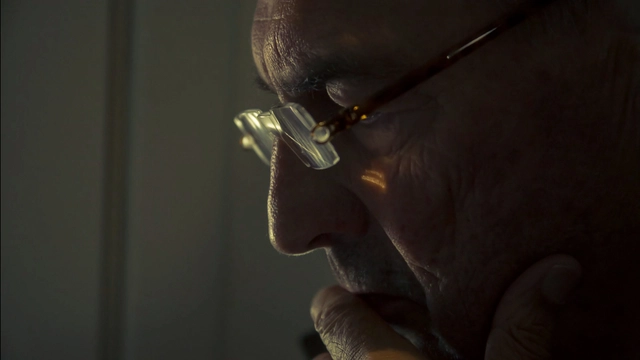
In the canon of great Dutch architects sit a number of renowned practitioners, from Berlage to Van Berkel. Based on influence alone, Rem Koolhaas—the grandson of architect Dirk Roosenburg and son of author and thinker Anton Koolhaas—stands above all others and has, over the course of a career spanning four decades, sought to redefine the role of the architect from a regional autarch to a globally-active shaper of worlds – be they real or imagined. A new film conceived and produced by Tomas Koolhaas, the LA-based son of its eponymous protagonist, attempts to biographically represent the work of OMA by “expos[ing] the human experience of [its] architecture through dynamic film.” No tall order.
Update: We've added a video, presented by PLANE-SITE, about the exhibition, featuring quotes from Carla Bechelli.
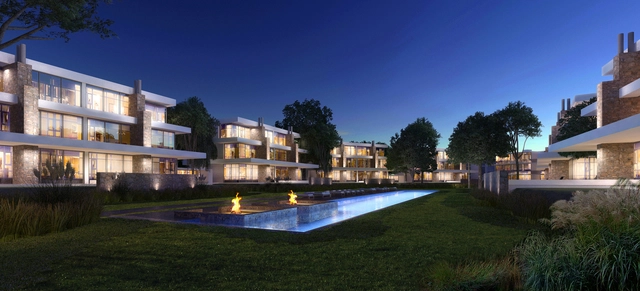
Carla Bechelli Arquitectos has created an exhibition of its multiple-residence project, Las Piedras Villas & Houses, a 2015 recipient of an International Property Award, which is currently on display at the 2016 Venice Biennale, at Palazzo Bembo.
Located in the suburbs of Buenos Aires in Argentina, the project consists of a series of small-scale buildings around a central lake intended to create a dialogue with the single-family housing in the surrounding neighborhood.
In late August, the Flanders Architecture Institute will organise Encounters in Optimism: Utopia in a Finite World, an interactive programme of lectures, debates and workshops that will take place in various national pavilions at the Venice Architecture Biennale. The overarching theme is "the architectural utopia in a finite world."
Together with The British Council, the Deutsches Architekturmuseum and the Creative Industries Fund NL, the Flanders Architecture Institute has put together a programme for architects, students and the general public to reflect on how architecture can redefine the city. The economic climate and the idea of utopia are the main topics in these discussions.
https://www.archdaily.com/793483/encounters-in-optimism-utopia-in-a-finite-worldAD Editorial Team
In May 2016, the After Belonging Agency discussed the theme of the forthcoming Oslo Architecture Triennale—entitled After Belonging: a Triennale In-Residence, On Residence, and the Ways We Stay In-Transit—as part of In Therapy, the exhibition of the Nordic Pavilion at the 2016 Venice Biennale. The hour-long discussion, which also includes presentations by Shumi Bose and Füsun Türetken, begins with an in-depth description of how the Triennale intends to focus on the future challenges of migration by investigating how cities and architecture can react to large groups of people moving and resettling.
https://www.archdaily.com/791923/three-nordic-refractions-the-after-belonging-agency-discuss-the-theme-of-the-2016-oslo-triennialeAD Editorial Team
In two lectures delivered by Bart Lootsma, Professor and Head of Institute for Architectural Theory and History at the University of Innsbruck, the 2016 Venice Biennale—Reporting From the Front—is dissected, unpicked and evaluated through the national participations (pavilions) and Alejandro Aravena's central exhibitions. Lootsma, who has broadcast the lectures as publicly available resources on architecturaltheory.eu, is the co-curator of the 2016 Pavilion of Montenegro.
https://www.archdaily.com/791670/bart-lootsma-dissects-unpicks-and-evaluates-the-2016-venice-biennaleAD Editorial Team
Dream of Venice Architecture, the second in a series by Bella Figura Publications, has brought together a collection of contemporary architects and architectural writers to share their personal experiences of La Serenissima: the great Italian city of Venice. "Water runs through her veins," Editor JoAnn Locktov writes. "Bridges, palaces, churches – every structure is a testament to the resiliency of imagination."
In an exclusive half-hour interview with Alejandro Aravena, Monocle's Josh Fehnert questions the recent Pritzker Prize-laureate on Chilean architecture and urbanism, why he considers simple design as the key to alleviating the world's biggest woes, and the conception and ultimate result of his 15th International Architecture Exhibition – La Biennale di Venezia.
https://www.archdaily.com/791596/alejandro-aravena-on-design-venice-and-why-he-paused-his-career-to-open-a-barAD Editorial Team
It’s LIQUID Group is selecting all interesting photo, painting, design/architecture projects, video-art, installation/sculpture and performance art works to include in the next exhibition. FUTURE LANDSCAPES, International Art and Architecture Festival, is the third event of BORDERS Festival that will be hosted in Venice, Palazzo Ca’ Zanardi and Venice Art House Gallery, from October 06 to November 27, 2016 during the period of Venice Biennale.
In this interview, presented in collaboration with PLANE—SITE, Cynthia Davidson and Monica Ponce de Leon—curators of the US Pavilion at the 2016 Venice Biennale—explain why the United States' contribution to the 2016 Venice Biennale has brought together "visionary" American architectural practices to speculatively address the future of the city of Detroit. They argue that these projects have "far-reaching applications for cities around the world."
https://www.archdaily.com/791116/video-speculative-detroit-architectural-imagination-2016-venice-biennaleAD Editorial Team
In this interview, presented in collaboration with PLANE—SITE, Jack Self—co-curator of the British Pavilion at the 2016 Venice Biennale—reveals how the frontline of architecture in Britain today is not just a housing crisis, but "a crisis of the home." In provocatively presenting "the banal," Self reveals why the British participation at the 2016 Venice Biennale proposes five new models for domestic life, each curated through time of domestic occupancy, alongside how it seeks to address the ways in which we might live in the future.
https://www.archdaily.com/790670/video-designing-through-time-home-economics-2016-venice-biennaleAD Editorial Team
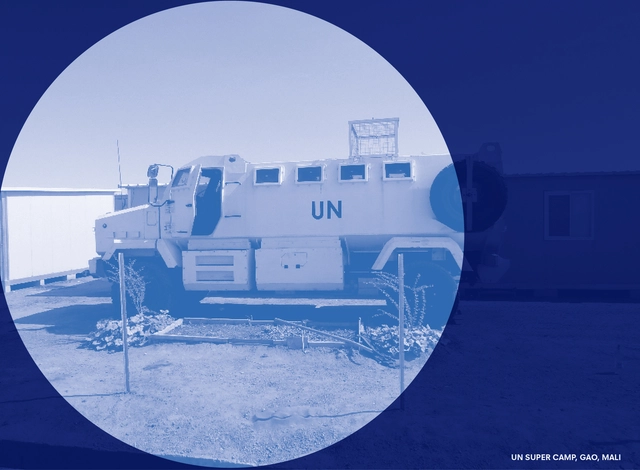
Volume #48: The Research Turn contains the exhibition catalogue for BLUE: The Architecture of UN Peacekeeping, the Dutch entry at the 15th International Architecture Exhibition, la Biennale di Venezia, by Malkit Shoshan. BLUE focuses on the most prominent footprint of the United Nations’ peacekeeping operations: the compound.
After the collapse of the Soviet Union and increasingly since 9/11 and the ‘War on Terror’, warfare has moved into the city. While the wars of the 20th century were largely between nations, fighting over territorial sovereignty and along disputed borders, the wars of the 21st century have been internal and borderless. Today’s wars are being fought between large multinational coalitions of security regimes and insurgent networks. It’s not just war that has moved to the city though: the entire security apparatus has moved with them too, including its peacekeepers and their entire infrastructure. Today, United Nations (UN) peacekeeping operations are taking place in hundreds of cities around the world and at a large scale.
In the latest edition of Section D, Monocle 24's weekly review of design, architecture and craft, Chiara Rimella reports from the Veneto in northern Italy for a report on the best at the 15th International Architecture Biennale – La Biennale di Venezia. Covering Aravena's central exhibitions, Reporting From the Front, and the designers and curators of the 61 national pavilions, the show seeks to understand how architecture can tackle some of the pressing social and political concerns of our time.
https://www.archdaily.com/790142/monocle-24-s-section-d-reports-from-2016-venice-biennaleAD Editorial Team
In a short film exploring some of the National Participations at this year's Venice Biennale, Monocle Films take a considered look at how different countries have responded to the Biennale theme, Reporting From the Front in both explicit and more indirect ways. Visiting the Austrian Pavilion, the Nordic Pavilion, the Turkish Pavilion, the British Pavilion, the Irish Pavilion, the Australian Pavilion and the Romanian Pavilion, the film studies what discourses are being waged in the compressed geo-political world of the Giardini di Biennale.






.jpg?1469542883&format=webp&width=640&height=580)