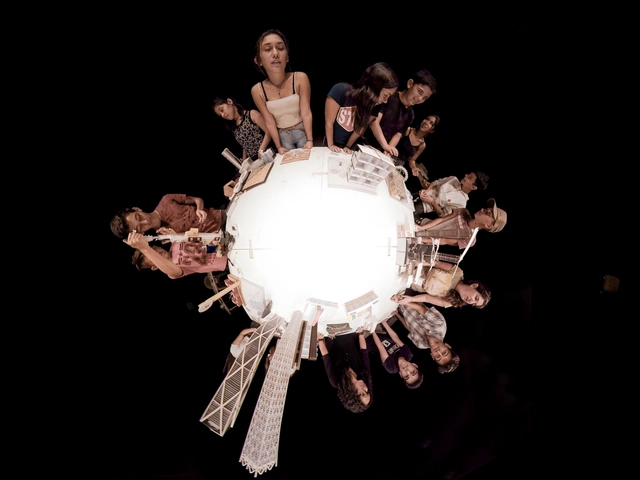
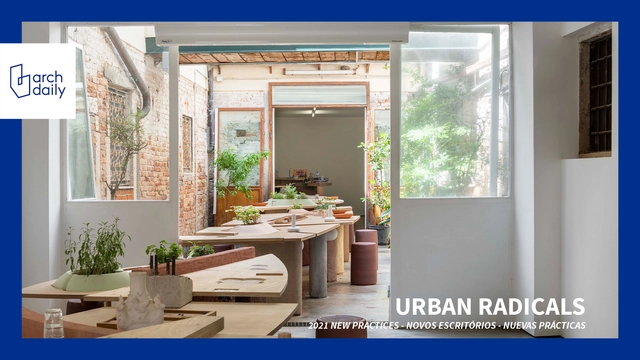
Urban Radicals is a design collective based in London, founded in 2019 by Era Savvides and Athanasios Varnavas. The practice operates at the intersection of multiple disciplines, exploring public space and the notion of collectivity across a variety of scales, contexts and design expressions. One of Archdaily's Best New Practices of 2021, Urban Radicals shrinks and grows organically through the projects, dissolving the boundaries between diverse fields of knowledge and circumventing traditional office structure to integrate a multiplicity of perspectives within architecture.
The problem with being a deliberative writer is that pretty much everything has already been penned by the time you’re ready to write about something. Such is the case with the 2021 ChicagoArchitecture Biennial (CAB): The Available City. There have been several well-written, insightful essays about the CAB by Zach Mortice, Anjulie Rao,Marianela D’Aprile, and others, so it would be foolish to travel the landscape they have so expertly traversed. Instead, I’m offering a trip through this edition of the CAB, which concluded a successful and significant run on Saturday, down a road less traveled.
https://www.archdaily.com/974746/breaking-the-dead-paradigm-for-design-exhibitionsCraig L. Wilkins
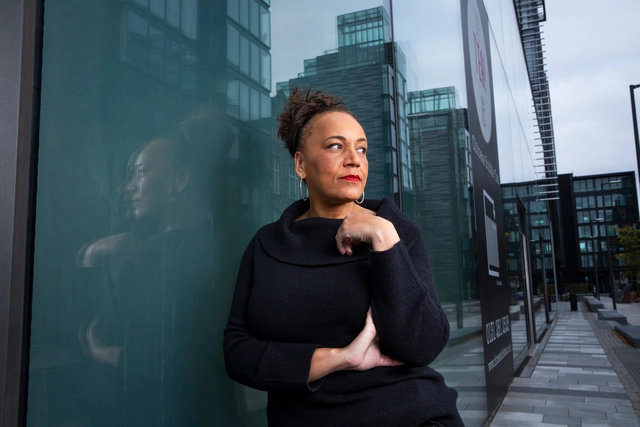
The Board of La Biennale di Venezia, has appointed Ghanaian-Scottish architect, academic, and novelist Lesley Lokko as Curator of the 18th International Architecture Exhibition - La Biennale di Venezia. The 18th International Architecture Exhibition will be held from Saturday 20 May to Sunday 26 November, 2023.
EU Pavilion, a research practice exploring the relationship between architecture and European institutions, presents eight proposals for the first European Pavilion at the Venice Biennale. European architectural and artistic practices were invited by curators Anna Livia Friel, Marco Provinciali, Benjamin Gallegos Gabilondo, Nicolò Ornaghi and Francesco Zorzi to reimagine the national pavilion, the defining spatial and symbolic paradigm of the Biennale. The speculative project aims to explore architecture’s potential in supporting the European project and helping define the identity of this culturally diverse transnational organization.
Peruvian architectural firm leonmarcial arquitectos has been invited to take part of the 17th Venice Architecture Biennale with an installation at the Arsenale as part of the "As New Households” exhibition space. Titled Interwoven, the installation encourages the action of sharing and celebrates the exchange between homes and their environments through architecture.
Can architecture foster better relationships between people, creating an equalized and respectful use of space? Can tools be designed that strengthen the bonds between humans and objects? BAAG (Buenos Aires Arquitectura Grupal) studio explores the architectural elements that mediate between people and objects, the natural and artificial, public and private, individual and collective, and humans and other living things.
How does systemic thinking and generative design contribute to new forms of convivence? Can they become tools to connect tradition and identity in a modern way? Can they help to design customizable architectural strategies that offer locally accessible solutions? Can they contribute to the creation of dignified spatial experiences that can be replicated on a mass scale?
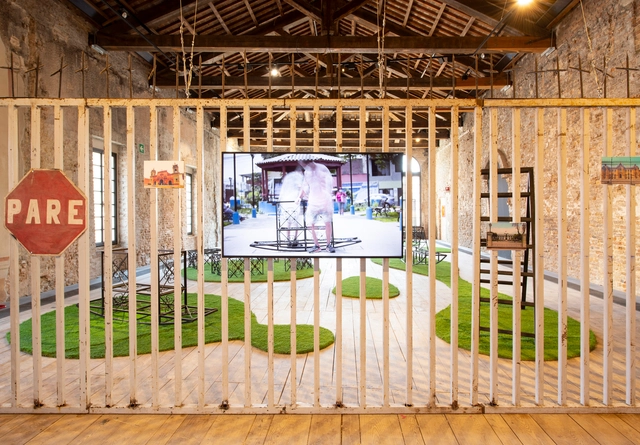
“Playground: Artifacts for Interaction”, by curator Felipe Ferrer, aims to transform the fences surrounding Peru's public spaces into tools for social integration. The project proposes removing the gates enclosing public spaces throughout Lima and Peru's other urban centers, inviting residents to freely enter and interact with the spaces. By removing these "security" mechanisms, which really serve as tools of segregation, and installing benches, playgrounds, and soccer fields, the project aims to divert all the energy, time, and resources put into installing fences and channel it into bringing new life to these public spaces.
The Federal Secretary of Culture and the National Institute of Fine Arts and Literature (INBAL) present the exhibit, titled Desplazamientos (Displacements), which will represent Mexico in the 17th International Exhibition of Architecture-The Biennale of Venice, taking place from May 22 to November 21, 2021 in the Venetian Arsenal. The exhibition aims to redefine the way that Mexico participates in this distinguished space, one of architecture's global stages and a platform for countries to share their cultural heritage. The Mexican pavilion, titled Displacements, is the result of a dialogue between the representatives of the 12 chosen projects and the the curatorial team as a part of the process to transform the pre-established theme of the Venice Biennale and to formulate a dialogue through spatial, artistic, and constructive demonstration.
https://www.archdaily.com/962748/focusing-on-architecture-as-process-rather-than-an-abstract-object-interview-with-elena-tudela-curator-of-the-mexican-pavilion-at-the-2021-venice-biennaleArchDaily Team
"When we enter the restroom, we are never alone. Instead, we are entangled in a network of bodies, infrastructures, ecosystems, cultural norms, and regulations". Although restrooms are often overlooked facilities that cater to the needs of individuals, they are, however, spaces where gender, religion, race, hygiene, health, and the economy are defined and expressed. For the 17th International Architecture Exhibition at La Biennale di Venezia, Matilde Cassani, Ignacio G. Galán, Iván L. Munuera, and Joel Sanders designed two pavilions that exhibit how restrooms are political architectures, serving as battlegrounds for the world's disputes.
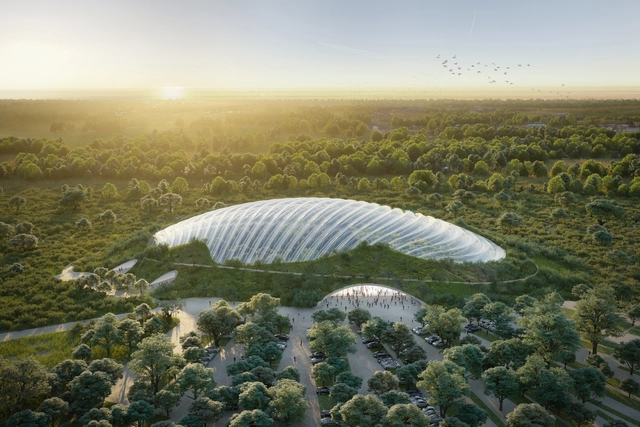
Not-for-profit Zuecca Projects and Coldefy have shared new research for Tropicalia, the largest single-dome greenhouse on the planet, for the 17th International Architecture Exhibition – La Biennale di Venezia. Presenting tropical fauna and flora, the team is also sharing the architectural and engineering specificities of the Tropicalia greenhouse with its unique sustainable air treatment engineering.
Developed by architect Gerardo Caballero, in collaboration with Paola Gallino, Sebastian Flosi, Franco Brachetta, Ana Babaya, Leonardo Rota, Emmanuel Leggeri, Sofia Rothman, Gerardo Bordi, Edgardo Torres, and Alessandro De Paoli, "The Infinite House", a project inspired by traditional Argentine houses, will represent Argentina in the upcoming 2021 VeniceArchitecture Biennale. The project reflects on the identity of Argentine public housing and the role collective housing, both public and private, has played in the country's history and society. The Infinite House aims to push the limits of the domestic and to highlight the importance of the collective rather than the individual by illustrating that a home extends beyond one's own living space: "it is the city, the country, and even the world."
Coming soon. Visions from the minimum territory ("Próximamente") is the title of the Uruguay Pavilion at the Venice Biennale 2021, which will take place between May 22 and November 21, 2021.
A sneak peak of Uncertainty, the highlight of the Spanish Pavilion at the 2021 Biennale of Venice taking place from May 22 to November 21 of this year.
“Playground, Artifacts for Interaction” by Felipe Ferrer will be featured in the Peru Pavilion in the 2021 Venice Biennale of Architecture. The project was the winner of the Curatorial Competition held by The Cultural Patronage of Peru that aimed to highlight how fences and gates shape our understanding of public spaces.
Entitled Primitive Migration from/to Taiwan, the National Taiwan Museum of Fine Arts (NTMoFA) and curatorial teams Divooe Zein Architects and Double-Grass International Co., organized an immersive exhibition for the Biennale Architettura 2021. Taiwan’s Collateral Event for the 17th International Architecture Exhibition of La Biennale di Venezia will run from 22 May to 21 November 2021 at Palazzo delle Prigioni.
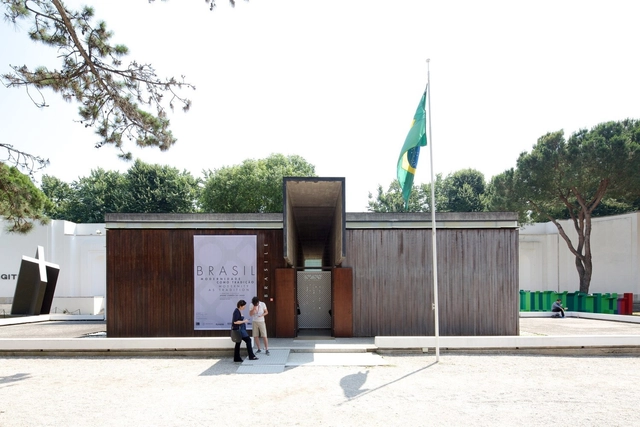
Entitled utopias of common life, Brazil's official participation in the 17th Bienalle Architettura 2021 is curated by the collaborative studio Arquitetos Associados and the visual designer Henrique Penha. The exhibition at the Brazilian Pavilion in the Giardini, in Venice, begins by mapping utopias that exist on Brazilian soil, from the Guarani world vision of a Land Without Evil to contemporary times, highlighting a few singular moments among them.
Conceived before the Covid-19 pandemic, which has temporarily suspended the possibility of physical proximity in a large part of the world, the proposal gains new meanings in the current context and dialogues with the overall theme, by curator Hashim Sarkis: How Will We Live Together?











.jpg?1624390734&format=webp&width=640&height=580)