1. ArchDaily
  2. Urban Theory

Urban Theory: The Latest Architecture and News

The Korean Pavilion to Explore Urban Shrinkage Through "Catabolism" at the 2027 Venice Architecture Biennale

Audio available

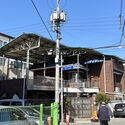
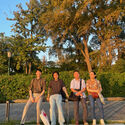
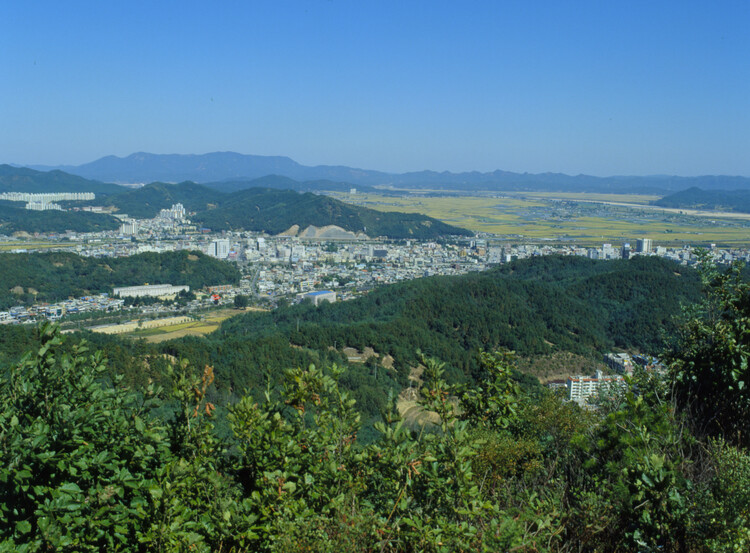
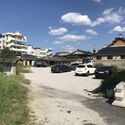
The Korean contribution at the 2027 International Architecture Exhibition – La Biennale di Venezia will focus on the country's condition of hyper-shrinkage, the accelerated stage of population contraction and societal aging, within the context of global demographic change. Commissioned by the Arts Council Korea (ARKO) and led by curator Janghwan Lee, the exhibition will feature contributions by architects Bae Yoonkyung, Kyo Suk Lee and Jaehyub Ko. The curatorial project is named "Catabolism," after the metabolic process through which complex molecules break down into simpler units and release energy. Moving away from an expansion-focused view of cities and architecture, the team uses the concept as a lens to understand urban shrinkage as a reconfiguration of existing relationships and the emergence of new uses and ways of living.
The Korean Pavilion to Explore Urban Shrinkage Through "Catabolism" at the 2027 Venice Architecture Biennale - Imagem 1 de 4The Korean Pavilion to Explore Urban Shrinkage Through "Catabolism" at the 2027 Venice Architecture Biennale - Imagem 2 de 4The Korean Pavilion to Explore Urban Shrinkage Through "Catabolism" at the 2027 Venice Architecture Biennale - Imagem 3 de 4The Korean Pavilion to Explore Urban Shrinkage Through "Catabolism" at the 2027 Venice Architecture Biennale - Imagem 4 de 4The Korean Pavilion to Explore Urban Shrinkage Through Catabolism at the 2027 Venice Architecture Biennale - More Images

Subscriber Access

A Beating and Bleeding Heart: Bodies, Streets, and the Politics of Care in Bogotá

Audio available

This article is the winning entry of the Epistle Writing Prize 2025, an annual competition dedicated to recognizing outstanding writing on design, architecture, and the environment.

It's wet season, but this morning's downpour does little to deter the rhythm along La Carrera Séptima. Cyclists and pedestrians weave past ambulatory vendors with carts of avocados, ginger sweets, and phone cases. Toy cars, lightbulbs, and hand-beaded jewelry glisten with raindrops, arranged neatly on tarps that demarcate vendors' territories. Police officers approach a recycler gathering bottles; a tourist bargains for a jacket; two women find each other in the middle of the road, embracing as their coats grow heavy with rain.

La Séptima, or Bogotá's Seventh Avenue, is the most emblematic road in Bogotá, traversed by more than two million people every day. Along this single road — part marketplace, part protest route, part transportation hub — Bogotá's history unfolds. For nearly a year, I traced its rhythms as a pedestrian, commuter, inhabitant, and researcher. In all these moments and their historical incarnations, one image endured: the road is a living body. It is imagined as Bogotá's backbone, its vital artery, its heart. It bleeds, bears scars, and demands care.