1. ArchDaily
  2. Urban Radicals

Urban Radicals: The Latest Architecture and News

Architecture Now: From Island Resorts to Eco-Parks, A Look at Recent Architectural Announcements from BIG, KCAP, and More

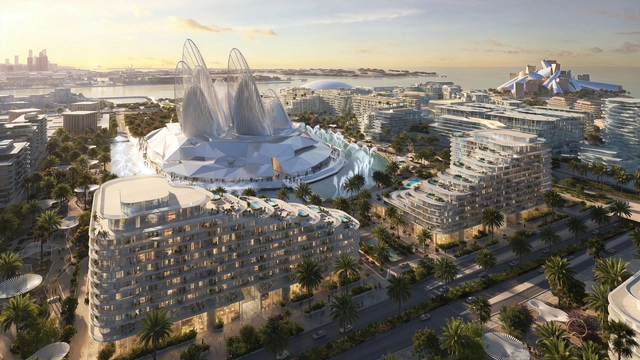
Recent architectural announcements showcase a global range of projects. This month, some of the most recognized architectural offices in the world have announced ambitious projects, some engaging with local communities, rediscovering and revitalizing existing structures, or contributing to complex architectural landscapes. Among them, BIG revealed their proposal for Saadiyat Island, a cultural district that gathers some of the world's most famous designers. Additionally, Populous revealed a new performance center, KCAP is developing a framework for an eco-industrial park, and Henley Halebrown is working to revitalize an overlooked structure in Belgium, reopening it to the local community. Read on to discover a collection of recent announcements from the architectural world, peeking into established architects' processes and recent announcements.

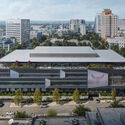
Architecture Now: From Island Resorts to Eco-Parks, A Look at Recent Architectural Announcements from BIG, KCAP, and More - Image 1 of 4Architecture Now: From Island Resorts to Eco-Parks, A Look at Recent Architectural Announcements from BIG, KCAP, and More - Image 2 of 4Architecture Now: From Island Resorts to Eco-Parks, A Look at Recent Architectural Announcements from BIG, KCAP, and More - Image 3 of 4Architecture Now: From Island Resorts to Eco-Parks, A Look at Recent Architectural Announcements from BIG, KCAP, and More - Image 4 of 4Architecture Now: From Island Resorts to Eco-Parks, A Look at Recent Architectural Announcements from BIG, KCAP, and More - More Images+ 22

Ephemeral Cities: 3 Radical City Concepts That Propose for Users to Shape Their Built-Form

Subscriber Access | 

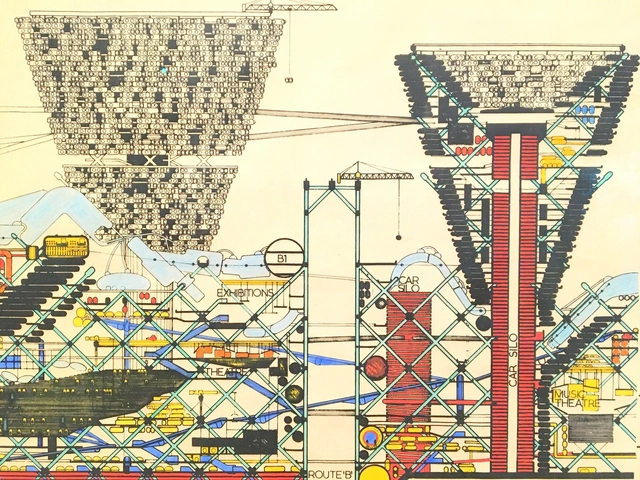
The concept of a city can be viewed as a constantly evolving system where both architects and users contribute to its design and redesign. While its framework may start with planners or designers, the character of the urban fabric is ultimately shaped by the societies and generations that inhabit it. The question of "city authorship" often arises in the context of masterplan design. Can architects and urban planners determine the extent to which a city will evolve through its initial design? The answer is no. User authorship then acknowledges that city planning should not be approached like building design, where designers attempt to predict every aspect of shape, pattern, behavior, and culture. Instead, it recognizes the role that people play in shaping the urban fabric through their personal taste in architecture, the development of neighborhood personality, and ongoing redesign that contributes to the story and spirit of a place. These factors should be considered in the initial design by engaging ideas related to future expansion, adaptable infrastructure, and empowering citizens to contribute to the city's architecture, thus making the city design democratic. This article explores conceptual radical cities where designers embrace the ideas of user authorship and the constant evolution of ephemeral architecture.

Ephemeral Cities: 3 Radical City Concepts That Propose for Users to Shape Their Built-Form - Image 1 of 4Ephemeral Cities: 3 Radical City Concepts That Propose for Users to Shape Their Built-Form - Image 2 of 4Ephemeral Cities: 3 Radical City Concepts That Propose for Users to Shape Their Built-Form - Image 3 of 4Ephemeral Cities: 3 Radical City Concepts That Propose for Users to Shape Their Built-Form - Image 4 of 4Ephemeral Cities: 3 Radical City Concepts That Propose for Users to Shape Their Built-Form - More Images+ 8

A Brick for Venice: Urban Radicals Explores Waste-based Construction in Response to the Rising Climate Crisis

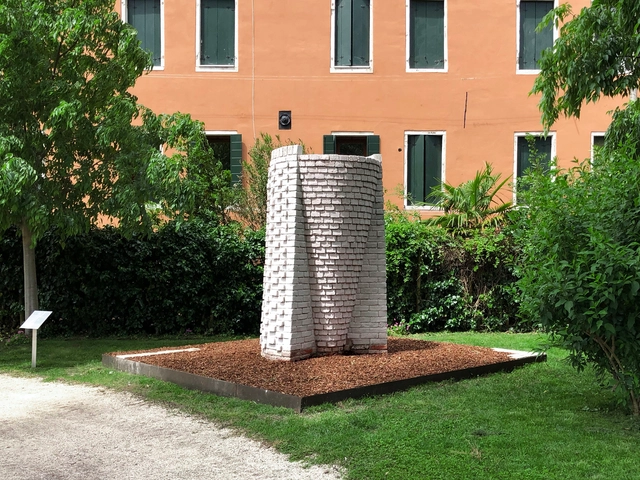
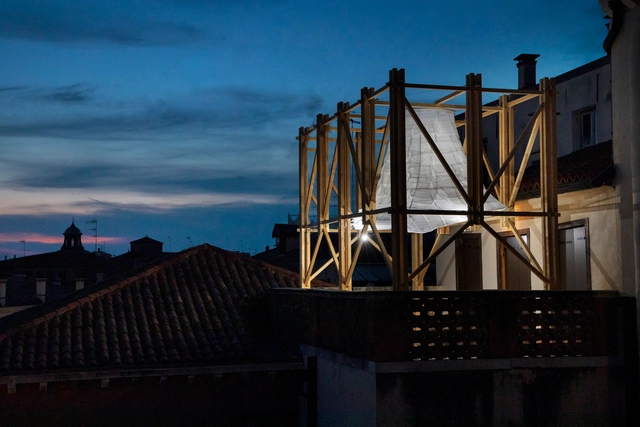
Urban Radicals presented a temporary pavilion “A Brick for Venice” as part of the European Cultural Center’s “Time Space Existence program during the same time as the 2023 Venice Architecture Biennale. The entirety of the brick pavilion was made with mud from the city’s canals. Furthermore, “A Brick for Venice” is the first proof of concept for the team’s novel waste-based construction product.

A Brick for Venice: Urban Radicals Explores Waste-based Construction in Response to the Rising Climate Crisis - Image 1 of 4A Brick for Venice: Urban Radicals Explores Waste-based Construction in Response to the Rising Climate Crisis - Image 2 of 4A Brick for Venice: Urban Radicals Explores Waste-based Construction in Response to the Rising Climate Crisis - Image 3 of 4A Brick for Venice: Urban Radicals Explores Waste-based Construction in Response to the Rising Climate Crisis - Image 4 of 4A Brick for Venice: Urban Radicals Explores Waste-based Construction in Response to the Rising Climate Crisis - More Images+ 18

10 Structural Installations by Snøhetta, MADWORKSHOP, and others at the ECC's 'Time Space Existence' Exhibition at Venice

Subscriber Access | 

In parallel to this year's Venice Architecture Biennale, The European Cultural Centre (ECC) presented the sixth edition of its extensive architecture exhibition titled Time Space Existence. The 2023 iteration of the group show draws attention to expressions of sustainability in its numerous forms, ranging from a focus on the environment and urban landscape to the unfolding conversations on innovation, reuse, community, and inclusion. A total of 217 projects by established participants like Snøhetta or MADWORKSHOP and emerging players such as Urban Radicals or ACTA are currently on show through the 26th of November, 2023, at Venice's Palazzo Bembo, Palazzo Mora, and Marinaressa Gardens.

In response to climate change, the installations on show investigate new technologies and construction methods that reduce energy consumption through circular design and develop innovative, organic, and recycled building materials. Participants also address social justice by presenting living solutions envisioned for displaced communities and minorities, while others examine the tensions between the built urban environment and the nature surrounding it to identify opportunities for coexistence.

10 Structural Installations by Snøhetta, MADWORKSHOP, and others at the ECC's 'Time Space Existence' Exhibition at Venice  - Image 1 of 410 Structural Installations by Snøhetta, MADWORKSHOP, and others at the ECC's 'Time Space Existence' Exhibition at Venice  - Image 2 of 410 Structural Installations by Snøhetta, MADWORKSHOP, and others at the ECC's 'Time Space Existence' Exhibition at Venice  - Image 3 of 410 Structural Installations by Snøhetta, MADWORKSHOP, and others at the ECC's 'Time Space Existence' Exhibition at Venice  - Image 4 of 410 Structural Installations by Snøhetta, MADWORKSHOP, and others at the ECC's 'Time Space Existence' Exhibition at Venice  - More Images+ 9

"It is Important to Give Authorship to the Public": An Interview With Urban Radicals

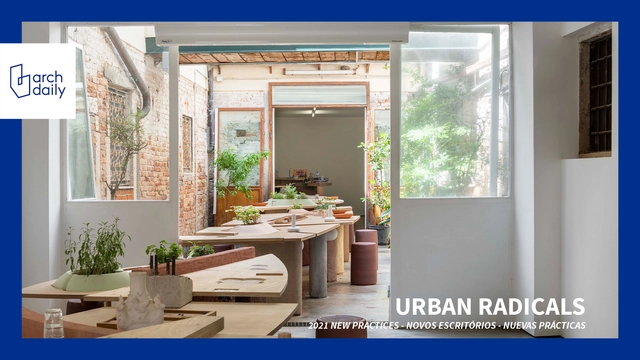
Urban Radicals is a design collective based in London, founded in 2019 by Era Savvides and Athanasios Varnavas. The practice operates at the intersection of multiple disciplines, exploring public space and the notion of collectivity across a variety of scales, contexts and design expressions. One of Archdaily's Best New Practices of 2021, Urban Radicals shrinks and grows organically through the projects, dissolving the boundaries between diverse fields of knowledge and circumventing traditional office structure to integrate a multiplicity of perspectives within architecture.

"It is Important to Give Authorship to the Public": An Interview With Urban Radicals - Image 1 of 4"It is Important to Give Authorship to the Public": An Interview With Urban Radicals - Image 2 of 4"It is Important to Give Authorship to the Public": An Interview With Urban Radicals - Image 3 of 4"It is Important to Give Authorship to the Public": An Interview With Urban Radicals - Image 4 of 4It is Important to Give Authorship to the Public: An Interview With Urban Radicals - More Images+ 13

ArchDaily Selects the Best New Practices of 2021

As our world evolves at an unprecedented pace, the challenges that come with it are becoming more and more complex. The questions faced by the cities and networks of our global world, the physical and virtual environments where our evolution takes place, are making architecture more relevant than ever. 

The issues of the built environment are no longer exclusive to the incumbents who build and design it and have become transversal questions in our society. From the citizens who question the quality of their public spaces to the self-trained builder erecting a tiny house in the woods, to the homeowners using an app to codesign their interiors during lockdown, we want to have a saying and we want to take action. Why does architecture have to be so uncertain, so distant?