1. ArchDaily
  2. Urban Design

Urban Design: The Latest Architecture and News

Platform 8: An Index of Design & Research

Platform 8 catalogs a curated selection of work generated in the past year at the Harvard University Graduate School of Design. Alongside final products of design education, Platform 8 places particular emphasis on collecting and documenting the people and artifacts that shape research-driven design practices. Here, design is presented both as process and as a final product. Indexical structure, punctuated with a collection of portraits, presents a comprehensive picture of the school. Platform 8 shows the intention, direction, and passion seen and experienced every day at the GSD.
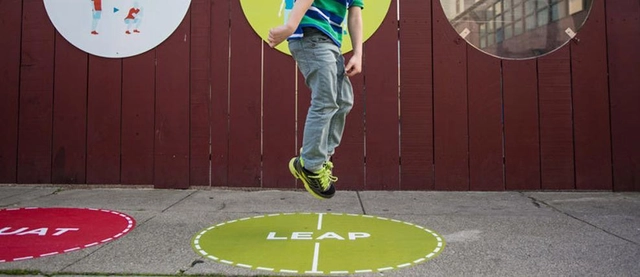
Design Museum Mornings: Playable Cities with Maggie Cooper

To celebrate the upcoming Extraordinary Playscapes exhibition in June, BSA Space is teaming up with co-curator Design Museum Boston for an event exploring how to make the urban environment more accessible to play. As part of the ongoing series Design Museum Mornings, this session will feature Maggie Cooper, City Initiatives manager at KaBOOM!, a nonprofit focused on bringing balanced and active play into the daily lives of all children. Join Cooper for a candid conversation as she shares how to bring communities together through initiatives like group playground builds and playability walks, especially for children growing up in poverty. Free breakfast and coffee will be provided, along with juices from sponsor Purity Organic.

A Look Back: 8 Years of Social and Urban Projects

In the past eight years the world has seen important changes – stemming from natural catastrophes, global warming, war, diseases, political and economic crisis among other things – all of which have a direct impact on the way we inhabit our planet and therefore how architects and planners are managing context-related designs for community living.

The importance of socially engaged architecture was highlighted by this year's Pritzker Prize winner Alejandro Aravena, whose work appeals to the idea of an active, committed architect who seeks for a democratic urban environment. This development also resonates strongly with ArchDaily's mission statement "to improve the quality of life of the next 3 billion people that will move into cities in the next 40 years, by providing inspiration, knowledge and tools to the architects who will have the challenge to design for them."

Therefore, in celebration of ArchDaily's 8th birthday, our Projects Team curated a selection of 24 exemplary projects divided into 3 categories. Each of these projects published over the past 8 years dedicate their design to find greater social, community, civil and humanitarian needs.

Call for Papers: International Symposium on Urban Design

On the 20th anniversary of its MSc Urban Design Program, the METU Faculty of Architecture is organising an international symposium on urban design to be held between the 4th and 5th October 2016 in Ankara, Turkey: 'Designing Urban Design: Towards a Holistic Perspective'.

23 Teams Selected to Reinvent the Future of Paris

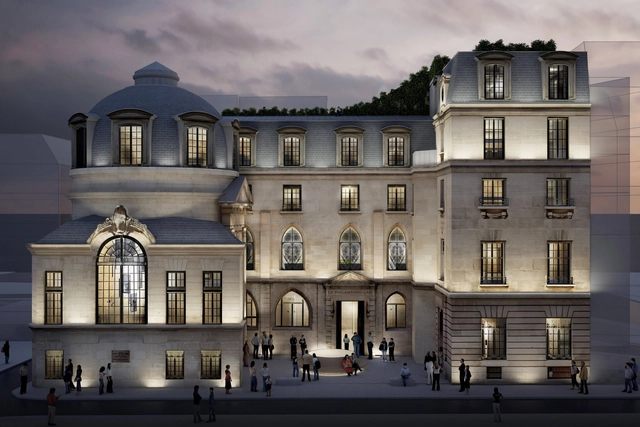
Réinventer.paris has announced the 23 winners chosen to develop architectural projects in Paris, including designs by Sou Fujimoto, David Chipperfield, and DGT Architects. Réinventer.paris is an urban initiative launched to give designers the power to rethink and reshape the way that Parisians live, work, and play. Located on various sites chosen by Mayor Anne Hidalgo, each project successfully creates a sense of liveliness and embodies what the future of Paris might be. The call for submissions was answered with ideas about innovation, cutting edge-solutions to environmental problems, and intelligent design.

San Francisco 2016: Tenderloin System Update

Following on from the success of ‘Cambodia 2015’ (awarded 3rd Top Competition of 2015 by Bustler), Eleven is excited to announce their latest architecture and idea challenge: ‘San Francisco 2016 - Tenderloin System Update’.

BSA Urban Design Workshop: Suffolk Downs Concept Presentations

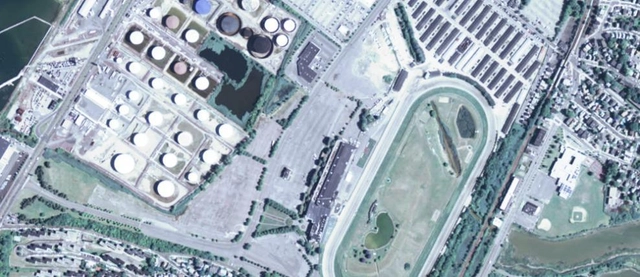
The Suffolk Downs Urban Design Workshop is the third in an ongoing series of Urban Design Workshops organized by the BSA Foundation. The workshops’ overall goal is to open up dialogue and stimulate thinking about the design potential of places with particularly significant and compelling opportunities.

BSA Urban Design Workshop: Suffolk Downs Panel Discussion

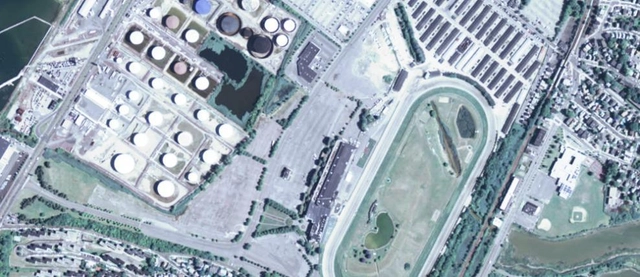
The Suffolk Downs Urban Design Workshop is the third in an ongoing series of Urban Design Workshops organized by the BSA Foundation. The workshops’ overall goal is to open up dialogue and stimulate thinking about the design potential of places with particularly significant and compelling opportunities.

Loop PDX: A Design Competition to Connect Portland's Central City

The University of Oregon John Yeon Center for Architecture and the Landscape and Design Week Portland invite proposals to define, design, and bring to life Portland’s proposed “green loop”—a six-mile pedestrian/bike urban promenade linking the city’s east and west sides.

Open Call: Crowdus Street Design Competition

Deep Ellum developed in the late 1800s as a residential and commercial neighborhood on the east side of Downtown Dallas. The early 1900s flourished with industrial development, serving factory facilities for the Continental Gin Company and Henry Ford’s Model T. Deep Ellum’s real claim to fame was found in its music. By the 1920s, the neighborhood had become a hotbed for early jazz and blues musicians, hosting the likes of Blind Lemon Jefferson, Huddie “Leadbelly” Ledbetter, Texas Bill Day and Bessie Smith. Following WWII, the success of Deep Ellum started to fade. The ever-growing availability and use of the automobile led to the removal of the Houston and Texas Central railroad tracks -- to make way for the Central Expressway-- and by 1956 the streetcar line had been removed. Businesses closed and residents moved, and in 1969 a new elevation of Central Expressway truncated Deep Ellum, completely obliterating the 2400 block of Elm Street.

Elevating Erie: Ideas Competition for a Biodiverse Boulevard

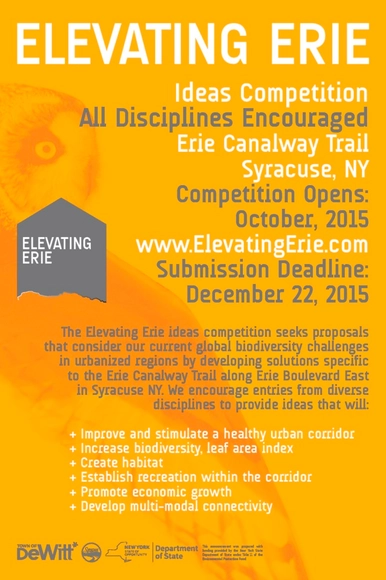
Update: The deadline has been extended to January 4, 2016. 

The creation of the Erie Canal was a paradigm shift for American progress in the 19th century, leveraging hundreds of miles of canal networks capable of generating cities out of swamps and ushering in a new era of exchange. Over a century later, what was the Erie Canal through Central New York has been capped over with urban development and sprawl. We are now presented with the opportunity to reposition Erie as the vehicle for a globally relevant, ecologically turbocharged urban corridor. The Elevating Erie ideas competition seeks proposals that consider our current global biodiversity challenges in urbanized regions by developing solutions specific to the Erie Canalway Trail along Erie Boulevard East connecting DeWitt to Syracuse.

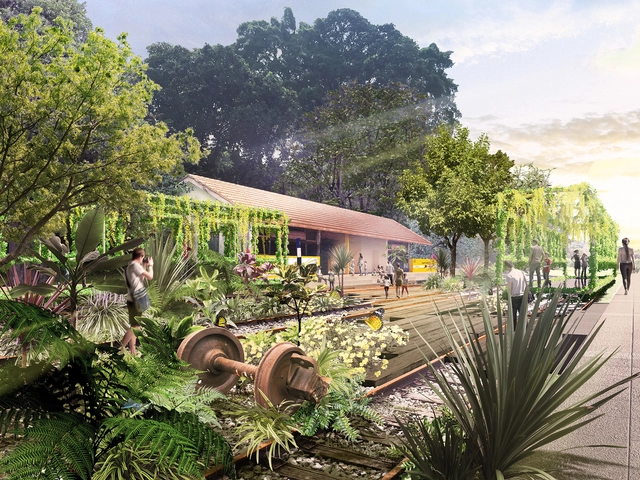
Nikken Sekkei Designs Master Plan to Revitalize a Former Railway Spanning the Entirety of Singapore

A design team led by Nikken Sekkei, in collaboration with Tierra Design and Arup Singapore, has won a competition to Master Plan a 24-kilometer long former railway corridor that spans the entirety of Singapore with their proposal entitled “Lines of Life.” The proposal, chosen by a panel from Singapore’s Urban Redevelopment Authority incorporates green areas, footpaths, bicycle paths, and surrounding developments that are flexibly implementable over many years, so that the former train line can be best integrated into its surroundings.

Salon Unveils "Keeping the Valley Alive" Master Plan for Istanbul

Istanbul-based architecture studio Salon, in collaboration with Praxis Landscape, has unveiled the designs for its Beylikdüzü Life Valley Bridges and Routes Master Plan for Istanbul's Beylikdüzü district. Guided by the idea of “Keeping the Valley Alive," the project has created a new design for the area to thrive, maintaining the valley “livable, accessible, sustainable, feasible, and alive.”

Salon Unveils "Keeping the Valley Alive" Master Plan for Istanbul - Image 1 of 4Salon Unveils "Keeping the Valley Alive" Master Plan for Istanbul - Image 2 of 4Salon Unveils "Keeping the Valley Alive" Master Plan for Istanbul - Image 3 of 4Salon Unveils "Keeping the Valley Alive" Master Plan for Istanbul - Image 4 of 4Salon Unveils Keeping the Valley Alive Master Plan for Istanbul - More Images+ 9

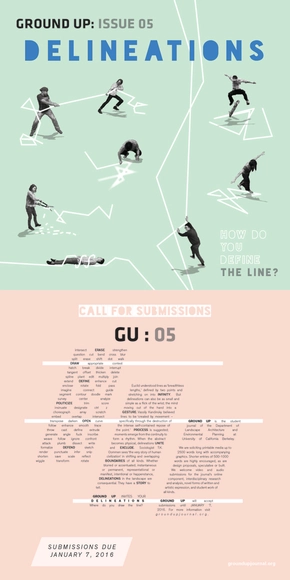
Call for Submissions: GROUND UP Journal, Issue 5

Euclid understood lines as ‘breadthless lengths,’ defined by two points and stretching on into infinity. But delineations can also be as small and simple as a flick of the wrist; the mind moving out of the hand into a gesture. Vassily Kandinsky believed lines to be ‘created by movement – specifically through the destruction of the intense self-contained repose of the point.’ Process is suggested; moments emerge from the continuity to form a rhythm. When the abstract becomes physical, delineations unite and exclude. Sociologist T.K. Oommen sees ‘the very story of human civilization’ in shifting and overlapping boundaries of all kinds. Whether blurred or accentuated, instantaneous or permanent, representational or manifest, intentional or happenstance, DELINEATIONS in the landscape are consequential. They have a story to tell.

Lecture: Terreform ONE at The Bartlett

Terreform ONE: Hackerspace + Bio Design - This lecture will discuss Terreform ONE, a non-profit design group that promotes smart design in cities. Through intensive projects, the group aims to illuminate the environmental possibilities of New York City and inspire solutions in similar areas globally. The group develops solutions for local sustainability in energy, transportation, infrastructure, buildings, waste treatment, food, and water. These solutions are derived from the interface of design, computation and synthetic biology.

Open Call: Play Park Design Competition, Ballyfermot, Ireland

Irish Architecture Foundation in collaboration with The Matheson Foundation and Dublin City Council are launching a competition to design a play and skate park for ‘The Lawns’ in Le Fanu Park, Dublin 10. The competition is now open. The 'Play Park: Ballyfermot' project is a unique opportunity for an innovative inter-disciplinary design collective, with a passion for working in community contexts to develop a world class play and skate space for young people in Dublin.

Winners of "The Rust Belt" Contest Offer Ideas for a 107-Acre Former Factory Site

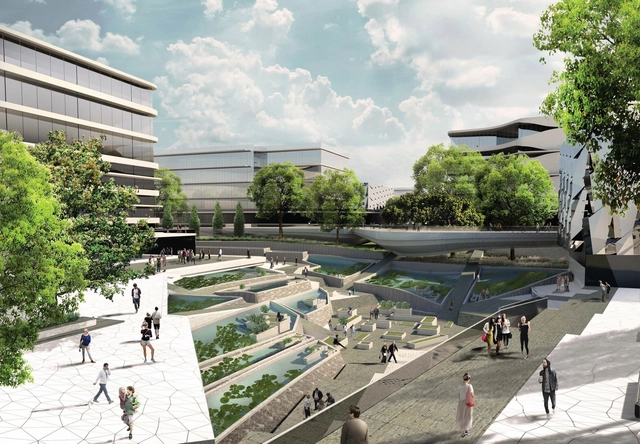
Across industrial North America, many small working class cities are faced with a plethora of abandoned property due to the downfall of the automotive industry. The prolific ruins of the largest abandoned factory in North America, Detroit's Packard Motor Plant, have served as an emblem for dozens of similar plants dotting the landscapes of cities across the continent. In 2010, shortly after the beginning of the global economic crisis, Chrysler closed a sprawling engine factory in Kenosha, Wisconsin. The factory has since been demolished and is now at the beginning of a five-year cleanup. Located adjacent to a densely populated suburban development, the 107-acre property begs the question: what can be done with such a massive piece of land?

In response to Kenosha's Chrysler problem, a team of urbanists, architects and researchers known as Urban Design for Everyone (UD4U) launched a global competition to reinvigorate the former industrial property. Proposals had to take the adjacent neighborhoods into consideration, with the ultimate goal of bridging gaps between disparate communities at opposite ends of the property. The winning proposals range widely from a stylized village of housing, to the creation of enormous urban farms, to the construction of an innovation park featuring a series of vast artificial lakes. After receiving 43 entries from 17 countries, a jury of local architects selected three exceptional proposals and five honorable mentions. Find out what the teams proposed after the break.

Before & After: 30 Photos that Prove the Power of Designing with Pedestrians in Mind

Subscriber Access | 

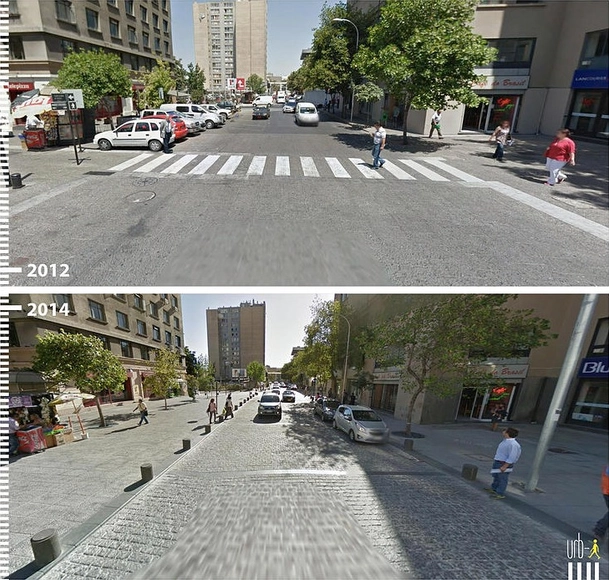
Providing more public space for pedestrians is one of the main goals of urban renewal projects taking place in cities around the world. 

By planting more trees, implementing more sidewalks and bike paths and establishing new seating areas, it is possible to design more welcoming places with less traffic congestion and that promote sustainable methods of transportation, such as walking or biking. 

With the aim of publicizing urban renewal projects that have made cities more pedestrian friendly, Brazilian group Urb-I launched the “Before/After” project, which compiles before and after photos that show how cities have redistributed their public space.

The project is collaborative so that anyone can use Google Street View, or another similar tool, to raise awareness of the changes taking place in their cities.

Read on to see the transformed spaces.