1. ArchDaily
  2. Urban Activism

Urban Activism: The Latest Architecture and News

The Story of Miyashita Park: Resistance, Partnership, and Publicness

Subscriber Access | 

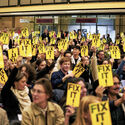
Urban renewal is inherently fraught—financially complex, politically exposed, stakeholder-dense, and almost guaranteed to leave someone dissatisfied. Precisely for these reasons, many cities default to inertia rather than risk the upheaval that comes with reworking entrenched urban fabrics, their residences, and their dynamics; once the "sleeping bear" is prodded, unexpected complications tend to multiply.

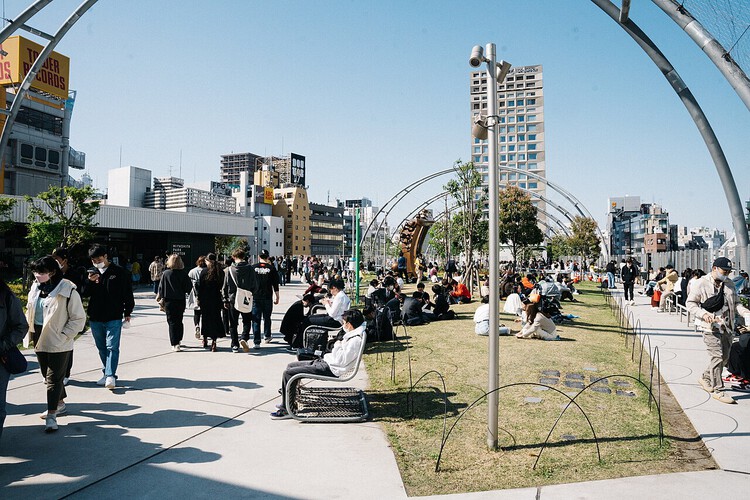
Miyashita Park (Miyashita Kōen), located in Shibuya, Tokyo, crystallizes this dilemma. Its current form—a layered, mixed-use complex balancing commercial activity with a publicly accessible park—emerged from years of negotiation, critique, and recalibration. The result is a distinctive example of a public-private partnership that seeks to align urban amenity, everyday leisure, and economic viability, producing a new piece of city that hosts public life while underwriting its own upkeep.


The Story of Miyashita Park: Resistance, Partnership, and Publicness - Image 1 of 4The Story of Miyashita Park: Resistance, Partnership, and Publicness - Image 2 of 4The Story of Miyashita Park: Resistance, Partnership, and Publicness - Image 3 of 4The Story of Miyashita Park: Resistance, Partnership, and Publicness - Image 4 of 4The Story of Miyashita Park: Resistance, Partnership, and Publicness - More Images+ 24

"The city cannot be understood from the screen": AI and childhood in urban design

Subscriber Access | 

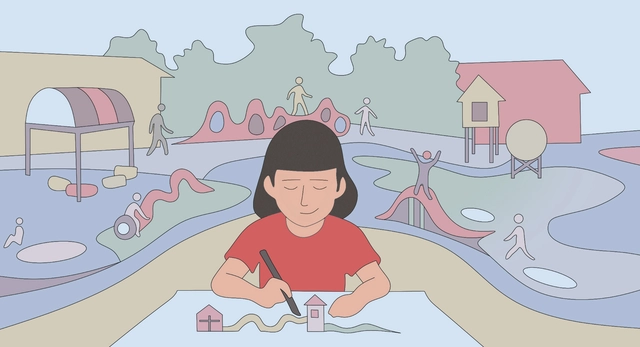
Neither a passing trend nor a permanent threat: the initial alarm is fading. Artificial intelligence is increasingly being adopted as a strategic tool which, when integrated responsibly, can be highly valuable—especially in participatory urban design processes focused on children and youth.

To explore this intersection of technology, cities, and new generations, we spoke with Dolores Victoria Ruiz Garrido, architect and founder of Little Architects, a program she created over a decade ago at the Architectural Association (AA) in London. With more than 15 years of experience in participatory urbanism, she emphasizes that AI can be a powerful tool when used ethically and purposefully—particularly to enrich education and community-focused design processes. But she warns: "The city cannot be understood from the screen—it must be grasped through the body, the walk, and wonder. Before generating stunning or visually beautiful images to transform the city, we must teach how to read it: to observe, understand, and emotionally connect with it."

The European Citizens’ Initiative HouseEurope! Receives the 2025 OBEL Award

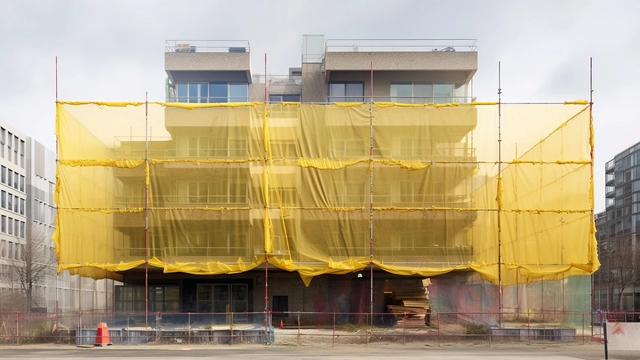
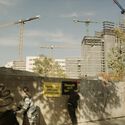
HouseEurope!, a registered non-profit organization focused on promoting the social and ecological transformation of Europe's built environment, has received the 2025 OBEL Award. Presented annually by the Henrik Frode Obel Foundation, the award recognizes architectural contributions with the potential to drive meaningful change. Aligned with this year's theme, "Ready Made," the OBEL Award Jury selected HouseEurope! for its efforts in raising awareness and fostering public engagement around the need for a shift in construction and housing practices across Europe.

The European Citizens’ Initiative HouseEurope! Receives the 2025 OBEL Award - Image 1 of 4The European Citizens’ Initiative HouseEurope! Receives the 2025 OBEL Award - Image 2 of 4The European Citizens’ Initiative HouseEurope! Receives the 2025 OBEL Award - Image 3 of 4The European Citizens’ Initiative HouseEurope! Receives the 2025 OBEL Award - Image 4 of 4The European Citizens’ Initiative HouseEurope! Receives the 2025 OBEL Award - More Images+ 4

Art, Activism, and the City: Illuminating Social Change

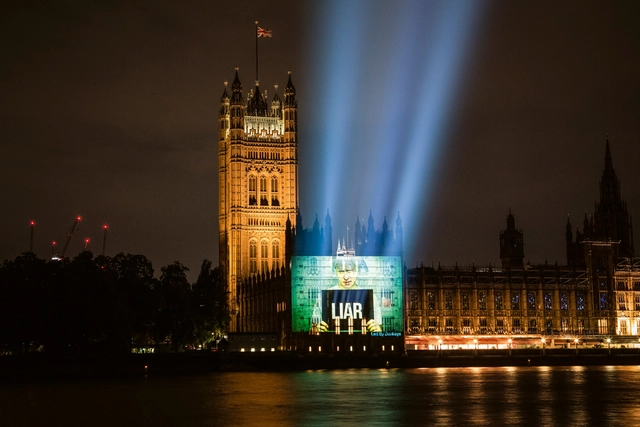
The creative fusion of art and activism in urban spaces has propelled the British collective Led by Donkeys into the spotlight, garnering millions of views for their interventions on social media. Their critical visual occupations - whether billboard messages during the day or large-scale projections at night - raise a compelling question: which medium holds the greater persuasive power? The book "Led by Donkeys: Adventures in Art, Activism and Accountability" offers a deep dive into their conceptual approach, charting their rapid evolution over six years. What began as a London-based response to Brexit has expanded into a global critique of political hypocrisy, addressing issues in Europe, the Middle East, and America. For Peter Weibel, former director of the ZKM Center for Art and Media in Karlsruhe, Germany, the innovative fusion of activism and art—or "Artivism"—represents the first new art form of the 21st century. Years of experience in environmental activism provided the group with crucial insights into the mechanics of political communication, the organization of public interventions, and the challenges of achieving meaningful societal change.

Art, Activism, and the City: Illuminating Social Change - Image 1 of 4Art, Activism, and the City: Illuminating Social Change - Image 2 of 4Art, Activism, and the City: Illuminating Social Change - Image 3 of 4Art, Activism, and the City: Illuminating Social Change - Image 4 of 4Art, Activism, and the City: Illuminating Social Change - More Images+ 1

The European Citizens' Initiative on Building Reuse Opens for Signatures

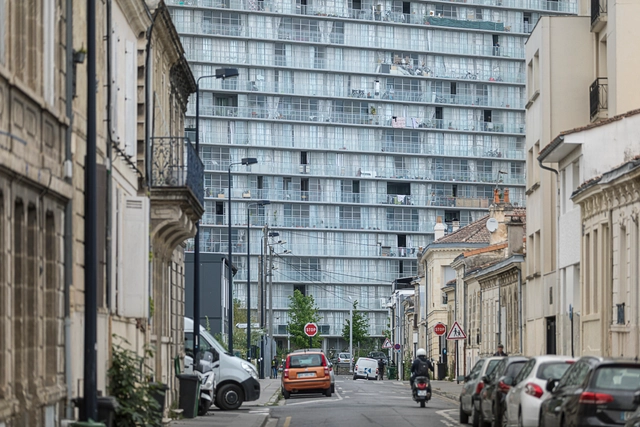
HouseEurope! is the European Citizens' Initiative advocating for EU legislation to simplify, reduce the cost of, and make more socially equitable the renovation and reuse of existing buildings, has officially begun its signature gathering period. The initiative aims to curb demolition driven by speculation and foster a construction industry that prioritizes the potential of existing public and private buildings. As a tool of direct democracy, European Citizens' Initiatives allow citizens to propose legislation at the EU level. For the legislation to be officially considered and implemented by the European Commission and EU member states, it requires the support of 1 million European citizens from at least seven EU countries. The initiative opened for signatures on February 1st, 2025 and will remain open until January 31st, 2026.

The European Citizens' Initiative on Building Reuse Opens for Signatures - Image 1 of 4The European Citizens' Initiative on Building Reuse Opens for Signatures - Image 2 of 4The European Citizens' Initiative on Building Reuse Opens for Signatures - Image 3 of 4The European Citizens' Initiative on Building Reuse Opens for Signatures - Image 4 of 4The European Citizens' Initiative on Building Reuse Opens for Signatures - More Images+ 1

Rescuing Architecture: Stories of Buildings Saved from Demolition

Regarding urban development, the choice between demolition and adaptive reuse holds far-reaching implications. From debates around the cultural and historical significance of structure to the environmental impact of the process of razing and rebuilding, compared to the cost of preserving and adapting, the matter of demolitions has ignited the architectural community to come together and ask for more responsible assessment strategies in hopes of rediscovering the value of existing structures. This article gathers some of the stories of buildings facing the threat of demolition and the processes that led to their rescue.

Rescuing Architecture: Stories of Buildings Saved from Demolition - Image 1 of 4Rescuing Architecture: Stories of Buildings Saved from Demolition - Image 2 of 4Rescuing Architecture: Stories of Buildings Saved from Demolition - Image 3 of 4Rescuing Architecture: Stories of Buildings Saved from Demolition - Image 4 of 4Rescuing Architecture: Stories of Buildings Saved from Demolition - More Images+ 1

The Curb Cut Effect: How Accessible Architecture is Benefiting Everybody

Subscriber Access | 

The fabric of our cities is shaped by millions of small decisions and adaptations, many of which have become integral to our experience. Nowadays taken for granted, some of these elements were revolutionary at the time of their implementation. One such element is the curb cut, the small ramp grading down the sidewalk to connect it to the adjoining street, allowing wheelchair users and people with motor disabilities to easily move onto and off the sidewalk. This seemingly small adaptation has proven to be unexpectedly useful for a wider range of people, including parents with strollers, cyclists, delivery workers, etc. Consequently, it lends its name to a wider phenomenon, the “curb cut effect”, where accommodations and improvements made for a minority end up benefiting a much larger population in expected and unexpected ways.

The Curb Cut Effect: How Accessible Architecture is Benefiting Everybody - Image 1 of 4The Curb Cut Effect: How Accessible Architecture is Benefiting Everybody - Image 2 of 4The Curb Cut Effect: How Accessible Architecture is Benefiting Everybody - Image 3 of 4The Curb Cut Effect: How Accessible Architecture is Benefiting Everybody - Image 4 of 4The Curb Cut Effect: How Accessible Architecture is Benefiting Everybody - More Images+ 5

Confronting the Racist Legacy of Urban Highways

Highways, in their inanimate state, cannot be racist. However, the forces that located them and the consequences of their placement are inextricably connected to race. Deborah Archer, a law professor and civil rights lawyer, captures the central concept: “Highways were built through and around Black communities to entrench racial inequality and protect white spaces and privilege.”

In the new book, Justice and the Interstates: The Racist Truth About Urban Highways, editors Ryan Reft, Amanda Phillips du Lucas, and Rebecca Retzlaff explore racial injustice and the interstate highway system. They collect essays that address the dislocation caused by interstates. The book came out of a series of articles in Metropole, a publication of the Urban History Association.

Radical Rituals: Studio forty five degrees Searches for Local Space-Making Practices Across Europe

When talking about space-making practices, architects and urban planners are usually thinking about participatory planning and collaborative processes, often overlooking the ways in which the communities themselves can become their own agents of change. As the people poses an intimate knowledge of not only their environment, but also of social and cultural norms, the needs of their communities and latent opportunities within their surroundings, they are often the ones initiating actions, supporting their peers and contributing positively to their locality. Research-focused office forty five degrees set out to explore these grass-roots initiatives, to meet the locals and gather their stories in an effort to gain a better understanding of the complex and diverse cultural territories across Europe. Their journey, organized under the “Radical Rituals” project, follows the 45°N parallel line that transverses Europe from East to West. The office has been selected as part of ArchDaily's 2023 New Practices, an annual survey aimed at showcasing those who adress the ever-growing challanges of our times and take architecture to new directions.

Radical Rituals: Studio forty five degrees Searches for Local Space-Making Practices Across Europe - Image 1 of 4Radical Rituals: Studio forty five degrees Searches for Local Space-Making Practices Across Europe - Image 2 of 4Radical Rituals: Studio forty five degrees Searches for Local Space-Making Practices Across Europe - Image 3 of 4Radical Rituals: Studio forty five degrees Searches for Local Space-Making Practices Across Europe - Image 4 of 4Radical Rituals: Studio forty five degrees Searches for Local Space-Making Practices Across Europe - More Images+ 6

“Not For Sale!”: The Canadian Pavilion Investigates Housing Alienation at the 2023 Venice Architecture Biennale

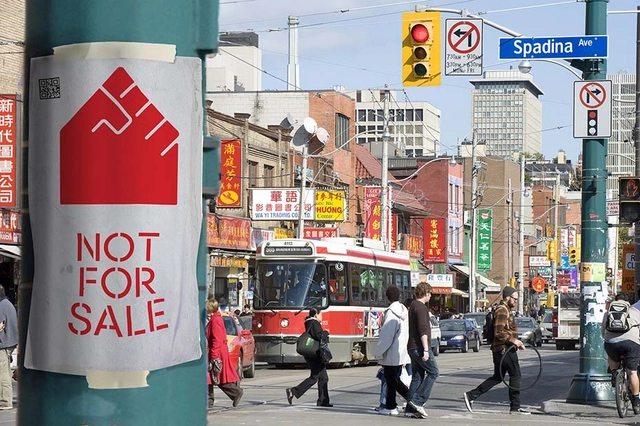
The Canada Council for the Arts has chosen the curatorial collective Architects Against Housing Alienation (AAHA) to represent Canada at the 18th International Architecture Exhibition, La Biennale di Venezia 2023, with the Not for Sale! exhibition. The pavilion, open from May 20th until November 26th, 2023, aims to draw attention and encourage dialogue on potential solutions to the challenges generated by the housing crisis in the country.

Tactical Urbanism: What are its Limits in the Public Realm?

Today, one of the most popular initiatives regarding public space, participatory design and activism in the city is the so-called citizen urbanism or tactical urbanism. The approach proposes to trigger, through limited and low-cost interventions, long-term changes in public space, i.e. short-term action, long-term change (Street Plans, 2013).

The strategy used is to create temporary scenarios that make visible a specific problem and the formation of specific interventions to solve it, seeking to incorporate the community to give it relevance and promote its sustainability over time and, in this way, raise the discussion about the benefits of the projects for the quality of life in the context in which they are inserted.