Cities in Southeastern Europe do not wait to be read. They accumulate, layer upon layer of socialist planning, post-socialist disruption, and the quieter, less legible work of citizens remaking space from the ground up. Here, space and legacy insist on their own terms. What happens to architectural research when the cities that we observe already seem to know something our discipline has not yet learned to see?
Artificial intelligence has made its way into almost every corner of professional workflows, prompting the architectural industry to rethink how it works. To adapt to this shift, firms are now facing the limits of a model that has changed very little over the past few decades.
What has shifted, and noticeably so, is the pressure on productivity. Today's studios are expected to deliver more work faster and with greater accuracy, while managing tighter budgets, complex regulations, and rising client expectations. In practice, this translates into compressed timelines and a constant demand for precision that leaves little room for error. Often, much of this pressure falls on a small group of individuals who hold critical project knowledge.
Artificial intelligence is no longer a distant concept in architectural practice. It is rapidly becoming a practical tool used by firms around the world to accelerate design workflows, generate visualizations, and explore new creative possibilities.
According to a new industry survey conducted by Chaos in collaboration with Architizer, architects are already integrating AI into their daily work. Nearly 800 architects and designers from around the globe participated in the study, sharing insights into how they use AI tools, how much time the technology saves, and how they believe artificial intelligence will shape the future of architecture.
Meta fitting in Matte Black. Image Courtesy of Dornbracht
Are living spaces getting smaller? As cities densify and the global population continues its steady migration toward urban centers—projected to reach around 70% by 2050—domestic space is becoming increasingly compressed. Rising land prices, high construction costs, and a surge in single-person households push developers toward smaller units and tighter floor plans. At the same time, cultural shifts toward resource efficiency and minimal living support this move. Shrinking living spaces require fewer materials, consume less energy, and encourage people to live closer to their means.
Example of the Nested Floor System capacities. Courtesy of Offsite Wood and Quebec Wood Export Bureau
The latest release of Offsitewood.org marks a significant step forward in making offsite wood construction more approachable for architects. Version 2.0 introduces a set of digital resources aimed at helping designers model, plan, and collaborate more efficiently.
Free downloadable libraries are a central and expanding feature of the site. Additionally, new applications and services are now available that include wood material e-sample viewers, an advanced panelization and framing toolbar for Revit, and a collaborative workspace for project optimization.
The use of innovative tools, techniques, materials, and technologies to shape the future of construction is a subject that captivates professionals across architecture, engineering, construction, and planning, as well as investors and industry leaders. Advances in technology and breakthroughs in material science provide a rich landscape for exploration and discussion, sparking lively debates on the ongoing transformations in both urban and rural environments. Key areas of focus include resource management, the challenges posed by the climate crisis, and the broader implications for the built environment.
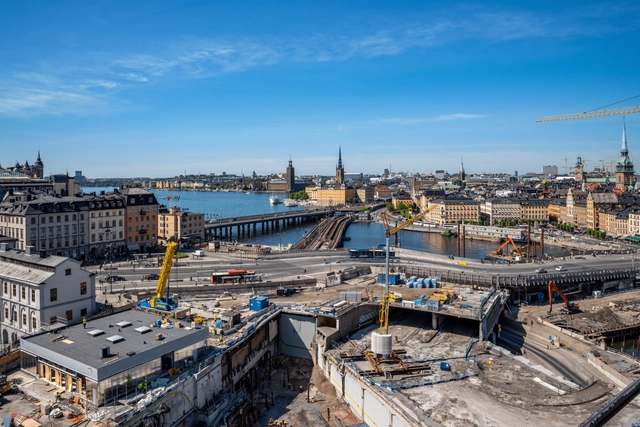
STOCKHOLM, SWEDEN - MAY 26, 2018: Cityscape view from above of large contruction site at the Old Town and Slussen in Stockholm Sweden May 26, 2018.. Image via Shutterstock | Per-Boge
This article is the tenth in a series focusing on the Architecture of the Metaverse. ArchDaily has collaborated with John Marx, AIA, the founding design principal and Chief Artistic Officer of Form4 Architecture, to bring you monthly articles that seek to define the Metaverse, convey the potential of this new realm as well as understand its constraints. In this feature, architect John Marx questions the limits and capabilities of AI in architecture and in creating buildings that resonate deeply with people and communities.
This article is the ninth in a series focusing on the Architecture of the Metaverse. ArchDaily has collaborated with John Marx, AIA, the founding design principal and Chief Artistic Officer of Form4 Architecture, to bring you monthly articles that seek to define the Metaverse, convey the potential of this new realm as well as understand its constraints. In this feature, architect John Marx interviews Peter Hirshberg, chairman, and Anna Fedorova, principal at the Maker City Project.
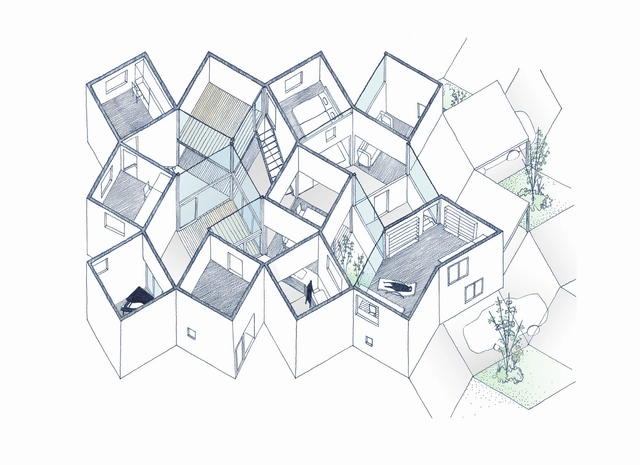
MVRDV has just released a new design study exploring how co-living can help shape the future of housing. Created in collaboration with developer HUB and sustainable investor Bridges Fund Management, the study introduces a comprehensive study exploring diverse typologies, aiming to revolutionize communal living and vibrant neighborhoods. It addresses modern housing needs, including flexibility, sustainability, and community, while tackling climate crisis and affordability issues. The endeavor offers tailored solutions for various co-living projects, catering to many demographics and lifestyles.
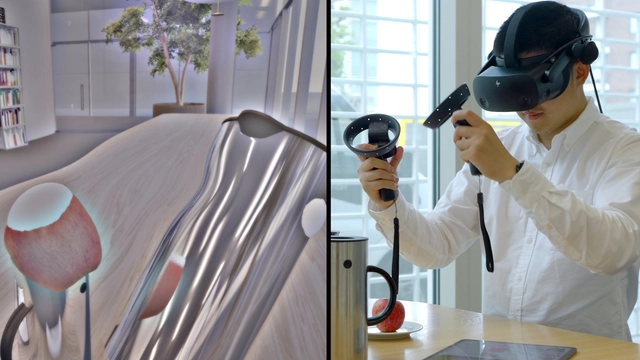
Foster + Partners Applied Research + Development team has created VARID (Virtual and Augmented Reality for Inclusive Design). Designed in collaboration with City, University of London (City) and UCL’s PEARL Lab, VARID is a design toolkit that uses virtual and augmented reality technologies. Its objective is to support academics, designers, and architects in better understanding how people with vision impairments perceive their environment.
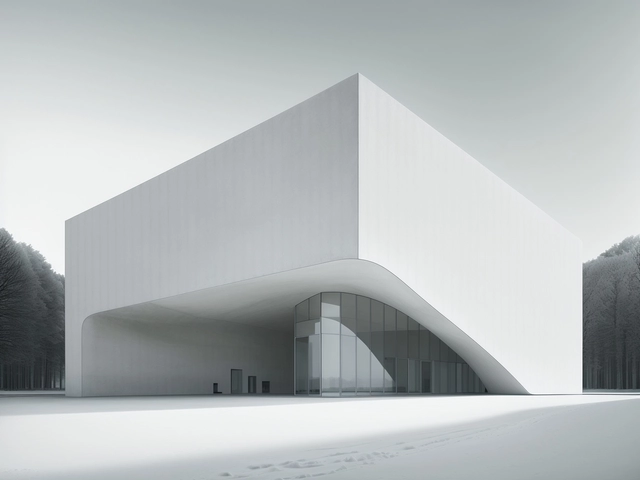
Image created under the prompt: A minimalist, white building with high, curved solid walls, curtain walls, and robust concrete columns in a Nordic environment. Image via LookX AI
Nowadays, architectural work is closely linked to technology and the advances that emerge in this field. In that sense, various aspects of artificial intelligence have been widely discussed. The reality is that, rather than plunging into a competition of capabilities between Architects vs AI, —with nuances that could evoke some aspects of the ideology of 19th-century English Luddites— advances in this field can be seen as tools to optimize processes and open new perspectives within the profession.
In this context, architecture often spans various stages, from early phases where data decisively shapes built environments to later ones where generative design tools for spaces play a fundamental role in spatial configuration. In this process, visualization plays the crucial role of graphically understanding the expression of what is being designed. Thus, iterating on the visualization and evaluating each of the results is vital not only to express ideas but also to use those visualizations to interpret aesthetic elements.
https://www.archdaily.com/1010426/prompting-creativity-the-role-of-ai-in-visualization-and-design-tools-for-architectsEnrique Tovar
In architecture, drawing is a technical and artistic expression that involves creating visual representations using various analog instruments. While drawing remains relevant and current in practice today, efforts have been made to carry out architectural tasks and studies more efficiently. The drafting machine, a significant development in this regard, enabled precise strokes using fewer instruments. However, the emergence of computational tools, such as computer-aided drafting (CAD), has revolutionized the workflow by leveraging the advantages offered by computers. Architects can now play a more direct and creative role in the design process, reducing their reliance on time-consuming drawing and repetitive tasks. Moreover, workflow enhancements have fostered more effective collaboration among different stakeholders in the architectural process.
https://www.archdaily.com/1001757/generative-space-design-exploring-8-transformative-tools-in-architectureEnrique Tovar
The Second Studio (formerly The Midnight Charette) is an explicit podcast about design, architecture, and the everyday. Hosted by Architects David Lee and Marina Bourderonnet, it features different creative professionals in unscripted conversations that allow for thoughtful takes and personal discussions.
A variety of subjects are covered with honesty and humor: some episodes are interviews, while others are tips for fellow designers, reviews of buildings and other projects, or casual explorations of everyday life and design. The Second Studio is also available on iTunes, Spotify, and YouTube.
https://www.archdaily.com/995576/the-second-studio-podcast-is-bim-ruining-the-architecture-industryThe Second Studio Podcast
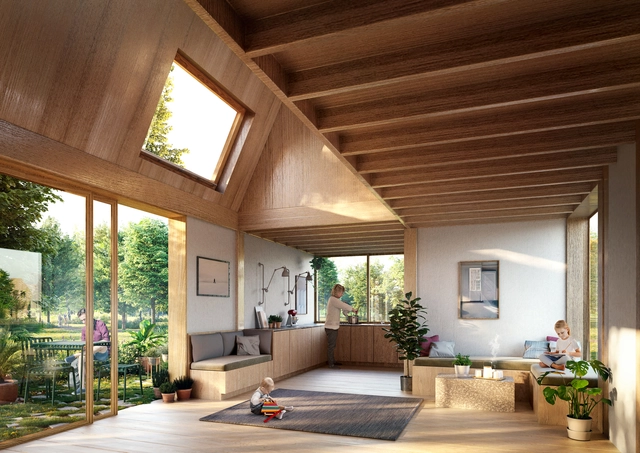
VELUX Group reveals The Build for Life concept aimed at creating sustainable communities and built environment through affordable, socially-oriented designs and new housing models, healthy indoor climates and the use of low-impact materials. Developed together with EFFEKT, MOE engineers and Danish construction company Enemaerke & Petersen A/S, the concept provides architects and city planners with a “compass’ for navigating the sustainability imperatives of the moment while encouraging the design of healthier living places.
There has been a lot of talk about how automation will affect the way we do architecture, and what our role will be when technologies reach our own desks and work tables. In recent years, while we have seen how robotics and advanced technology are gaining ground in construction and manufacturing, new tools are emerging that promise to automate the design process itself. These would allow us to quickly and easily configure living spaces and their dimensions in the initial stages of a project, using simulations and artificial intelligence.
Will this automation be the future of architectural design? We talked with Jesper Wallgren, architect and founder of Finch 3D, to better understand this tool and its possible scope.
Since 2008, ArchDaily’s core mission has been to provide inspiration, tools, and knowledge to architecture lovers around the world. Central to this democratization of architectural knowledge has been our extensive projects library, where buildings around the world, in all shapes and sizes, are showcased and made available for all to see. We have always worked to make sure this vast database is as accessible as possible, allowing you to filter categories, countries, architects, years, and products. Today, we are proud to announce our latest feature: you can now search for ArchDaily projects by color!
https://www.archdaily.com/920019/filter-archdaily-projects-by-colorNiall Patrick Walsh
Most of the materials that we use in the construction of our projects have shapes and dimensions that seek to facilitate their storage, transfer, and installation, being constituted in its majority by orthogonal modulations. These straight angles don't always fit with the irregularity of our designs, nor do they coincide exactly when encountering more organic materials or other specific elements such as ducts, pillars, or furniture.
This simple tool allows you to copy, duplicate, and measure complex contours so that the materials adapt perfectly to other elements. Its mobile 'teeth' must be pressed against the profile to obtain a mold of its shape, generating templates that will allow cutting and adjusting the original material with precision. Thus, the tool could even be useful for replicating or repairing unique details in restorations or refurbishments.