1. ArchDaily
  2. ThyssenKrupp

ThyssenKrupp: The Latest Architecture and News

See Thyssenkrupp's Sideways-Moving Elevator in Action

Subscriber Access | 

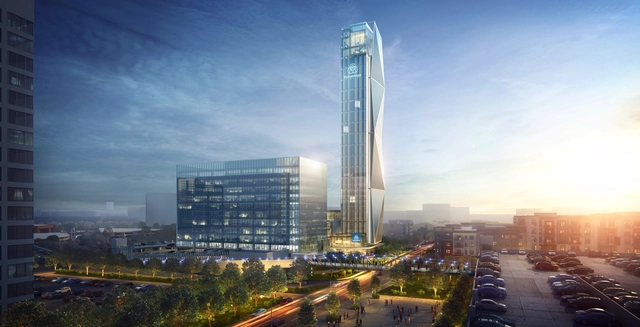
In this video, British YouTuber Tom Scott explores Thyssenkrupp’s potentially disruptive new "MULTI" elevator system,” which the company revealed in detail this week. Though only in its beta stage of development, being tested within the confines of ThyssenKrupp’s 246-meter tall “innovation” tower in Rottweil, Germany, Multi aims to transform high rise building design with horizontally moving elevator cabs.

The German firm’s cable-free system utilizes vertically mounted tracks, in-cab braking systems, and pivoting elevator tracks to whisk occupants up and across buildings faster and safer than traditional shaft based systems.

ThyssenKrupp Brings Sideways-Moving Elevator Innovation To Reality

In their latest press release, elevator manufacturer ThyssenKrupp announced new information about their cable-free system that rethinks the movement of the 1853 invention. Allowing for both horizontal and vertical transportation, “MULTI” has the capacity to innovate tall building design through its elimination of architectural constraints such as vertical alignment and elevator shaft dimensions. First unveiled as a concept in 2014, MULTI reported this month that the elevator has been installed into a test building and is soon to be implemented publicly into new developments.

ThyssenKrupp Promises to Revolutionize Skyscraper Design with Elevator Innovation

Elevator manufacturer ThyssenKrupp has unveiled its latest technological advance, a cable free, multi-car, multi-directional elevator that has the potential to revolutionize the size and shape of future skyscrapers. Run using magnetic technology similar to that used by Maglev trains, with each cabin running its own individual motor, the "MULTI" elevator system opens up the potential for elevator cabins to move horizontally as well as vertically. This in turn offers the potential for multiple cabins to operate in a single system, with cabins going up one shaft and down an adjacent shaft.