

"It's amazing how resilient our society is, and that resiliency includes architecture. It's resilient in terms of the society, it's resilient economically, and that's a really good thing."
Thom Mayne: The Latest Architecture and News
Archiculture Interviews: Thom Mayne
https://www.archdaily.com/634346/archiculture-interviews-thom-mayneHolly Giermann
Thom Mayne, Wang Shu and Lu Wenyu among the RIBA's 2015 Fellowships
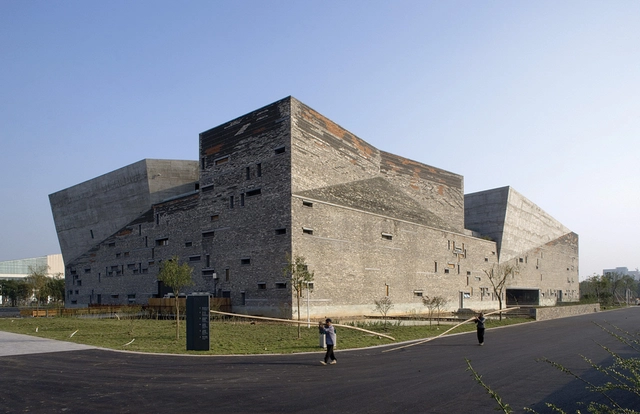
The Royal Institute of British Architects (RIBA) has announced 13 Honorary Fellowships and 11 International Fellowships which it will award at an event on February 3rd, along with the recently announced RIBA Royal Gold Medal.
Among others, the Honorary Fellowships include Director of Architecture at the British Design Council Vicky Richardson and academic Dalibor Vesely; the International Fellowships include Pritzker Prize Winners Thom Mayne and Wang Shu and his Partner Lu Wenyu. The Honorary and International Fellowships entitle winners to use the initials 'Hon FRIBA' and 'Int FRIBA,' respectively after their names.
Read on after the break for the full Fellowship lists
https://www.archdaily.com/551266/thom-mayne-wang-shu-and-lu-wenyu-among-the-riba-s-2015-fellowshipsRory Stott
The Berlage Archive: Thom Mayne (1996)

In this 1996 lecture Pritzker Prize winner Thom Mayne describes his views of architectural theory and his unique approach to the architectural process at a time when firms had begun the transition to 3D digital models. As one of the founders of Santa Monica based firm Morphosis, Mayne speaks about the evolution of their built and unbuilt projects in the late 70s and early 80s by giving insights into three general topics including objects, context, and the role of nature in architecture. His discussion touches on everything from music and art, to philosophical questions regarding the process of architecture and its role in society.
In the development of his first projects, Mayne reveals a preoccupation with objects, their materials, and their relationship to the craft of architecture. He also describes how context shapes his designs, using the example of his Sixth Street House of 1983. For him, the project's site in Los Angeles was particularly influential to his work in the way that it is a “prototype of the modern metropolis” in which “…there’s no inside, there’s no outside, there’s no way of perceiving it, its growing, its moving, its changing, quicker than one can absorb it.” These notions of context were reflected in many later works, and tied into his interest in “the space between randomness and order.”
https://www.archdaily.com/549185/the-berlage-archive-thom-mayne-1996Evan Rawn
World Photo Day: Roland Halbe by Thom Mayne
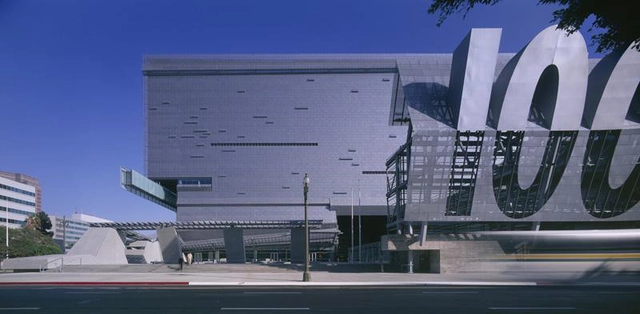
In honor of World Photo Day (August 19th) ArchDaily wanted to thank the photographers who bring to life the projects that we publish every day. So we asked 15 architects to weigh in on the work of some of our most-appreciated architecture photographers. Here, Thom Mayne writes on behalf of Roland Halbe.

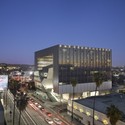

https://www.archdaily.com/538765/world-photo-day-roland-halbe-by-thom-mayneAD Editorial Team
A Prize for Promise: GAGA’s Hunt for the New Hadid
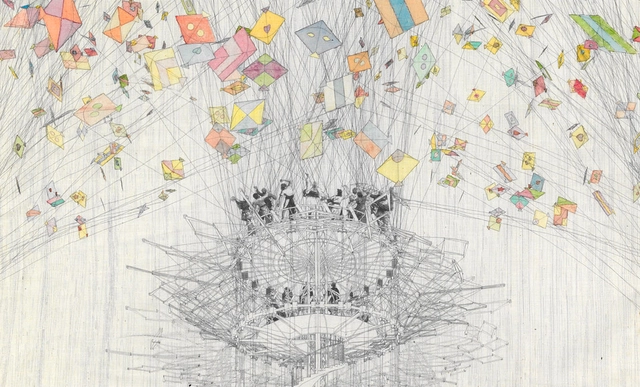
A few years ago London’s Architectural Association held an exhibition called First Works: Emerging Architectural Experimentation in the 1960s & 1970s, which wonderfully gathered together early projects from a host of the most famous names in architecture. In both Zaha Hadid’s gorgeously animated plan/perspectives of the Taoiseach’s Residence and Daniel Libeskind’s intensely unstable drawings of Micromegas, you can already sense a lifetime of formal exploration ahead for the pair; and yet who would ever guess the unique tectonic language to come from the anonymously mundane drawings of the Sequoyah Educational Research Centre by Morphosis?
When I set up the Global Architecture Graduate Awards (GAGAs) at The Architectural Review in 2012, it was with the insight that, at its best, the work produced at the start of a career can be its most daring and projective. At that fertile threshold between the academy and practice, uncertain graduates can be years ahead of more assured and mature colleagues in the creative risks they are willing to take.


assembly_of_suburbia.jpg?1406067449 "Post-Graduate Runner-up, GAGA 2013. Adrienne Lau - (Dis)assembly of Suburbia")


https://www.archdaily.com/529946/a-prize-for-promise-gaga-s-hunt-for-the-new-hadidWill Hunter
VIDEO: Thom Mayne Talks the Cooper Union Building
In honor of Thom Mayne's birthday today, we're sharing this video interview from Danish Website Louisiana. In it Thom Mayne introduces his building at 41 Cooper Square by saying "I wanted to produce something that was off, and was not at all systematic in any normal architectural sense." Ultimately, the form of the building is, he says, an attempt to engage with New York City, understanding Cooper Union as a key part of the city's incredible intensity of intellectual creative capital. He also discusses how the building - despite its avant garde form - won over the local community. Enjoy!
https://www.archdaily.com/468215/video-thom-mayne-talks-the-cooper-union-buildingRory Stott
Museum Round Up: The Box is Back

In a recent article for the Denver Post, Ray Rinaldi discusses how the box is making a comeback in U.S. museum design. Stating how architecture in the 2000’s was a lot about swoops, curves, and flying birds - see Frank Gehry and Santiago Calatrava - he points out the cool cubes of David Chipperfield and Renzo Piano. We've rounded up some of these boxy works just for you: the Clyfford Still Museum, the Kimbell Art Museum Expansion, The St. Louis Art Museum's East Building, Tod Williams and Billie Tsien's Barnes Foundation, and Shigeru Ban's Aspen Art Museum. Each project begins to show how boxes can be strong, secure, and even sly. Check out more about the article here.
https://www.archdaily.com/450966/museum-round-up-the-box-is-backEric Baldwin
SOHO China's Zhang Xin on Balancing Design and Commercial Viability
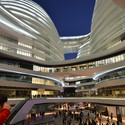
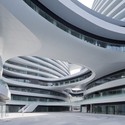
The list of architects that have collaborated with Zhang Xin’s development company, SOHO China, reads like the roster of an architectural dream team (which includes Zaha Hadid, Yung Ho Chang, Bjarke Ingels, Kengo Kuma, Kazuyo Sejima, Herzog & de Meuron, Thom Mayne, David Adjaye, Toyo Ito and others). So it’s no surprise that the self-made billionaire lectured to a packed house at Harvard University’s Graduate School of Design last Thursday. Xin spoke about her commitment to and love of design, explaining that her company’s mission is to bring a variety of architectural languages to China. And though SOHO’s projects are certainly experimental, Xin contends that her developer mindset actually helps meliorate the architect’s propensity to take the experiment too far—all without sacrificing the impressive and iconic forms of SOHO’s building portfolio.
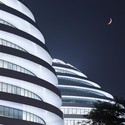
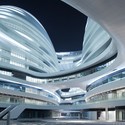
Watch Zhang Xin link her practice in real estate to larger global issues and catch a glimpse of two Zaha Hadid-designs currently under construction: Wangjing SOHO and Sky SOHO.

https://www.archdaily.com/441507/soho-china-s-zhang-xin-on-balancing-design-and-commercial-viabilityBecky Quintal
Talking With Thom

Despite what you may think, Thom Mayne isn't the "bad boy" of architecture - at least, not according to Thom Mayne. He sees himself more as a skilled negotiator than a starchitect (a phrase he hates) - after all, he reasons, how else would he have completed so many buildings? In this interview, originally published on Metropolis Magazine's Point of View blog as "Q&A: Thom Mayne," Andrew Caruso and Mayne discuss Morphosis, SCI-ARC, the early days of his career, and his architectural ethos.
Andrew Caruso: Your professional career began in the discipline of planning. What led to the shift toward architecture and your eventual partnership with Jim Stafford?
Thom Mayne: I started working at the Pasadena redevelopment agency doing low cost housing, and that’s where I met Jim [Stafford]. Coming out of USC, I had no background about Mies, Khan or Corbusier, for example. USC was very strong in being anti-historical, looking forward instead of backward. I was essentially naive.
Jim was a year ahead of me at USC and had part of the older regime at the school. When I met him at the planning agency, he started introducing me to history. I got fascinated by [Paul] Rudolph; and then it just took off. Jim guided me through this thought process, reestablishing me in the tradition of architecture.
https://www.archdaily.com/433036/talking-with-thomAndrew Caruso
Same Time Zone, Different Standards
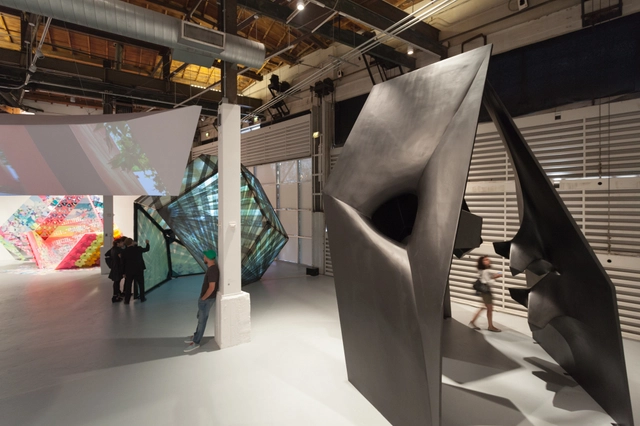
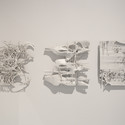
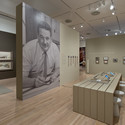
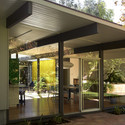
The Getty’s Pacific Standard Time Presents: Modern Architecture in L.A. hosted A. Quincy Jones: Building for Better Living at UCLA’s Hammer Museum and Contemporary Architecture from Southern California (formerly known as A New Sculpturalism) at MOCA Geffen for the better part of this summer. These two exhibits, on view until September 8 and 16 respectively, give us insight into Los Angeles’ past and present architectural legacies. They take on fundamentally different challenges. One uncovers a prolific and primary history of a modernist architect, the other attempts to capture and catalogue an unwieldy and unstable present.
Read on after the break for reviews of both exhibitions...

https://www.archdaily.com/424372/same-time-zone-different-standardsMichelle Paul
The Indicator: When Architects Attack
When Christopher Hawthorne, architecture critic for the Los Angeles Times, gives a bad review there is the sense that he is essentially dismantling a building, chipping its façade apart, like breaking down some charade in defense of the public’s honor. Like a hired killer he disappears the architecture, but at the same time heightens its visibility in the culture.
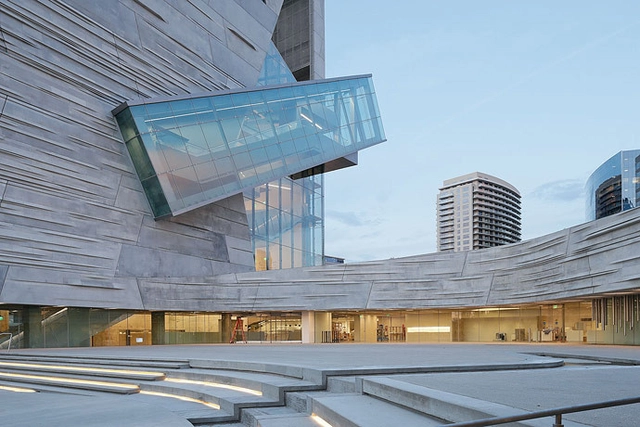
This ability, to provoke in such ways, is precisely why Thom Mayne would like to bar Mr. Hawthorne from taking a crack at reviewing the new building he and his firm, Morphosis designed for the firm’s new offices.
On a recent tour of the new digs, Mayne, as reported in The Architect’s Newspaper, was overheard saying, “There are no good writers in Los Angeles” and “All local writers are horrible.” To add further insult, he wants a science writer to cover it. That should be a short review.
https://www.archdaily.com/370147/the-indicator-when-architects-attackSebastian Jordana
Video: Thom Mayne Talks With Toyo Ito
At 71, the 2013 Pritzker Prize winner Toyo Ito is not content with settling down just yet, at least not architecturally-speaking. Where many architects have established distinct styles, Ito is known for constantly shifting, experimenting, questioning and developing his approach to architecture. As one member of the Prtizker jury put it "he has been working on one project all along - to push the boundaries of architecture. And to achieve that goal, he is not afraid of letting go what he has accomplished before.”
In this video entitled Learning from Laureates - which comes courtesy of the good folks at ARCHITECT magazine - fellow experimentalist and Pritzker Prize recipient (not to mention 2013 AIA Gold Medalist) Thom Mayne gets to grips with Ito's motivation. The pair of laureates converse via Skype examining the drive behind Ito's evolutionary approach, before getting down to discussing how they think architecture is being affected by society's biggest change yet - the advent of the post-digital age.
See more of Ito's work along with some of our previous coverage after the break...
https://www.archdaily.com/366665/video-thom-mayne-talks-with-toyo-itoNicky Rackard
Thom Mayne, Recipient of the 2013 AIA Gold Medal

The AIA has announced that Thom Mayne has been selected as the recipient of the 2013 AIA Gold Medal, one of the profession's highest honors, due to his "ambitious government and institutional projects."
https://www.archdaily.com/304044/thom-mayne-recipient-of-the-2013-aia-gold-medalVanessa Quirk
Cornell releases preliminary renderings of NYC Tech Campus

To celebrate the start of a seven-month land use review process, Cornell has released preliminary renderings of the first academic building planned for Cornell Tech – the new world-class technology and entrepreneurship campus in New York City that was masterplanned by Skidmore, Owings and Merrill (SOM).
The modern campus strives to rethink academic workspace, prioritize environmental performance, and exploit the unique urban condition of Roosevelt Island. In May, Pritzker Prize laureate Thom Mayne, founder of Morphosis, was appointed as architect of the first landmark building, which will set the stage for the carbon positive campus.
Continue after the break to learn more.
https://www.archdaily.com/282904/cornell-releases-preliminary-renderings-of-nyc-tech-campusKarissa Rosenfield
CornellNYC selects Architect for Net-Zero Tech Campus

Today, Cornell University has announced their selection of Thom Mayne and Morphosis to design the first academic building for the CornellNYC Tech campus on Roosevelt Island. Mayor Michael Bloomberg awarded the Roosevelt Island campus project to Cornell mid-December of last year. With plans to achieve net-zero, the campus is striving to become the new modern prototype for learning spaces worldwide.
“This project represents an extraordinary opportunity to explore the intersection of three territories: environmental performance, rethinking the academic workspace and the unique urban condition of Roosevelt Island,” Mayne said, as reported by Cornell University. “This nexus offers tremendous opportunities not only for CornellNYC Tech, but also for New York City.”
Continue reading for more.
https://www.archdaily.com/233178/cornellnyc-selects-architect-for-net-zero-tech-campusKarissa Rosenfield
National Mall Competition Finalists Announced

Over 1,200 entires from 30 states and 10 countries submitted applications for the National Mall competition. Late last month fifteen design teams were chosen as finalists to advance to the second stage of this prestigious contest.
Hosting 25 million visitors annually, the National Mall will undergo an estimated $700 million restoration beginning in 2012. The competition has been broken down into three areas of restoration: Union Square including the Reflecting Pool and the Ulysses S. Grant Memorial, Sylvan Theater on the Washington Monument Grounds, and the Constitution Gardens between the Vietnam Veterans Memorial and the Lincoln Memorial.
Among the finalists to move on to stage two of the competition, Diller Scofidio Renfro, Weiss/Manfredi, and Rogers Marvel Architects who are shortlisted for two out of the three areas of restoration, as well as Snohetta, Michael Maltzan Architecture, Ten Arquitectos, and Bohlin Cywinski Jackson who are finalists for one area of restoration.
“Entrants were evaluated on past design performance, philosophy, design intent, thoughtfulness, creativity and overall resume,” according to a release from the Trust of the National Mall. The jury, compiled of architects, professors and other members of the architecture community, included Michael Gericke of Pentagram NYC and Pritzker Prize Laureate Thom Mayne founder of Morphosis.
The second stage of the competition includes interviews of the teams conducted by the Trust for the National Mall and the National Park Service, and the last stage will include proposed plans for the restoration. The competition will culminate in May 2012 and the proposed designs from stage three of the competition will be available to the public prior to the winning design being selected.
Follow the break for a complete list of design finalists for the National Mall Competition.
https://www.archdaily.com/182707/national-mall-competition-finalists-announcedKelly Minner
Mayne to join SCI-Arc

SCI-Arc, Los Angeles’ cutting edge architectural institute, has just announced Thom Mayne as the newest Trustee of the board. Mayne’s addition to the board emphasizes SCI-Arc’s commitment to pushing the boundaries of traditional architectural form and theory. Back in 1972, Mayne co-founded the institute along with seven faculty members and approximately forty students who left Cal Poly Pomona to form a “a college without walls.” For the past nearly four decades, Mayne has been an integral part of the university, serving as a juror, lecturer and generous supporter of the school. ”Thom Mayne is the quintessential SCI-Arc architect. His addition to the board is indicative of the fact that SCI-Arc continues to re-imagine the content of architecture,” said Director Eric Owen Moss. According to SCI-Arc, this appointment complements a series of events that have prompted the school’s growth both physically and programmatically.
https://www.archdaily.com/125480/mayne-to-join-sci-arcKaren Cilento