1. ArchDaily
  2. The Japan Foundation

The Japan Foundation: The Latest Architecture and News

“Built Environment: An Alternative Guide to Japan” Exhibition in Montréal Examines Resilient Japanese Architecture

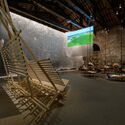
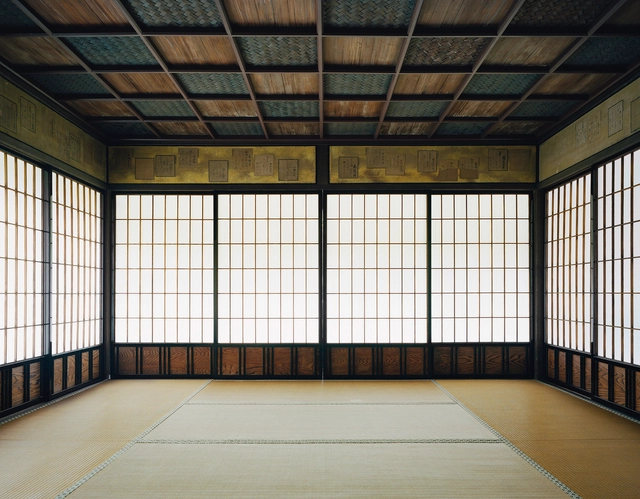
The exhibition Built Environment: An Alternative Guide to Japan at the Université du Québec à Montréal's (UQAM) Centre de design will be on view until January 25, 2026. Curated by Shunsuke Kurakata, Satoshi Hachima, and Kenjiro Hosaka, it features a selection of 80 projects from Japan's 47 prefectures, including works by renowned Japanese architects such as 2014 Pritzker Prize laureate Shigeru Ban, Kengo Kuma, the designer of the Museum of Modern Art's renovation in New York Yoshio Taniguchi, celebrated landscape architect and sculptor Isamu Noguchi, and 2019 Pritzker Prize laureate Arata Isozaki. The selection aims to offer a renewed perspective on Japan through innovative buildings, civil engineering projects, and landscape designs. Organized in collaboration with the Japan Foundation and presented with the support of the Consulate General of Japan in Montreal, the exhibition is conceived as a traveling project exploring the resilience of Japanese architecture and infrastructure in the face of natural disasters and climate change.
Architecture as Soft Power: Cultural Diplomacy and Its Role in Shaping Architectural Production

Cultural diplomacy refers to the use of cultural expression and creative exchange to foster understanding and build relationships between nations. In this context, architecture has long played a distinctive role. Beyond its functional and aesthetic dimensions, it serves as a medium of communication, a language through which countries express identity, values, and ambition on the global stage.

Architecture operates as a form of soft power — persuasive rather than coercive — enabling nations to project influence through material presence. From modernist embassies in the post-war era to monumental pavilions at world expositions, governments and institutions have recognized the built environment's potential to shape perception. By commissioning prominent architects and adopting specific design languages, countries have used architecture to signal modernity, tradition, innovation, or stability.

Architecture as Soft Power: Cultural Diplomacy and Its Role in Shaping Architectural Production - Image 1 of 4Architecture as Soft Power: Cultural Diplomacy and Its Role in Shaping Architectural Production - Image 2 of 4Architecture as Soft Power: Cultural Diplomacy and Its Role in Shaping Architectural Production - Image 3 of 4Architecture as Soft Power: Cultural Diplomacy and Its Role in Shaping Architectural Production - Image 4 of 4Architecture as Soft Power: Cultural Diplomacy and Its Role in Shaping Architectural Production - More Images+ 20

Event: "Japanese Design Today: Unique, Evolving, Borderless - with Hiroshi Kashiwagi and Yoshifumi Nakamura"

The Japan Foundation, New York and The New School’s Parsons School of Design, Design Studies and Industrial Design programs present “Japanese Design Today: Unique, Evolving, Borderless ‐ with Hiroshi Kashiwagi and Yoshifumi Nakamura” on Tuesday, September 8, 2015 at 6:30 p.m. at The Bob and Sheila Hoerle Lecture Hall/Hoerle Lecture Hall, UL105, University Center, The New School, 63 Fifth Avenue, New York, NY 10003. Hiroshi Kashiwagi, professor at Musashino Art University and architect/ furniture designer Yoshifumi Nakamura will each discuss the evolution, distinguishing characteristics, and current state of Japanese design today.

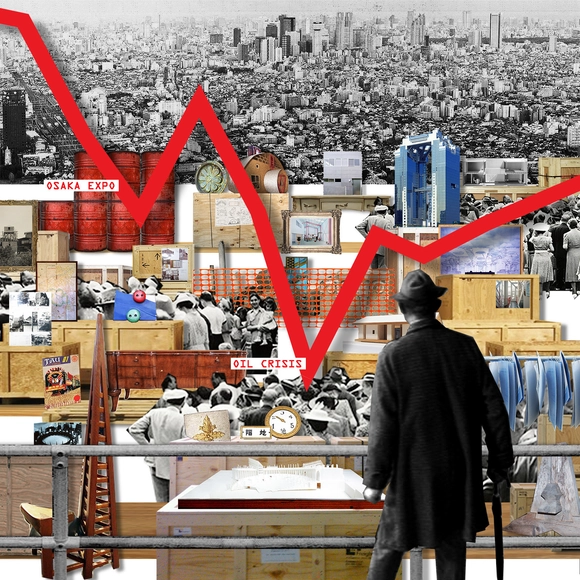
Venice Biennale 2014: Japan Pavilion to Examine Radical Experiments of the 1970s

The influence of Western civilization and the birth of modernization following World War II lead Japan to become the world’s second largest economy by 1968. With this came a host of problems, namely environmental pollution and the oil crisis, which triggered the reexamination of modernism in Japanese architecture and a series of radical experiments by young architects that inevitably lead to a new vision of the city.

Highlighting the work of these young architects, as well as historians, urban observers, artists and magazines of the 1970s, Japan’s participation at the 2014 Venice Architecture Biennale will spotlight the “independent, fundamentally innovative responses” that “unfolded a new fertile field of architecture” and revealed the “essential power” our profession has in the real world.