


-
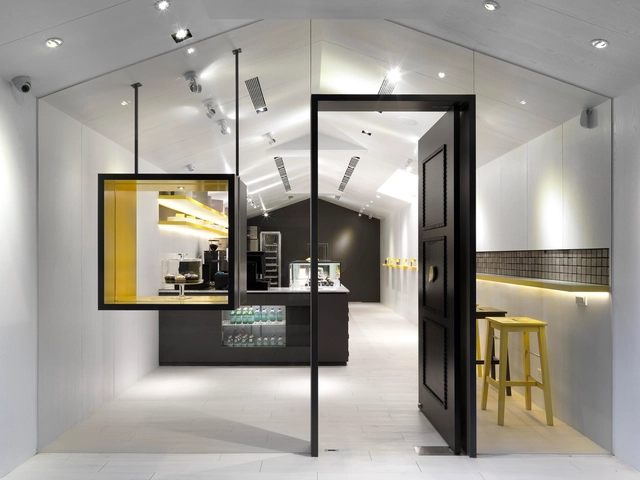
Architects: Hsuyuan Kuo Architects & Associates
- Area: 1045 m²
- Year: 2012


Construction is underway for OMA’s Taipei’s Performing Arts Center! The project, started back in 2012, has generated a buzz in the architecture community for its peculiar form. Conceived as a number of theaters intersecting as a group of three simple geometries, the Performing Arts Center will provide flexible stage space to host experimental theater and art performances. This video—filmed by a drone—shows some of the preliminary structure that has already been erected. The building is expected to be completed in 2015.
During the Shenzhen Bi-City Biennale of Urbanism/Architecture, we had the opportunity to speak with David Gianotten, partner-in-charge of OMA’s Hong Kong office. Gianotten launched the Dutch firm’s Asian headquarters in 2009, where he supervises major projects such as the Shenzhen Stock Exchange and the Taipei Performing Arts Centre.
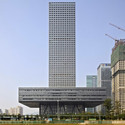
Standing outside of the recently completed Stock Exchange headquarters, he answered our questions about urbanization, innovation and the intricacies of running an office in an environment with such rapid urban growth. Shenzhen has proven an experiment of economic openness and is a vivid example of China’s recent growth. The city’s skyline is practically a physical graph of an upward-trending economy, with buildings designed by nearly every internationally renowned architecture firm. But OMA’s Shenzhen Stock Exchange building stands apart from the rest not only because of its impeccable construction (a rarity in the fast-paced building booms of Chinese cities), but also because it houses the institution that lists China’s biggest companies.
The 254 meter tower is an elegant structure that combines pure volumes with an exoskeleton grid clad in translucent glass. It represents a characteristic OMA-approach to innovative architectural solutions, made possible by extensive programmatic and technical research.
Read the full interview (which includes Gianotten’s insights on the study of architecture, the role of architects, and the importance of simplicity when communicating complex innovation) after the break.

It’s official: Taipei has been selected as the 2016 World Design Capital (WDC). This doesn’t come by surprise, as back in August they were the only city selected by International Council of Societies of Industrial Design (ICSID) to move onto the competition’s final round.
The city campaigned under the slogan “Adaptive City: Design in Motion,” focusing on how design can improve the living standards of their citizens. To strengthen their campaign, officials proposed 20 projects under the “Public Policy by Design” program that intended to strengthen the connection between designers, the public and funders. Over 600 workshops have already been conducted, encouraging collaboration between the city’s top officials and design professionals, and many more are scheduled to take place.
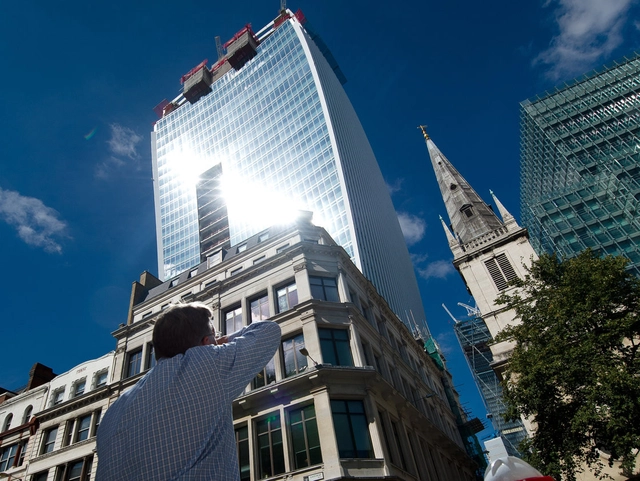
With the recent news that Rafael Viñoly Architects' 20 Fenchurch Street (or the "Walkie Talkie") in London has been producing an unusually hot solar reflection, dubbed the "Death Ray," we've put together a list of seven architectural blunders around the world - from the worrying to the downright absurd.

Taipei has been selected by the International Council of Societies of Industrial Design (Icsid) as the only municipality to move on to the next phase in the process towards becoming the 2016 World Design Capital (WDC). The selection committee is expected to conduct an onsite evaluation and comprehensive report prior to releasing an official announcement in September.


As an update to last year's post on WOHA's 'Breathing Architecture' exhibition, their work has seen great success in Frankfurt and Taichung. Now on its last leg, it will travel to Taipei and be on display from March 22-May 10 at the "Mobile Museum - SEED project". Reminding us of bold visions of the future, in which plants reclaim nature for themselves, the architects realize the permeation of buildings and landscape, and of interiors and exteriors in projects. WOHA’s tropical architecture is permeable, leafy and interspersed with community spaces, which truly capture the essence of how architecture is breathing. For more information, please visit here. More images can be viewed after the break.

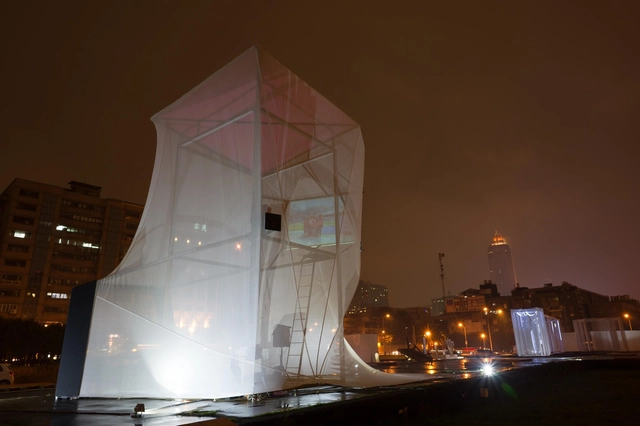
Exhibited at the ‘Next Play: Shifting Ground’ Exhibition in Taipei, the Tower of Colony is the Hong Kong project by Groundwork, which responds to a theme of ‘Displacement’, to transform a one acre site at Huashan, a cultural district at the heart of Taipei City. The architects were interested in how migrants react on a foreign land. By building on the site, they 'colonized’ one acre of grassland from site, therefore colonizing a fragment of Taipei. Hong Kong, a colony by nature, now has its own colony. Their abstraction of the act of colonization can be observed at two scales: The Tower and The Performance. More images and architects’ description after the break.


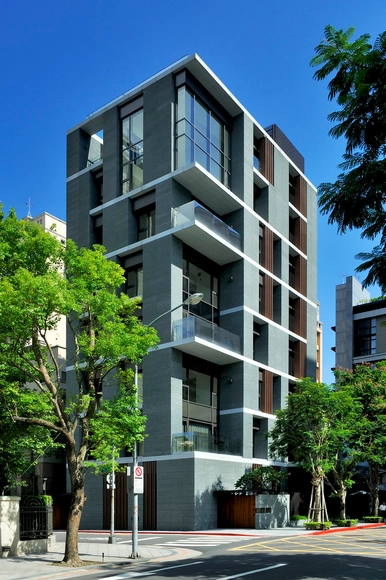


The New Taipei City Museum of Art (NCArt) should propose a new paradigm for celebrating art in Taipei, one that brings lifestyle, art, recreation and education together to celebrate the vibrant cultural identity of the community. The fusion of art with all aspects of one’s daily experience is driven by ideas about the intrinsic relationship between art and life relevant in Taiwan’s popular contemporary culture. The new museum seeks to embody these ideas and provide an iconic venue for the spontaneous unfolding of contemporary life.
Here’s the proposal Zerafa Architecture Studio presented for this project.




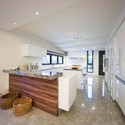
.jpg?1371923591 "Courtesy of DL Design/TL Architects & Associates/HY KO")