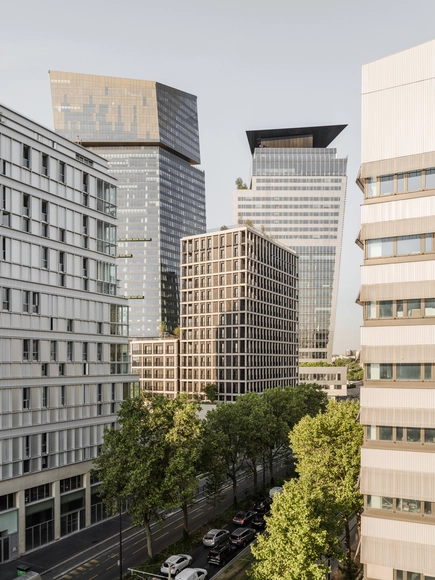
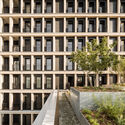
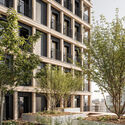
In Paris’ thirteenth arrondissement, the architecture office Moreau Kusunoki has completed Le Berlier, a 50-meter-tall timber tower housing residential units along with various other amenities. Situated at the intersection of multiple urban flows, networks, and scales, the project aims to find the middle ground between innovation, monumentality, and domesticity. The new residential center expresses its structural system through the grid of the façade, rendered in charred and pre-weathered wood.
Homes of the Future. Image Courtesy of Mossawi studios
This week's curated selection of Best Unbuilt Architecture highlights visionary homes by the ArchDaily community. From a prefabricated house to supporting Ukraine war victims, a modular multi-story house highlighted during the Dutch Design Week, and a villa "shaped" by the Dubai coastline wind flow, this round-up of unbuilt projects showcases how architects move forward from the conventional residence concept to project alternative habitational standards in responding to harsh environments, nature, and technology.
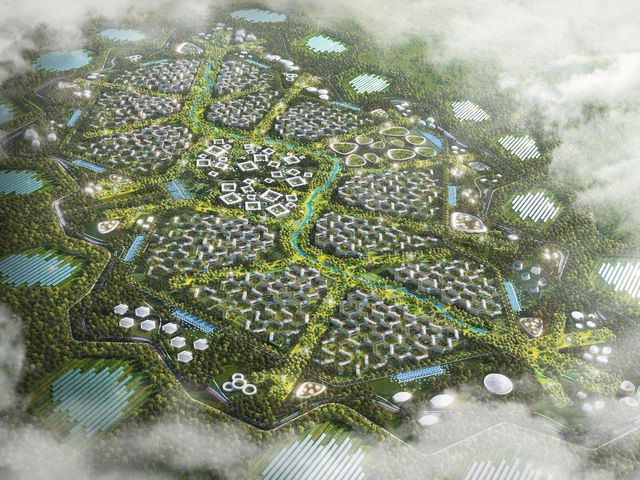
URB has unveiled plans to develop Africa's most sustainable city, a development that can host 150,000 residents. Known as The Parks, the city plans to produce 100% of its energy, water & food on-site through biodomes, solar-powered air-to-water generators, and biogas production. The 1,700-hectare project will feature residential, medical, ecotourism, and educational hubs to become one of the significant contributors to the growing green and tech economy in South Africa.
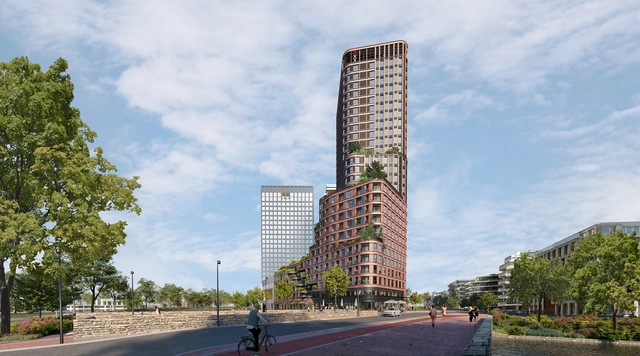
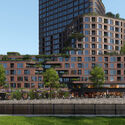
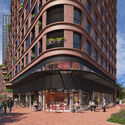
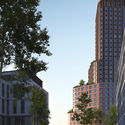
Brink Tower by Mecanoo was just granted planning permission and construction works are planned for mid-October 2022. Located in Amsterdam, the Netherlands, the 90-meter-high building, developed by Xior Student Housing and DubbeLL – winners of the competition for this tower together with Mecanoo Architecten in 2020- will offer a mixed program, including spaces to live, work, and relax in a healthy environment. The residential tower is set to create an" energy-positive, green, and inclusive neighborhood" and contribute to the development of Overhoeks in North Amsterdam.
BEYOME, led by Project Consortium together with the architects of Enorme Studio, seeks to transform traditional dwellings by providing a greater degree of flexibility in their spaces, so that they can adapt to contemporary lifestyles, taking into account the different uses that their inhabitants give to them. But how can we make the same space capable of adapting to different uses? What strategies could be developed to double the surface area of our homes and make better use of them?












 .
.