Videos
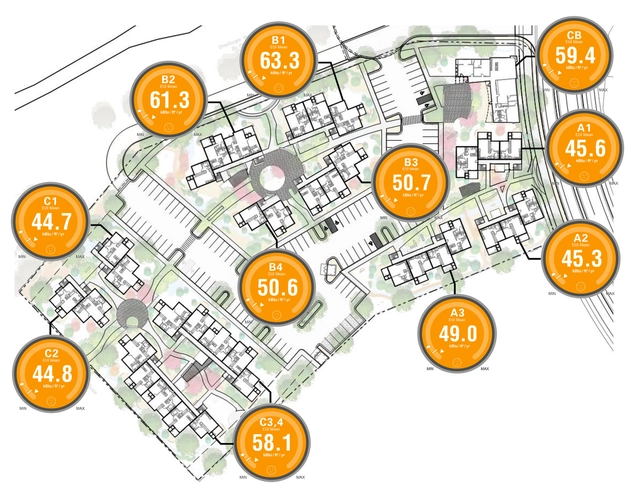
Site-wide pEUI Analysis using Autodesk Insight: helps identify outliers that could possibly impact the site’s energy consumption the greatest.. Image Courtesy of Dekker/Perich/Sabatini
Dekker/Perich/Sabatini (D/P/S) has made a strategic business decision, one that architecture firms are starting to adopt as a means to help them achieve their own sustainability goals and drive more business. With the implementation of a Building Performance Analysis (BPA) team and equipped with time-saving design tools, D/P/S has been leveraging building information modeling (BIM) for energy analysis. Since joining the AIA 2030 Commitment last year, the firm has already analyzed and reported nearly 1 million square feet in new construction projects.
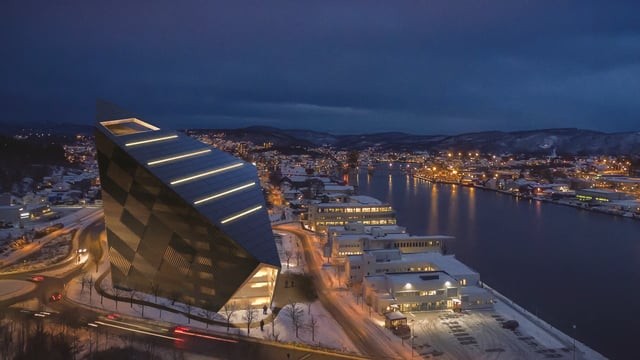
A country known for economic dependency on its rich oil deposits, Norway is now looking toward the future of energy production: net-positive architecture. Taking the lead in this initiative, developer Emil Eriksrød has commissioned American-Norwegian firm Snøhetta to design Norway’s first energy positive building, Powerhouse Telemark, a 6,500 square meter (70,000 square foot) office building located in the tiny Norwegian town of Porsgrunn, home to just 35,000 people. When completed, it will be the world’s northernmost plus-energy building.
Local children play with a scale model of the school site
Building Trust are happy to announce that we will be working alongside We Yone Child Foundation to design and build a new hall space for a school that we have been working on for the last 2 years. Building Trust have a number of sustainable design and build projects around the World in 2016, ranging from schools and housing to wildlife conservation and healthcare.
We are offering a hands on participatory workshop where you will gain experience in sustainable building techniques and understand more about humanitarian design while building worthwhile projects that will have a huge benefit to the local community. You will gain an insight into a number of building techniques and architectural styles.
Building Trust are happy to announce that we will be working alongside We Yone Child Foundation to design and build a new hall space for a school that we have been working on for the last 2 years. Building Trust have a number of sustainable design and build projects around the World in 2016, ranging from schools and housing to wildlife conservation and healthcare.
We are offering a hands on participatory workshop where you will gain experience in sustainable building techniques and understand more about humanitarian design while building worthwhile projects that will have a huge benefit to the local community. You will gain an insight into a number of building techniques and architectural styles.
Since infrastructure is the embodiment of long-term investments, its impact in determining the organization of flows extends well into the future, both for developed and developing countries. Whereas the former are confronted with the need to maintain and renew highways, electrical grids, sewage systems, and the like, the latter are scrambling to meet the needs of their own expanding populations. In both cases, massive investments for retrofitting or for new infrastructure are key to sustaining the human habitat. This topic: “Infrastructure Space” will be the focus of the 5th International Forum for Sustainable Construction in Detroit, USA from April 7 to April 9, 2016.
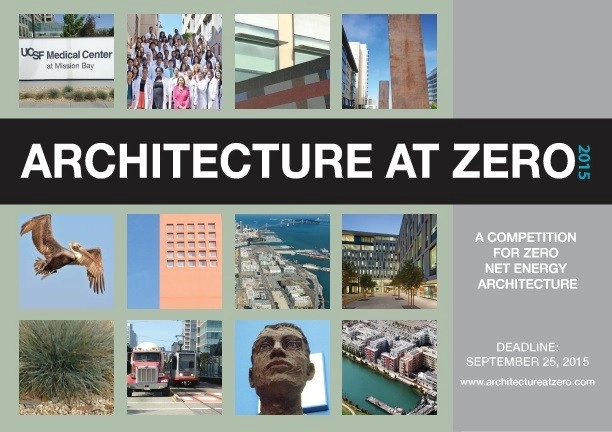
The 2015 Architecture at ZeroCompetition has launched, challenging students and designers to develop 'family-style residential units' for the Mission Bay Campus of the University of CaliforniaSan Francisco. Now in its fifth year, the competition calls for designs that produce "at least as much energy as [they] use over a year," excluding the embodied energy of building materials and transportation of people and materials to and from the site. Entrants must be able to demonstrate that their designs can be reasonably expected to meet a zero net energy goal over a prolonged period of time. The competition is open to student and professional individuals and teams, with up to $25,000 in prize money to be won. Interested parties have until August 28 to register and submissions are due September 25 at 1PM PST. Read more about the competition at Architecture at Zero's website and check out the winners from last year here.
Ten projects have been named the top examples of sustainable and ecological design by the AIA and its Committee on the Environment (COTE) for the year 2015. Now in its 19th edition, the COTE Top Ten Awards program recognizes projects that adhere to the highest integration of natural systems and technology to produce spaces that positively impact their surroundings and minimize their environmental footprints.
All of the projects will be honored at the 2015 AIA National Convention and Design Exposition in Atlanta. See this year's top ten sustainable designs, after the break.
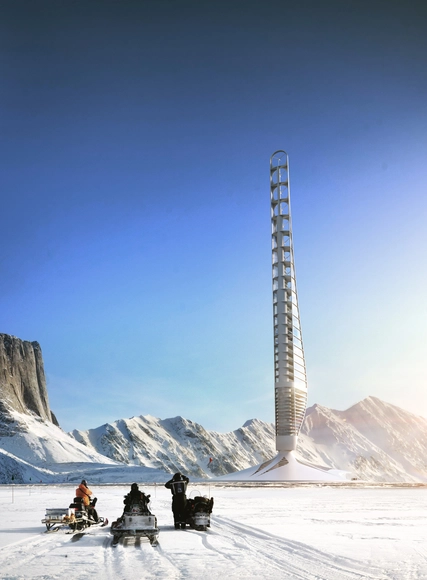
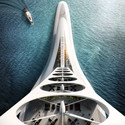
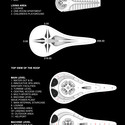
Imagine a future in which all the Earth's divisions are removed: countries abolished, borders dissolved, and governments overthrown. Such is the version of planet Earth for which "Civilization 0.000", the 2013 master's thesis project by Dimo Ivanov of RWTH Aachen University, is designed. Envisioning a future free of "unnatural division" and where the earth's resources are measured and meted out according to human need, the project proposes a series of interlinked skyscrapers or "0.000 Units" that harness local earth resources. Each of the units assumes one of 6 key functions: living space, education, resource management, production, energy storage, and electricity generation. Functions are determined by the environment in which the units are sited.
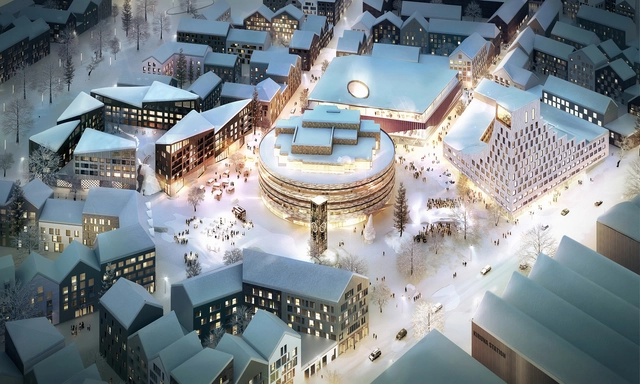
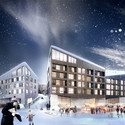
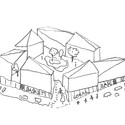
Kjellander + Sjöberg, along with development group Skanska, won a competition held by Kiruna Municipality for the square's regeneration. Under the moniker Fjällbäcken, the urban block responds to the idiosyncratic subarctic climate in a manner the architects describe as "sustainable in the long term." When realized, the 2000m2 housing development will have 90 apartments and feature a host of sustainable solutions. Onsite rainwater management facilities are incorporated into the project's planning, alongside provisions for green space and ecofriendly heating and cooling systems.
Learn more about the project and view selected images after the break.
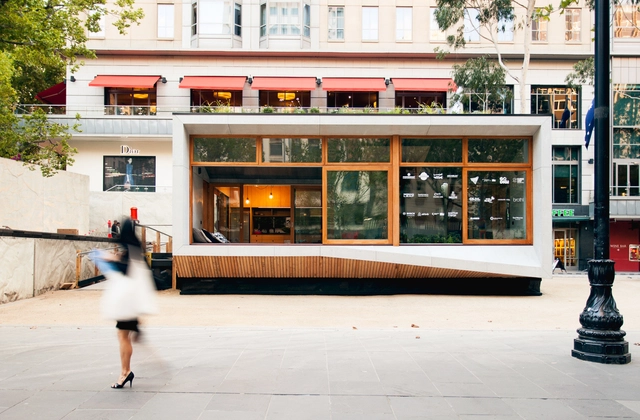
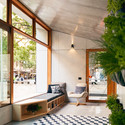
Australian company ArchiBlox has released its design for the world’s first carbon positive prefabricatedhouse. Representing a new movement in ArchiBlox houses, the carbon positive house provides the option for a more environmentally-conscious design, through both reducing embodied energy that accompanies new-home construction and maintaining positive-energy production. The groundbreaking product line began its first installation on February 8 at Melbourne’s City Square.
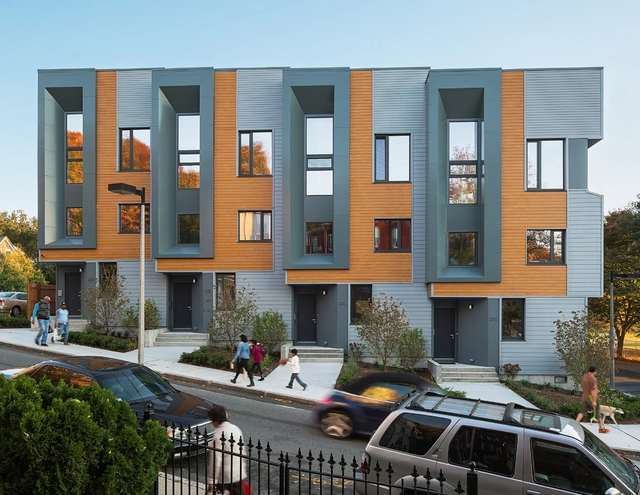
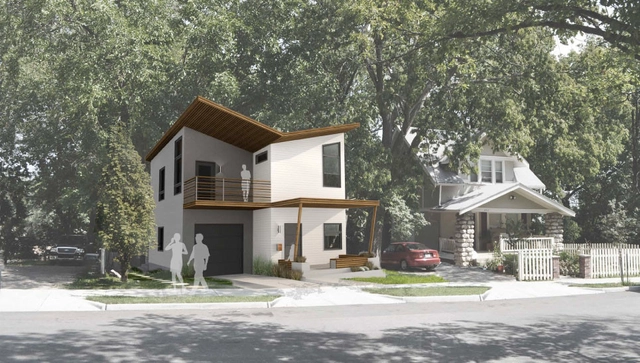
Home design by DRAW. Image Courtesy of Make It Right
Make It Right, the organization formed by Brad Pitt that builds affordable and sustainable houses for people in need, has released a series of new single-family home designs by local architects to expand their efforts in Kansas City, Missouri. The new homes will become part of Make it Right's established work in Manheim Park, complementing the affordable housing and community complex opened by the organization in 2013.
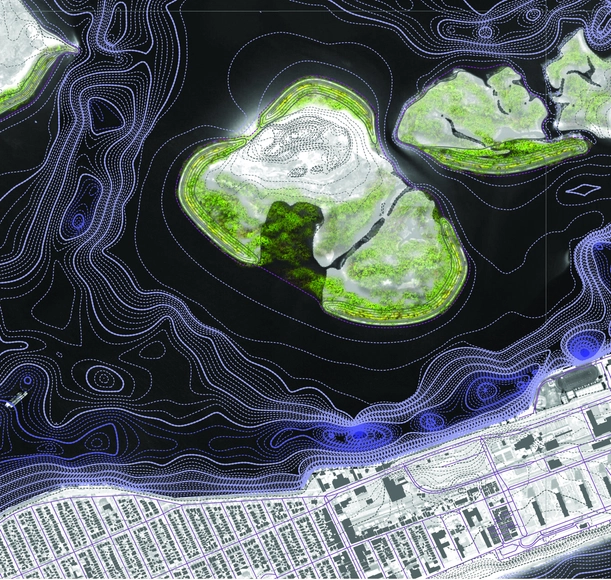
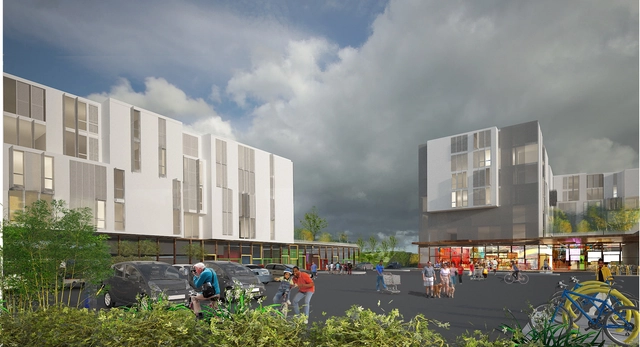
Embracing Limits. Image Courtesy of Architecture at Zero
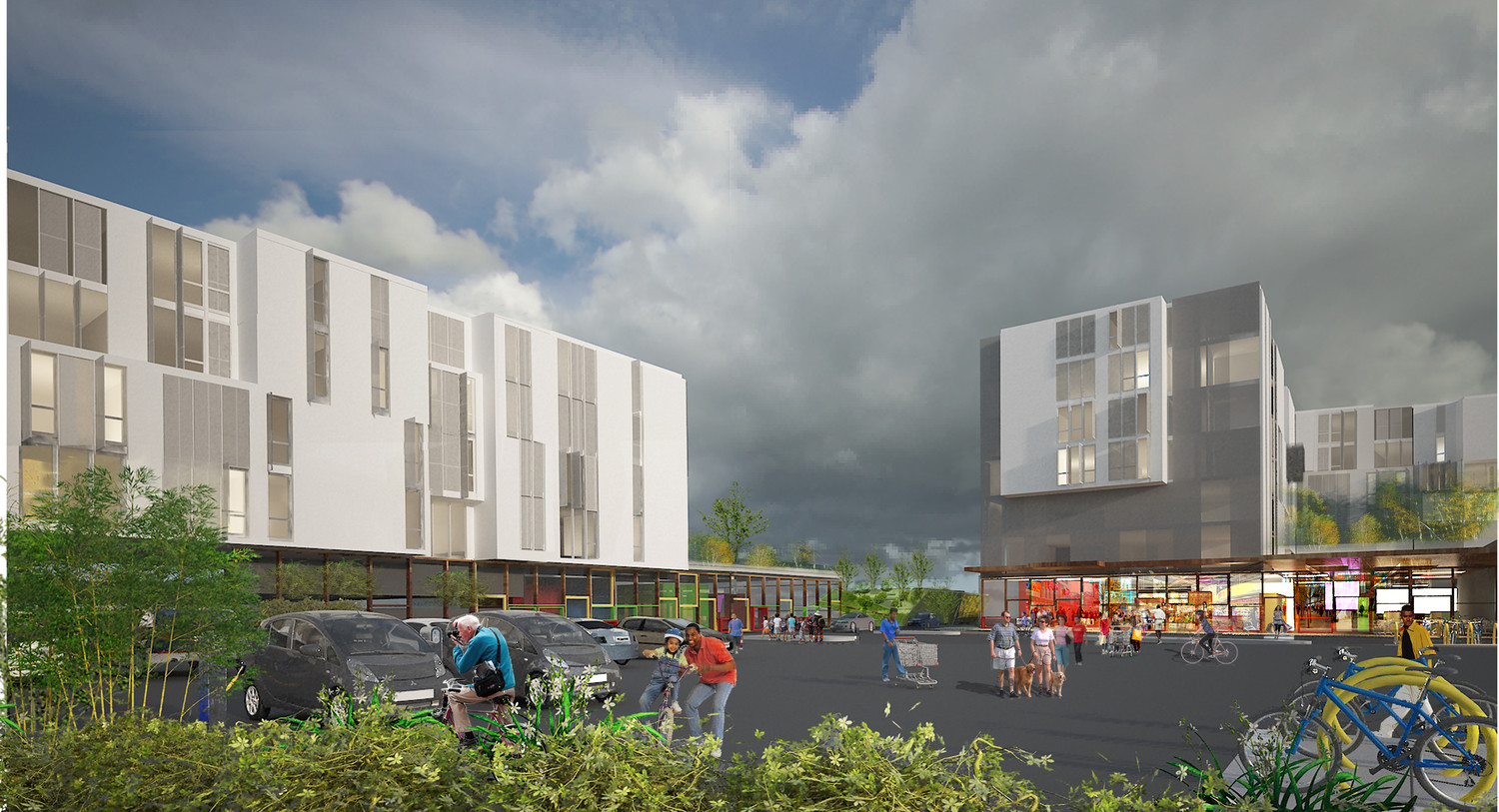
Recently, the Architecture at Zero design competition, sponsored by Pacific Gas and Electric Company, came to a close. Open to a variety of fields and skill levels, the competition challenged entrants to create a zero net energy (ZNE) design specific to an Oakland-based site run by the East Bay Asian Local Development Corporation (EBALDC). ZNE buildings maintain equal amounts of energy input and output annually, and thus function as independent sustainable units, making them a smart solution when considering future impact.