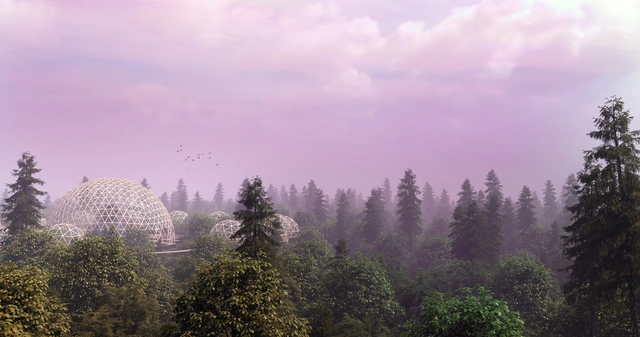
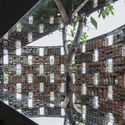
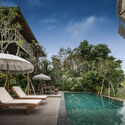
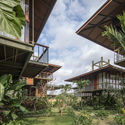
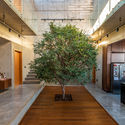
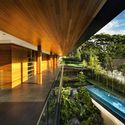
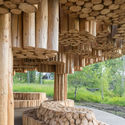
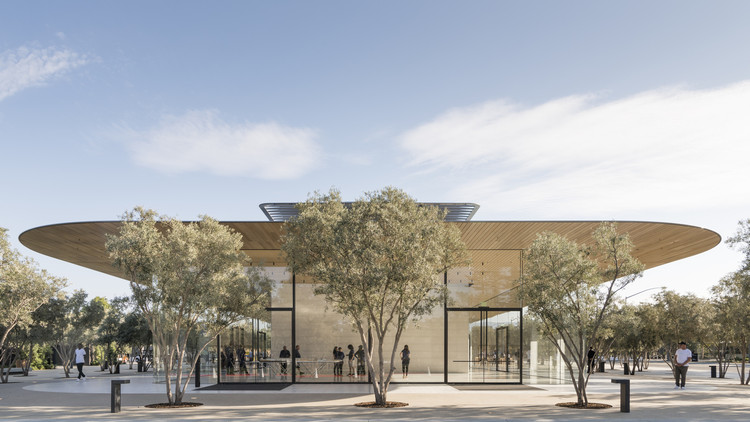
PARKROYAL COLLECTION Pickering, designed by WOHA and Tierra Design. Image Courtesy of WOHA
Singapore as of late is continually building its reputation as a City in Nature, with Singaporean design long having a strong consciousness to acknowledge that green spaces matter. Urban planners and architects alike have taken a conscientious decision to weave in nature throughout the city as it continues to uproot new buildings and developments, incorporating the implementation of plant life in any form, whether it be through green roofs, cascading vertical gardens, or verdant walls.
This article will explore the pioneering actions taking place in Singapore to create a more biodiverse city and nation, and how this provides a view of how other major cities can adopt similar initiatives over the next decade to provide a blueprint for the future.
The Build Better Now virtual pavilion opened to the public during COP26, showcasing seventeen sustainable projects that demonstrate the built environment's opportunities for addressing the climate crisis. The initiative, run by UK Green Building Council, comes as a global call for climate action, highlighting the AEC's industry's commitment to sustainable practice on a worldwide stage, particularly since this year the COP26 dedicated a day to buildings and cities.
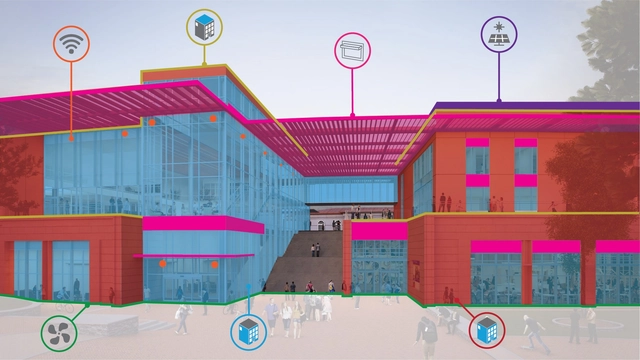
Energy codes around the world get stricter every year, architects need to prepare for various challenges ahead. The first step is to understand the key metrics needed to conduct early-stage analyses and collaborate across various teams. With buildings responsible for 39% of total carbon emissions, the design practice is evolving to bake in data-driven energy efficiency. This change is leading architects to quickly become building performance experts and create spaces that are high performance and healthy for occupants.
https://www.archdaily.com/963003/sustainable-building-design-top-5-metrics-every-architect-should-knowSponsored Post
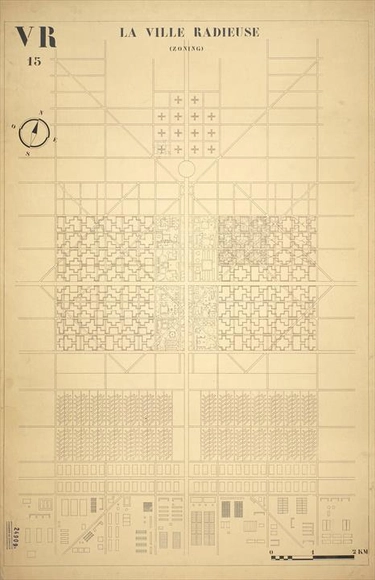
The Master Plan of the Radiant City. Image Courtesy of LE CORBUSIER FOUNDATION
Throughout history, religious reformers and visionary starchitects have attempted to envision the future of our cities: from the Venetian model city of Palmanova to the multi-story housing complex for 5,000 people drafted by Italian architect Paolo Soleri, from Frank Lloyd Wright’s Broadacre City to Le Corbusier’s Radiant City, numerous masterplans have been crafted to illustrate some of the most unprecedented ambitions.
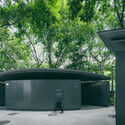
In recent years, with the accelerated urban development of public spaces in China, public washrooms have been assigned numerous new roles. Designers have come up with a variety of proposals which suggest turning public washrooms into a place where social gathering can be redefined, and temporary stay can be more engaging. Although the scale of public washrooms is significantly smaller than that of any other type of architecture, Chinese architects have been working innovatively on fitting the public washrooms into the changing social contexts. Below are a few examples that demonstrate some current architectural experiments with public washroom design in China.
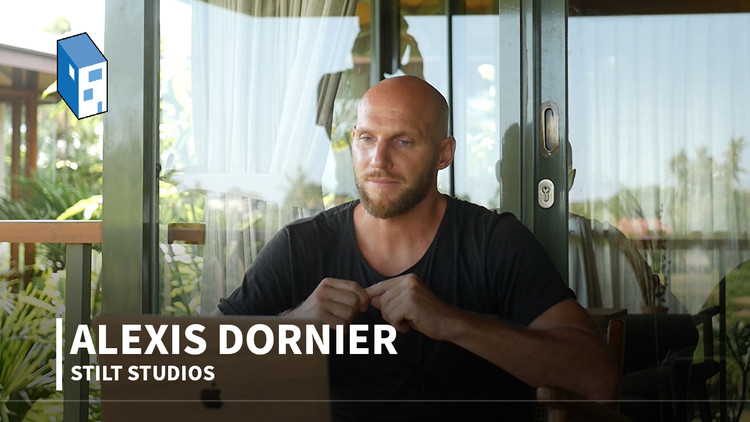
“It all started with the question: What if I’m going to build my own house?" It was this consideration that prompted Alexis Dornier to note that when he's providing architectural design service he's mostly catering, filtering and catalyzing input from other people that have budgets, preferences and tastes and it’s up to him to channel or organize that and let it "stream through" him. Using his craft to put it in order. "But what if you did not have that other hand [designer's help]? What would you do?”
Archdaily’s Hana Abdel, projects curator, sat down with Alexis Dornier to discuss his latest venture as co-founder of Stilt Studios, a company “focused on making Architectural design accessible to a greater audience of people. People who wouldn’t be able to afford an architect or don’t want to go through the trouble of working with an architect. So, what if we could create a product, or an architecture that almost works as a product.”
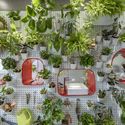
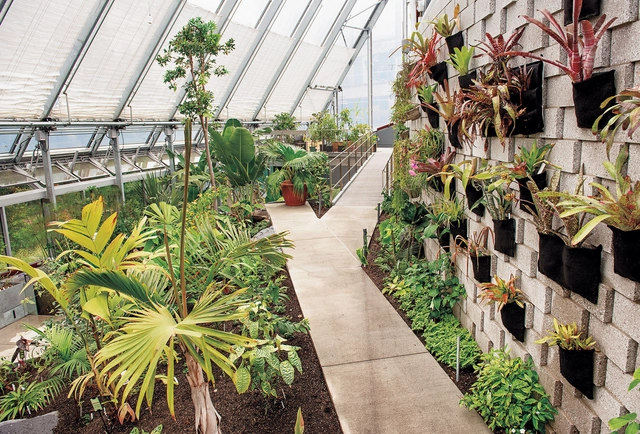
If a person were to imagine a setting of complete relaxation, odds are the first image that comes to mind is a place surrounded by nature, be it a forest, the mountains, the sea, or a meadow. Rarely does one imagine an office or a shopping mall as a source of comfort and relaxation. Still, the majority of people spend almost 80-90 % of their time indoors, going back and forth from their houses to their workplaces.
Architects and designers are now searching for design solutions that will resonate well into the future, turning to 'biophilia' as an important source of inspiration that promotes well-being, health, and emotional comfort.
Recycling has long been an entry point into sustainable design. It's personal, achieved at a micro scale where individuals can reduce waste and preserve energy. But between resource shortages, environmental habitat loss and the global climate crisis, there has been a shift in daily practices towards more circular thinking. Increasingly, the need to sustain life is part of a continuous process of production, resorption, and recycling where waste becomes the input for production.
As a reaction to the unprecedented moment that we are all experiencing, Zuecca Projects has decided to launch its first-ever Open Call, on the theme of Sustainable Architecture and Design.
Sustainable design is more than water, energy and carbon. For architecture, it is deeply rooted in an understanding of life cycles and systemic cultural change. Over the last thirty years, the word "sustainability" began to lose its weight as it transformed into a loosely defined buzzword. But the ideas behind the umbrella term have grown and expanded, and in turn, iconic new buildings are being designed to rethink what the future holds.
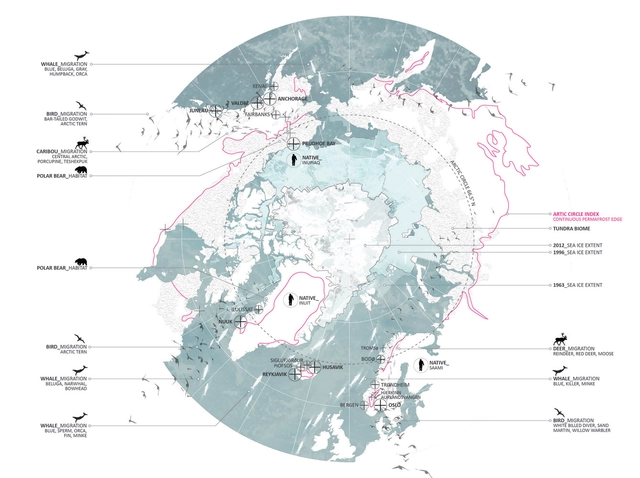
In this webinar, Amanda Aman, AIA, LEED AP BD+C will present her 2018 Stewardson Keefe LeBrun Travel Grant research, Fragile Fields of the Arctic Circle Periphery. The perpetual global climate shift materializes within the Arctic Circle as a reaction to the pressures of petrochemical industrial output and unsustainable human practice. Arctic environments are among the first to experience the manifestations of this shift as the Arctic is warming at twice the rate of the rest of the globe. As a result, natural systems, wildlife migrations, and patterns of habitation will be severely altered, in addition to the dependence of indigenous people groups on these for cultural preservation and physical survival.
Fifty percent of landfill waste in New Zealand is construction and demolition waste. The demand for homes in the coming years and decades is rapidly outstripping any possible supply we could provide with our current construction methods. PhD student Ged Finch discusses the problems with the home building industry and practices in New Zealand and proposes an alternative to what he terms the "disposable model" of building. Today's homes are not built to last, and can make us sick in the time they are here. Finch's research focuses instead on a completely reimagined, zero waste model for construction. Utilizing today's digital fabrication technologies, we can create a set of building parts that are optimized and reusable from naturally durable materials. But the technical solution is only one part, states Finch. The real key is human ambition.
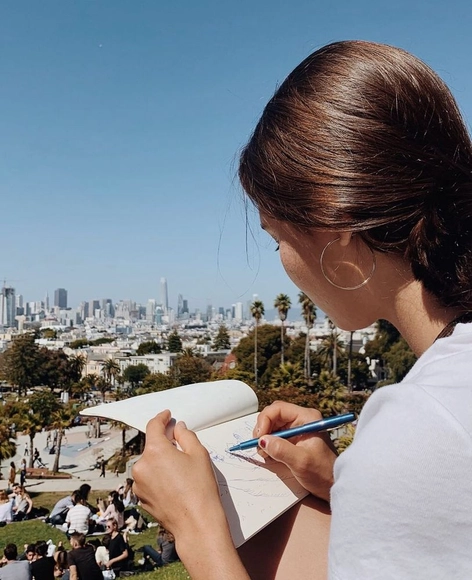
Today's designers have inherited unprecedented global challenges, a legacy which will require radically new ways of fashioning the buildings, places, and landscapes that harbor our diverse ways of life. The College of Environmental Design offers several introductory and advanced programs for those interested in confronting these challenges in the fields of architecture, landscape architecture and environmental planning, urban design, and sustainable city planning. Please visit UC Berkeley's Summer Programs website to view images of student work and learn more about the CED Summer experience.
Architects of today face a common task that defies intuition – how to balance building performance and strict carbon targets against cost. Sustainability in design is certainly a worthy and necessary goal, but the amount of options can be overwhelming and the costs prohibitive, especially in the eyes of owners. How can designers best convince their clients to integrate sustainability into a project? Keeping costs low and backing up decisions with fact-based analysis are solid first steps.
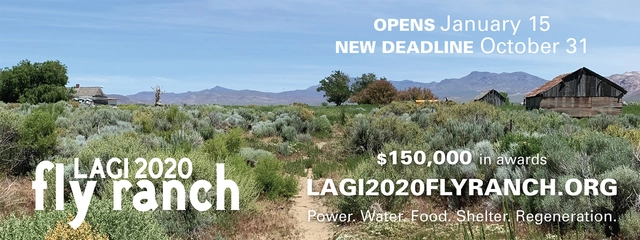
Land Art Generator Initiative and Burning Man Project have partnered to launch a multi-disciplinary design challenge—LAGI 2020 Fly Ranch—that will create the foundational infrastructure of Fly Ranch. The project is open to everyone everywhere and seeks creative solutions to systems of energy, water, food, shelter, and regeneration. You are invited to propose your regenerative artwork in this unique and stunning landscape. In 2021 selected design teams will be provided with an honorarium grant for the purpose of building a functional prototype on site.
Entries to the 6th International LafargeHolcim Awards for sustainable construction will close on February 25, 2020. The competition seeks projects by professionals as well as bold ideas from the Next Generation that combine sustainable construction solutions with architectural excellence. The Awards accept projects and concepts from architecture, engineering, urban planning, materials science, construction technology, and other related fields.


..jpg?1644514229&format=webp&width=640&height=580)

._1.jpg?1644514203 "Oasia Hotel Downtown, designed by WOHA and STX Landscape Architects. Image Courtesy of WOHA")

.jpg?1644514319 "Kampung Admiralty, designed by Ramboll Studio Dreiseitl and WOHA. Image Courtesy of WOHA")
..jpg?1644514229)