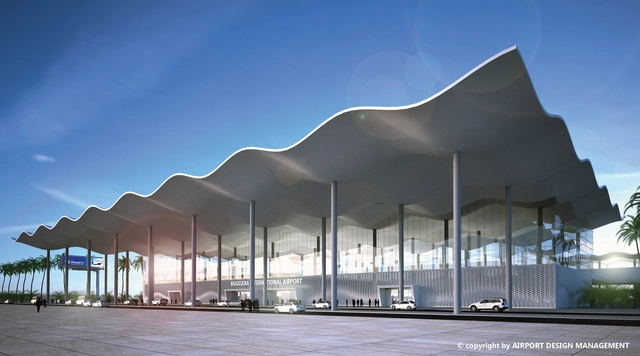
Rwanda’s largest publicly funded project, Bugesera International Airport is on track to be the first certified green building in the region. A few pieces of this net zero emission complex include: a 30,000 square metre passenger terminal, 22 check-in counters, ten gates, and six passenger boarding bridges. Funded by Public Private Partnership, the project is cost estimated at $414 million USD. The international hub was only one of several initiatives discussed by the AfricaGreen Growth Forum (AGGF) in Kigali at the end of last year.
It is, once again, the time of year where we look towards the future to define the goals and approaches that we will take for our careers throughout the upcoming year. To help the millions of architects who visit ArchDaily every day from all over the world, we compiled a list of the most popular ideas of 2018, which will continue to be developed and consolidated throughout 2019.
Over 130 million users discovered new references, materials, and tools in 2018 alone, infusing their practice of architecture with the means to improve the quality of life for our cities and built spaces. As users demonstrated certain affinities and/or demonstrated greater interest in particular topics, these emerged as trends.
https://www.archdaily.com/910525/the-trends-that-will-influence-architecture-in-2019Pola Mora
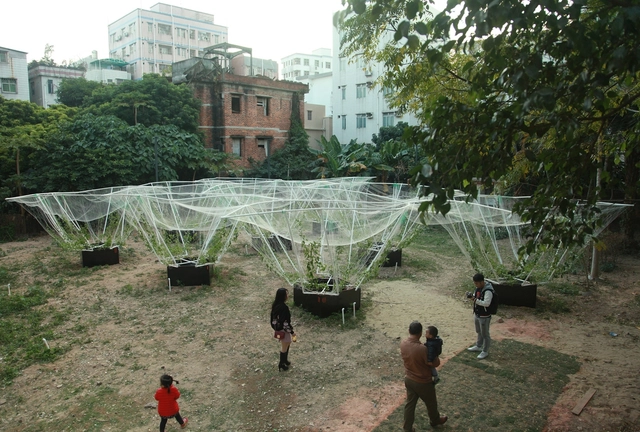
Cristopher Cichocki's Root Cycle combines installation art with existing architecture in an effort to spark a discussion regarding the relationship between design, both contemporary and historical, and environmental sustainability.
Cichocki partnered with Geoplast, a local Italian designer and manufacturer dedicated to producing innovative sustainable design products. The artist uses a particular Geoplast elevator product and Aloe Vera plants as the main components for the artwork.
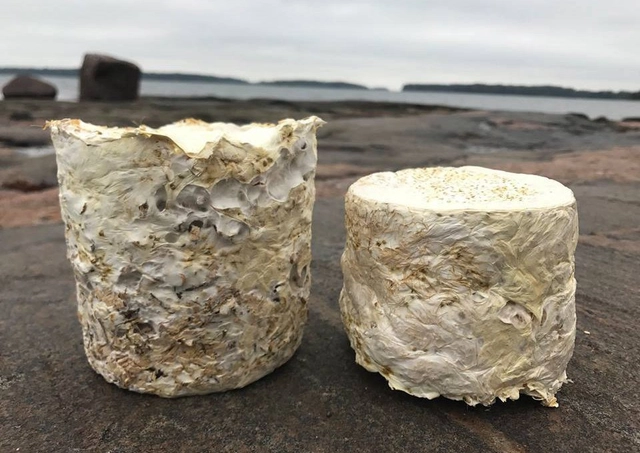
UK entrepreneur Ehab Syed has developed a mushroom-based insulation with his company Biohm, embodying techniques that are “completely natural, biodegradable and vegan.”
As reported by Global Construction Review, the material will come to the market in the coming months, with interest expressed by Tata Steel, Heathrow Airport, and leading UK house builders.
https://www.archdaily.com/903744/biohms-vegan-insulation-system-offers-a-future-for-green-constructionNiall Patrick Walsh
Habitat: Vernacular Architecture for a Changing Planet
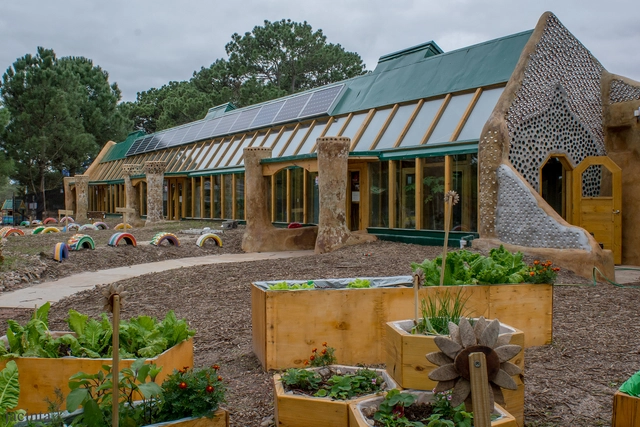
Climate change is the biggest challenge facing our planet. There has never been a more important time to understand how to make the best use of local natural resources and to produce buildings that connect to ecosystems and livelihoods and do not rely on stripping the environment or transporting materials across the globe.
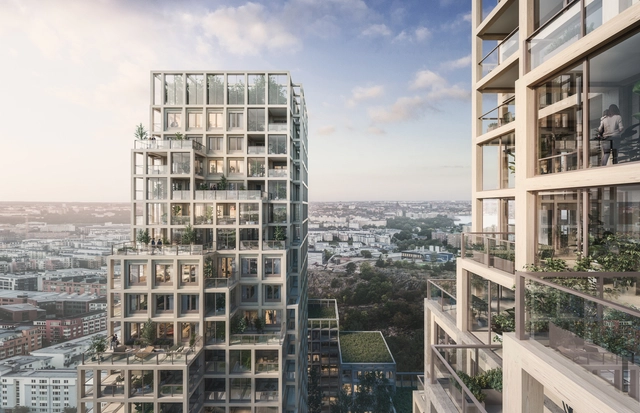
Kjellander Sjöberg Architects have won the competition for Nacka Port, a new sustainable and dynamic urban block. The award-winning architecture firm, which is one of the leading architectural offices in Scandinavia will build the project in an area between Nacka and Stockholm, Sweden.
Out of the three architecture offices who were invited to compete, the latter being held in discourse with the Nacka Municipality and Architects Sweden, Kjellander Sjöberg’s proposal contributes to a “vibrant urban context with an inviting and varied program."
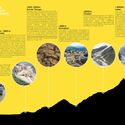
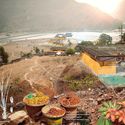
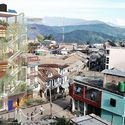
KTK-BELT Studio, a not-for-profit organization based in rural Nepal, is currently working with local communities to create a fascinating "Vertical University," which will teach students about biodiversity and environmental conservation in 6 "living classrooms" positioned along a vertical forest corridor that stretches from 67 meters above sea level to the top of an 8,856-meter peak. These 6 stops encapsulate the 5 climatic zones of Eastern Nepal: tropical, subtropical, temperate, subarctic and arctic.
The project explores the specific impacts of climate change in each climatic zone, creating “classrooms” where students can walk from Koshi Tappu to Mt. Kanchenjunga, the third tallest peak in the world, and learn onsite from indigenous farmers about the biological diversity of each area. By teaching place-based skills in these micro-conservation hubs, the project aims to conserve and activate local knowledge. Each of these “classrooms” responds to the visual and cultural cues of its unique landscape, with one campus focusing on a flood-proof design in a heavy monsoon area, and another mimicking the semi-nomadic lifestyle of local yak-herders.
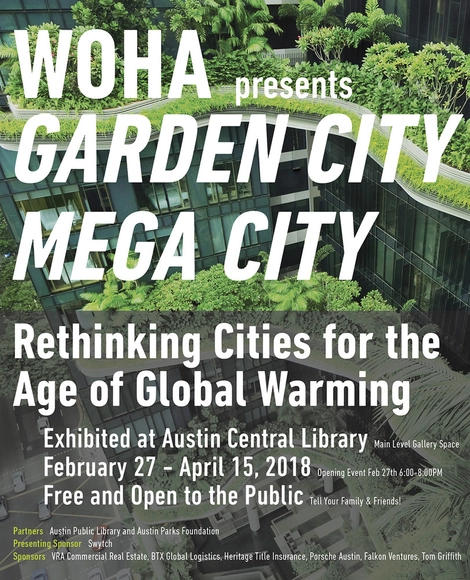
In collaboration with Austin Central Library and Austin Parks Foundation, the Singaporean architecture firm WOHA is pleased to present “Garden City Mega City,” an exhibition highlighting sixteen built and unbuilt projects that put forward a sustainable vision for how cities should evolve in the 21st century.
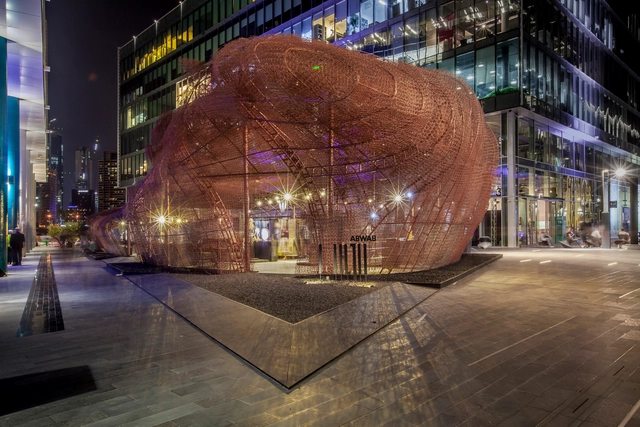
A commitment to the environment is at the core of Fahed + Architects philosophy, so it was necessary to create a structure out of 100% recyclable material from the local waste management company, Bee’ah. The outer skin of the pavilion is a mesh of entwined bedsprings that naturally lends itself to an organic form, floating amongst the surrounding buildings.
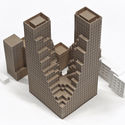
Dutch Firms Team RAU, SeARCH, and karres +brands have been named as one of the winners of the Inventons la Metropole de Grand Paris, the largest European competition for city planning, architecture and public space. Their project, Triango, reinvents Paris’ Triangle de Gonesse into a dynamic and lively business park which promotes sustainability in every sense of the word.


.jpg?1548884950&format=webp&width=640&height=580)

















![Call for Submissions / 2018 Summer [IN]STITUTE in Environmental Design - Featured Image](https://snoopy.archdaily.com/images/archdaily/media/images/5a9d/9db2/f197/ccf8/6c00/012c/slideshow/open-uri20180305-14309-k3t69r.jpg?1520278953&format=webp&width=640&height=580)