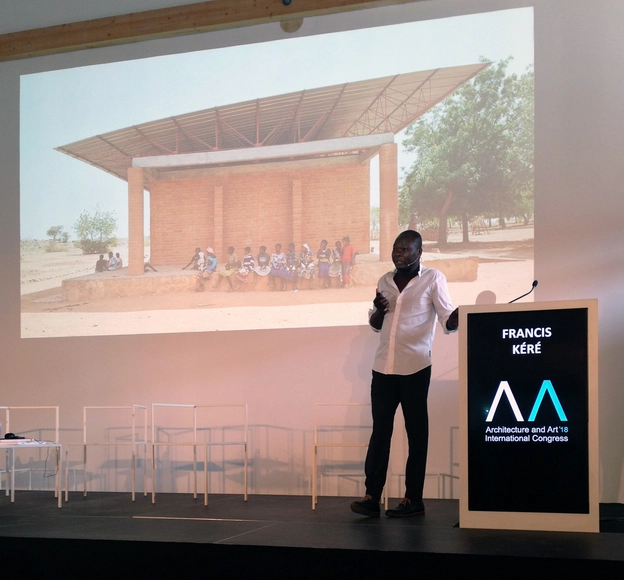
"I Draw on Paper, but I Prefer to Draw on the Ground". This phrase caught my eye during Diébédo Francis Kéré's speech at the AAICO (Architecture and Art International Congress), which took place in Porto, Portugal from September 3 to 8, 2018. After being introduced by none other than Eduardo Souto de Moura, Kéré began his speech with the simplicity and humility that guides his work. His best-known works were built in remote places, where materials are scarce and the workforce is of the residents themselves, using local resources and techniques.
The tech industry in Japan has continued to serve as a pivotal driving force in Japan, with the whole country being well known for its technological innovations in various industries. As of late, most industries and companies have begun to shift their focus to the topic of sustainable development, with the inclusion of using these very technologies to work towards zero energy goals.
PARKROYAL COLLECTION Pickering, designed by WOHA and Tierra Design. Image Courtesy of WOHA
Singapore as of late is continually building its reputation as a City in Nature, with Singaporean design long having a strong consciousness to acknowledge that green spaces matter. Urban planners and architects alike have taken a conscientious decision to weave in nature throughout the city as it continues to uproot new buildings and developments, incorporating the implementation of plant life in any form, whether it be through green roofs, cascading vertical gardens, or verdant walls.
This article will explore the pioneering actions taking place in Singapore to create a more biodiverse city and nation, and how this provides a view of how other major cities can adopt similar initiatives over the next decade to provide a blueprint for the future.
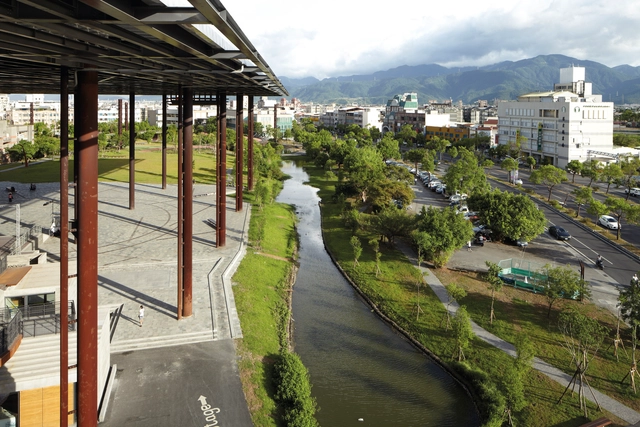
Taiwan proposes that architecture can transform a place, and to represent this idea, the work of Sheng-Yuan Huang and his practice, Fieldoffice, were chosen for the Taiwan Exhibition at La Biennale di Venezia in 2018, entitled Living with Sky, Water, and Mountain: Making Places in Yilan. Sheng-Yuan and Fieldoffice demonstrated that the notion of making places is more than building a physical space, but is equally about establishing a linkage between people, as well as people and their environment.
Alessandro Martinelli explores Sheng-Yuan and his colleagues at Fieldoffice as the avant-garde of a new architectural movement in his book, The City Beyond Architecture, which seeks to produce a new form of collective living through the lens of design and culture, touching on what the design culture of the majority of future urbanization could become. In the following, we will discuss Shen-Yuang's impact on Taiwanese architecture as he spearheaded the call to integrate and imagine public spaces that inhabited the capacity to structure a particular landscape to provide both social spaces and a sense of identity to its occupants.
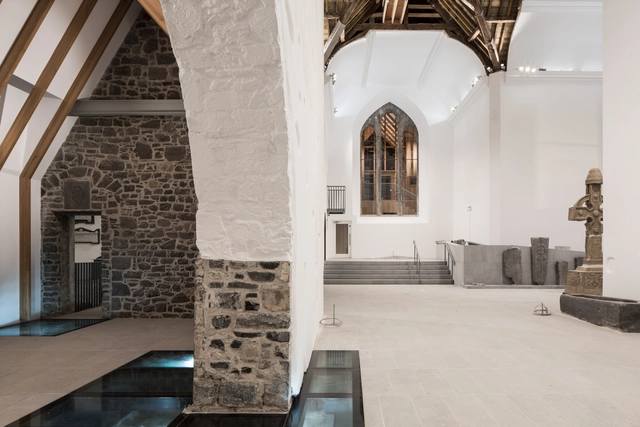
The dawn of the Anthropocene has thrown the idea of adaptive reuse into the limelight: effectively the pinnacle of urban regeneration and revitalization. It utilizes the presence of existing buildings with historic and cultural value and re-purposes them to be functional. Essentially a form of architectural salvage; a sustainable and viable means of rebuilding.
Recent events such as the pandemic has highlighted inequalities in our cityscape, the inadequate segments in a state of disuse and disrepair. Adaptive reuse can replenish these areas and create new cultural hotspots, encouraging activity and creating vibrant and healthy mixed-use environments.
Below is a diverse selection of cultural hotspots using Adaptive Reuse
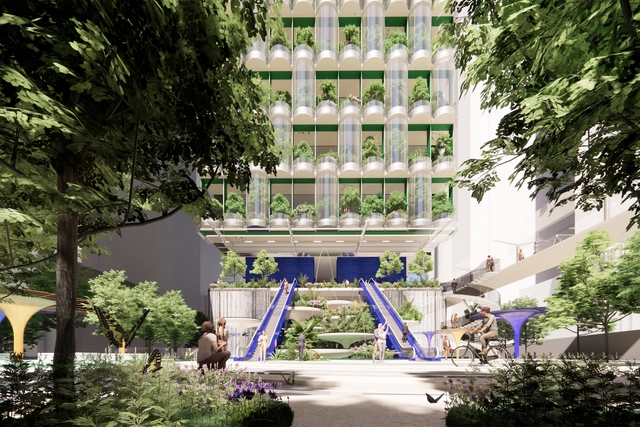
Arup reveals the competition-winning design for a 230m tall net-zero commercial tower in Hong Kong that embodies the city's aspirations to reach carbon neutrality by 2050. Taikoo Green Ribbon blends technology and nature to create an urban ecosystem sustaining a new generation of workplaces. Featuring a façade of curved PVs, hanging gardens, algae walls and various renewable energy sources, the project is a high-performance building slated to achieve carbon neutrality in less than a decade after construction.
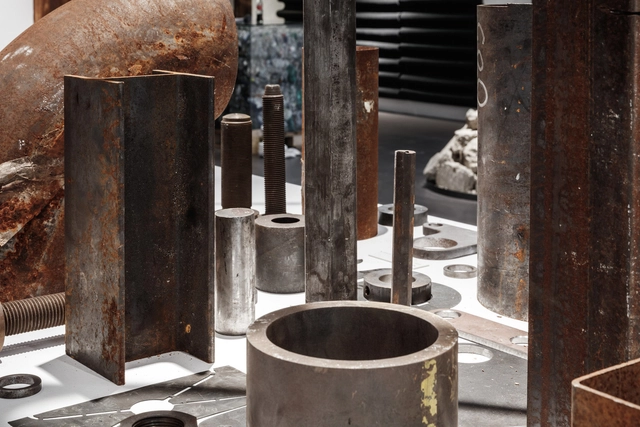
At the Dutch Design Week, a house created entirely from bio-based materials aims to illustrate that circular design is not only feasible but a scaleable construction method for the future. Featuring 100 types of sustainable materials, The Exploded View Beyond Building is a concrete example of the possibilities of creating a circular living environment, bringing together substantial research into high-quality components fit for disassembly and modular design.
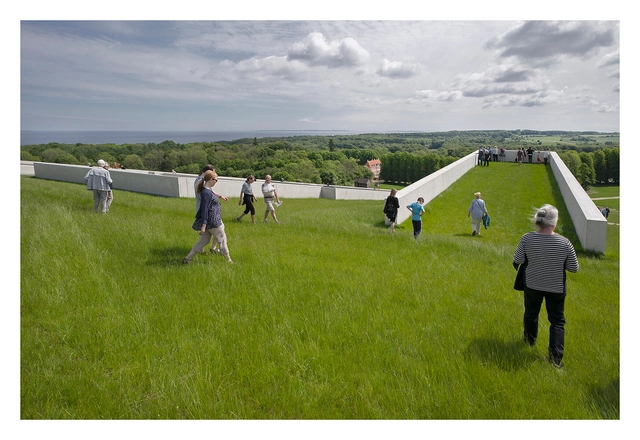
Researchers credit the Hanging Gardens of Babylon as the first examples of green roofs. Although there is no proof of its exact location and very little literature on the structure, the most accepted theory is that King Nebuchadnezzar II built a series of elevated, ascending terraces with varied species as a gift to his wife, who missed the forests and mountains of Persia, their local land. According to Wolf Schneider [1] the gardens were supported by brick vaults, and under them, there were shaded halls cooled by artificial irrigation of the gardens, with a much milder temperature than the outside, in the plains of Mesopotamia (present-day Iraq). Since then, examples of green roofs have appeared all over the world, from Rome to Scandinavia, in the most diverse climates and types.
Nevertheless, inserting plants on roofs is still viewed with suspicion by many, as they are thought to be costly and difficult to maintain. Others, however, argue that the high implementation costs are quickly offset with savings in air conditioning and especially that occupying the building's fifth façade with vegetation is, above all, a rational solution. In any case, the question remains as to how green roofs can really help with climate change.
Zero kilometer materials can be purchased locally, do not need to be transformed by large stages of industrial processing or toxic treatments and, at the end of their service life, they can be returned to the environment.
For example, wood from a nearby forest eliminates the need for long transfers, valuing local resources, and allowing architecture to lessen its environmental impact while committed to the landscape and context.
MVRDV has revealed the design of "De Oosterlingen", a series of seven sustainable residential buildings on Amsterdam’s Oostenburg Island. The proposed buildings are distributed in a 'barcode' composition, forming an apparent unified design but with an animated skyline and unique characteristics such as varying roof shapes and façades of wood, glass, recycled brick, and bio-based composite.
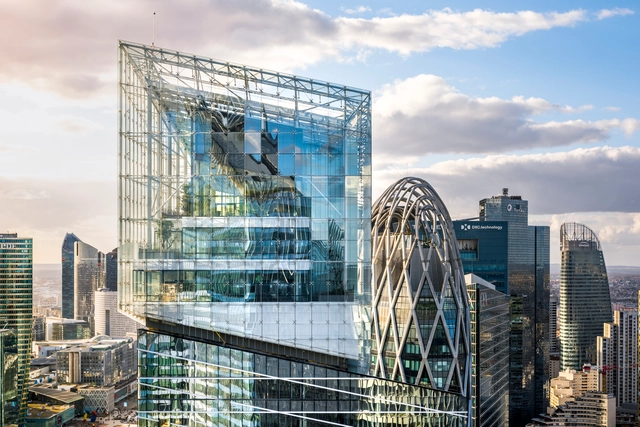
In a 2016 survey of 400 employees in the U.S., Saint-Gobain found that office building occupants commonly complained about poor lighting, temperature, noise, and air quality, leading the company to deduce a need for improved lighting and thermal comfort in buildings while also maintaining low energy consumption and freedom of design for architects and clients. Their solution was SageGlass, an innovative glass created first in 1989 and developed over the course of the past three decades. The glass, which features dynamic glazing protecting from solar heat and glare, simultaneously optimizes natural light intake. A sustainable and aesthetic solution, SageGlass’ adaptability to external conditions dispels the need for shutters or blinds.
https://www.archdaily.com/957605/more-daylight-but-less-glare-and-heat-how-does-automatically-tintable-glass-workLilly Cao
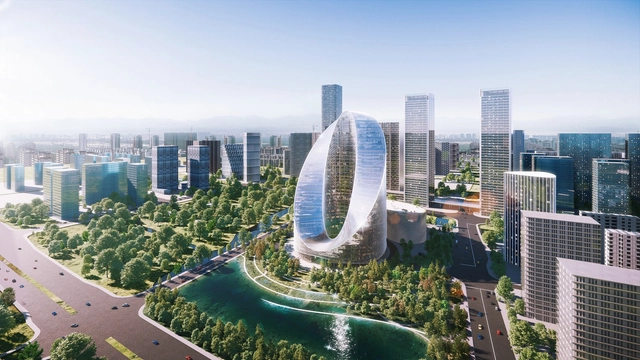
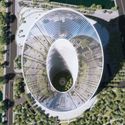
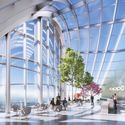
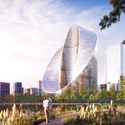
Nestled in the heart of Yuhang District, Bjarke Ingels Group’s design for the new OPPO R&D Headquarters, China’s largest smartphone company, combines aesthetics and innovative technology in a building that will be an environmental, economical, and socially sustainable hub for innovation.
After winning an international competition at the end of 2019, UNStudio has designed the new office of international software development company JetBrains in Saint Petersburg, promoting interaction and sustainability through its architecture, and focusing on the project's three keywords: Connective, Comfortable, and Versatile. UNStudio further developed the design in 2020 and construction is expected to start later this year.
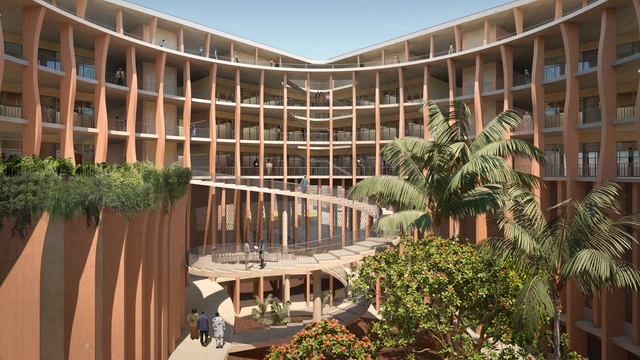
Benin's National Assembly in Porto-Novo Proposal. Image Courtesy of Kéré Architecture
Founder of the Berlin-based firm Kéré Architecture, Francis Kéré, has won the 2021 Thomas Jefferson Foundation Medal in Architecture. Presented by the University of Virginia and the Thomas Jefferson Foundation at Monticello, the award is one of four honors recognizing achievements in architecture, citizen leaderships, global innovation, and law. The Thomas Jefferson Foundation Medals recognize the exemplary contributions of recipients to the endeavors in which Jefferson excelled and held in high regard.
In many cases, I haven't been able to decide whether a building full of trees fits into the "sustainable" category. In fact, I've often had to make the argument that such a building is far from it.
It seems that the vast majority of contemporary marketing for sustainable architecture operates under the guise of greenwashing. What's more, the line between what truly creates healthier and more sustainable living spaces and what doesn't is often a blurred one.
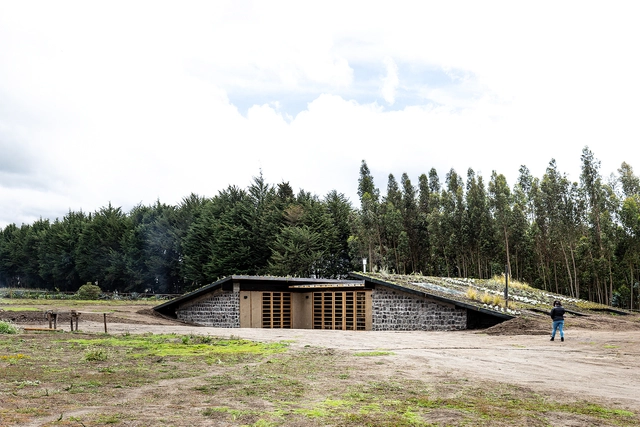
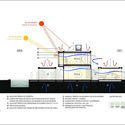
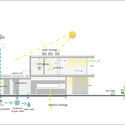
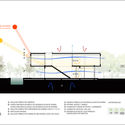
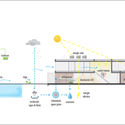
The principles of bio-climatic architecture, when applied with an understanding of the surrounding climate and geography, can simultaneously increase a building's efficiency and create a more comfortable living space. Passive measures like solar panels, rainwater and grey water harvesting, openings for natural light, and cross-ventilation are all low-cost, high yield methods of increasing a home's thermal comfort and efficiency and decreasing its carbon footprint.
In a Common Edge article, I briefly discussed a concept that I call the “Triple Bottom Lie,” which posits that more people, plus more consumption by each person, plus an economic system completely dependent on the aforementioned items, can just keep working forever, without consequences. Historically, the United States has accepted the economic shibboleth of endless growth because it reduced class conflict; a rising tide (supposedly) lifted all boats, rafts and yachts included. We are, however, approaching the limits of growth, from both a resource standpoint (we’re running out of raw materials) and a technological standpoint (our inventions are progressively less revolutionary).
https://www.archdaily.com/956080/endless-sustainable-growth-is-an-oxymoronChristopher L. Cosper
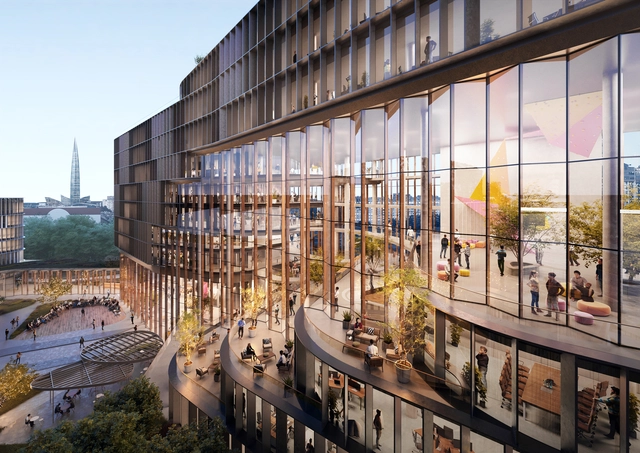
Construction has begun on MVRDV’s six-story sustainable office and laboratory complex. Located in the heart of Amsterdam Science Park, in the eastern part of the city, the project, designed for the Matrix Innovation Center, “will be virtually energy neutral and uses demountable construction techniques”.




..jpg?1644514229&format=webp&width=640&height=580)

._1.jpg?1644514203 "Oasia Hotel Downtown, designed by WOHA and STX Landscape Architects. Image Courtesy of WOHA")

.jpg?1644514319 "Kampung Admiralty, designed by Ramboll Studio Dreiseitl and WOHA. Image Courtesy of WOHA")
..jpg?1644514229)







.jpg?1615469357&format=webp&width=640&height=580)
.jpg?1623754842&format=webp&width=640&height=580)

.jpg?1623754916 "© Proloog")
.jpg?1623754848 "© Proloog")

.jpg?1623754842)










.jpg?1606909402&format=webp&width=640&height=580)
.jpg?1606909307 "Courtesy of MVRDV")
.jpg?1606909282 "Courtesy of MVRDV")
.jpg?1606909168 "Courtesy of MVRDV")
.jpg?1606909250 "Courtesy of MVRDV")
.jpg?1606909402)