1. ArchDaily
  2. Studio Egret West

Studio Egret West: The Latest Architecture and News

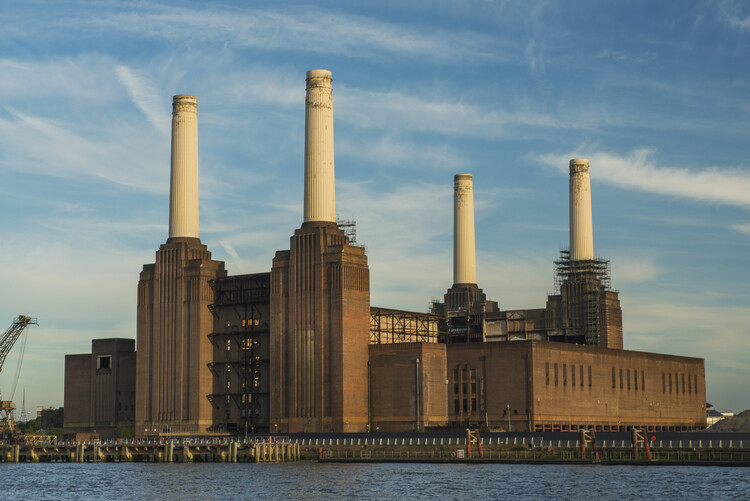
Studio Egret West to Masterplan the Future Phases of Battersea Power Station Regeneration in London

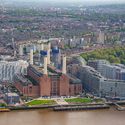
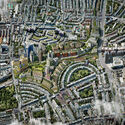
Battersea Power Station is a former coal-fired power station located on the south bank of the River Thames in London, originally designed by architects J. Theo Halliday and Giles Gilbert Scott. Notable for its appearance on the cover of Pink Floyd's 1977 studio album Animals and in Alfred Hitchcock's 1936 film Sabotage, the station is one of the world's largest brick buildings and is known for its Art Deco interior fittings and décor. Recognized today as part of modern industrial heritage, the site's transformation into a commercial development began in 2012, with the adaptive reuse guided by a masterplan designed by Rafael Viñoly. On February 16, Battersea Power Station announced the appointment of the strategic urban design practice Studio Egret West to evolve the original masterplan for the remaining 16 acres of the 42-acre riverside neighbourhood in the southwest London.

Studio Egret West to Masterplan the Future Phases of Battersea Power Station Regeneration in London - Image 4 of 4Studio Egret West to Masterplan the Future Phases of Battersea Power Station Regeneration in London - Image 1 of 4Studio Egret West to Masterplan the Future Phases of Battersea Power Station Regeneration in London - Image 2 of 4Studio Egret West to Masterplan the Future Phases of Battersea Power Station Regeneration in London - Image 3 of 4Studio Egret West to Masterplan the Future Phases of Battersea Power Station Regeneration in London - More Images

Cities Need Care, Not Perfection: Rethinking How We Build the Urban Future

Subscriber Access | 

What does optimism feel like in cities that can no longer rely on perfection as their ultimate ambition? Across the world, urban environments bear the weight of overlapping pressures: climate volatility, spatial inequality, political fragmentation, public distrust, and chronic infrastructural disinvestment. These realities render the idea of an ideal city increasingly detached from lived experience. Yet the hope for building better systems persists. While utopian visions may seem like an escape from the growing complexities of the modern world, the greater challenge for contemporary city-making is to confront those complexities rather than avoid them.

Cities Need Care, Not Perfection: Rethinking How We Build the Urban Future - Image 1 of 4Cities Need Care, Not Perfection: Rethinking How We Build the Urban Future - Image 2 of 4Cities Need Care, Not Perfection: Rethinking How We Build the Urban Future - Image 3 of 4Cities Need Care, Not Perfection: Rethinking How We Build the Urban Future - Image 4 of 4Cities Need Care, Not Perfection: Rethinking How We Build the Urban Future - More Images+ 16

Architecture Now: From Revitalized Museums to STEM Educational Facilities, Discover the Recent Work of KPF, Zaha Hadid Architects, and Other Leading Offices

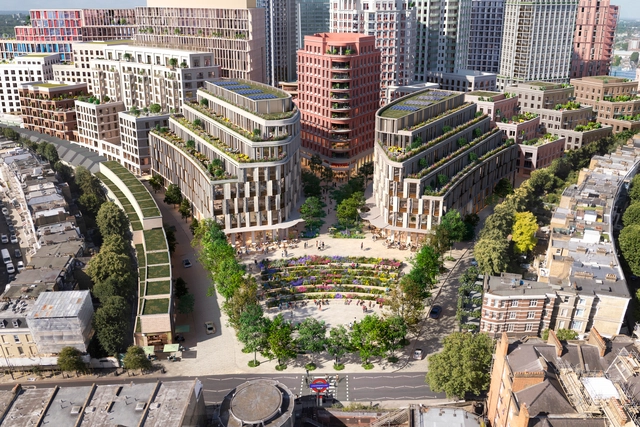
In recent weeks, a series of significant architectural developments have been announced, showcasing the varied work of renowned firms from around the globe. These projects, revealed between late September and October 2024, emphasize the transformative potential of architectural design in rehabilitating historical structures, revitalizing urban areas, and proposing new facilities to meet the evolving needs of communities. Notable names such as Zaha Hadid Architects, Kohn Pedersen Fox (KPF), and Studio Egret West are among those leading ambitious projects, from the waterfront residences on Qetaifan Island in Qatar to the reimagining of London's Earls Court. This collection of recent announcements provides a glimpse into the ongoing evolution of urban landscapes and community-centric architecture.

Architecture Now: From Revitalized Museums to STEM Educational Facilities, Discover the Recent Work of KPF, Zaha Hadid Architects, and Other Leading Offices - Image 1 of 4Architecture Now: From Revitalized Museums to STEM Educational Facilities, Discover the Recent Work of KPF, Zaha Hadid Architects, and Other Leading Offices - Image 2 of 4Architecture Now: From Revitalized Museums to STEM Educational Facilities, Discover the Recent Work of KPF, Zaha Hadid Architects, and Other Leading Offices - Image 3 of 4Architecture Now: From Revitalized Museums to STEM Educational Facilities, Discover the Recent Work of KPF, Zaha Hadid Architects, and Other Leading Offices - Image 4 of 4Architecture Now: From Revitalized Museums to STEM Educational Facilities, Discover the Recent Work of KPF, Zaha Hadid Architects, and Other Leading Offices - More Images+ 32

The Refurbishment and Adaptive Reuse of Brutalist Architecture

Subscriber Access | 

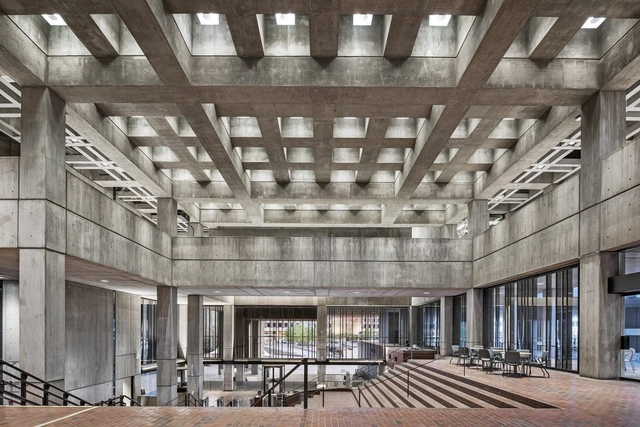
"Demolition is a waste of many things – a waste of energy, a waste of material, and a waste of history," says Pritzker-winning architect Anne Lacaton. In recent years, refurbishment and adaptive reuse have become ubiquitous within the architectural discourse, as the profession is becoming more aware of issues such as waste, use of resources and embedded carbon emissions. However, the practice of updating the existing building stock lacks consistency, especially when it comes to Brutalist heritage. The following explores the challenges and opportunities of refurbishment and adaptive reuse of post-war architecture, highlighting how these strategies can play a significant role in addressing the climate crisis and translating the net-zero emissions goal into reality while also giving new life to existing spaces.

The Refurbishment and Adaptive Reuse of Brutalist Architecture - Image 1 of 4The Refurbishment and Adaptive Reuse of Brutalist Architecture - Image 2 of 4The Refurbishment and Adaptive Reuse of Brutalist Architecture - Image 3 of 4The Refurbishment and Adaptive Reuse of Brutalist Architecture - Image 4 of 4The Refurbishment and Adaptive Reuse of Brutalist Architecture - More Images+ 1

A Vision for Future London Underground Stations

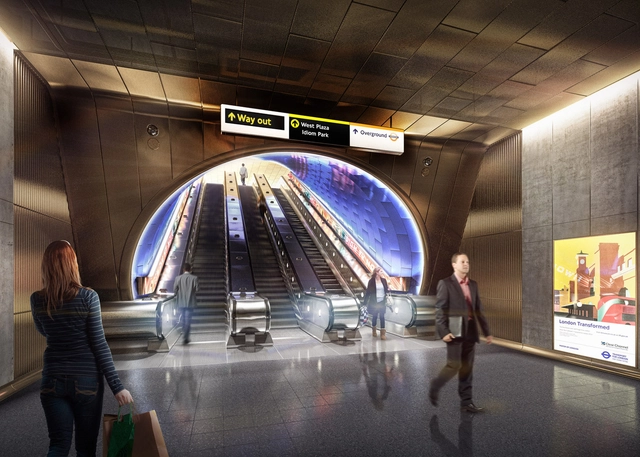
London-based practice Studio Egret West have developed designs for future London Underground stations which centre on a holistic approach to infrastructure design. The so-called 'Station Design Idiom' is, according to the designers, "deliberately wide-ranging." As a manifesto, it "covers small interventions, like repainting, through to full station refurbishments and new builds" and "complements existing London Underground standards and guidance and is the first port of call for all design decision-making on the network."

In Conversation With Will Hunter, Director Of The New London School Of Architecture

The great schools of architecture have been around since time immemorial, or at least that's how it can often feel. In London, a city particularly dense with institutions of this calibre, this is perhaps felt more acutely. How, then, do you develop an entirely new school in this tightly packed environment which has the potency and capacity to compete? Will Hunter, former executive editor of the London-based Architectural Review, began a process to do just this with an article in 2012. Following this, he set up the ARFA—Alternative Routes For Architecture—in order to explore different models for architectural education, calling upon professionals and academics to contribute to a series of informal discussions.

“When the tuition fees in the UK escalated to around £9000 per year in 2013, it got me thinking about different models for architectural education,” Hunter recalls. The casual meetings held around this time gradually become more serious until, “at a certain point, we decided to test them: to make a school.” The project gathered momentum from that point on and now, two years later, the London School of Architecture (LSA) are preparing to take in their first ‘trailblazing cohort’ of postgraduate students.

Dolls’ House Designs for KIDS Unveiled

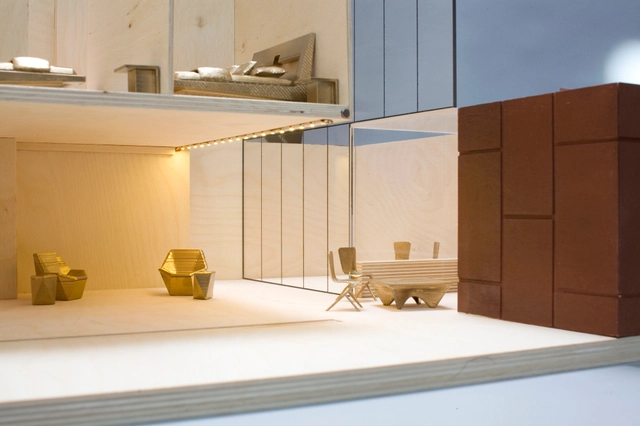
Inspired by the dolls’ house that Edwin Lutyens designed for The British Empire Exhibition in 1922, twenty British practices are each designing a contemporary dolls’ house in aid of the disabled childrens’ charity KIDS. Each version will sit on a 750mm square plinth to be auctioned at Bonham's on the 11th November and contains one feature which would make life easier for a disabled child. Among the participating practices is Zaha Hadid Architects and Rogers Stirk Harbour + Partners. FAT will also be working with Turner Prize recipient Grayson Perry CBE, and Studio Egret West with artist Andrew Logan.

See all the entries after the break...