1. ArchDaily
  2. Studio Anne Holtrop

Studio Anne Holtrop: The Latest Architecture and News

Shaping Architectural Continuity: 25 Revitalization Projects Across Historic, Industrial, and Natural Sites

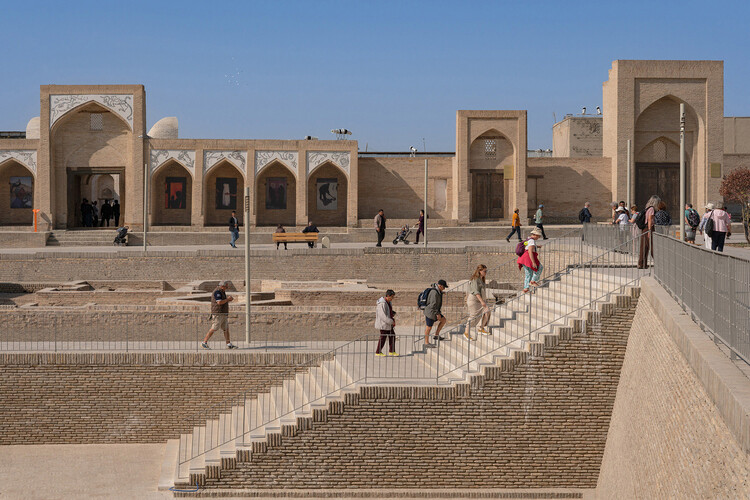
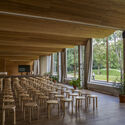
Heritage sites constitute complex spatial archives in which architecture, history, and collective memory converge. They encompass a wide spectrum of contexts—from archaeological remains, ancient and historic townscapes, UNESCO-listed landscapes, to early modern civic structures and industrial infrastructures. Yet these environments confront challenges: climate change, urban transformation, disaster, shifting social needs, and the gradual erosion of material fabric. Revitalization and restoration projects respond to these conditions by positioning architectural and spatial practice as an active mediator between preservation and the contemporary topologies.

In current practice, conservation is understood as a creative process of adaptation and reinterpretation that serves both communities and inhabitants. At the same time, monumental architecture continues to define the identity and landscape of a place for wider audiences and future generations. Architects and planners are called upon to negotiate sensitive historic contexts while introducing new programs, techniques, and spatial experiences. They exemplify diverse design approaches, including precise structural interventions, climate-responsive strategies, and meticulous material restoration, alongside the thoughtful insertion of new architectural elements. Equally important is their engagement with vernacular knowledge and materiality, which preserves the locality and cultural specificity of each site.
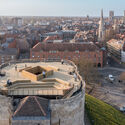
Shaping Architectural Continuity: 25 Revitalization Projects Across Historic, Industrial, and Natural Sites - Image 1 of 4Shaping Architectural Continuity: 25 Revitalization Projects Across Historic, Industrial, and Natural Sites - Image 2 of 4Shaping Architectural Continuity: 25 Revitalization Projects Across Historic, Industrial, and Natural Sites - Image 3 of 4Shaping Architectural Continuity: 25 Revitalization Projects Across Historic, Industrial, and Natural Sites - Image 4 of 4Shaping Architectural Continuity: 25 Revitalization Projects Across Historic, Industrial, and Natural Sites - More Images+ 21

Seven Finalist Designs Revealed for the Museum of Jesus’ Baptism in Jordan

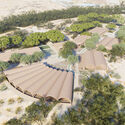
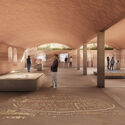
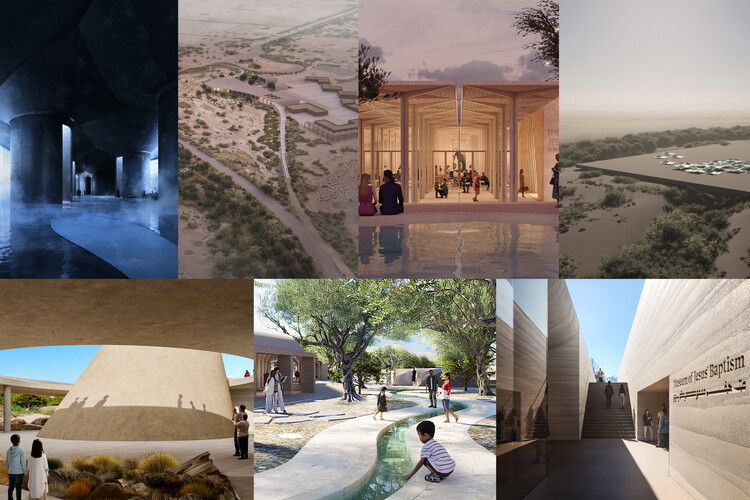
The Foundation for the Development of the Lands Adjacent to the Baptism Site has unveiled seven shortlisted concept designs for the new Museum of Jesus' Baptism at Bethany, Jordan. The proposals, now available in an online gallery, were developed by internationally recognized multidisciplinary teams led by AAU Anastas, heneghan peng architects, Níall McLaughlin Architects, Studio Anne Holtrop, Tatiana Bilbao ESTUDIO, Toshiko Mori Architect, and Trahan Architects. Managed by Malcolm Reading Consultants, the invited competition seeks an architect-led multidisciplinary team to design a museum and garden that responds to the sacred character of the site. The project is planned to open in 2030, marking the bimillennial of Christ's baptism, and aims to create a space of reflection, learning, and cultural exchange.

Seven Finalist Designs Revealed for the Museum of Jesus’ Baptism in Jordan - Image 1 of 4Seven Finalist Designs Revealed for the Museum of Jesus’ Baptism in Jordan - Image 2 of 4Seven Finalist Designs Revealed for the Museum of Jesus’ Baptism in Jordan - Image 3 of 4Seven Finalist Designs Revealed for the Museum of Jesus’ Baptism in Jordan - Image 4 of 4Seven Finalist Designs Revealed for the Museum of Jesus’ Baptism in Jordan - More Images+ 40

Choreographing Space: Architecture and Dance as Interdisciplinary Practices

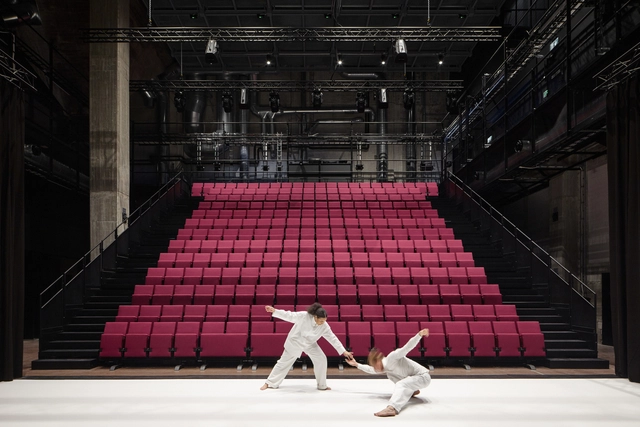
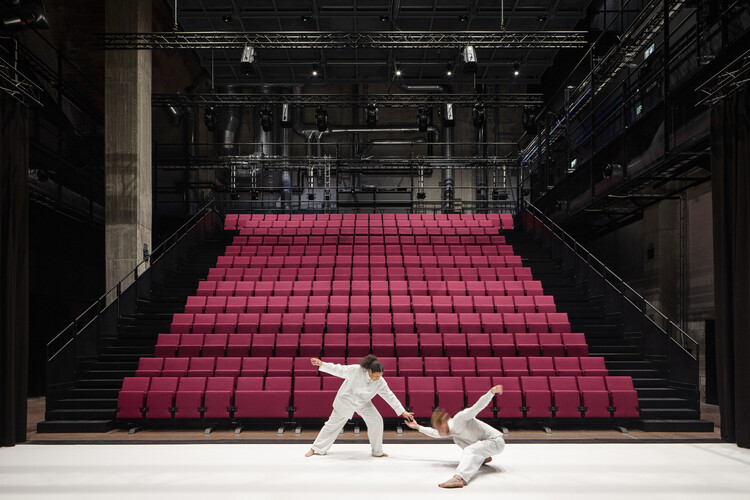
"Dance, dance… otherwise we are lost." This oft-cited phrase by Pina Bausch encapsulates not only the urgency of movement, but its capacity to reveal space itself. In her choreographies, space is never a neutral backdrop, it becomes a partner, an obstacle, a memory. Floors tilt, chairs accumulate, walls oppress or liberate. These are architectural conditions, staged and contested through the body. What Bausch exposes — and what architecture often forgets — is that space is not simply built, it is performed. Her work invites architects to think not only in terms of materials and forms, but of gestures, relations, and rhythms. It suggests that architecture, like dance, is ultimately about how we inhabit, structure, and emotionally charge the spaces we move through.

Historically, architecture and dance have operated in parallel, shaping human experience through the body's orientation in space and time. From the choreographed rituals of classical temples to the axial logics of Baroque palaces, built space has always implied movement. The Bauhaus took this further, as Oskar Schlemmer's Triadic Ballet visualized space as a geometric extension of the body. This was not scenery, but spatial thinking made kinetic. In the 20th century, choreographers like William Forsythe and Anne Teresa De Keersmaeker integrated architectural constraints into their scores, while architects such as Steven Holl, Diller Scofidio + Renfro, and Toyo Ito designed buildings that unfold as spatial sequences, inviting movement, drift, and delay.

Choreographing Space: Architecture and Dance as Interdisciplinary Practices - Image 1 of 4Choreographing Space: Architecture and Dance as Interdisciplinary Practices - Image 2 of 4Choreographing Space: Architecture and Dance as Interdisciplinary Practices - Image 3 of 4Choreographing Space: Architecture and Dance as Interdisciplinary Practices - Image 4 of 4Choreographing Space: Architecture and Dance as Interdisciplinary Practices - More Images+ 35

Muharraq Architecture City Guide: 10 Projects Through the Bahraini City's Developing Pearling Path

Subscriber Access | 

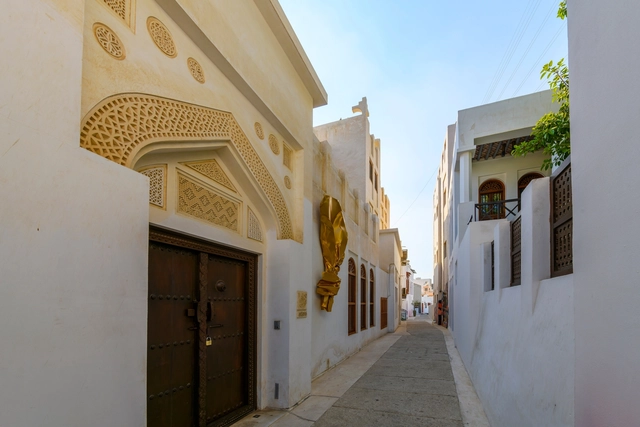
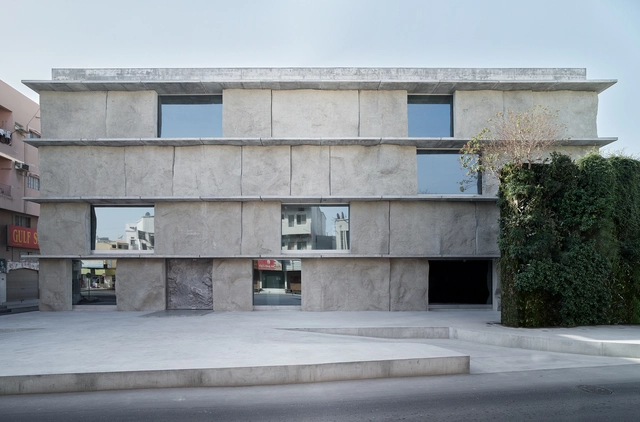
The Kingdom of Bahrain is being widely acknowledged recently through their worldwide architectural contributions at the Expo 2025 in Osaka, with their Anatomy of a Dhow pavilion by Lina Ghotmeh; or at the Venice Biennale, where the Heatwave exhibition was awarded the Golden Lion for Best National Participation. However, for the past few years Bahraini cities like Muharraq have been lending the stage for regional and international architects to discover their typical Persian Gulf architecture and add their own touches to the local sites. It's through the works of Leopold Banchini, Anne Holtrop, or Valerio Olgiati that the old has been brought back to life, along with the efforts of the local authorities and cultural figures.

Muharraq Architecture City Guide: 10 Projects Through the Bahraini City's Developing Pearling Path - Image 1 of 4Muharraq Architecture City Guide: 10 Projects Through the Bahraini City's Developing Pearling Path - Image 2 of 4Muharraq Architecture City Guide: 10 Projects Through the Bahraini City's Developing Pearling Path - Image 3 of 4Muharraq Architecture City Guide: 10 Projects Through the Bahraini City's Developing Pearling Path - Image 4 of 4Muharraq Architecture City Guide: 10 Projects Through the Bahraini City's Developing Pearling Path - More Images+ 16

Taming Nature: How Architecture is Redefining Its Relationship with the Environment

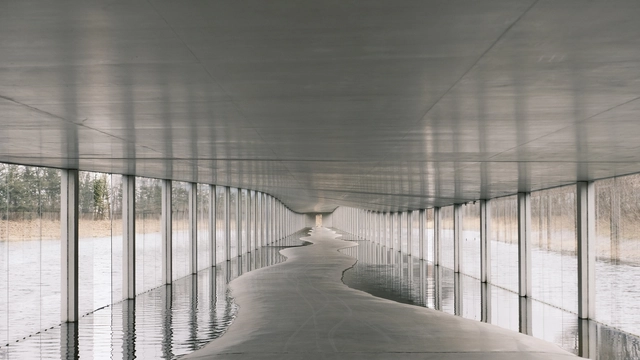
Integrating natural elements into architectural design has long been a fundamental pursuit in creating comfortable, sustainable environments that enhance both individual well-being and the relationship between buildings and their surrounding context. In areas with vast landscapes, incorporating natural elements is essential for seamlessly connecting architecture with its site. Conversely, in dense urban environments dominated by built structures, introducing greenery becomes also increasingly vital, reintroducing nature into the so-called "concrete jungle."

However, beyond conventional landscape features—such as water fountains, green walls, gardens, or courtyards—architects are redefining what it means to build with nature. The focus has shifted toward deeply integrating architecture with its natural surroundings, creating immersive spatial experiences that blur the boundaries between the built and the organic - in a way, "taming" nature. When successfully executed, these designs go beyond fostering well-being or promoting a healthy lifestyle; they evoke a profound sense of tranquility, power, and harmony, transforming the way we perceive and inhabit space.

Taming Nature: How Architecture is Redefining Its Relationship with the Environment - Image 1 of 4Taming Nature: How Architecture is Redefining Its Relationship with the Environment - Image 2 of 4Taming Nature: How Architecture is Redefining Its Relationship with the Environment - Image 3 of 4Taming Nature: How Architecture is Redefining Its Relationship with the Environment - Image 4 of 4Taming Nature: How Architecture is Redefining Its Relationship with the Environment - More Images+ 23

35 Green Corner Building / Studio Anne Holtrop

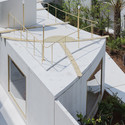
35 Green Corner Building / Studio Anne Holtrop - Exterior Photography, Learning, Facade35 Green Corner Building / Studio Anne Holtrop - Exterior Photography, Learning35 Green Corner Building / Studio Anne Holtrop - Interior Photography, Learning, Bathroom35 Green Corner Building / Studio Anne Holtrop - Exterior Photography, Learning35 Green Corner Building / Studio Anne Holtrop - More Images+ 26

Christian Kerez Designs Parking Structure in Bahrain as Part of the Pearl Path Project

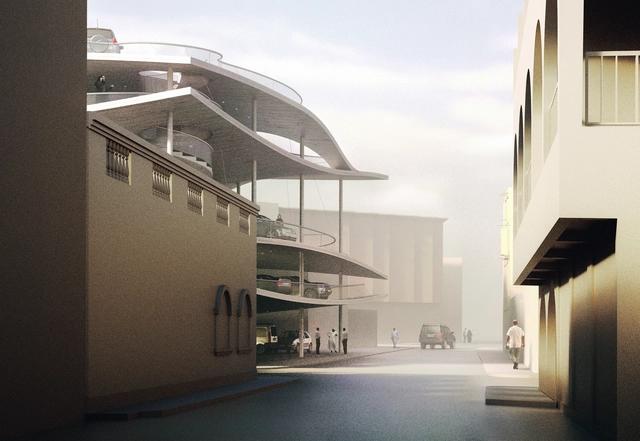
Since 2002, the historic city of Muharraq, the third-largest in Bahrain, has been the protagonist of a comprehensive preservation and development project meant to highlight its pearling history and improve the urban environment. Building on Muharraq’s legacy are several new structures designed by world-renowned architects to create the framework for the city’s revival, among which are four multistorey car parks designed by Christian Kerez and set to be completed this year. The structures envisioned not as car storage but as public spaces feature curved slabs that create a continuous transition from one level to the other while shaping a constantly changing spatial experience.

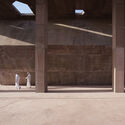
Christian Kerez Designs Parking Structure in Bahrain as Part of the Pearl Path Project  - Image 3 of 4Christian Kerez Designs Parking Structure in Bahrain as Part of the Pearl Path Project  - Image 4 of 4Christian Kerez Designs Parking Structure in Bahrain as Part of the Pearl Path Project  - Image 2 of 4Christian Kerez Designs Parking Structure in Bahrain as Part of the Pearl Path Project  - Image 1 of 4Christian Kerez Designs Parking Structure in Bahrain as Part of the Pearl Path Project  - More Images+ 9

The Architectural Review Announces Winners of the 2017 AR Emerging Architecture Awards

The Architectural Review Announces Winners of the 2017 AR Emerging Architecture Awards - Image 2 of 4
Winner: Rue Bonnet Social Housing/ Avenier Cornejo Architectes. Image Courtesy of The Architectural Review Emerging Architecture Awards

The winners of the Architectural Review 2017 Emerging Architecture Award are Christelle Avenier and Miguel Cornejo. The duo’s social housing project in Paris was selected as winners by the judges. All finalists gathered in Berlin this year to present their projects to a panel consisting of Marina Tabassum, Martyn Hook, and Matthias Sauerbruch. For the last two-years, the jury has received the applications at the World Architecture Festival.

The Architectural Review Announces Winners of the 2017 AR Emerging Architecture Awards - Image 2 of 4The Architectural Review Announces Winners of the 2017 AR Emerging Architecture Awards - Image 3 of 4The Architectural Review Announces Winners of the 2017 AR Emerging Architecture Awards - Image 5 of 4The Architectural Review Announces Winners of the 2017 AR Emerging Architecture Awards - Image 6 of 4The Architectural Review Announces Winners of the 2017 AR Emerging Architecture Awards - More Images+ 4

Chicago Architecture Biennial Announces List of 2017 Participants

The Chicago Architecture Biennial has announced the list of participants invited to contribute to the event’s second edition, which will be held from September 16 to January 7, 2018 in Chicago. More than 100 architecture firms and artists have been selected by 2017 artistic directors Sharon Johnston and Mark Lee, founders of Los Angeles–based Johnston Marklee, to design exhibitions that will be displayed at the Chicago Cultural Center and throughout the city.

“Our goal for the 2017 Chicago Architecture Biennial is to continue to build on the themes and ideas presented in the first edition,” explained Johnston and Lee. “We hope to examine, through the work of the chosen participants, the continuous engagement with questions of history and architecture as an evolutionary practice.”

Studio Anne Holtrop Wins 2016 Challenge of the Time Prize

Dutch firm Studio Anne Holtrop has won the 2016 Challenge of The Time, an international architectural prize named by architect and artist Iakov Chernikhov. Now in its fifth iteration, the prize honors young architects up to 44 years old for the “best architectural project concepts that [feature an] innovative approach” and face “challenges to the future.”

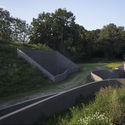
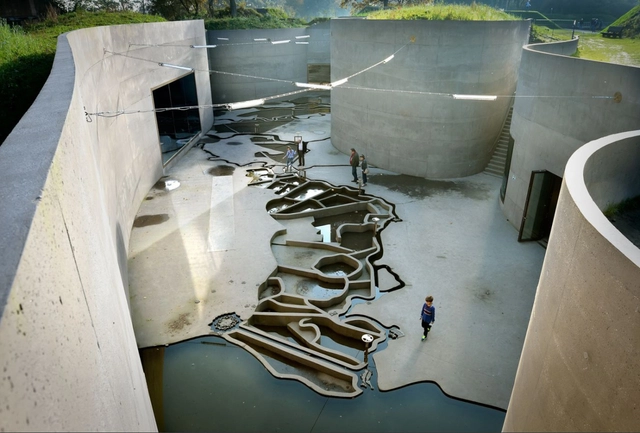
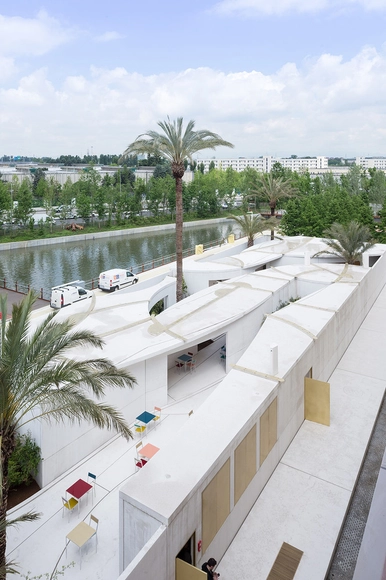
Studio Anne Holtrop’s work varies from spatial temporary models and pavilions to extensive public buildings. For instance, over the past several years, the studio has designed the Museum Fort Behten near Utrect, and the National Pavilion of Bahrain for the EXPO exhibition in Milan, as well as for the Venice Biennale.

Studio Anne Holtrop Wins 2016 Challenge of the Time Prize  - Image 1 of 4Studio Anne Holtrop Wins 2016 Challenge of the Time Prize  - Image 2 of 4Studio Anne Holtrop Wins 2016 Challenge of the Time Prize  - Image 3 of 4Studio Anne Holtrop Wins 2016 Challenge of the Time Prize  - Image 4 of 4Studio Anne Holtrop Wins 2016 Challenge of the Time Prize  - More Images

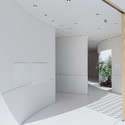
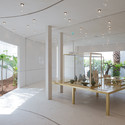
Bahrain Pavilion – Milan Expo 2015 / Studio Anne Holtrop

Bahrain Pavilion – Milan Expo 2015 / Studio Anne Holtrop - Pavilion, Facade, ChairBahrain Pavilion – Milan Expo 2015 / Studio Anne Holtrop - Pavilion, Stairs, Facade, HandrailBahrain Pavilion – Milan Expo 2015 / Studio Anne Holtrop - Pavilion, Facade, Chair, TableBahrain Pavilion – Milan Expo 2015 / Studio Anne Holtrop - Pavilion, Facade, Handrail, BalconyBahrain Pavilion – Milan Expo 2015 / Studio Anne Holtrop - More Images+ 11